What to Look for in a Drill Press: Essential Features to Consider
Choosing the right drill press comes down to motor power, drilling capacity (depth and swing distance), a cast-iron or steel frame for stability, and precision features like a depth stop and quill scale. A drill press’s whole advantage over a handheld drill is stability and repeatability — the features that matter most are the ones that actually deliver on that promise, not the ones with the flashiest spec sheet.
Types Of Drill Presses
Best Entry-Level Benchtop Drill Press
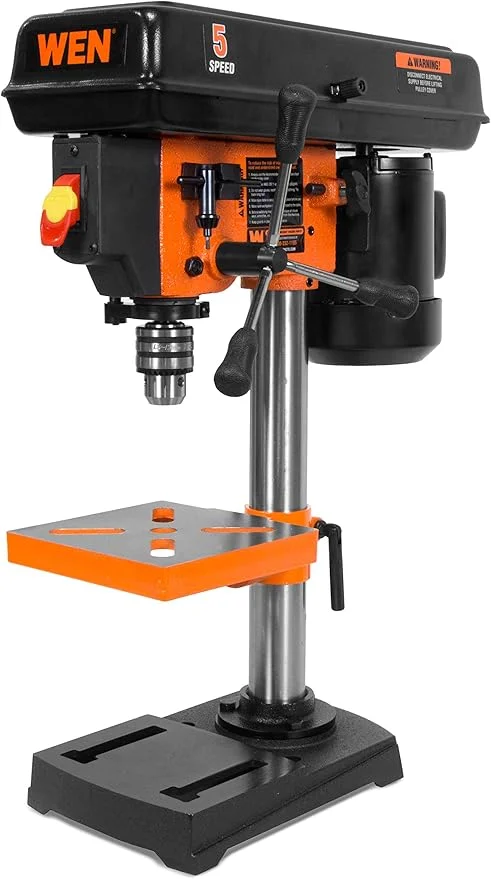 |
WEN 2.3-Amp 8-Inch 5-Speed Cast Iron Benchtop Drill Press – $123.76 A cast-iron frame for real stability at a genuinely entry-level price, with 5 speeds covering most wood and light metal drilling.
|
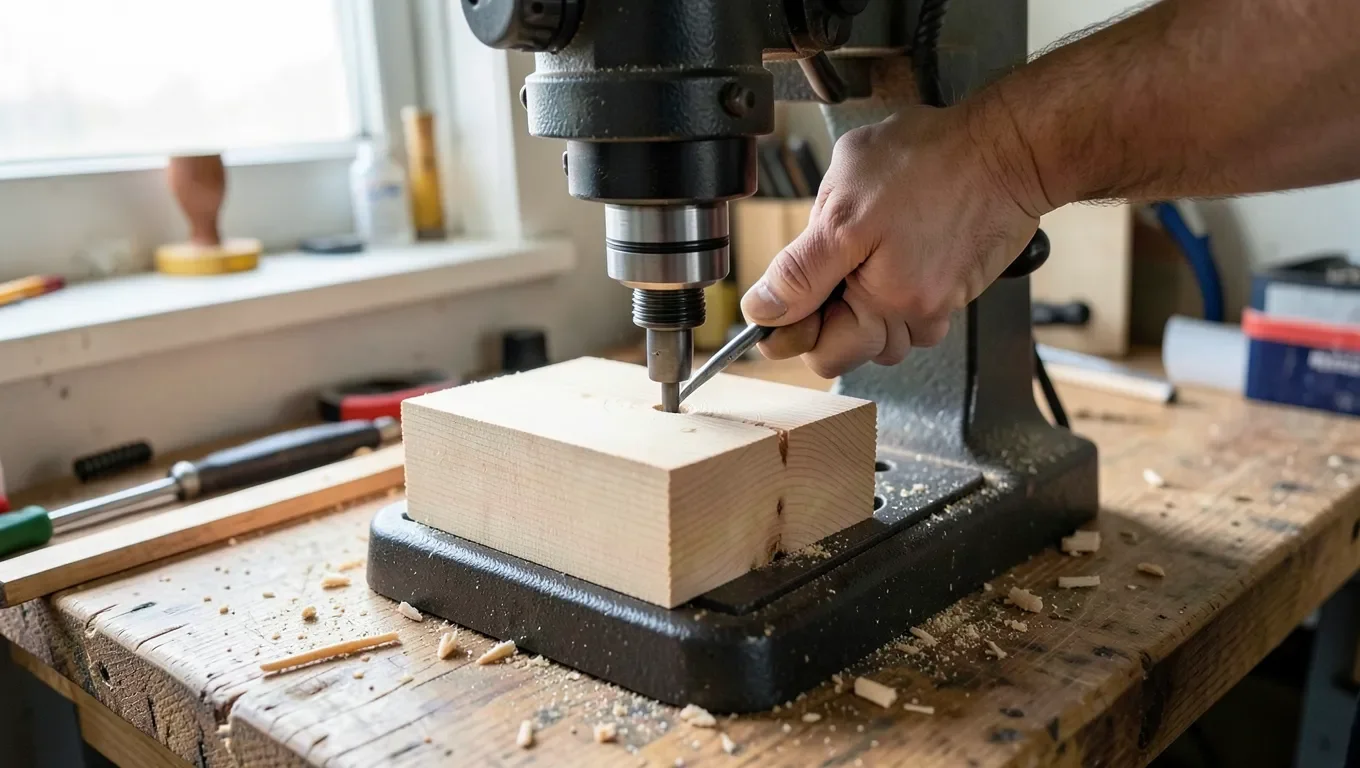
Benchtop models sit on a workbench, take up less floor space, and suit most home woodworking. Floor models stand on their own base, offer more power and swing capacity, and make sense once a project regularly exceeds a benchtop model’s capacity. Magnetic drill presses use a strong magnet to clamp onto steel, which makes them portable for job-site metalwork where the workpiece itself can’t be moved to a bench — a specialized case most woodworkers won’t need.
Motor Power And Speed Range
1/2 to 3/4 horsepower handles most home woodworking; step up to a full horsepower or more for heavier material or frequent metal drilling. Variable speed control matters as much as raw power — different bit sizes and materials need different speeds, and a wide, easy-to-adjust range (typically 5 or more speeds on a benchtop model) is what actually lets one machine handle both a small bit in hardwood and a large bit in softwood without burning either the bit or the wood.
Drilling Capacity: Depth And Swing
Maximum quill travel (how far the drill bit can plunge in one stroke) determines the deepest hole you can drill without repositioning the workpiece — check this against your typical project thickness, not just the largest project you can imagine. Swing distance (double the distance from the bit to the column) determines the largest panel you can center a hole on; a bigger swing matters for large panels, while a smaller swing is perfectly fine for typical furniture-scale parts and actually keeps the machine more compact.
Frame Construction And Stability
Cast iron is heavier and dampens vibration better than steel or aluminum, which translates directly into cleaner, more accurate holes — this matters more than almost any other spec, since a drill press’s entire value proposition is precision a handheld drill can’t match. Steel frames are a reasonable middle ground on weight and cost; aluminum keeps the machine light and portable but flexes more under load, which shows up as slightly less consistent hole placement on demanding work.
Precision Features That Actually Matter
- Depth stop: lets you drill the same depth repeatedly without measuring each time — essential for any project needing multiple identical holes.
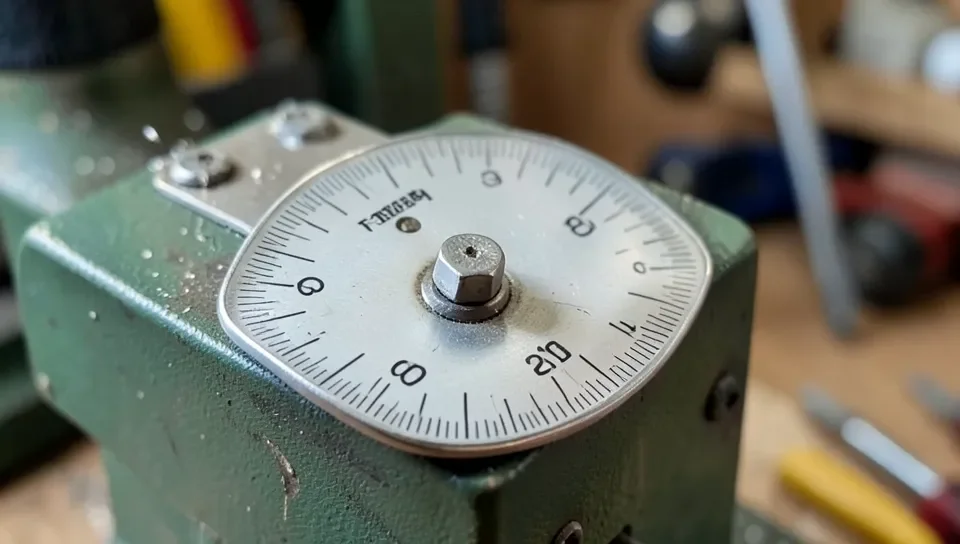
- Quill scale: a clear, readable depth scale on the quill itself, so you can dial in a depth precisely rather than eyeballing it.
- Laser guide (optional): projects a crosshair showing exactly where the bit will land, useful for speed but not a substitute for properly clamping the workpiece.
- Adjustable, tilting table: lets you drill angled holes and reposition the workpiece without repositioning the whole machine.
Safety Features To Check For
A wide, stable base is the first safety feature that matters — a top-heavy or narrow-footed drill press can tip under lateral pressure. Guarding around the chuck and bit protects hands from moving parts and eyes from flying debris; guards that come off too easily defeat the purpose, so check that they’re solidly mounted, not just present. An accessible emergency stop, sized and colored to find without looking, matters more on a floor model where you’re standing further from the switch than it does on a compact benchtop unit.
Holding The Workpiece Securely
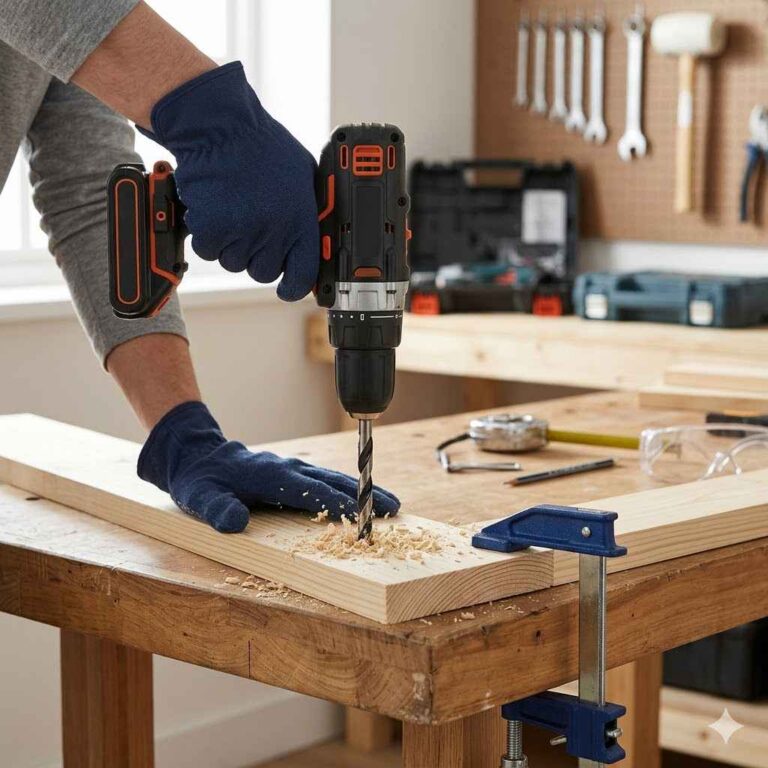
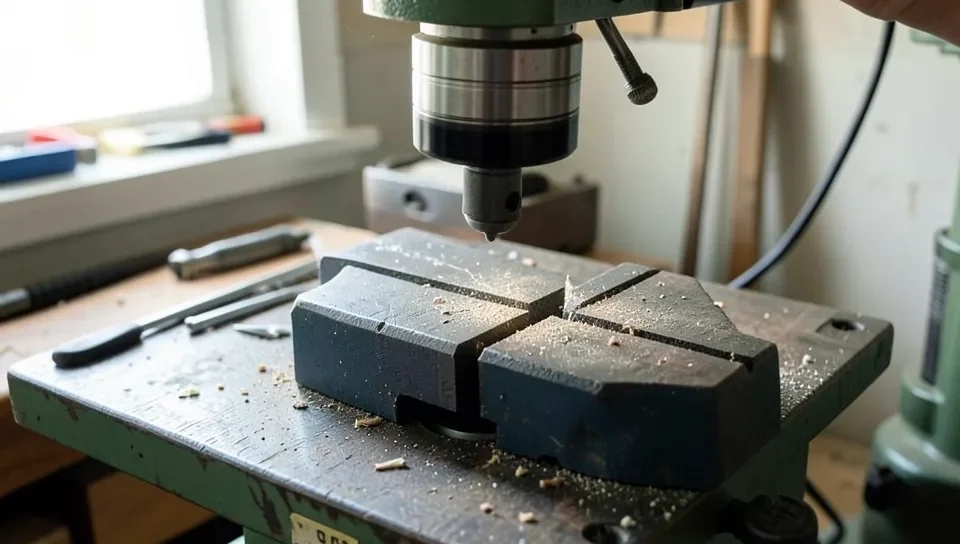
A drill press vise or clamps holding the workpiece to the table isn’t optional safety advice — an unclamped piece can spin violently if the bit binds, which is one of the more common drill-press injuries. Check that whatever vise or clamp system you’re using is rated for the size stock you’ll actually be drilling, and that it tightens down firmly without slipping.
Accessories Worth Having
A quality vise and clamp set improves both safety and accuracy, as covered above. Dust collection ports that fit a standard shop vacuum hose keep the work area visible and clean, which matters more than it sounds for accurate drilling — sawdust piling up on your line of sight is a real accuracy problem, not just a mess.
Frequently Asked Questions
What Features To Consider In A Drill Press?
Motor power and speed range, drilling capacity (depth and swing), frame material for stability, and precision features like a depth stop and quill scale. Frame stability matters more than most buyers expect, since it directly affects hole accuracy.
How Important Is Motor Power In A Drill Press?
Motor power determines what materials and bit sizes the machine can handle without bogging down. 1/2-3/4 HP suits most home woodworking; heavier or frequent metalwork calls for a full horsepower or more.
What Are Speed Settings On A Drill Press?
Adjustable speed settings let you match the bit’s rotational speed to the material and bit size — a slower speed for larger bits and harder materials, faster for small bits in softer wood. A wide range with easy adjustment is what makes one machine versatile across projects.
Why Is An Adjustable Table Crucial In A Drill Press?
An adjustable, tilting table lets you reposition and angle the workpiece without moving the entire machine, which is what makes angled holes and awkward-shaped stock practical to drill accurately.
Conclusion
A drill press earns its place in a shop through stability and repeatability, not flashy extras — prioritize frame material, adequate motor power for your typical materials, and real precision features like a depth stop and quill scale. Get those right and the rest (laser guides, dust ports, table size) are genuinely nice-to-haves rather than deciding factors.
Sponsored / affiliate links. As an Amazon Associate I earn from qualifying purchases. I may earn additional commission from eligible campaigns.