What Are ACL Cornhole Boards Finished With? The Official Coating Explained
If you searched “ACL boards” expecting something related to concrete panels or composite decking, you’re not the first – it’s an easy mix-up. In the backyard-game world, ACL stands for the American Cornhole League, and an “ACL board” is simply a cornhole board built and officially licensed to that league’s tournament standards.
What actually separates a genuine ACL board from a plywood rectangle cut in a home shop isn’t the wood so much as what’s on top of it: a specific, multi-step factory finish engineered to make a bag glide predictably instead of sticking, catching, or skidding off the edge. Here’s exactly what that finish is, how it changes across ACL’s REC, COMP, and Elite board grades, and how to get a comparable result on a board you build yourself.
What “ACL Boards” Actually Means
ACL is the American Cornhole League, the sport’s largest sanctioning body for competitive and televised cornhole. Its officially licensed board line comes in three grades – REC (recreational), COMP (competition), and Elite (tournament) – each built to the same 24-by-48-inch regulation footprint with a 6-inch hole centered 9 inches from the top edge, but with different plywood, thickness, and finish specs depending on how seriously the board gets used.
Officially Licensed ACL Board Pick
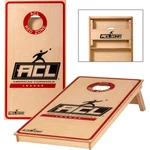 |
Officially Licensed ACL COMP 2×4 Boards – $299.99 The exact 15mm Grade A Baltic birch, double UV-protected top-coat build described in this article – skip the DIY finishing and buy the real, tournament-legal thing.
|
The Wood: Baltic Birch or Poplar Plywood, Not Composite
Every ACL board starts as plywood, not the autoclaved concrete or composite panel some people assume from the name. The species and thickness change by grade:
- REC boards: 12mm poplar plywood – sanded smooth, routed target hole, built for casual and backyard play.
- COMP boards: 15mm Grade A Baltic birch plywood – the standard for sanctioned league and tournament play.
- Elite boards: 18mm Grade A Baltic birch plywood – the thickest play surface, used at the top level of competition.
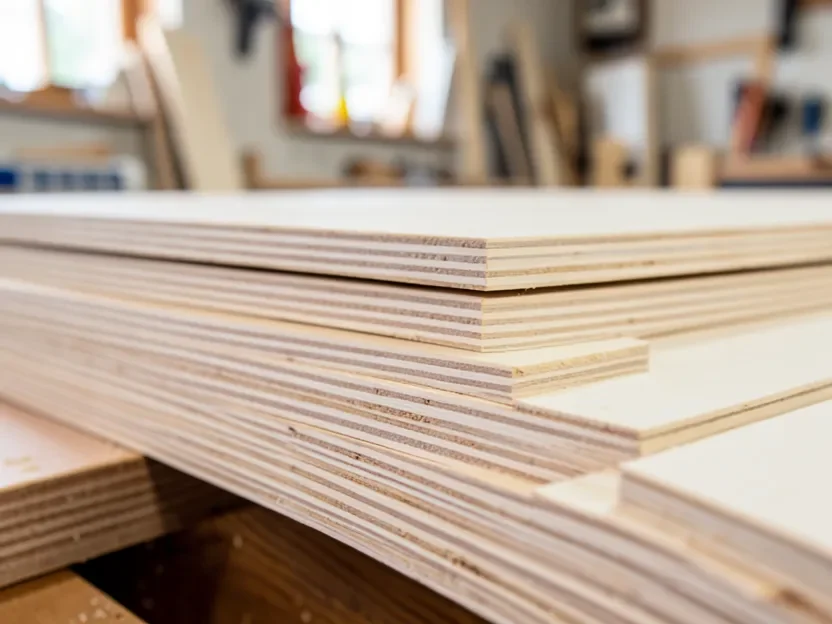
Baltic birch is favored for COMP and Elite boards because it’s a void-free, multi-ply hardwood panel – every layer is full birch veneer with no soft filler core, so it stays flatter over time, machines cleanly on a CNC router when the target hole and graphics are cut, and doesn’t telegraph internal voids through a glossy top-coat the way a lower-grade plywood can.
The Official ACL Finish: A Multi-Step, UV-Protected Top-Coat
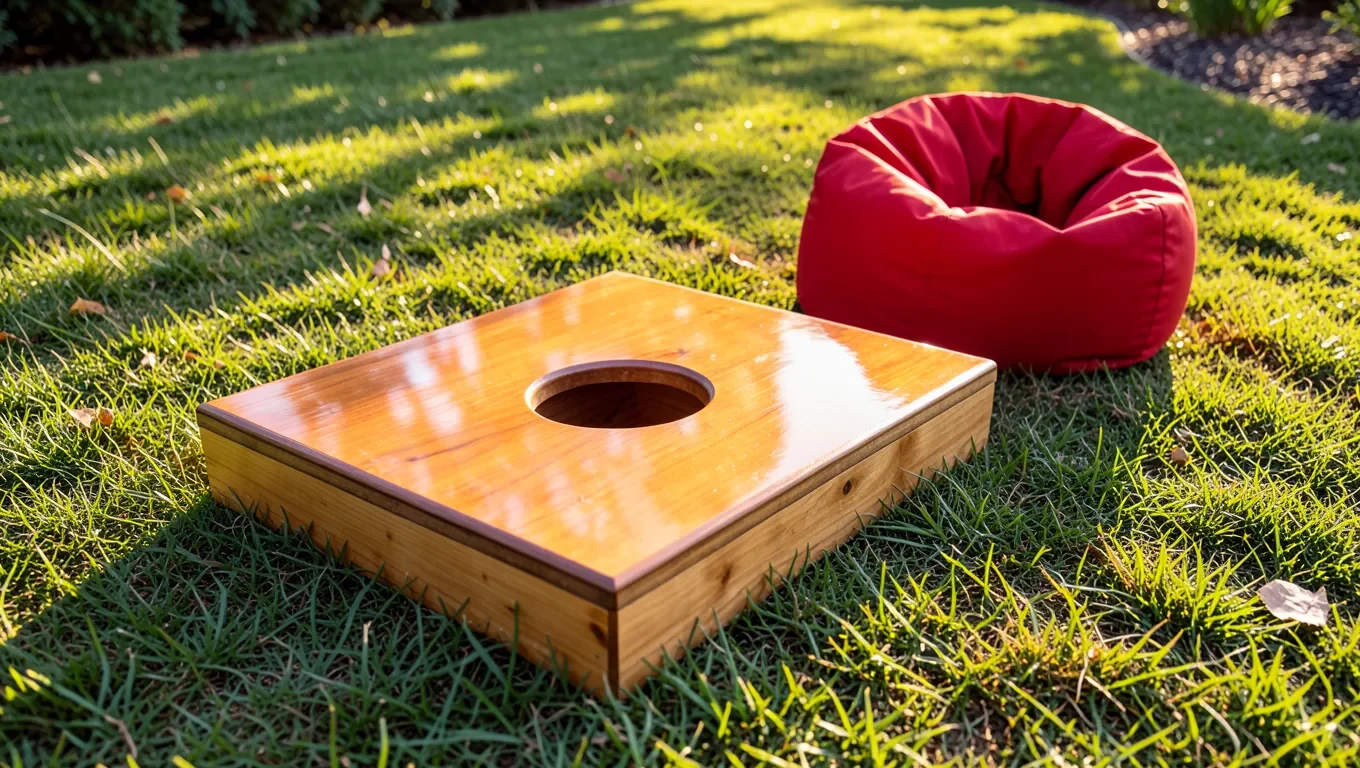
This is the part most people are actually asking about. REC boards ship with a single clear top-coat – enough protection for backyard use, but not built to hold up to daily tournament wear. COMP and Elite boards get ACL’s proprietary double- and four-step UV-protected top-coat, applied at the factory in multiple passes over the printed board graphics.
That finish is doing three specific jobs, not just adding shine:
- Consistent bag glide: the surface is tuned to a specific slide speed – smooth enough that bags slide toward the hole instead of stopping dead, but not so slick that a bag skids straight off the far edge.
- UV resistance: outdoor play means constant sun exposure, which can turn an unprotected clear coat tacky or yellowed within a season; the UV-rated resin resists that breakdown.
- Graphic protection: the printed board graphics are heat-cured and then sealed under the top-coat, so they resist chipping and fading rather than sitting as a sticker under a thin varnish.
Because board speed is a real competitive variable, sanctioned ACL boards are also physically stamped and certified before tournament play – a board that’s been waxed, oiled, or otherwise made too slick loses its legal certification, which is also why the league’s own rules explicitly ban wax and other foreign substances on the playing surface.
REC vs. COMP vs. Elite: How the Build Changes Together
The finish doesn’t change in isolation – it’s paired with a different wood, frame, and leg style at each grade level:
- REC: 12mm poplar, single top-coat, square-leg frame with hidden dowel joinery, approved for recreational play only.
- COMP: 15mm Baltic birch, double UV top-coat, dual cross-beam frame with pocket screws and dowel joinery, heavy-duty H-leg design to eliminate board bounce, approved for tournament play.
- Elite: 18mm Baltic birch, the full four-step UV top-coat, the same no-bounce H-leg construction as COMP but with the thickest play surface of the three.
If you’re buying rather than building, the grade you need really comes down to how the board will be used: REC for a backyard set that only sees casual weekends, COMP or Elite if the board needs to hold up to regular competitive play or actually be tournament-legal.
Want That Finish on a Board You Build Yourself?
You won’t be able to replicate ACL’s exact proprietary resin at home, and a shop-built board can’t carry the league’s official tournament stamp regardless of finish. But you can get very close to the same feel – smooth, consistent, semi-gloss, not slick – with either of two common approaches:
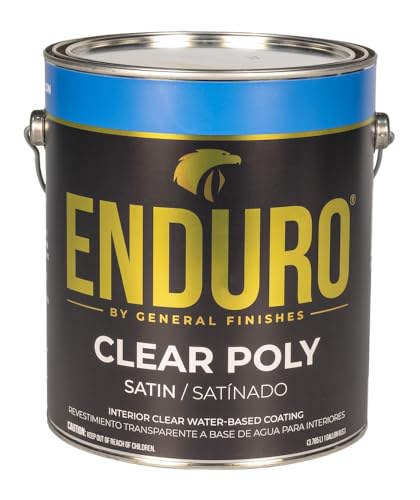
- Polyurethane (the more common route): sand progressively up through 220–320 grit, then apply 3–4 thin coats, lightly scuff-sanding between coats. This builds a durable, semi-gloss surface close to a COMP board’s feel without a lot of specialized equipment.
- Epoxy (more work, glass-smooth result): a self-leveling epoxy topcoat gives a harder, higher-gloss surface with excellent slide, but it costs more, needs careful mixing and a dust-free work area, and is less forgiving of application mistakes than polyurethane.
Whichever product you use, stick to a semi-gloss finish and skip anything wax-based or silicone-sprayed – those get too slick for fair play and wear off unevenly within a season, which is exactly why the ACL’s own rules exclude them. For the full sanding-to-sealing walkthrough, see our step-by-step guide to finishing cornhole boards.
Why Tournament Boards Get Physically Stamped
Board speed isn’t just a marketing detail – it’s a real competitive variable, the same way a bowling lane’s oil pattern matters to bowlers. A board that’s slicker than regulation lets a bag slide farther on a lighter toss, which changes how players have to throw to land in the hole. To keep that variable consistent across every sanctioned event, ACL boards used in league play are inspected and stamped before matches, confirming the surface hasn’t been altered with wax, oil, silicone spray, or any other substance that would change how a bag travels across it.
That’s also why the finish is treated as a fixed spec rather than something players are allowed to touch up between games. A board that’s been resurfaced or waxed mid-season, even with good intentions, can lose its certification until it’s re-inspected – the whole point of a standardized top-coat is that every board on the circuit behaves the same way.
Keeping the Finish in Good Shape
Whether it’s a licensed ACL board or a board you finished yourself, the top-coat is the part that takes the most abuse – repeated bag impacts, UV exposure, and moisture if it’s stored or played outside. A few habits go a long way toward keeping that surface playing the way it did on day one:
- Store boards flat or upright under cover rather than leaving them face-up in direct sun or rain between games – UV exposure is what eventually turns an unprotected finish tacky or chalky.
- Wipe the surface down with a dry or barely damp cloth after outdoor play instead of hosing it off – standing water can work into any seam where the top-coat meets the routed hole edge.
- Never apply wax, furniture polish, or silicone spray to “refresh” a slow board – it’s the single fastest way to make a board illegal for sanctioned play and it wears off unevenly, leaving slick and sticky patches on the same surface.
- Re-coat a DIY board every season or two if it sees regular outdoor use – a single fresh coat of polyurethane over a light scuff-sand restores slide consistency far more predictably than trying to patch worn spots.
ACL Cornhole Board Finish: FAQ
What wood are ACL cornhole boards made of?
REC boards use 12mm poplar plywood. COMP boards use 15mm Grade A Baltic birch plywood, and Elite boards use 18mm Grade A Baltic birch – the thickest play surface of the three grades.
What is the ACL board finish actually called?
ACL calls it a proprietary top-coat finish – a single clear coat on REC boards, and a double- or four-step UV-protected top-coat on COMP and Elite boards. It isn’t a finish you can buy by name; it’s applied at the factory.
Can I use regular polyurethane on cornhole boards instead?
Yes. Polyurethane applied in 3–4 thin coats with light sanding between coats is the most common DIY route and gets you a similar semi-gloss, consistent-slide surface, though it won’t carry the ACL’s official tournament certification.
What’s the difference between REC and COMP ACL boards?
REC boards use thinner 12mm poplar plywood with a single top-coat and are approved for recreational play only. COMP boards use thicker 15mm Baltic birch with a double UV-protected top-coat and a no-bounce H-leg frame, and are approved for sanctioned tournament play.
Sponsored / affiliate links. As an Amazon Associate I earn from qualifying purchases. I may earn additional commission from eligible campaigns.