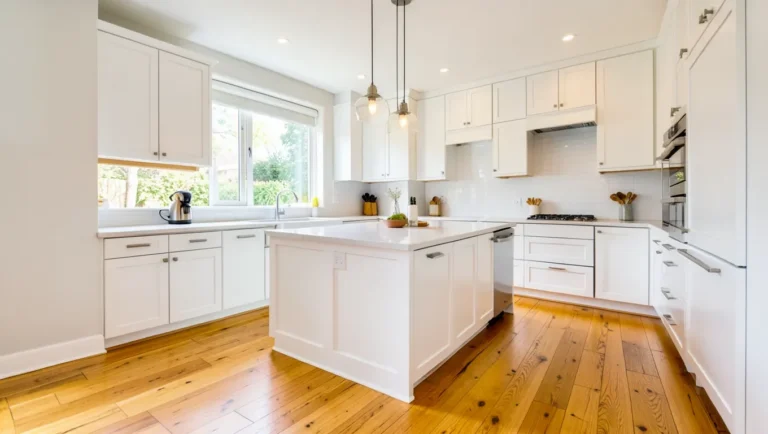
Best Hardwood Floor Colors to Pair With Dark Cabinets
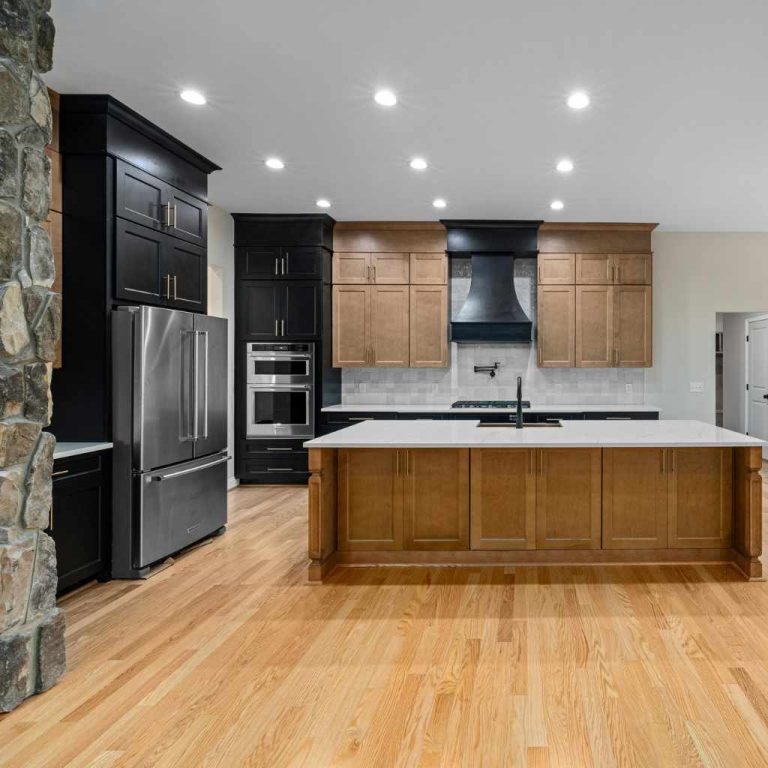
Light to medium hardwood tones — white oak, hickory, or natural maple — pair best with dark cabinets, since dark-on-dark makes a kitchen feel smaller and heavier. The one exception: matching warm undertones (dark cherry or mahogany cabinets with warm oak or hickory floors) so the space doesn’t clash. This guide covers the best specific colors, the contrast rule to follow, and which wall colors tie it together — for the broader picture beyond dark cabinets, see the full guide to the best hardwood floor colors.
Quick Answer
White oak, natural maple, or a weathered/whitewashed finish are the safest hardwood floor colors with dark cabinets — aim for a floor at least two shades lighter than the cabinets. If you prefer warm walnut or butterscotch tones instead of light wood, match its undertone (warm or cool) to your cabinet’s undertone so the two don’t fight each other.

Best Hardwood Floor Colors for Dark Cabinets
Best Way to Test Floor Colors Pick

30 Stain Samples – Wood Stain Sample Variety Pack – $24.99
Photos of light oak or greige floors under someone else’s kitchen lighting won’t tell you how a stain looks against your specific cabinet color — this variety pack lets you hold real stained wood swatches next to your actual cabinets before you order flooring.
- Best for: Comparing multiple stain tones against your cabinets before committing to a full floor order
- Why we picked it: 30 swatches cover light, medium, and neutral tones — the three families this guide recommends
- Main drawback: Swatches show stain color, not the specific wood species’ grain — still confirm species/grade with your flooring supplier
As an Amazon Associate we earn from qualifying purchases.
These three color families cover almost every dark-cabinet kitchen:
- Light wood tones: White oak, natural maple, pale cherry, or a weathered/whitewashed finish. These create the strongest contrast and visually expand the room — the go-to choice for small or low-light kitchens.
- Medium brown tones: Walnut, mid-tone oak, or a butterscotch stain. Less contrast than light wood, but still reads as a deliberate pairing rather than a match, and hides scuffs better than very light floors.
- Neutral “greige” tones: A gray-beige blend that works with both warm and cool cabinet undertones — the safest pick if you’re not sure which direction to go.
Avoid: stark white-washed floors, heavily saturated red/orange/yellow stains, high-gloss finishes, and floors that match the cabinet color almost exactly — all four tend to look dated within a few years or flatten the contrast that makes dark cabinets look intentional.
The Contrast Rule: How Much Lighter Should the Floor Be?
As a starting rule, aim for a floor at least two shades lighter than your cabinets. Dark cabinets with lighter floors read as visually balanced and open; the reverse (dark floors, lighter cabinets) also works, but matching dark cabinets to dark floors is the pairing most likely to make a kitchen feel smaller.
That said, dark floors with dark cabinets isn’t off-limits — it can work if both are in the same warm or cool family and the room has strong natural light or light-colored walls to compensate. It’s a higher-risk combination, so test it (see the sample pack above) before committing to a full floor.
Matching Undertones: Warm Cabinets vs. Cool Cabinets
Undertone mismatches are the most common reason a “correct” color combination still looks off in person. Match your cabinet’s undertone to your floor’s undertone, not just the light/dark value:
- Warm cabinets (mahogany, cherry, warm espresso): pair with warm floors — oak or hickory in a honey or amber finish.
- Cool cabinets (charcoal, black, cool-toned espresso): pair with cooler or neutral floors — white/grey-washed woods or a greige finish.
- Not sure which you have? Hold a cabinet door sample next to a white sheet of paper in daylight — a yellow/red cast is warm, a pink/grey cast is cool.

Wall and Paint Colors That Tie the Room Together
Once your floor and cabinet colors are set, the wall color is what keeps the room from feeling too heavy or too flat:
- Light neutrals — white, beige, cream, light gray — create the brightest, most classic contrast with dark cabinets.
- Warm neutrals — taupe, warm gray, soft blush — echo the floor’s warmth without competing with it.
- Bold, cool accents — sage or deep green, navy — work well in kitchens with plenty of natural light and light flooring to balance them.
📊 Hardwood flooring trends are moving lighter, with darker floor tones increasingly giving way to warmer, lighter palettes. — Source: National Association of Realtors, Styled, Staged & Sold blog
Frequently Asked Questions
What hardwood floor color looks best with dark cabinets?
Light to medium wood floors, such as white oak or natural maple, look best with dark cabinets. They create contrast that keeps the kitchen feeling open instead of closed in.
Can dark hardwood floors match dark cabinets?
Yes, but it can make the room feel smaller. If you want dark floors with dark cabinets, add light walls, strong natural light, or bright furniture to prevent a heavy look.
Should I choose warm or cool floor tones?
Match the floor’s undertone to your cabinet’s undertone. Warm tones like honey or amber suit warm-toned cabinets (mahogany, cherry); cool tones like gray or ash suit cool-toned cabinets (charcoal, black).
What if I want the floor and cabinets to contrast strongly?
Choose a floor color at least two shades lighter than your cabinets. This makes the cabinets stand out as an intentional design choice and keeps the room feeling open.
How do I test a floor color before committing?
Hold physical stain samples or flooring swatches against your actual cabinets in your kitchen’s natural and artificial light at different times of day — photos and showroom lighting rarely match how a color reads in your specific space.
The short version: go two shades lighter than your cabinets, match undertones, and test physical samples in your own kitchen light before ordering a full floor. For color guidance beyond dark cabinets specifically, see the complete hardwood floor color guide.
Sponsored / affiliate links. As an Amazon Associate I earn from qualifying purchases. I may earn additional commission from eligible campaigns.
 Senhill Professional Hardwood Flooring Jack Positioning Tool for Laminate Flooring Installation Hard Wood Straight Tile Contractor Hand Tool
 Laminate Floor Repair Kit, Wood Furniture Repair Kit with 11 Colors Hardwood Floor Wax and 8 Colors Furniture Markers, Vinyl Linoleum Floor Repair kit Covers Scratches, Stains, Hole, Cracks