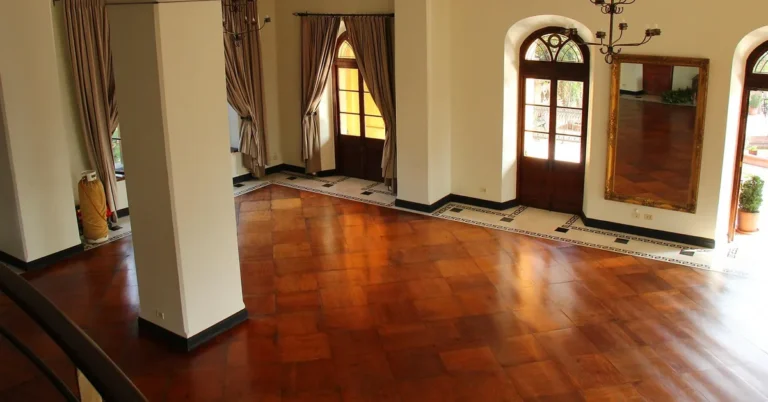
What Color Walls With Dark Wood Floors? (Match the Undertone)
Warm-toned dark wood floors like walnut or cherry look brightest next to a cool, crisp white, not a warm cream that can make both the floor and wall look muddy. Get the undertone wrong and even an LRV 70+ “safe” white reads flat instead of bright. This guide matches wall undertones to walnut, mahogany, cherry, and espresso floors, covers bold alternatives like charcoal and navy, and flags the mistakes that shrink a dark-floor room.
Match Your Wall Color to Your Floor’s Undertone
Best Paint Sample Pick

Samplize Benjamin Moore Chantilly Lace Peel & Stick Sample OC-65 – $46.18
The cool, crisp white this guide recommends for warm-toned walnut and mahogany floors — a real painted swatch, not a printed chip, so you see the actual undertone against your own floor before buying a gallon.
- Best for: Testing a cool-white wall color against warm, red-brown floors
- Why we picked it: Matches the undertone-matching table above exactly — LRV 90, true painted color, repositionable
- Main drawback: One color per sample — buy 2–3 to compare side by side
Compare more undertone-matched paint samples
 Option 1 Edgecomb Gray HC-173 Sample – $41.93
|
 Option 2 Pale Oak OC-20 Sample – $42.33
|
 Option 3 Swiss Coffee OC-45 Sample – $44.05
|
As an Amazon Associate we earn from qualifying purchases.
Most “which color goes with dark wood floors” advice stops at “pick something light.” That skips the step that actually determines whether the room looks intentional or off: undertone. Warm, red-brown floors (walnut, mahogany, cherry) read cleanest next to a cooler-leaning white or gray, while cooler, near-black floors (espresso, ebony) look warmer and more inviting next to a warm white or greige — pairing like with like usually looks muddy, not matched.
| Your Dark Floor Tone | Floor’s Undertone | Best Wall Undertone | Named Example (LRV) |
|---|---|---|---|
| Walnut, mahogany | Warm red-brown | Cool, crisp white | Benjamin Moore Chantilly Lace OC-65 (LRV 90.0) |
| Cherry | Warm red-orange | Soft cool-neutral white | Benjamin Moore Swiss Coffee OC-45 (LRV 81.9) |
| Espresso, ebony | Cool, near-black | Warm greige | Benjamin Moore Edgecomb Gray HC-173 (LRV 63.1) |
| Not sure / mixed undertone | — | Safe warm-neutral greige | Benjamin Moore Pale Oak OC-20 (LRV 68.6) |
📊 Paint needs a Light Reflectance Value (LRV) of roughly 50 or higher to bounce meaningful light back into a room — interior designers typically use the 65–80 range for a bright, airy wall next to dark flooring. — Source: Benjamin Moore, color data page
Light and Airy: White and Off-White Walls
White and off-white walls remain the most reliable pairing for dark wood floors because they maximize contrast without competing with the floor’s grain. A crisp, cool white suits warm-toned floors best (see the undertone table above); warmer off-whites and creamy ivories work better once the floor itself leans cooler or the room gets limited natural light.
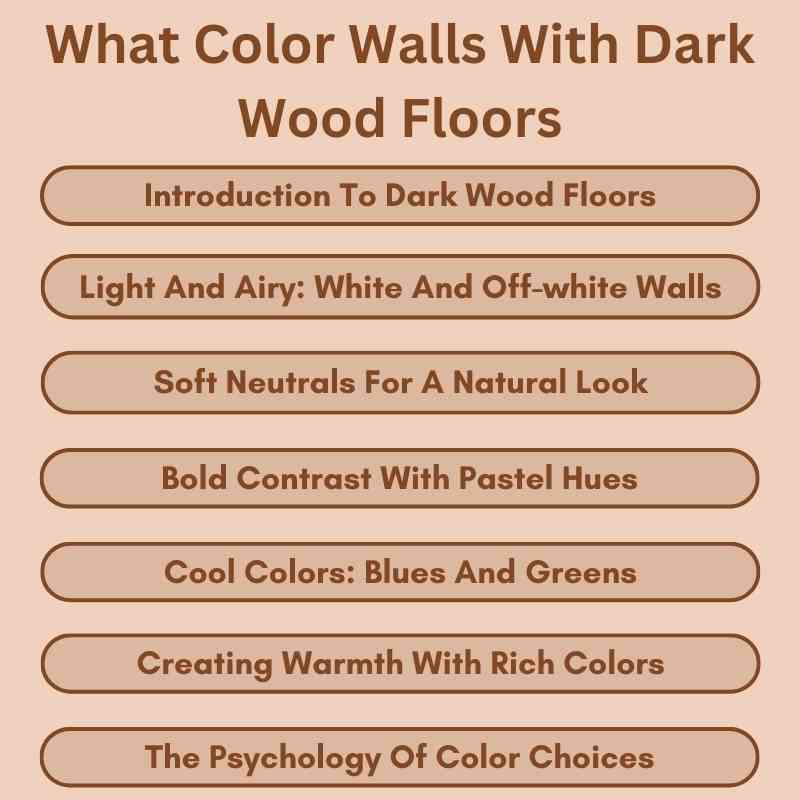
The Classic White Approach
When it comes to pairing dark wood floors with wall colors, a crisp cool white is the safest, most tested option — it balances the darkness of the floor without introducing a competing undertone.
Warmth With Off-Whites and Creams
If stark white feels clinical, an off-white or cream adds warmth — but test it against your actual floor first (see the testing method below): the exact shade of off-white can shift warm or cool depending on the room’s natural light.
Soft Neutrals for a Natural Look
Beige, light gray, and taupe provide a subtle backdrop that lets a dark floor’s grain stand out instead of fighting for attention. Warm greiges like Pale Oak (from the table above) work with almost any dark wood tone; cooler light grays pair best with warm red-brown floors like walnut and mahogany.
Beige and Light Gray Tones
Sand and cream beiges create a cozy, warm atmosphere; dove and silver grays read more modern. Both pair well with dark wood floors — the choice comes down to whether the room should feel cozy or crisp.
Taupe as a Versatile Choice
Taupe splits the difference between warm and cool, which makes it forgiving when you’re not certain of your floor’s exact undertone. A lighter taupe gives subtle contrast; a deeper taupe reads more dramatic.
Bold and Dark Wall Colors That Still Work With Dark Floors
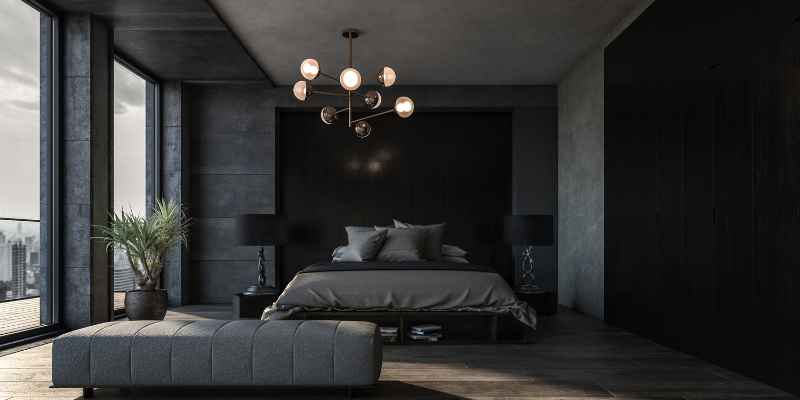
Light isn’t the only option. Navy, charcoal, and even black walls can work with dark wood floors in the right room — the rule is that at least one of the two (floor or wall) has to stay light enough to anchor the space, and the room needs strong natural or artificial light to avoid feeling like a cave.
Deep navy or charcoal walls next to dark wood floors create a moody, intentional look popular in dining rooms and studies — but this combination needs bright overhead and accent lighting, plenty of light-colored furniture and trim, and works best in larger rooms with good natural light. In a small, dim room, dark-on-dark reads as cramped rather than dramatic.
Best Pastel Shades for Dark Floors
For a softer bold statement, pastels create contrast without the risk of a dark-on-dark room feeling closed in:
| Pastel Shade | Description |
|---|---|
| Mint Green | A refreshing, soothing color that keeps the room feeling light despite the added color. |
| Lavender | A soft, muted shade that adds interest without darkening the room. |
| Pale Yellow | A warm, cheerful hue — best paired with warm-toned floors like walnut or cherry. |
| Powder Blue | A cool, calming color best paired with warm red-brown floors for balanced contrast. |
Cool Colors: Blues and Greens
Soft blues and earthy greens bring a calm, natural feel and work especially well against warm red-brown floors like walnut, where the cool undertone balances the wood’s warmth. Pale sky blue, powder blue, and blue-gray shades all read as serene rather than cold when paired with a dark floor.
Earthy Greens for a Natural Vibe
Sage, olive, and moss bring a natural feel and pair especially well with the warm undertones in walnut and mahogany floors. Combine with beige or cream trim to keep the room from feeling too saturated.
Creating Warmth With Rich Colors
Deep reds, oranges, and golds add sophistication and warmth — but because these hues share the same warm family as walnut, mahogany, and cherry floors, use them as accent walls or in smaller doses rather than on every wall, or the room can start to feel visually heavy.
The Impact of Yellow and Gold
Yellow and gold tones reflect light well and add a welcoming, luxurious feel. Used as an accent wall rather than throughout the room, they brighten the space without competing with the floor’s own warmth.
Tips for Coordinating Furniture and Decor
Wall color is only part of the equation — furniture, rugs, and trim all interact with a dark floor the same way walls do. The same undertone-matching logic used for pairing white cabinets with wood floors in a kitchen applies here: light, warm-neutral furniture keeps the contrast clean, while cool-toned gray furniture can look chalky against a warm walnut or cherry floor.
Selecting Complementary Furniture
Light-colored furniture creates the strongest contrast against dark floors. Match its undertone the same way you’d match wall paint — warm-toned wood furniture (oak, maple) generally reads cleaner against walnut or mahogany floors than cool gray-toned pieces.
Accessorizing With Rugs and Curtains
Neutral-toned rugs and curtains tie the room together without introducing a third competing undertone. If your floors are light rather than dark, the same undertone logic applies in reverse — see our guide to wall colors for light wood floors.
Paint Finishes and Lighting Considerations
The right paint finish matters as much as the color. Matte finishes hide wall imperfections and reduce glare next to dark floors; satin or eggshell finishes add a subtle sheen that pairs well with a polished hardwood floor.
- Choose a light, undertone-matched wall color to reflect and amplify natural light.
- Add lighting fixtures strategically to brighten corners the wall color alone can’t reach.
- Avoid heavy drapes that block natural light — sheer curtains or blinds keep the room bright.
- Install mirrors opposite windows to bounce additional light around the room.
- Choose light-colored furniture to reinforce the contrast the wall color already creates.
Common Mistakes to Avoid
Most wall-color mistakes with dark floors come down to two things: going too dark, or ignoring undertone entirely.
Over-Darkening the Room
Matching deep wall colors to deep floor colors can make a room feel smaller and closed off, especially in a space with limited natural light. Reserve dark-on-dark (see the bold colors section above) for larger, well-lit rooms.
Ignoring Undertones in Wood and Paint
This is the single most common mistake: picking a “safe” white or gray without checking whether it’s warm or cool, then wondering why it looks slightly off against the floor. Use the undertone table near the top of this guide, and always test a physical sample (below) before buying a full gallon.
Design Pairings to Try by Wood Tone
These are starting-point combinations based on the undertone principle above, not a fixed formula — use them as a shortlist to test against your own floor and lighting.
| Dark Wood Floor | Wall Color Direction | Why It Works |
|---|---|---|
| Rich mahogany | Cool, soft gray | Cool undertone balances the wood’s warm red tone |
| Dark walnut | Crisp cool white or creamy warm beige | Either extreme works — cool white for max contrast, warm beige for coziness |
| Deep cherry | Warm taupe or soft cool white | Warm taupe echoes the wood; soft white maximizes contrast |
How to Test a Paint Color Before You Commit
A printed paint chip is too small to judge undertone accurately, and it’s usually lit under fluorescent store lighting that skews the color. Before buying a gallon:
- Use a large sample, not a chip: A peel-and-stick or brush-out sample at least 8×10 inches shows the real undertone; a 2-inch chip does not.
- Hold it against the actual floor: Undertones shift depending on what’s next to them — a white that looks neutral on its own can read pink or gray next to your specific floor.
- Check it at three times of day: Morning, midday, and evening light all shift a color’s undertone, sometimes dramatically.
- View it on more than one wall: Corners and walls without direct light will always look darker and cooler than the wall facing the window.
“The undertone mistake shows up constantly with dark walnut and mahogany floors — a wall color that looked neutral gray on the paint chip goes noticeably purple-pink once it’s next to a warm, red-brown floor. A full-size sample on the actual wall catches that before it’s on every wall in the room.”
Frequently Asked Questions
What color walls go well with dark wood floors?
Light, undertone-matched colors work best: a cool, crisp white or gray for warm-toned floors like walnut and mahogany, and a warm white or greige for cooler-toned floors like espresso or ebony. Matching the undertone, not just the lightness, is what keeps the pairing from looking slightly off.
How do you brighten a room with dark wood floors?
Choose a wall paint with an LRV of 65 or higher, add mirrors opposite windows, skip heavy drapes in favor of sheer curtains, and use light-colored furniture. All four combined reflect more light back into the room than any one change alone.
What colors look best with dark wood?
Cool whites and grays for warm red-brown wood tones (walnut, mahogany, cherry); warm whites and greiges for cooler, near-black tones (espresso, ebony). Bold options like navy or charcoal also work in larger, well-lit rooms.
How do you match wall color with wood floor?
Identify your floor’s undertone first (warm red-brown vs. cool near-black), then choose a wall color with the complementary undertone rather than an identical one. Test a large physical sample against the actual floor in your room’s real lighting before committing to a full gallon.
Do dark wood floors make a room look smaller?
Dark floors alone don’t shrink a room, but pairing them with dark walls in a small or dim space can. Keeping the walls light — especially an LRV 65+ white or greige — offsets the visual weight of a dark floor and keeps the room feeling open.
Conclusion
The fastest way to pick a wall color for dark wood floors is to start from undertone, not just lightness: cool whites and grays for warm floors like walnut and mahogany, warm whites and greiges for cooler floors like espresso. Light colors in the LRV 65–80 range create the most reliable contrast.
Whichever direction you choose, test a physical sample against your actual floor and in your room’s real lighting before committing — it’s the one step that prevents most of the mismatches in this guide.
Sponsored / affiliate links. As an Amazon Associate I earn from qualifying purchases. I may earn additional commission from eligible campaigns.