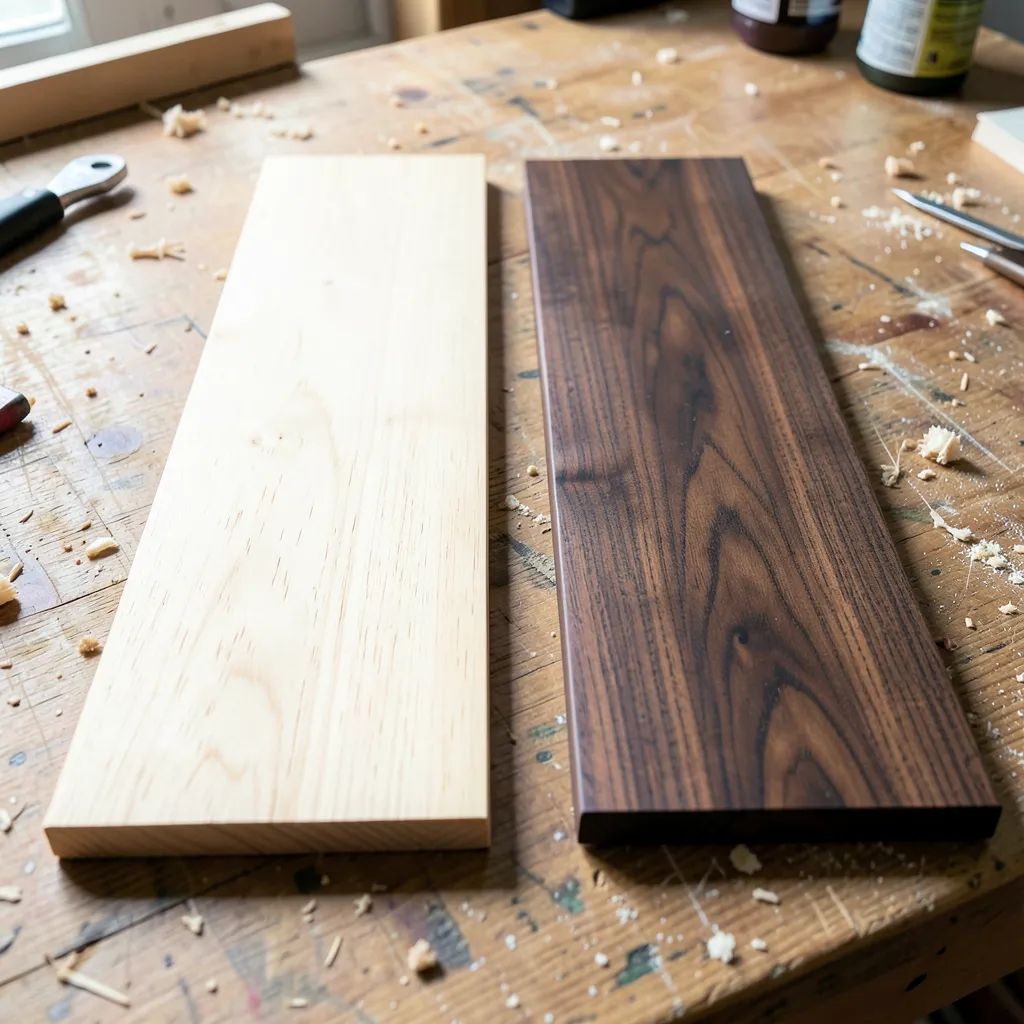
Birch vs Walnut: Hardness, Cost, and Which Wood Actually Fits Your Project
Are you standing in front of a stunning array of wood samples, wondering which one to choose for your next project? Birch and walnut are two popular choices, each with its own unique charm and characteristics.
But which one is right for you? Whether you’re crafting furniture, renovating your home, or simply curious about these beautiful materials, understanding the differences can make all the difference in achieving the perfect look and feel. This article will walk you through the features, benefits, and potential drawbacks of birch and walnut, helping you make an informed decision that aligns with your needs and style.
Dive in to discover which wood will best bring your vision to life!
Characteristics Of Birch
Best Finish for Both Woods
 |
Howard Products Beeswax Wood Polish & Conditioner,HOWARD | Our pick | $10.98
Price as of 20 Oct 2026
|
View |
Birch is a diffuse-porous hardwood, meaning its pores are small and evenly scattered rather than concentrated in rings, which is why it sands to such a uniform, almost featureless surface compared to a ring-porous wood like oak. Color runs pale cream to light tan, occasionally with faint reddish streaks near knots or old branch scars, and the grain stays straight and tight enough that birch plywood is a standard substrate for painted cabinetry — the surface takes paint and stain with very little grain texture showing through, which is exactly what you want under a solid-color finish.
On the Janka hardness scale, yellow birch measures around 1260 lbf, which actually puts it ahead of walnut (roughly 1010 lbf) despite walnut’s reputation as the “premium, tougher” wood — that reputation is really about color and grain figure, not dent resistance. Birch’s real durability trade-off is elsewhere: it’s more prone to seasonal movement (expansion and contraction with humidity) than a more dimensionally stable wood, so it’s a better fit for flooring and furniture than for anything requiring very tight long-term tolerances, like a fine cabinet door.
Birch also machines well for a wood this hard — it cuts cleanly with sharp blades, sands to a smooth finish quickly since there’s little grain to fight, and carves reasonably well for detail work, though its density means hand tools need to stay sharp or the cut quality drops off noticeably. That combination of hardness, smoothness, and workability is why it shows up so often in birch plywood, turned items, and mid-price furniture.
Characteristics Of Walnut
Black walnut heartwood ranges from a warm chocolate brown to a deep purplish-brown, sometimes with darker streaking running through it, while the sapwood at the edges stays much paler — a contrast that steamed walnut lumber (a common processing step) mutes by driving the sapwood’s color closer to the heartwood. Grain is usually straight but can turn wavy or curly in figured boards, which is where walnut gets the dramatic, one-of-a-kind grain patterns prized in fine furniture and gunstocks.
Despite its reputation, walnut is actually the softer of the two woods discussed here at around 1010 lbf on the Janka scale, though “softer” here is relative — it still resists dents and wear well enough for daily-use furniture, just not quite as well as birch or harder domestic hardwoods like oak or hard maple. What walnut does exceptionally well is stay dimensionally stable once dried, meaning it moves less with seasonal humidity changes than many other hardwoods, which is part of why it’s a traditional choice for fine cabinetry and musical instrument parts where tight-fitting joints matter.
Walnut cuts and planes cleanly with sharp tools, and its moderate density means it doesn’t dull blades as fast as denser woods, but its open grain benefits from a pore filler before a high-gloss finish if you want a perfectly smooth, glass-like surface rather than one where the pores read as fine texture under the sheen.
Cost Comparison
Birch typically runs $4-$6 per board foot for solid lumber, which is a meaningful part of why it’s the standard choice for painted cabinetry and budget-conscious furniture builds — the fact that it’s also harder than walnut means you’re not sacrificing durability for the lower price. Birch plywood, widely used as a cabinet-grade substrate, is separately priced and generally cheaper than solid walnut lumber by a wide margin.
Walnut runs considerably higher, typically $10-$14 per board foot depending on grade, figure, and region — figured or wide, clear boards command a real premium over standard grade. That price reflects walnut’s slower growth rate and the market demand for its color and grain more than any performance advantage, since (as the hardness numbers above show) it isn’t actually the tougher wood of the two.
Common Uses Of Birch
Birch plywood is a cabinet-shop staple specifically because its tight, even grain machines and paints so predictably — it’s the default substrate behind a huge share of painted kitchen cabinetry, even when the cabinet doors themselves are a different species or an MDF panel. Solid birch shows up in mid-price chairs and tables where its combination of real hardness and a light, adaptable color works for both modern and traditional styling.
In flooring, birch’s hardness (1260 lbf, ahead of red oak’s roughly 1290 lbf-adjacent range and well ahead of many softer species) makes it a genuinely durable choice for high-traffic rooms, not just a budget alternative to oak — it’s a legitimate performance pick, priced lower mostly because it’s less traditional and less commonly stocked than oak or maple flooring.
Common Uses Of Walnut
Walnut’s color and figure are the whole reason it commands a premium in fine furniture — dining tables, cabinet doors, and case pieces where the grain itself is the design feature, not just a backdrop for paint. Its dimensional stability once dried also makes it a traditional choice for gun stocks and instrument parts, applications where a wood that swells or warps with humidity would actually be a functional problem, not just a cosmetic one.
Walnut veneer — thin sheets sliced from a log and glued to a substrate like plywood or MDF — is how most of the walnut you see in office furniture and cabinet doors is actually used, since veneering lets a single log’s dramatic figure cover far more surface area than solid lumber from the same log ever could. The same slicing process is also used for musical instrument backs and sides, where a thin, consistent, figured veneer is preferred over solid wood for both cost and tonal reasons.
Environmental Considerations
Birch is a fast-growing species that typically reaches harvestable size in a few decades, which lets managed birch stands cycle through harvest and regrowth faster than slower-growing hardwoods — that faster turnover is a real sustainability advantage when the wood is sourced from a certified, well-managed forest rather than clear-cut wild stock.
Black walnut grows far more slowly, often taking 60-80 years or more to reach a mature, harvestable diameter, which is part of why old, wide walnut boards carry such a premium and why walnut forestry leans more toward careful, selective harvesting than large-scale rotation. Buying FSC-certified walnut, where available, is a reasonable way to support that more conservative management approach without giving up the wood’s aesthetic appeal.
Choosing Based On Aesthetic
Birch’s pale, low-contrast grain reads as clean and unobtrusive, which is exactly why it works so well in Scandinavian and other minimalist styles that want the furniture to feel light rather than dominant in a room — it pairs naturally with white, pale gray, and other airy palettes without competing for visual attention. Walnut does the opposite: its dark, often dramatic figure is meant to be the focal point, which is why it anchors traditional and mid-century modern rooms alike, and why it reads well against deep, saturated wall colors that would wash out a lighter wood.
The practical way to decide isn’t really “which wood is better” — it’s which visual role you want the piece to play. A birch piece recedes into a room’s overall palette; a walnut piece becomes a room’s anchor point. If you’re mixing species in the same space, matching undertones (warm vs. cool) matters more than matching exact wood species, since a warm-toned birch and a warm-toned walnut can coexist far more easily than two woods with clashing undertones.
Maintenance And Care
Birch wood‘s main enemies are moisture and sun. Dust with a soft, dry cloth for routine cleaning; a barely-damp cloth is fine for spills but should be followed immediately by drying, since birch’s tight grain doesn’t hide water spotting the way a more figured wood might. Direct sunlight fades birch’s pale color unevenly over time, so rotating furniture or using window coverings in a sun-heavy room helps it age evenly rather than developing a visible “sun shadow” where a rug or another piece blocked the light.
Walnut is more forgiving of moisture in some ways but reacts more visibly to color change — an occasional coat of wood oil (roughly annually for a piece that sees regular use) keeps the grain fed and the color rich, since walnut can look slightly dull and gray if it’s never oiled or waxed. Like birch, keep it out of direct sun; walnut’s rich brown tends to lighten with prolonged UV exposure, which is the opposite direction of the aging some people expect from wood, and it’s not reversible without refinishing.
Choosing Based On Aesthetic
Birch wood is light. It has a soft look. This makes it good for modern styles. Birch can make a room feel bright and airy. It pairs well with white or pastel colors. Walnut is different. It has a rich, dark tone. This gives a room a warm feeling. Walnut fits well with classic or traditional styles. It matches deep reds, greens, and blues.
Some people love the lightness of birch. It feels fresh and new. Others prefer the depth of walnut. It feels cozy and rich. Birch and walnut both have unique looks. Both can make a home special. Your choice depends on what you like. Think about your style. Do you like bright or dark?
Maintenance And Care
Birch wood requires regular cleaning. A soft cloth works best. Dust weekly to keep its shine. Water can damage birch. Use only a damp cloth. Avoid soaking the wood. Polish birch every few months. Use special wood polish for best results. Keep birch away from direct sunlight. Sunlight may fade its color. Use curtains or blinds to protect. Check for scratches often. Repair them quickly. This keeps birch looking new.
Walnut needs gentle care. Dust it weekly using a soft cloth. Walnut absorbs water easily. Always use a dry cloth first. Oils can help. Apply wood oil every year. This keeps walnut shiny and smooth. Sunlight can harm walnut’s rich color. Use shades or curtains to block. Watch for cracks or splits. Repair them soon. Walnut stays strong with care. Wax can protect walnut. Use it every few months.
Janka Hardness and Cost: The Numbers
| Wood | Janka Hardness | Typical Cost |
|---|---|---|
| Birch | 1260 lbf | ~$4–6 per board foot |
| Walnut | 1010 lbf | ~$10–14 per board foot |
Birch is actually the harder wood despite walnut’s reputation as the premium, tougher-feeling choice — walnut’s higher price comes from its color and grain, not extra durability. If dent resistance matters more than looks (a busy kitchen floor, for example), birch is the more practical pick.
Frequently Asked Questions
Is Walnut More Expensive Than Birch?
Yes, walnut is generally more expensive than birch. Walnut has a rich color and unique grain. Birch is more affordable and commonly used in furniture. Prices vary based on quality, region, and availability. Always compare prices from multiple sources for the best deal.
Is Birch High Quality Wood?
Birch is considered high-quality wood. It features fine grain, durability, and versatility for furniture and cabinetry. Its smooth finish makes it popular for interior design. Birch is also cost-effective, offering a balance between quality and affordability. Ideal for various woodworking projects, it provides strength and aesthetic appeal.
Is Walnut Or Maple Better?
Walnut and maple have distinct qualities for different uses. Walnut offers rich color and grain, ideal for furniture. Maple provides durability and is often used for flooring and cabinetry. Preference depends on specific needs and aesthetic choices. Both woods are excellent, but the better choice depends on the intended application.
What Wood Is Closest To Birch?
Maple wood resembles birch closely in appearance and texture. Both are light-colored with fine grain patterns. Maple is slightly harder, offering durability similar to birch. Popular in furniture making, both woods have versatile uses. Their aesthetic appeal and workability make them excellent choices for various woodworking projects.
Conclusion
The numbers settle the practical question: birch is the harder, cheaper, more sustainably fast-growing wood, and it suits a bright, modern, low-maintenance room better than walnut ever will. Walnut costs roughly double to triple birch’s price for a wood that’s actually somewhat softer, and its value is entirely in a look and a slow-grown scarcity that birch was never trying to compete on in the first place.
So the real decision comes down to what a piece needs to do in the room, not which wood is objectively “better.” A busy kitchen floor or a piece of furniture that needs to shrug off daily wear is better served by birch’s hardness and lower price. A dining table or cabinet meant to be the visual anchor of a room, where grain and color carry real weight, is worth walnut’s premium. Either wood, sourced and finished well, will outlast most furniture trends — the choice is really about which role you want it to play.
Sponsored / affiliate links. As an Amazon Associate I earn from qualifying purchases. I may earn additional commission from eligible campaigns.