What Is 7/16 Plywood? (Usually OSB, Not True Plywood)
What most stores sell as “7/16 plywood” is actually OSB (oriented strand board) — true veneer plywood at that exact thickness is comparatively rare. Both carry the same APA 24/16 span rating for roof and wall sheathing, but plywood stays about 86% as strong after wet/dry cycling versus 63-70% for OSB, and costs 50-160% more per sheet. This guide covers the real difference, when it matters, and when OSB is the smarter buy.
Quick Answer
“7/16 plywood” at a home center is almost always 7/16-inch OSB sheathing, not true veneer plywood — 7/16″ simply isn’t a standard plywood nominal thickness (plywood typically comes in 15/32″, 1/2″, 5/8″, and 3/4″). Both share the same APA 24/16 span rating for 16″- or 24″-on-center framing, so for most roof and wall sheathing, OSB at that thickness performs the same job for less money.
Is 7/16 “Plywood” Actually Plywood, or OSB?
Recommended Check-Before-You-Install Pick
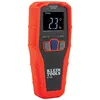
Klein Tools ET140 Pinless Moisture Meter – $49.20
Since OSB loses more strength than plywood when it gets wet before or during installation, checking moisture content before you close in a roof or wall matters more on an OSB job.
- Best for: Checking sheathing moisture before install, especially on OSB
- Why we picked it: Non-destructive pinless reading, no holes left in the panel
- Main drawback: Pinless meters read average moisture across a small area, not an exact single point
As an Amazon Associate we earn from qualifying purchases.
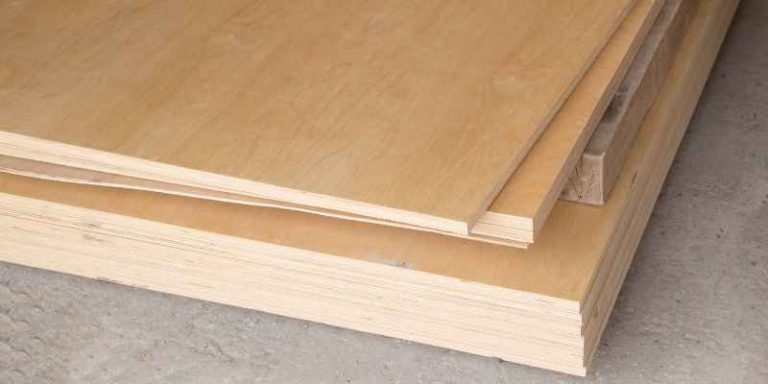
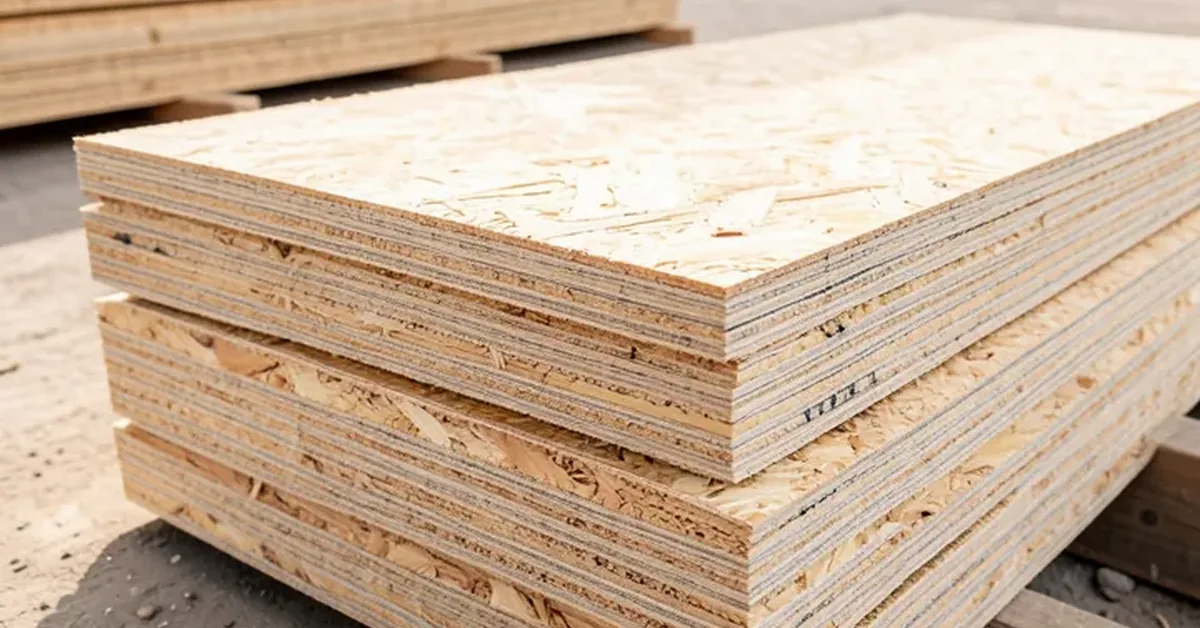
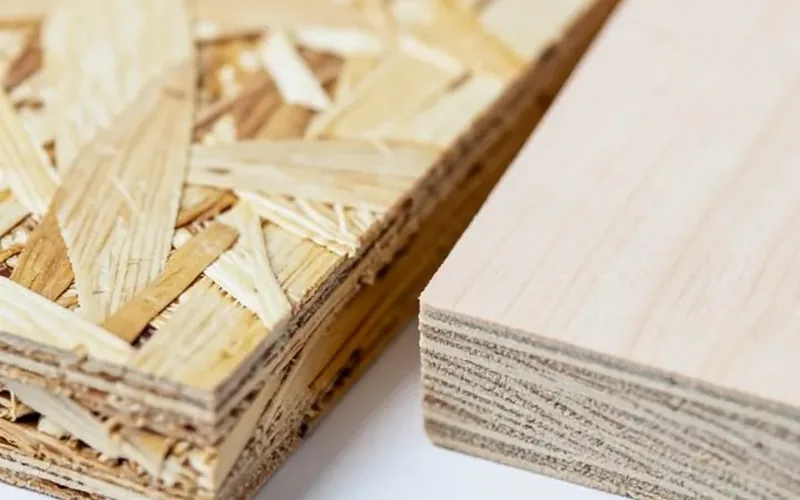
Almost every “7/16 plywood” sheet sold at a home center — Georgia-Pacific’s Blue Ribbon or Nautilus lines included — is OSB, not veneer plywood. True plywood is built from thin wood veneer sheets glued cross-grain; OSB is built from compressed wood strands bonded with resin. The confusion happens because both get sold in the same “sheathing” aisle and both get called “plywood” by habit, even on the shelf tag.
True 7/16-inch veneer plywood does exist, but it’s not the standard thickness the plywood industry sells at — standard plywood sheathing thicknesses are 15/32″, 1/2″, 5/8″, and 3/4″. If you specifically need true plywood rather than OSB, you’re more likely to find it at 15/32″ (very close to 7/16″) than at an exact 7/16″ nominal thickness.
Span Rating: What 7/16 Sheathing Is Actually Rated For
7/16-inch sheathing — OSB or plywood — typically carries an APA span rating of 24/16, meaning it’s engineered for roof rafters or trusses up to 24 inches on-center, or floor joists up to 16 inches on-center. APA (the Engineered Wood Association) publishes the same span rating tables for OSB and plywood at matching thicknesses; the rating system doesn’t favor one material over the other. Always confirm your local code and truss/rafter spacing before assuming 7/16″ is sufficient — wider spacing or heavier roofing (like tile) may call for a thicker panel.
OSB vs. True Plywood at 7/16″: Real Differences
| Factor | 7/16″ OSB | 7/16″ (or nearest) Plywood |
|---|---|---|
| Stiffness | Baseline | ~7-10% stiffer |
| Strength retained after wet/dry cycling | 63-70% | ~86% |
| Nail-holding at panel edges | Slightly lower | Slightly higher |
| Typical price per sheet | $14-$20 | $28-$52 (at 1/2″) |
📊 Roughly three-quarters of new home construction in the U.S. now uses OSB rather than plywood for sheathing, largely because of the price gap above. — Source: APA – The Engineered Wood Association
The practical takeaway: OSB’s lower moisture-cycling performance mostly matters if the panel gets soaked repeatedly before you can dry it in — a roof deck exposed to rain for a week before shingling, for example. Keep any 7/16″ sheathing, OSB or plywood, covered and dry as fast as possible during construction, and the performance gap in the table above matters a lot less.
Cutting and Installing 7/16 Sheathing
Use a circular saw with a sharp carbide blade for straight cuts, and support the sheet on both sides of the cut line to avoid it sagging and pinching the blade. Snap a chalk line for anything longer than a quick trim cut. Space nails or screws per your local code and the panel’s edge-nailing schedule — OSB’s slightly lower edge nail-holding (from the table above) is one more reason not to skip pre-drilling near panel edges on trim pieces.
Leave a small gap (about 1/8″) between sheets to allow for thermal and moisture expansion — tight-butted panels can buckle after they absorb ambient humidity, regardless of whether you used OSB or plywood.
Weight and Handling
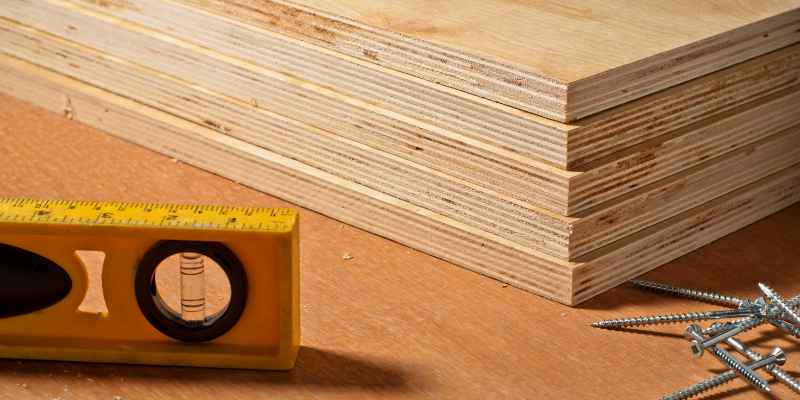
A 4×8 sheet of 7/16″ OSB weighs approximately 45-50 pounds dry, and can pick up another 2-3 pounds after sitting exposed to humidity or rain on a job site. Plywood at a comparable thickness runs similar or slightly lighter. Either way, plan for two people to carry full sheets safely, especially up a ladder or onto a roof.
Frequently Asked Questions
What is 7/16 plywood used for?
7/16″ sheathing (almost always OSB, occasionally true plywood) is used for roof decking and wall sheathing, rated for rafters or studs up to 24 inches on-center under the standard APA 24/16 span rating. It’s not typically used for floor sheathing, cabinetry, or furniture, which call for thicker panels.
How strong is 7/16 plywood?
At 7/16″, true plywood is about 7-10% stiffer than OSB of the same thickness and retains roughly 86% of its strength after repeated wetting and drying, versus 63-70% for OSB. Both meet the same APA 24/16 span rating when new and dry.
Is 7/16 plywood water-resistant?
Neither OSB nor standard plywood is waterproof, but plywood holds its strength better through repeated wet/dry cycles. For sustained ground contact or marine use, neither standard product is appropriate — use pressure-treated lumber or marine-grade plywood instead.
How much does 7/16 plywood weigh?
A standard 4×8 sheet of 7/16″ OSB weighs about 45-50 pounds dry, gaining another 2-3 pounds if it absorbs ambient moisture on a job site. True plywood at a comparable thickness weighs a similar amount.
Conclusion
If you bought “7/16 plywood” recently, there’s a good chance you actually bought OSB — and for most roof and wall sheathing jobs, that’s a perfectly reasonable, code-compliant choice at a fraction of true plywood’s price. Reach for true plywood (or a thicker OSB panel) when you expect repeated moisture exposure during construction, tighter fastener spacing near panel edges, or a spec that specifically calls for veneer plywood.
Sponsored / affiliate links. As an Amazon Associate I earn from qualifying purchases. I may earn additional commission from eligible campaigns.