What Is a Flat File Used for in Woodworking? Real Shop Uses
A flat file in woodworking is a metal hand tool with a flat, rectangular cross-section and rows of machine-cut teeth, and its real job is precision metalwork that touches your project, not shaping raw wood. Woodworkers reach for a flat file to dress and square card-scraper edges, deburr hardware and cut screws, joint the tops of handsaw teeth, and true up the sole or fence of a metal plane.
For actually removing wood, a rasp does the job better, because its teeth are individually punched instead of cut in continuous rows, so they clear shavings instead of clogging. That distinction gets blurred in a lot of woodworking content, and it’s worth understanding before you reach for either tool.
What a Flat File Actually Is
A flat file is a rectangular steel bar with two flat faces and two edges, tapering slightly toward the tip. The cutting surface is made of shallow diagonal ridges (single-cut) or two crossing sets of ridges (double-cut), stamped or machined into the steel in continuous rows. That row structure is the key difference from a rasp, and it’s why a flat file behaves more like a precision metal-smoothing tool than a wood carver.
Best All-Purpose Shop File
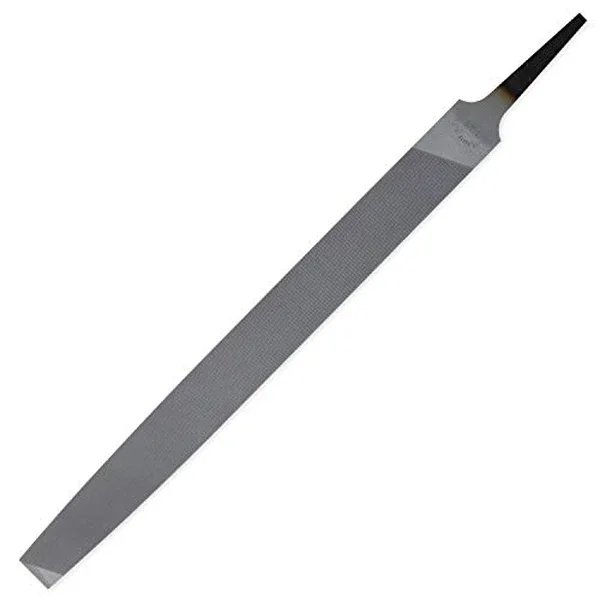 |
Nicholson 8" Mill Bastard-Cut File with Handle – $14.69 This is the exact cut and length we recommend below for dressing scraper edges, deburring hardware, and jointing saw teeth in a home shop.
|
Most flat files sold today are high-carbon steel, hardened so the teeth stay sharp against metal. A few are stainless, which resists rust better but dulls a little faster. Either way, the file’s edges are usually left uncut (safe edges) on one or both sides so you can work right up against a shoulder or a scraper’s flat face without gouging it.
Flat File vs. Wood Rasp: Why They Get Confused
A lot of older woodworking guides describe a flat file as a general wood-shaping tool. It isn’t, and using one that way on bare wood is a good way to waste an afternoon. Here’s the practical difference:
| Flat File | Wood Rasp |
|---|---|
| Teeth cut in continuous rows | Teeth individually punched, each one its own point |
| Clogs quickly on wood (loading) | Sheds shavings, stays clear on wood |
| Best for metal: hardware, saw teeth, scraper edges | Best for wood: shaping curves, roughing contours |
| Leaves a smoother, more controlled surface | Leaves a rougher surface that needs follow-up sanding |
If you already own a wood file or a rasp set, that’s the tool to grab for actually removing wood. Keep the flat file for the jobs below, where its fine, row-cut teeth are an advantage instead of a liability.
The Real Woodworking Uses for a Flat File
Despite the name confusion, a flat file earns a permanent spot in a woodworking shop. Its actual jobs are narrower and more specific than “shaping wood,” but they come up constantly:
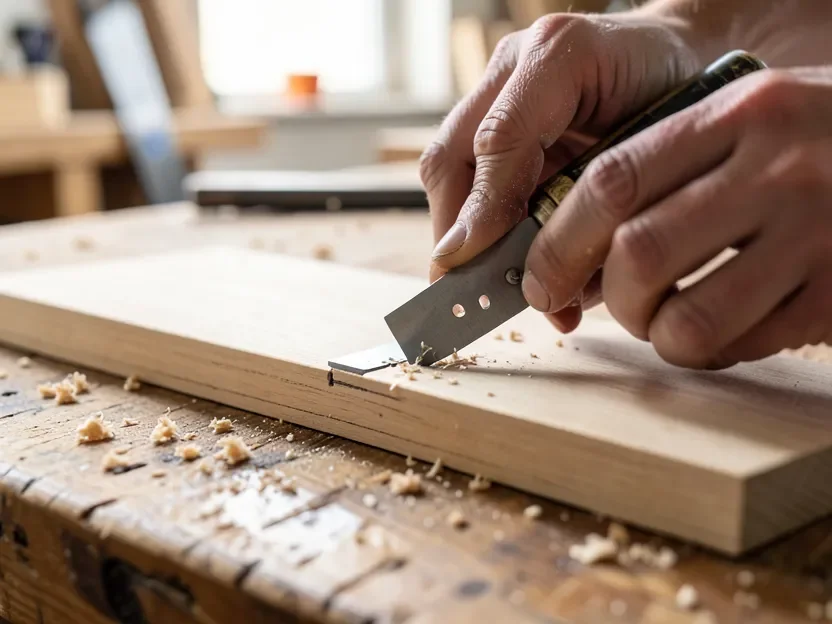
- Dressing card scraper edges. Before you burnish a hook on a card scraper, you draw-file the edge flat and square with a fine flat file. This is the single most common flat-file task in a hand-tool shop.
- Deburring hardware. Cut screws, freshly sawn threaded rod, and stamped brackets often have a sharp burr that will scratch show wood or snag skin. A few light strokes with a flat file knocks it off.
- Jointing handsaw teeth. Before sharpening a handsaw, you run a flat mill file down the row of teeth to bring them all to the same height, a step called jointing.
- Truing plane soles and fences. On a metal-bodied plane, a flat file can knock down a high spot or square up a fence that’s gone slightly out of true.
- Cleaning up dried glue and epoxy. Light, shallow strokes with a worn or fine flat file can shave off a hardened glue drip without gouging the surrounding wood, though a chisel or scraper is usually the better first choice.
Notice what’s missing from that list: shaping a curve, rounding an edge, or roughing out a contour. Those are rasp and spokeshave jobs. A flat file’s teeth are too fine and too easily clogged to be efficient at bulk wood removal.
File Cut Grades and Teeth-Per-Inch, Explained
Flat files are graded by how coarse their teeth are, from bastard (coarsest) down to smooth (finest), with second-cut in between. The number of teeth per inch (TPI) runs from roughly 14 TPI on the coarsest files to over 100 TPI on the finest, and a shorter file of the same grade will actually carry more teeth per inch than a longer one, because the same grade name applies across sizes.
| Cut Grade | Typical Use |
|---|---|
| Bastard cut | Fastest material removal, deburring, general shop work |
| Second cut | Intermediate smoothing, draw-filing scraper edges |
| Smooth cut | Fine finishing on metal, final touch-up work |
For a shop that only uses a flat file occasionally, a single bastard-cut file (like the one above) covers the majority of tasks. Add a second-cut file only once you’re doing enough scraper or fine-hardware work to justify a dedicated finer file.
How to Use a Flat File Correctly
A file only cuts on the push (or draw, for draw-filing), never on the return stroke. Dragging it backward under pressure just dulls the teeth faster.
- Secure the workpiece so it can’t shift, a vise or clamp for hardware, a flat surface for a scraper.
- Hold the file with one hand on the handle and the other steadying the tip.
- Push the file forward in a long, even stroke, applying steady pressure on the push and lifting slightly on the return.
- For draw-filing a scraper edge, hold the file at roughly 90 degrees to the edge and pull it sideways along the length in short, controlled strokes.
- Check your progress often. Files remove material faster than most people expect, especially a fresh bastard cut.
- Clean the teeth with a file card every few strokes if you feel the file skating instead of biting, that’s a sign it’s loading up with debris.
Choosing the Right Flat File for Shop Work
Length and cut matter more than brand. An 8-inch file is the standard all-purpose size, long enough for full strokes on hardware and scraper edges without being unwieldy. Go shorter (4-6 inches) only for tight, small-scale detail work, and longer (10-12 inches) if you’re jointing longer handsaws regularly.
Always buy with a handle, or add one separately, and make sure it’s fully seated before you apply pressure. The tang (the pointed, unhardened end that goes into the handle) is sharp and unprotected without it, and a slip can drive it straight into your palm.
Cleaning, Care & Rust Prevention
Rub a stick of ordinary chalk across the file’s face before you start a job. It fills the gaps between teeth and keeps filings from wedging in as you work, which noticeably cuts down on loading.
After use, clear the teeth with a file card (a short-bristled wire brush made for this) brushed in the same direction as the cut, never across it, which can bend the teeth. Store files separately, not tossed loose in a drawer with other metal tools; steel-on-steel contact dulls the teeth. A light coat of oil or a rust-inhibiting cloth wrap helps if your shop isn’t climate-controlled.
Flat File Safety Basics
- Never use a file without a handle attached, or as a makeshift pry bar, screwdriver, or punch, the tang can snap.
- Secure the workpiece before filing; a piece that shifts mid-stroke is a common source of slipped-file cuts.
- Keep your free hand and fingers clear of the direction the file will travel if it skips off the edge.
- Wear safety glasses. Metal filings come off faster and finer than most people expect.
Frequently Asked Questions
Can a Flat File Be Used to Shape Wood?
Not well, and not as a primary tool. A flat file’s teeth are cut in continuous parallel rows, so wood fibers and sawdust pack into those grooves almost immediately and the file stops cutting, a problem known as loading. A wood rasp has individually punched teeth that shed shavings as it cuts, which is why rasps, not files, are the standard tool for actually removing bulk wood. A flat file’s real place in a woodworking shop is on the metal parts of the process, not the wood itself.
What Is the Difference Between a Flat File and a Mill File?
In practice the terms overlap. A mill file is a specific type of flat file, tapered slightly in width and thickness with a single-cut pattern, originally made for sharpening mill and circular saw blades. A general flat file can be single-cut or double-cut and isn’t tapered. For most shop tasks, a mill bastard file (what’s recommended above) covers both jobs, but if you want the full breakdown see our guide to mill file vs bastard file differences.
What Cut Should I Buy for General Shop Use?
A bastard cut, the coarsest common grade, handles most jobs: deburring hardware, jointing saw teeth, and rough-truing metal. Add a second-cut file if you do finer work like draw-filing scraper edges, and a smooth-cut only if you’re doing fine metal finishing. Most home shops only ever need a bastard cut and a second cut.
How Do I Keep a Flat File From Clogging?
Rub ordinary chalk across the teeth before use, it fills the gaps and keeps metal filings and debris from wedging in as you work. Clear the teeth afterward with a file card (a stiff wire brush made for this) brushed in the direction of the cut, never across it. Store the file separately from other metal tools so the teeth don’t dull against them, and keep it dry to prevent rust.
Conclusion
A flat file’s job in woodworking is more specific than most guides let on: it’s for the metal side of the craft, dressing scraper edges, deburring hardware, jointing saw teeth, and truing metal tool parts, not for shaping the wood itself. Keep a rasp on hand for actual wood removal, and a good 8-inch bastard-cut flat file will cover nearly everything else. For a deeper look at related sharpening tools, see our guide to Sam Maloof’s rasp-based shaping method.
Sponsored / affiliate links. As an Amazon Associate I earn from qualifying purchases. I may earn additional commission from eligible campaigns.