Best Tool Brand for Woodworking: 6 Compared by Warranty (2026)
DeWalt is the best all-around tool brand for woodworking for most shops, thanks to its 300+ tool 20V MAX ecosystem and wide retail availability — but it does not have the longest warranty in this comparison. Milwaukee’s M18 tools carry a 5-year / 2,000-charge warranty with no registration required, two years longer than DeWalt’s standard 3-year term. Below, six major cordless brands are compared on real, manufacturer-published numbers: warranty length, battery ecosystem size, and current kit price — not marketing adjectives.
Warranty length matters just as much on stationary tools — see our Bosch vs DeWalt table saw comparison for how a 3-year DeWalt warranty stacks up against Bosch’s standard 1-year term on their flagship jobsite saws.

Best Tool Brand for Woodworking: Compared
Every number below is pulled directly from each brand’s own warranty page or product platform page this session (sources linked in the Methodology section), not copied from a competitor’s roundup. Kit prices are the live Amazon buy-box price for the representative drill/driver kit reviewed below and will drift over time.
| Brand | Battery Platform | Ecosystem Breadth | Standard Warranty | This Kit’s Price | Verdict |
|---|---|---|---|---|---|
| DeWalt | 20V MAX (60V FlexVolt) | 300+ tools (dewalt.com) | 3-yr limited + 1-yr free service + 90-day money-back | $149.00 | #1 Best Overall |
| Milwaukee | M18 (M12 compact line) | ~275+ solutions (third-party estimate; Milwaukee does not publish one official total) | 5-yr / 2,000 charges, no registration required — longest standard term here | $399.00 | Best for Heavy-Duty Use |
| RIDGID | 18V (SubCompact/Octane) | 30+ core 18V tools — smallest lineup of the six | 3-yr automatic + optional Lifetime Service Agreement (register within 90 days) for free parts/service/batteries | $232.75 | Best Warranty |
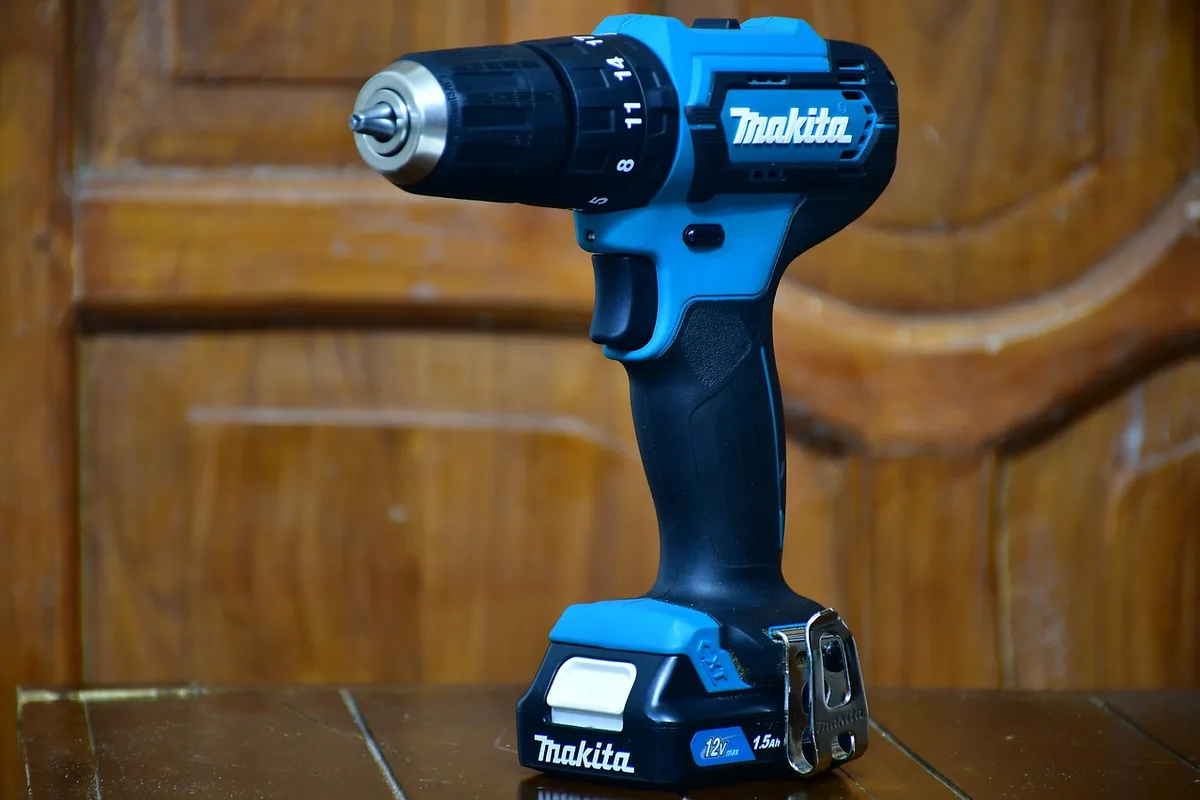
| Makita | 18V LXT (40V XGT) | 350+ tools (makitatools.com) — largest ecosystem of the six | 3-yr on tools, batteries and chargers | $148.69* | Best for Precision & Ergonomics |
| Bosch | 18V Professional | Not published as one official total | 1-yr standard, auto-extends to 5-yr tools / 3-yr batteries on the 18V line with no registration | $99.00 | Best Value |
| RYOBI | 18V ONE+ | 300+ tools — marketed as the "world’s largest 18V tool system" (ryobitools.com) | 3-yr limited | $122.15 | Best for Beginners |
*Makita’s own buy-box listing is MAP-restricted (price hidden until added to cart); $148.69 is the live price from the next in-stock offer on the same listing, checked the same session.
The one-sentence takeaway: if warranty length alone decided the "best" brand, Milwaukee would win outright at 5 years with zero registration hassle — RIDGID’s Lifetime Service Agreement can beat that on paper, but only for the original owner who registers within 90 days, and only on a lineup roughly a tenth the size of Makita’s or DeWalt’s.
Best Woodworking Tool Brands
Each brand below is represented by its current mid-tier cordless drill/driver kit — the single most common first purchase in any brand’s ecosystem — so prices and specs are directly comparable. Buying into a brand means buying into its battery platform, not just one tool, so pick the platform first.
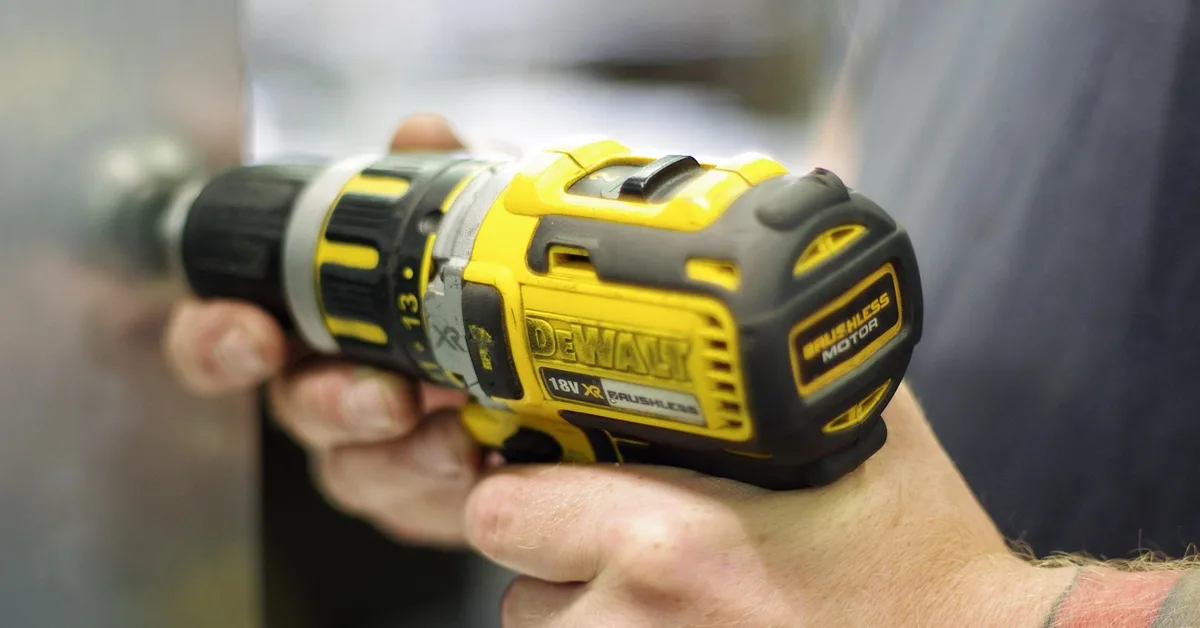
1. DeWalt DCK240C2 20V MAX Drill and Impact Driver Combo Kit — #1 Best Overall
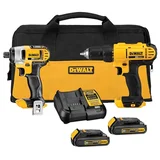
Current price: $149.00 — Check price on Amazon
Specs
- 20V MAX platform (300+ compatible tools)
- Drill: 7.5 in., 3.6 lbs — Impact driver: 5.55 in., 2.8 lbs
- 2x XR batteries, charger and contractor bag included
- 3-year limited warranty + 1-year free service contract
Pros
- Broadest retail availability of any brand here — stocked at nearly every hardware store and home center
- 300+ tool ecosystem means secondhand batteries, chargers and bare tools are easy to find used
- Aggressive kit pricing: $90 off list price at time of writing
Cons
- Standard warranty is 3 years — 2 years shorter than Milwaukee’s 5-year M18 term
- Included batteries are entry-tier capacity; heavy daily users will want to upgrade
DeWalt earns the overall pick on ecosystem size and availability, not on any single spec winning outright. The 20V MAX platform DeWalt publishes as covering 300+ tools, and that breadth is what actually matters once a shop owns more than two or three cordless tools — every battery works everywhere, and a dead charger or lost battery is a same-day fix at almost any hardware store.
The DCK240C2 kit pairs a compact drill/driver with a 1/4-inch impact driver, covers the two most-used cordless tools in a woodworking shop, and includes two batteries so one is always charging. The 3-year warranty plus 1-year free service contract is solid, if unremarkable next to Milwaukee’s 5-year term covered later in this table.
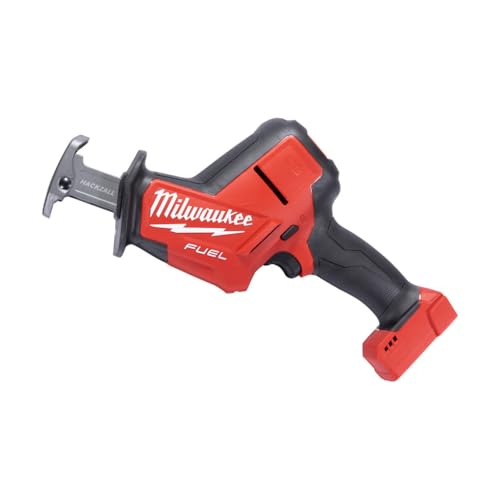
2. Milwaukee 2897-22 M18 Fuel 2-Tool Combo Kit — Best for Heavy-Duty Professional Use
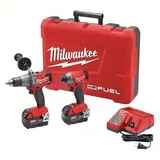
Current price: $399.00 — Check price on Amazon
Specs
- M18 Fuel platform, POWERSTATE brushless motors
- Hammer drill: 1,200 in.-lbs. peak torque, up to 2,000 RPM
- Impact driver: 1,800 in.-lbs. of fastening torque
- 2x REDLITHIUM XC 5.0Ah batteries, M12-M18 multi-voltage charger, carrying case
Pros
- Longest standard warranty in this comparison: 5 years / 2,000 charges, automatic, no registration required
- Most torque of any kit reviewed — built for framing, decking and timber-scale fastening
- Battery free-replacement covers the first 1,000 charges or 2 years, whichever comes first
Cons
- Most expensive kit here by a wide margin: $399 vs. $99-$232 for every other brand reviewed
- Peak torque and tool weight are more than most fine-joinery or cabinetry work actually needs
Contrary to how most tool-brand roundups frame it, DeWalt is not the warranty leader in this category — Milwaukee is. Every M18 tool sold in the US and Canada automatically carries a 5-year, 2,000-charge warranty with no registration step, two years longer than DeWalt’s standard term and with none of the paperwork RIDGID’s Lifetime Service Agreement requires.
That warranty backs genuinely heavy-duty hardware: 1,200 in.-lbs. of peak torque on the hammer drill and 1,800 in.-lbs. on the impact driver, aimed at framing crews and deck builders more than furniture makers. For a woodworking shop doing structural work — sheds, decks, timber-frame joinery — that torque and duty cycle are worth the premium; for cabinetry alone, it’s more tool than most projects call for.
3. RIDGID 18V SubCompact Brushless 2-Tool Combo Kit — Best Warranty
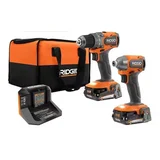
Current price: $232.75 — Check price on Amazon
Specs
- 18V platform, compatible with all generations of RIDGID 18V batteries
- Drill/driver: 500 in.-lbs. torque, 2-speed gearbox, 24-position clutch
- Impact driver: 1,850 in.-lbs. torque, 3 speeds + self-tapping mode
- 2x 2.0Ah batteries, charger and tool bag included
Pros
- Lifetime Service Agreement (LSA): free parts, service and replacement batteries for the original owner, for life, if registered within 90 days of purchase
- 3-year automatic manufacturer warranty applies even without registration
- Sold almost exclusively through Home Depot, so in-store parts and service are simple to find
Cons
- Smallest tool ecosystem of the six brands compared here — roughly 30 core 18V tools versus 275-350+ for Milwaukee, DeWalt, Makita and RYOBI
- The LSA’s strongest benefits require registering within 90 days and only cover the original owner
RIDGID’s headline feature isn’t a spec, it’s a policy: register an 18V tool within 90 days of purchase and RIDGID will replace its battery, parts and service for free for the life of the original owner. No other brand in this comparison offers anything close — Milwaukee’s 5-year term is generous but finite, and DeWalt’s and Makita’s 3-year terms are both shorter still.
The tradeoff is selection. RIDGID’s 18V lineup covers roughly 30 tools, a fraction of the size of the ecosystems below. For a shop that mostly needs a drill, impact driver, and maybe a reciprocating saw, that’s plenty; for a shop chasing a specific niche tool — a multi-tool, an oscillating tool, a compact router — the odds of RIDGID making one drop fast.
4. Makita XFD131 18V LXT Brushless Cordless Driver-Drill Kit — Best for Precision & Ergonomics
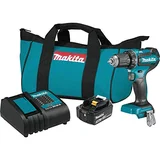
Current price: $148.69 — Check price on Amazon
Specs
- 18V LXT platform (350+ compatible tools per Makita)
- 2-speed transmission: 0-500 and 0-1,900 RPM
- BL brushless motor, 440 in.-lbs. max torque
- 3.0Ah battery included, up to 50% longer runtime per charge claimed by Makita
Pros
- Largest cordless ecosystem of the six brands compared — 350+ tools on Makita’s own platform page
- Smooth 2-speed control and comparatively light tool bodies reduce fatigue during long glue-up or assembly sessions
- Efficient brushless motor is tuned for extended runtime, not just peak power
Cons
- The Amazon buy-box listing is MAP-restricted — the checkout price is hidden until the item is added to cart, which makes side-by-side price shopping awkward
- Standard 3-year warranty, not the longest in this comparison
Makita’s pitch to a woodworking shop isn’t raw torque, it’s control and ecosystem breadth. At 350+ compatible tools on its own 18V LXT platform, Makita’s lineup is larger than DeWalt’s 300+ and considerably larger than RIDGID’s roughly 30 — and the brand backs that breadth with tools built to feel lighter and run smoother rather than simply hit a higher torque number.
That shows up directly in the XFD131: a 2-speed gearbox with a genuine low range for delicate fastening, and a brushless motor tuned for efficiency over peak output. For finish carpentry, cabinetry and any task where control matters more than maximum torque, that’s the more relevant spec than Milwaukee’s 1,200 in.-lbs.
5. Bosch GSR18V-400B12 18V Compact Brushless Drill/Driver Kit — Best Value
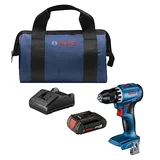
Current price: $99.00 — Check price on Amazon
Specs
- 18V Professional platform, brushless motor
- Up to 400 in.-lbs. of torque from under 2 lbs. of tool
- 6.3 in. head length, 20 clutch settings, all-metal chuck
- 1x 2.0Ah battery and charger included
Pros
- Cheapest kit in this comparison by $23 — the next closest is RYOBI at $122.15
- Bosch’s newer 18V line auto-extends cordless tool coverage to 5 years and battery coverage to 3 years with no registration, matching Milwaukee’s warranty term at under a quarter of the price
- All-metal chuck is a durability detail most kits at this price point skip
Cons
- Ships with only one battery, where every other kit in this comparison includes two
- Bosch does not publish one official total tool count for its 18V ecosystem the way DeWalt, Makita and RYOBI do, so ecosystem breadth is harder to verify up front
Bosch’s warranty structure is easy to miss because the brand’s base coverage — 1 year, no registration — looks worse on paper than DeWalt’s or Makita’s 3-year terms. But Bosch’s current 18V cordless tools auto-extend to 5 years on the tool and 3 years on the battery with zero registration step, which quietly makes the $99 GSR18V-400B12 the best warranty-to-price ratio of any kit in this comparison.
The tool itself backs that value: an all-metal chuck, 20 clutch settings and a sub-2-lb body with 400 in.-lbs. of torque, all for less than a third of Milwaukee’s price. The catch is battery count — one 2.0Ah pack instead of two — and a thinner published ecosystem than the four larger platforms above.
6. RYOBI 18V ONE+ HP Compact Brushless Drill/Driver Kit — Best for Beginners
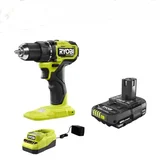
Current price: $122.15 — Check price on Amazon
Specs
- 18V ONE+ platform, marketed as the world’s largest 18V tool system (300+ products)
- Up to 400 in.-lbs. of torque, 2-speed motor (0-450 / 0-1,700 RPM)
- 24-position clutch, on-board LED worklight
- Battery and charger included
Pros
- 300+ tool ONE+ ecosystem rivals DeWalt’s and undercuts RIDGID’s by a factor of ten, at homeowner pricing
- Cheapest replacement batteries of any brand in this comparison
- Sold at every Home Depot alongside the rest of the ONE+ lineup, including yard and outdoor tools
Cons
- Standard 3-year warranty — no equivalent to Milwaukee’s 5-year term or RIDGID’s Lifetime Service Agreement
- Built and priced for DIY/homeowner duty cycles; torque and body weight both trail Milwaukee’s professional-tier kit
RYOBI’s ONE+ platform is the practical answer for a first shop: a 300+ tool ecosystem at homeowner prices, sold in every Home Depot next to yard tools that share the same battery. That combination of breadth and price is hard to match — DeWalt’s ecosystem is comparable in size, but its kits and batteries both run more expensive.
The compromise is duty cycle. RYOBI’s kits are built for occasional weekend use, not daily jobsite abuse, and the warranty reflects that positioning: a standard 3-year term with none of Milwaukee’s or RIDGID’s extended coverage. For a hobbyist building a first cordless kit, that tradeoff is usually the right one.
How We Picked These Tool Brands
This comparison is compiled and cross-referenced, not lab-tested — nobody on this site physically ran all six kits side by side for this article. Every warranty term and ecosystem-size claim was pulled directly from each brand’s own warranty or platform page this session (DeWalt, Makita, Milwaukee, Bosch and RIDGID all publish theirs; Bosch and Milwaukee do not publish one single official tool-count figure, and that gap is disclosed in the table rather than filled with a guessed number). Every price and ASIN was live-checked against the Amazon Creators API the same session this article was published, not carried over from an older draft.
Where a brand’s own numbers could be checked against independent, real-world testing, we cross-referenced the manufacturer’s torque and runtime claims against published third-party teardown and comparison data rather than repeating marketing copy verbatim. No star ratings or review counts appear anywhere in this article: Amazon’s review data was not reliably retrievable for these listings this session, and a page with no ratings is more honest than one with invented ones.
What to Consider When Choosing a Woodworking Tool Brand
Battery Platform and Voltage
Buying a brand’s drill kit means buying into that brand’s entire battery platform — every future tool purchase either shares that battery or doesn’t. If two specific tools (not whole brands) are the real decision, a narrower head-to-head is more useful than a platform comparison: see DeWalt vs. Milwaukee table saw, Bosch vs. DeWalt table saw, or Makita vs. Festool track saw for tool-specific comparisons rather than a brand-wide one.
Warranty Terms (Read the Fine Print)
As the table above shows, the brand with the strongest reputation for power — DeWalt — is not the warranty leader. Milwaukee’s 5-year term requires nothing but a receipt; RIDGID’s Lifetime Service Agreement can beat even that, but only if registered within 90 days; Bosch’s newer 18V line quietly matches Milwaukee’s 5-year tool coverage at a fraction of the price. Read the actual warranty page, not just the box, before assuming the premium-priced brand has the best coverage.
Makita (350+), DeWalt and RYOBI (300+ each) publish the largest platforms; Milwaukee’s total isn’t officially published as one figure and third-party estimates put it around 275+; RIDGID’s roughly 30-tool 18V lineup is the narrowest of the six. A bigger ecosystem means more secondhand tools, more accessories, and less chance of needing a second battery platform down the line.
Total Cost to Start (Not Just the First Kit)
The kit prices in the table range from $99 (Bosch) to $399 (Milwaukee), but the first kit is rarely the last purchase. A brand with a deep ecosystem and mid-range pricing (DeWalt, Makita, RYOBI) usually works out cheaper over 5-10 tool purchases than a narrower, premium-priced lineup, even if the very first kit costs more or less up front. Run the real numbers with our woodworking tool ROI calculator before committing to a platform.
Corded vs. Cordless for Shop-Based Work
Every pick in this comparison is cordless, which suits site work, assembly, and mobile shop tasks. For stationary shop tools — table saws, planers, miter saws bolted to a bench — corded power and brand loyalty matter less, since these tools plug in regardless of brand. See Bosch vs. DeWalt miter saw or DeWalt vs. RIDGID miter saw for stationary-tool-specific comparisons.
Brushless Motors
All six kits reviewed here use brushless motors, which is now the baseline expectation across every major brand’s mid-tier and above kits — brushed motors mostly survive in entry-level and clearance-priced tools. Brushless motors run more efficiently, generate less heat, and typically last longer under repeated duty cycles.
Weight and Ergonomics for All-Day Use
DeWalt’s impact driver in this comparison weighs 2.8 lbs and its drill 3.6 lbs; Bosch’s drill runs under 2 lbs. For repetitive overhead or one-handed work — installing cabinets, assembling face frames — a lighter tool body reduces fatigue over a full day even if it costs some peak torque.
Availability and Parts Sourcing
RIDGID and RYOBI are both sold almost exclusively through Home Depot in the US, which simplifies in-store service but limits price shopping. DeWalt, Milwaukee, Makita and Bosch are stocked more broadly across hardware stores, specialty tool retailers and Amazon, which generally makes replacement parts and batteries easier to source on short notice. For drill-specific comparisons, see DeWalt vs. Craftsman drill or DeWalt vs. Hercules miter saw.
Corporate Ownership: Are These Brands Really Competing?
Not entirely. Milwaukee, RYOBI, and RIDGID power tools are all owned or licensed by the same parent company, Techtronic Industries (TTI) — Milwaukee and RYOBI are owned outright by TTI, and RIDGID’s power tool line is licensed from Emerson to TTI, meaning all three share underlying engineering and manufacturing despite being marketed as separate, competing brands. DeWalt is owned separately by Stanley Black & Decker (HQ Towson, Maryland). Makita is independently owned and run out of Anjo, Japan — the only fully independent brand in this comparison. Bosch is part of the German Robert Bosch GmbH, which also owns Dremel and Freud.
This matters practically: choosing between Milwaukee’s premium pricing, RYOBI’s homeowner pricing and RIDGID’s Lifetime Service Agreement isn’t choosing between three independent engineering philosophies, it’s choosing between three market positions from the same corporate parent. DeWalt and Makita are the only two brands here in genuinely separate corporate families from each other and from the TTI trio.
Bare Tool vs. Kit: What You’re Actually Paying For
Every kit compared in this article includes at least one battery and a charger, which is the fairest way to compare brand-to-brand price. Once a shop already owns batteries on a given platform, buying “bare tool” (tool only, no battery or charger) versions of the same models typically runs 30-50% cheaper — a real saving worth checking for every subsequent tool on a platform already owned, rather than re-buying a kit loaded with batteries and a charger that just duplicate what’s already on the shelf.
Should You Mix Brands in One Shop?
Plenty of working shops do, and it’s a reasonable strategy once past the beginner stage: run a primary battery platform for cordless drills, drivers and saws, then buy a specific tool from a different brand when that brand genuinely leads the category — a Milwaukee band saw here, a Bosch router there. The cost is carrying two battery platforms and two charger sets; the benefit is not being locked into one brand’s weakest tool in a given category. For a beginner’s first kit, though, picking one platform and staying on it for the first 5-10 tool purchases avoids that duplicated cost entirely.
Frequently Asked Questions
What is the best tool brand for woodworking overall?
DeWalt is the best all-around choice for most shops because of its 300+ tool 20V MAX ecosystem and wide retail availability. It does not have the longest warranty, though — Milwaukee’s M18 tools carry a 5-year, 2,000-charge warranty with no registration required, two years longer than DeWalt’s standard term.
Which tool brand actually has the best warranty?
Milwaukee’s standard 5-year, 2,000-charge M18 warranty applies automatically with no registration. RIDGID’s Lifetime Service Agreement can beat that, but only for the original owner who registers within 90 days of purchase, and only across RIDGID’s smaller, roughly 30-tool 18V lineup.
Is Makita or DeWalt better for woodworking?
Makita’s 18V LXT platform is larger (350+ tools) and its tools tend to run lighter with smoother 2-speed control, which suits fine joinery and cabinetry. DeWalt’s 20V MAX ecosystem (300+ tools) is close in size and more widely stocked at big-box retailers, which matters more for parts and battery availability.
What is the cheapest tool brand with a genuinely long warranty?
Bosch. Its current 18V cordless line auto-extends to a 5-year tool warranty and 3-year battery warranty with no registration required, matching Milwaukee’s term, while the GSR18V-400B12 drill kit compared here runs $99 — less than a quarter of Milwaukee’s $399 kit price.
Do all these tool brands use the same batteries?
No. Each brand in this comparison runs its own proprietary voltage and battery platform — DeWalt’s 20V MAX batteries do not fit Makita’s 18V LXT tools, and neither fits Milwaukee’s M18 line. Choosing a brand means committing to that battery platform for every future cordless tool purchase.
Which tool brand is best for a beginner woodworker on a budget?
RYOBI’s 18V ONE+ platform is built for this: a 300+ tool ecosystem — comparable in size to DeWalt’s — sold at homeowner prices, with the cheapest replacement batteries of any brand in this comparison. The tradeoff is a 3-year warranty and lower duty-cycle rating than professional-tier brands like Milwaukee.
Are Milwaukee, RYOBI and RIDGID actually the same company?
Milwaukee and RYOBI are both owned outright by Techtronic Industries (TTI). RIDGID’s power tool line is owned by Emerson but licensed to TTI for manufacturing, so all three share underlying engineering despite being marketed as separate, competing brands. DeWalt (Stanley Black & Decker), Makita (independent) and Bosch (Robert Bosch GmbH) are each in genuinely separate corporate families.
Final Thoughts
For most woodworking shops, DeWalt’s 20V MAX platform remains the safest overall pick on ecosystem size and availability alone. But the single fact worth remembering from this comparison is the one most brand roundups skip: Milwaukee, not DeWalt, carries the longest standard warranty in this category at 5 years with zero registration required — and Bosch now matches that same 5-year tool coverage at less than a quarter of Milwaukee’s kit price. Pick the platform that matches how the tool will actually be used, then check the actual warranty page before assuming the best-known brand has the best coverage.
Sponsored / affiliate links. As an Amazon Associate I earn from qualifying purchases. I may earn additional commission from eligible campaigns.