What Is a Scratch Awl Used For? 5 Practical Uses
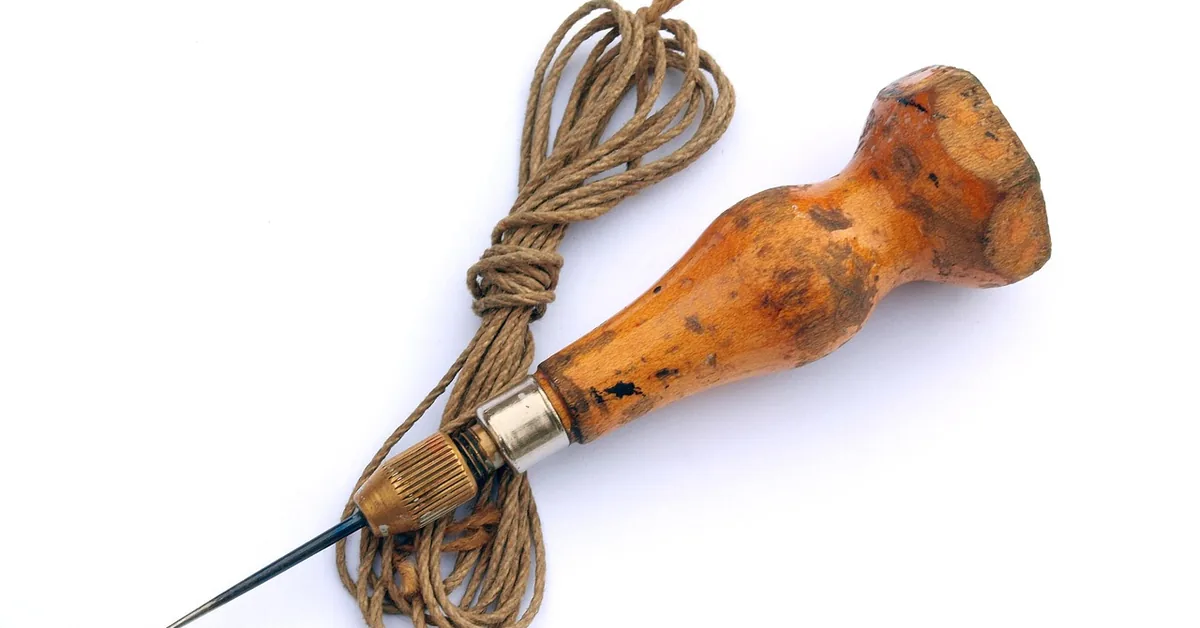
A scratch awl is a pointed hand tool used to score cut lines, start pilot holes for screws, and pierce holes in leather or fabric — a sharper, more precise mark than any pencil leaves. Skipping this step is a common reason screws wander off-center in soft pine. This guide covers woodworking, metalworking, leatherworking, and DIY uses, plus how to pick and maintain one.
Introduction To Scratch Awl
Best Scratch Awl Pick
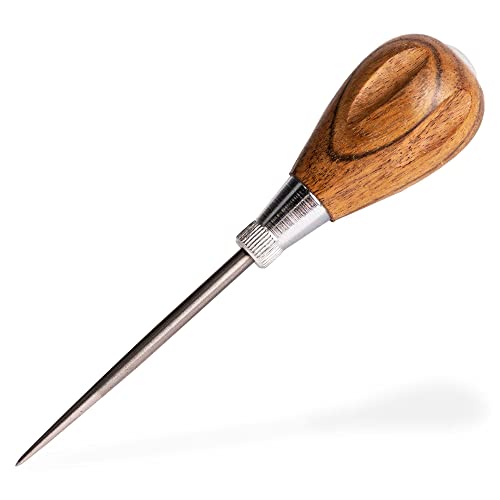 |
General Tools Scratch Awl Tool with Hardwood Handle –General Tools | Our pick | $7.29
Price as of 20 Oct 2026
|
View |
Scratch awls predate the modern workshop by centuries — the same tapered steel point was standard equipment for anyone doing precision layout work in wood, metal, or leather long before a machinist’s scribe or a marking knife existed as separate specialized tools. What’s kept it in toolboxes this long isn’t tradition, it’s that a pencil line has real width and can wander slightly as graphite wears down, while a scored line from a hardened point is a fraction of a millimeter wide and stays exactly where you put it — the difference matters most right at the moment a saw blade or drill bit needs to track a line exactly.
Primary Uses
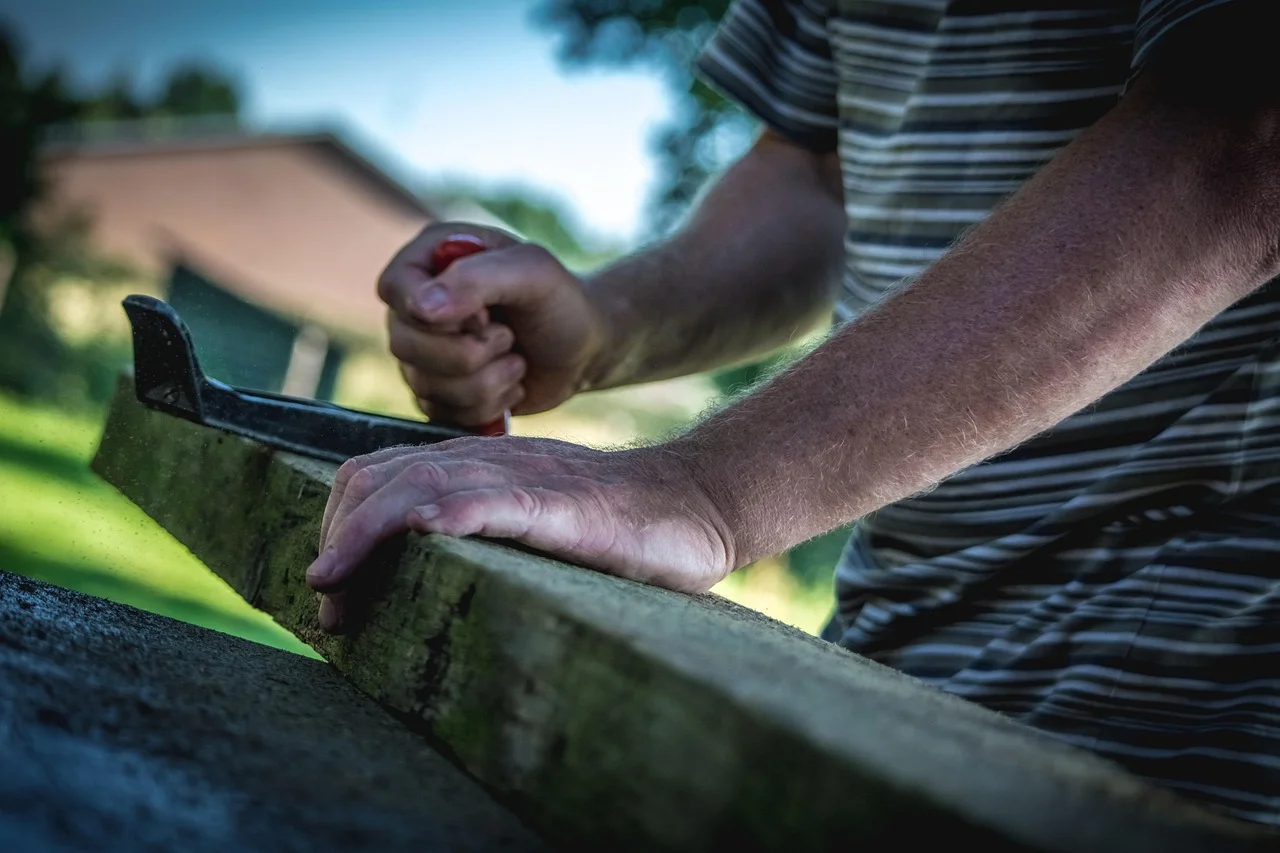
The two jobs a scratch awl does better than almost any other hand tool are scribing a cut line and starting a pilot mark. For scribing, dragging the point along a straightedge severs the surface wood fibers cleanly before a saw ever touches the board — that pre-scored line is what keeps a crosscut from tearing out a ragged edge on the show face, especially in figured or cross-grain wood where a saw blade alone would lift fibers ahead of the cut.
For starting screws, pressing the point in to create a small dimple gives a drill bit or screw tip something to register into instead of skating sideways across smooth wood grain when it first makes contact — that initial wander is exactly what causes an off-center pilot hole or a screw that drives in crooked. In softer woods like pine, where a spinning bit can walk several millimeters before it bites, that dimple is often the difference between a screw landing where you marked it and one landing noticeably off.
Woodworking Applications
Beyond the basic scribe-and-dimple uses above, a scratch awl is the standard tool for transferring a layout from a template or story stick onto actual stock — pressing through a paper or thin plywood template at each marked point leaves an exact, unambiguous dot on the wood underneath, which is more reliable than trying to trace a pencil around a template’s edge.
It’s also useful for checking grain direction on an unfamiliar board: dragging the point lightly across the surface at a shallow angle catches and lifts slightly against the grain, while it glides smoothly with the grain — a quick, low-tech way to confirm which direction to plane or sand before committing to a pass.
Metalworking Applications
On metal, a scratch awl functions essentially the same way a machinist’s scribe does — the hardened point is typically harder than mild steel or aluminum sheet, so it cuts a fine, permanent line into the surface rather than just marking on top of it the way a marker or grease pencil would. That permanence matters for layout lines that need to survive handling, cutting fluid, and the vibration of a saw or grinder without wearing off partway through the job.
The same pilot-dimple technique from woodworking carries over to metal drilling, where it’s arguably even more important: a drill bit meeting bare, smooth sheet metal at an angle will “walk” noticeably before it starts cutting, and a center-punched or awl-marked dimple is what keeps the hole where you intended it. A shop working across both wood and metal gets double duty out of one tool for this reason.
Leatherworking Uses
Leatherworkers reach for a scratch awl (often called a stitching awl in this context) as often as woodworkers do, but for a slightly different reason: leather doesn’t hold a pencil line well and readily shows scoring, so a scratch awl traces a pattern edge or fold line directly onto the hide with a mark that stays visible through the cutting and folding process without smudging the way chalk or pencil would.
For hand-stitched work, the awl’s real job is punching the stitching holes themselves — pushed through at a consistent angle and spacing, it opens a clean channel for two needles to pass through from opposite sides, which is how traditional saddle-stitching is done. A diamond-shaped or wide-blade awl point (rather than a round one) is generally preferred for stitching specifically because it leaves a slit the thread can lock into rather than a round hole the stitches can slip around in.
Diy And Craft Projects
Around the house, a scratch awl earns its keep on small repairs a full toolkit feels like overkill for: marking a screw location on drywall before it goes in, popping a stuck picture-hanger nail loose, or starting a pilot dimple in a piece of trim too thin to safely drill without one. It’s also handy for backing a small nail out partway by working the point under the head as a makeshift pry point when a hammer’s claw can’t get underneath it.
In crafts, the same fine point that scores wood works just as well on card stock, polymer clay, and thin plastic — piercing a clean starting hole for eyelets or brads, scoring a fold line in card stock for a crisper crease than hand-folding alone gives, or adding fine detail lines into clay before it cures.
Choosing The Right Scratch Awl
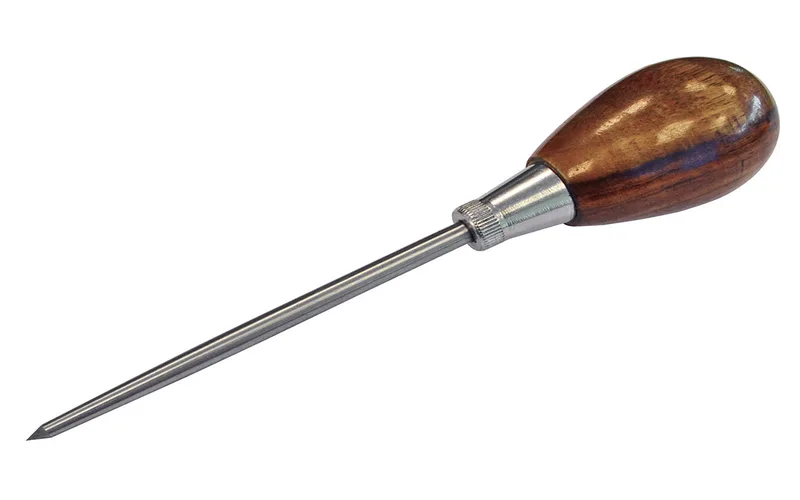
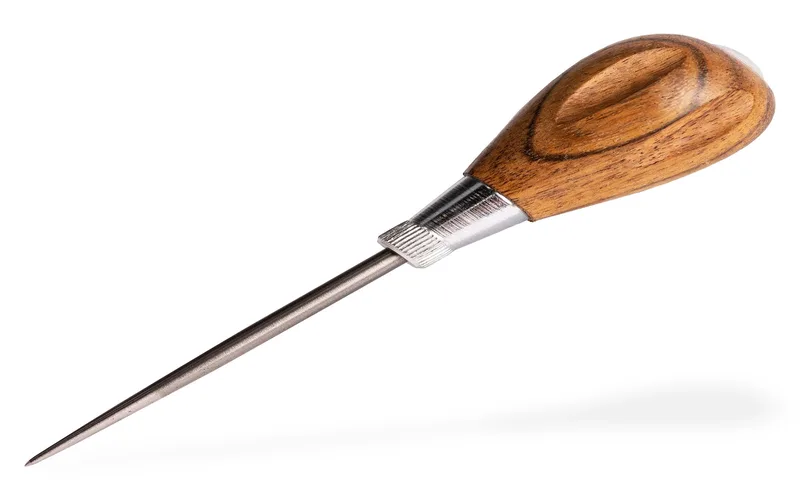
Handle material mostly comes down to grip and feedback rather than raw durability, since the point (nearly always hardened steel regardless of handle) is what actually does the work. A turned hardwood handle gives the most tactile control for fine scribing work and is the traditional choice; molded plastic handles are cheaper and more common in general hardware-store awls but can feel slippery under real hand pressure during extended use.
Point shape should match the job more than personal preference: a round, tapered point is the general-purpose default for wood and metal marking, while a diamond or four-sided point is specifically better for leather stitching, since its edges cut a small slit rather than just displacing fibers the way a round point does. Overall length matters too — a shorter awl gives more control for fine detail work, while a longer one gives more leverage for pushing through thicker material like heavy leather or dense hardwood.
Maintenance Tips
Regular cleaning and periodic sharpening are what keep an awl performing like new instead of gradually getting harder to use without you noticing why.
Cleaning And Storage
Wipe the point down after use, especially after leatherworking where oils and dyes in the hide can transfer onto the steel and slowly corrode it if left. A dry, enclosed spot — a toolbox slot or a sheathed storage block — keeps ambient moisture off the point between uses, which matters more than it might seem since a fine point rusts and pits faster than a broader steel surface would.
Sharpening Techniques
An awl that’s gone dull won’t score a clean line anymore — instead of cutting fibers cleanly it starts to tear or skip, which is the sign it needs attention. Draw the tip across a fine-grit sharpening stone at a consistent angle, rotating it slightly with each pass to maintain the point’s natural taper rather than grinding a flat facet on one side, and check progress by touch every few passes rather than sharpening blind. A light touch matters here: over-aggressive pressure removes material faster than needed and can throw the point out of round.
Safety Precautions
A scratch awl’s entire function depends on a sharp, exposed point, which means the same qualities that make it useful also make it genuinely easy to stab yourself with if you’re careless — more so than a knife, since there’s no visible cutting edge warning your hand away from it the way a blade does. Keep your off-hand entirely behind the direction of travel when scribing or piercing, never in front of or alongside the point, so a slip drives the tip into the workbench instead of your palm.
When it’s not in your hand, an awl belongs point-down in a dedicated holder or sheathed, not loose in a pocket, a drawer you reach into blind, or rattling around in a tool bag where it can find a hand by accident. Safety glasses are worth wearing specifically when starting pilot holes in harder materials, where the point can occasionally skip sideways off the surface before it bites in.
Frequently Asked Questions
What Is A Scratch Awl Used For?
A scratch awl is used for marking and scribing lines on wood, metal, or plastic. It helps create precise measurements and guides for cuts.
How Do You Use A Scratch Awl?
To use a scratch awl, hold it firmly and drag the pointed tip along the material. This creates a visible scribe line for guidance.
Can A Scratch Awl Be Used On Metal?
Yes, a scratch awl can be used on metal. Its pointed tip makes precise lines on metal surfaces for cutting or drilling.
What Materials Can A Scratch Awl Mark?
A scratch awl can mark wood, metal, plastic, and leather. It is versatile for various projects needing precise scribe lines.
Conclusion
What makes a scratch awl worth keeping in reach isn’t any single use, it’s that the same fine, hardened point does the same two jobs — scoring an exact line and starting a wander-proof pilot mark — across wood, metal, leather, and plastic alike. Pick one that matches the work you actually do most (a hardwood handle and round point for general shop use, a diamond point for leather stitching), keep the tip sharp and rust-free, and it’ll outlast most other hand tools in the box.
Sponsored / affiliate links. As an Amazon Associate I earn from qualifying purchases. I may earn additional commission from eligible campaigns.