How Much Does Koa Wood Cost? ($15-$150+ Per Board Foot)
Koa wood (Acacia koa) runs $15 to $50 per board foot for plain lumber, but curly or flame-figured boards jump to $60 to $150+ per board foot, with rare full-curl slabs selling for thousands. The gap exists because Hawaii law only allows salvaging dead or dying koa on public land, and the tree grows nowhere else on Earth. This guide breaks down real pricing by grade, explains why supply stays this tight, and covers where to buy genuine koa.
Koa Wood Prices by Grade and Product Type (2026)
Koa is sold and priced almost entirely on board foot, not square foot or linear foot, and the price swings hard based on grain figure. Plain, unfigured koa is the cheapest tier; full-curl, guitar-grade koa can cost ten times as much per board foot.
| Grade / Product | Typical Price | What You Get |
|---|---|---|
| Plain koa, flat-sawn | $15 – $20/bf | Solid color, little to no figure |
| Quartersawn plain koa | $20 – $50/bf | Straighter grain, some chatoyance |
| Light-to-medium curl | $60 – $90/bf | Visible curl/flame figure |
| Premium full-curl / guitar-grade | $90 – $150+/bf | Deep, uniform curl used by luthiers |
| Exhibition-grade slabs | $150/bf to low thousands per slab | One-of-a-kind figured slabs, priced individually |
| Pen or turning blanks | $15 – $40 each | Small offcuts, often curly-grade |
| Finished furniture | $500 – $3,000+ | Tables, cabinets, accent pieces |
| Ukulele or guitar (koa body) | $500 – $5,000+ | Depends on luthier and figure grade |
The single biggest lever on price is figure, not size. A plain, straight-grained board and a curly board of identical dimensions can differ in price by 5 to 10 times, because the curl is what luthiers and high-end furniture makers are specifically paying for.
Best Way to Try Real Koa Wood
 |
Exotic Wood Zone Curly Flame Hawaiian Koa Pen Blank (3/4″ x 3/4″ x 5″) – $16.45 A real, figured piece of the same curly koa grade discussed above, at pen-blank size instead of full board feet — a low-cost way to see genuine curl figure in hand before paying $90 to $150+ per board foot for a full board.
|
As an Amazon Associate we earn from qualifying purchases.
Why Is Koa Wood So Expensive?
Most competing pages mention that koa is “rare” without explaining why. Four concrete, checkable reasons drive the price, and none of them are marketing.
It Only Grows in Hawaii, and Nowhere Else
Koa (Acacia koa) is a hardwood species endemic to the Hawaiian Islands. It grows at elevations of roughly 2,000 to 6,000 feet, in volcanic-ash soil with a specific rainfall range. Unlike teak or mahogany, which grow across multiple countries and continents, there is no second country or region supplying koa to the world market — Hawaii is the entire supply.
You Can’t Legally Cut Down a Living Koa Tree on Public Land
Hawaii’s Division of Forestry and Wildlife (DOFAW) only issues special-use permits to salvage koa that is already dead or dying — defined as less than 15 percent remaining live crown. Commercial harvest permits for live trees on public land are issued rarely, and administrative rules strongly limit how much volume any permit can cover. Private landowners can legally harvest live koa on their own property under separate rules, but that is a small fraction of total Hawaii forest land. Most of the koa lumber sold commercially comes from salvage of dead, dying, or wind-fallen trees, according to Hawaii’s own Department of Land and Natural Resources.
19th-Century Deforestation Shrank the Supply for Good
Large tracts of koa forest were cleared in the 1800s and early 1900s for cattle ranching and agriculture as European and American settlers colonized the islands. Koa forests don’t regenerate quickly on cleared, grazed land, so that historical clearing permanently reduced the acreage available to regrow — there simply isn’t as much standing koa forest left as there was 150 years ago.
There’s No Such Thing as a Commercial Koa Plantation
Fast-growing plantation species like eucalyptus or teak can be farmed on a predictable harvest cycle. Koa can’t — it grows slowly, needs its specific elevation and soil conditions, and reaching a trunk diameter large enough for furniture-grade lumber realistically takes decades. No one has built a koa plantation industry at any meaningful commercial scale, so every board on the market traces back to natural, wild-growing trees rather than a renewable managed crop.
📊 A single mature koa tree roughly 2 feet in diameter and 10 feet tall can yield nearly 400 board feet of lumber — at premium full-curl pricing, that one tree is worth up to $60,000. Source: Hawaii Dept. of Land and Natural Resources, 2021
“Koa is highly sought and high-priced” — a framing that shows up across specialty lumber dealers, who consistently describe demand outpacing what Hawaii’s restricted, salvage-only supply can provide.
What Drives Demand for Koa Wood?
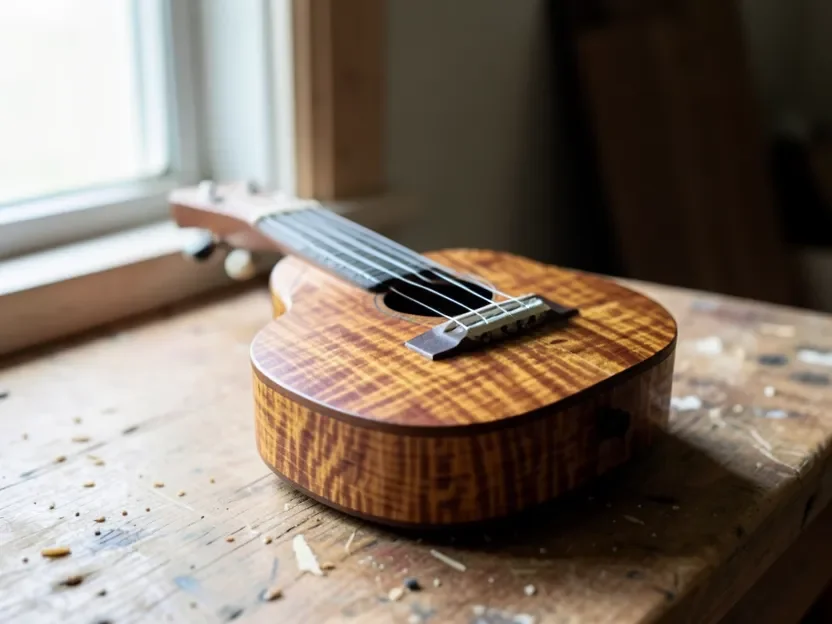
Curly koa (also called flame or figured koa) is koa lumber with wavy, rippling grain that shimmers or shifts color as the light angle changes, caused by irregular wood-fiber growth. It’s the most sought-after and most expensive form of koa, and it’s what most of the demand below is actually chasing.
- Luthiers (instrument makers): koa is a top choice for ukulele bodies and a well-known alternative tonewood for guitars — Hawaii’s own ukulele industry alone keeps steady demand for figured koa.
- Furniture makers: koa’s warm color range and chatoyant figure make it a premium choice for tabletops, cabinetry, and accent furniture.
- Wood turners and pen makers: smaller offcuts and blanks let hobbyists work with real koa without buying full boards.
- Cultural and historical demand: Native Hawaiians historically carved koa into canoes, paddles, and weapons, and that heritage still drives collector and gift demand today.
Koa Wood vs Other Expensive Exotic Woods
Koa isn’t the only pricey hardwood, but its combination of rarity (single-island supply) and figure premium puts its top end above most other exotics.
| Wood | Typical Price per Board Foot | Why |
|---|---|---|
| Teak | $15 – $30 | Grown commercially across Asia, more available |
| Genuine mahogany | $10 – $30 | Plantation-grown in multiple countries |
| Cocobolo | $40 – $80 | CITES-restricted, but grows across Central America |
| Ebony | $60 – $100+ | Slow-growing, limited African/Asian supply |
| Plain koa | $15 – $50 | Single-island supply, but unfigured |
| Curly/figured koa | $90 – $150+ | Single-island supply plus rare figure |
At the plain, unfigured grade, koa is actually competitive with mid-tier exotics. It’s the figured grades — curly, flame, full-curl — where koa pulls ahead of nearly everything except the rarest exhibition-grade lumber.
How to Buy Real Koa Wood Without Getting Scammed
Because genuine koa commands such a premium, mislabeled or fake “koa” (often actually acacia or monkeypod from other regions) shows up in the market. A few checks protect you before you pay for a board.
- Buy from a specialty exotic-wood or Hawaii-based dealer: generalist lumber yards rarely stock genuine koa, and specialty dealers are far less likely to mislabel species.
- Ask for the botanical name on the invoice: a legitimate seller will list it as Acacia koa, not just “koa” or “Hawaiian wood.”
- Check the grain against reference photos: koa’s curl has a distinctive rippling chatoyance that shifts under raking light — flat, uniform “figure” printed or stained onto cheaper wood won’t move the same way.
- Start with a small blank if you’re new to it: a pen or turning blank lets you handle real koa grain and weight before committing to full board-foot pricing.
- Confirm sustainable sourcing: ask whether the lumber came from salvage (the legal, common source) rather than an unverifiable claim of live-tree harvest.
If you’re weighing koa against a more affordable option for a specific build, our zebra wood vs. mahogany tonewood comparison and Janka hardness scale are useful next reads for matching a species to the job. Once you have a board in hand, see our guide on how to finish koa wood to bring out its full color and chatoyance. For a wider look at how species, grade, and hardness relate across all lumber types, our complete types of wood guide covers the full picture.
Frequently Asked Questions
How much does koa wood cost per board foot?
Plain koa runs $15 to $50 per board foot depending on cut. Curly or flame-figured koa jumps to $60 to $150 per board foot, and rare full-curl guitar-grade slabs can sell for $150 to $500+ per board foot, with exceptional individual slabs priced in the thousands.
Why is koa wood so expensive?
Koa is endemic to Hawaii and grows nowhere else on Earth. State law only allows salvaging dead or dying koa on public land, there is no commercial koa plantation industry because the tree takes decades to mature, and 19th-century deforestation for cattle ranching permanently shrank the supply.
Is it illegal to cut down koa trees in Hawaii?
You cannot legally cut down a living koa tree on Hawaii public land. The state’s Division of Forestry and Wildlife issues special-use permits only for salvaging trees that are already dead or dying (less than 15 percent live crown). Private landowners can harvest live koa on their own land under separate rules.
Is koa wood more expensive than mahogany or ebony?
Yes for figured grades. Genuine mahogany typically runs $10 to $30 per board foot and ebony $60 to $100+ per board foot, while curly or full-curl koa regularly prices at $90 to $150+ per board foot because of its combined rarity and figure.
What is koa wood mainly used for?
Koa is prized by luthiers for ukulele and guitar bodies, by furniture makers for tabletops and cabinetry, and by wood turners for bowls and pens. Historically, Native Hawaiians used koa for canoes, paddles, and weapons, which is part of why the wood carries cultural as well as material value.
Bottom Line
Koa’s price makes sense once you separate the two variables driving it: geography and figure. Plain koa is a single-island hardwood, which alone pushes it above common domestic species. Curly, figured koa adds a second scarcity layer on top of that, since figured grain occurs unpredictably and can’t be farmed or forced. Budget $15 to $50 per board foot for plain lumber, and $90 to $150+ per board foot if the figure matters to your project.
Sponsored / affiliate links. As an Amazon Associate I earn from qualifying purchases. I may earn additional commission from eligible campaigns.
 Exotic Wood Zone Mahogany Bowl Blanks (5-Pack), Kiln-Dried Hardwood Wood Turning Blocks for DIY Woodworking & Crafts, 4" x 4" x 2"
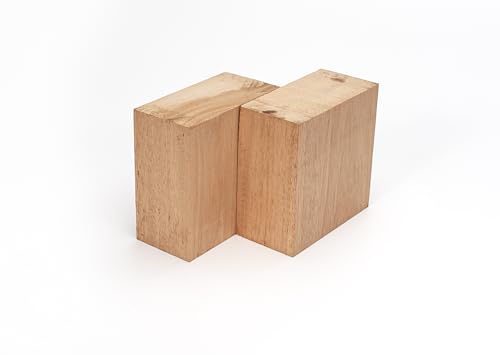 Exotic Wood Zone Wood Blanks for Bowls | Hardwood Bowl Blanks | Unfinished, Kiln-Dried, Sustainable Hardwood for Handcrafted Decorative Bowls & Functional Pieces (Fijian Mahogany, 7" x 7" x 2")