Oldest Operating Wooden Ferris Wheel? It’s in Munich, Not Vienna
The oldest operating wooden Ferris wheel is not Vienna’s famous Riesenrad — that 1897 landmark turns on a riveted iron and steel frame, with only its passenger cabins built from wood. The true record belongs to a 14-meter wheel built in 1925 by Germany’s Gundelwein carousel factory, still spinning today as the Riesenrad 1925 at Munich’s Oktoberfest. This guide covers its construction, its 2022 restoration, and why builders abandoned wood for mobile Ferris wheels after 1960.
Quick Answer
The oldest operating wooden Ferris wheel is the Riesenrad 1925 (formerly called the Russenrad), built in 1925 by the Gundelwein carousel factory in Thuringia, Germany. Vienna’s better-known Riesenrad is older (1897) but is not wooden — its wheel structure is iron and steel. The Munich wheel still operates every year at Oktoberfest and the Auer Dult festival.
Isn’t Vienna’s Riesenrad the Oldest Wooden Ferris Wheel?
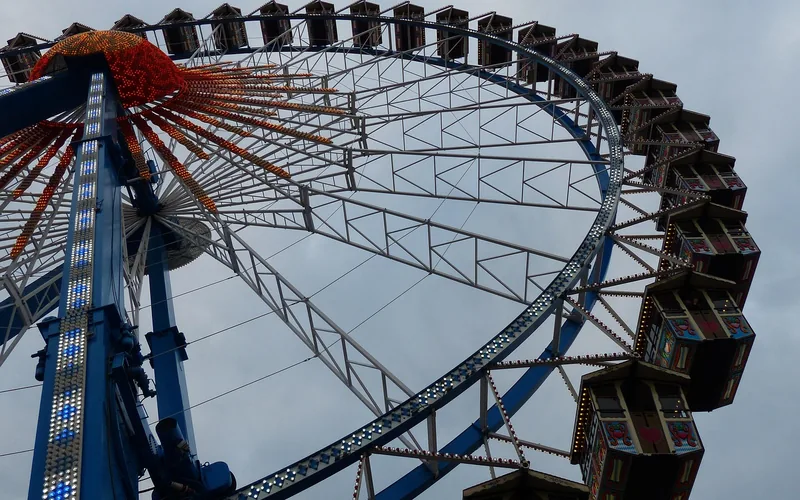
No. The Wiener Riesenrad in Vienna’s Prater park is the oldest continuously operating Ferris wheel of any kind, built in 1897 and rebuilt after a 1944 fire. But its 64.75-meter wheel structure is riveted iron and steel, engineered by British designer Walter Bassett Basset — only the 15 passenger cabins are wood-paneled. Calling the whole structure a “wooden Ferris wheel” is a common mix-up between the cabin material and the frame material.
That mix-up is exactly why the search for a genuinely wooden Ferris wheel points somewhere else entirely: a much smaller ride in Bavarian woodworking tradition, built three decades after Vienna’s wheel and still turning today.
The Real Oldest Operating Wooden Ferris Wheel: Munich’s Riesenrad 1925
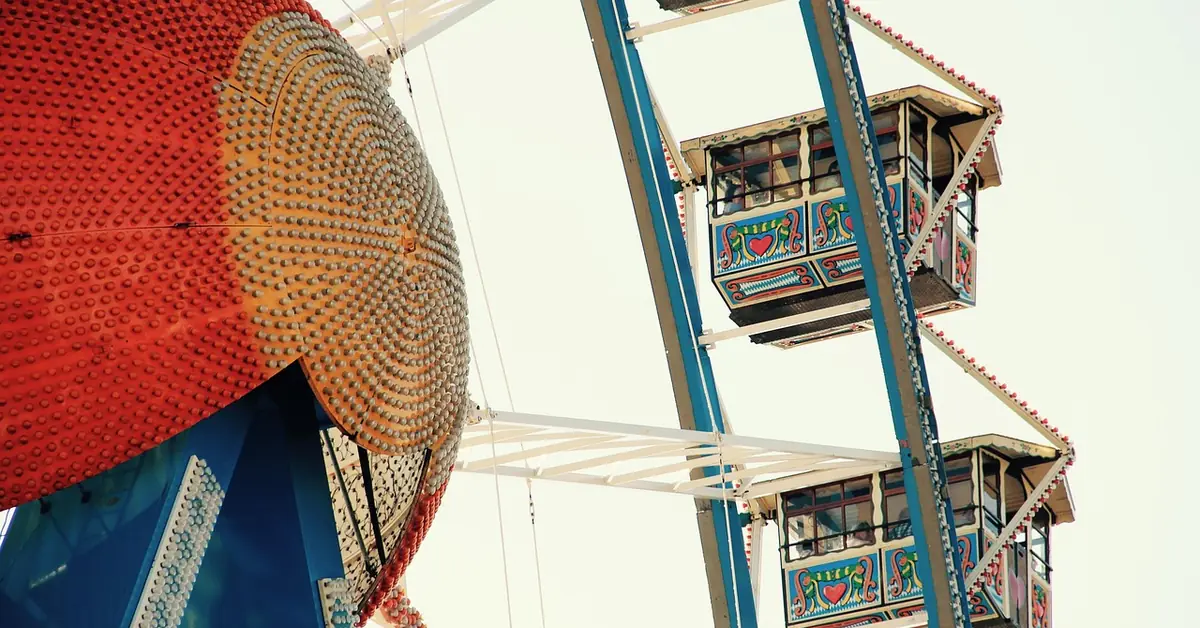
In June 1925, Munich shoemaker Josef Esterl commissioned the Gundelwein carousel factory in Wutha, Thuringia, to build a “Russian wheel” — the German term for a small transportable Ferris wheel — for 6,500 Reichsmark. The finished ride stood 14 meters tall with 12 gondolas, small enough to travel between festivals but built entirely from timber framing, the standard construction method for mobile wheels at the time.
📊 Mobile steel-framed Ferris wheels did not appear in Germany until the 1960s — every earlier transportable wheel, including this one, was a wood construction. — Source: Kulturgut Volksfest encyclopedia entry on Riesenräder
The wheel operated for decades under the name Russenrad (“Russian wheel”) at Munich’s Oktoberfest and Auer Dult festival. Its 12-horsepower motor still starts with a saltwater starter from 1925, and its hand-cranked concert organ — built by the Bruder company in Waldkirch — is thought to be even older than the wheel itself.
“It may be a miniature Ferris wheel, but it is a true cult object.”
Best Outdoor Wood Sealer Pick
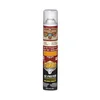 |
Ready Seal Exterior Wood Stain & Sealer, Natural Cedar, Turbo Spray – $19.98 A wheel built from wood only survives 100 years with constant sealing against rain and sun — this spray-on formula covers fences, decks, and outdoor furniture as easily as it would a wooden ride’s frame.
|
As an Amazon Associate we earn from qualifying purchases.
Why Early Ferris Wheels Were Built From Wood, Not Steel
Wood was the practical choice for a traveling fairground wheel, not a stylistic one. It was cheap, widely available, and light enough for showmen to disassemble and reassemble at each new festival stop. Builders could shape and join it on-site with the same carpentry skills used for wooden wheel construction elsewhere in fairground work, without needing a steel fabrication shop.
The strength came from the joinery, not the material alone. Builders of these wheels relied on overlapping wood members held with bolts and metal straps at the load points — a method related to how strong wood joints are engineered today, though fairground builders used bolted lap joints rather than glued biscuits for a structure that had to survive being taken apart and rebuilt dozens of times a year.
📊 The transition away from wood for transportable Ferris wheels happened almost entirely after 1960, once steel-fabrication techniques caught up to the portability that wood had always offered. — Source: Kulturgut Volksfest encyclopedia entry on Riesenräder
How a 100-Year-Old Wooden Ferris Wheel Survives
A century-old timber structure that runs outdoors and carries passengers does not survive by luck. The Riesenrad 1925 nearly stopped running for good in 2019, when Germany’s TÜV vehicle-safety inspectors flagged aging components the previous owners could no longer afford to replace. The Willenborg family of showmen bought and rebuilt it in 2022, restoring the drive mechanics “close to original condition” before returning it to the Auer Dult in 2023 and Oktoberfest in 2024 under its new name.
Moisture is the real threat to any outdoor wood structure, not age by itself. Rain swells the grain, sun bakes it dry again, and that repeated cycle is what eventually splits and weakens a board. Regular sealing slows the cycle down; a protective oil or exterior finish applied on a schedule keeps water from soaking into the grain in the first place, which is the same reason a working antique ride needs a maintenance calendar instead of a single restoration and nothing after.
The same principle applies to any outdoor wood project, not just a fairground ride — see how it plays out on a treated wood deck or whether cedar resists rot on its own without help.
The Original 1893 Ferris Wheel: Where Is It Now?
George Washington Gale Ferris Jr. built the first true Ferris wheel for the 1893 World’s Columbian Exposition in Chicago. At 264 feet tall with 36 gondolas each holding 60 riders, it was an all-steel structure from the start — wood was never part of its design. After the fair closed, the wheel was moved once for the 1904 St. Louis World’s Fair, then dismantled and sold for scrap in 1906. Nothing of the original wheel survives today except photographs and engineering records.
Frequently Asked Questions
Is Vienna’s Wiener Riesenrad made of wood?
No. The Wiener Riesenrad’s 64.75-meter wheel is riveted iron and steel, built in 1897 by engineer Walter Bassett Basset. Only its 15 passenger cabins are wood-paneled, which is likely why it gets mistaken for a wooden Ferris wheel.
What is the oldest wooden Ferris wheel still in operation?
The Riesenrad 1925, built in 1925 by the Gundelwein carousel factory in Thuringia, Germany, and originally called the Russenrad. It still operates today at Munich’s Oktoberfest and the Auer Dult festival, following a 2022 restoration.
Why don’t modern Ferris wheels use wood?
Mobile steel-framed Ferris wheels only became standard in Germany from the 1960s onward, once steel fabrication and transport methods caught up to what wood had offered for decades: light weight and easy on-site assembly. Steel now scales to much larger diameters and needs less recurring maintenance than wood.
Can you still ride the Riesenrad 1925 in Munich?
Yes. It appears annually at Munich’s Oktoberfest and at the Auer Dult folk festival, operated by the Willenborg family of showmen since its 2022 restoration.
What happened to the original 1893 Chicago Ferris wheel?
It was moved to the 1904 St. Louis World’s Fair after Chicago, then dismantled and sold for scrap metal in 1906. No part of the original structure survives today.
Conclusion
The “oldest operating wooden Ferris wheel” title doesn’t belong to Vienna at all — that 1897 landmark is steel under its wooden cabins. The real answer is a 14-meter ride built in 1925 by a small German carousel factory, still spinning every autumn at Munich’s Oktoberfest under its new name, Riesenrad 1925. It survived because someone kept resealing, rebolting, and rebuilding it — the same maintenance any outdoor wood structure needs to outlast a single season, let alone a century.
Sponsored / affiliate links. As an Amazon Associate I earn from qualifying purchases. I may earn additional commission from eligible campaigns.