How to Make a Round Groove in Wood: Core Box Bit & Gouge
The cleanest way to make a round groove in wood is a router with a core box bit. The bit’s half-circle profile cuts a smooth U-shaped channel as wide as the bit in a single pass. A curved carving gouge does the same job by hand, and a table saw can cut wide, shallow coves. A round-over bit is the wrong tool, because it shapes an outside edge and cannot cut a channel into a flat face.
Round-bottom grooves show up in juice grooves on cutting boards, marble runs, cord and wire channels, decorative flutes, and cradles for dowels or round inserts. This guide covers which method fits which groove, the simple math for matching bit size to width and depth, and how to avoid the burn marks and ragged edges that ruin the cut. If you need a flat-bottomed groove for a panel or shelf instead, see our guide to cutting a groove in wood.
Which Method Fits Your Round Groove
Best Core Box Bit Pick
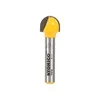 |
YONICO 1/2-Inch Core Box Router Bit, 1/4-Inch Shank, $9.95 A 1/2-inch core box bit cuts a round groove 1/2 inch wide, which covers most juice grooves, cord channels, and marble tracks.
|
| Method | Best for | Limits |
|---|---|---|
| Router with core box bit | Straight or curved grooves, stopped grooves, repeat work | Needs a router, and the groove width is fixed by the bit |
| Carving gouge and mallet | One-off grooves, odd shapes, no power tools | Slow, and the width takes practice to keep even |
| Scratch stock or hollow plane | Shallow grooves along an edge | Only suits shallow cuts along a straight edge |
| Table saw cove cut | Wide, shallow concave grooves on flat stock | Needs an angled fence and very light passes |
For most people the router is the right answer. The rest of this guide starts there, then covers the hand and table saw alternatives.
Bit Math: Matching Groove Width and Depth
A core box bit is a half circle, so the math is simple. The groove is as wide as the bit’s diameter, and a true semicircular groove is as deep as the bit’s radius, which is half the diameter. Cutting deeper than the radius is possible on bits with straight sides above the round tip (one 1/2-inch bit we looked at lists a 3/8-inch cutting depth), but the bottom of the groove stays round while the walls above it go straight.
| Bit diameter | Radius (semicircle depth) | Good for |
|---|---|---|
| 1/4 inch | 1/8 inch | Fine decorative lines, thin wire |
| 3/8 inch | 3/16 inch | Small cord channels, light flutes |
| 1/2 inch | 1/4 inch | Juice grooves, most cord channels |
| 5/8 inch | 5/16 inch | Grooves that hold a 5/8-inch (16 mm) marble half-buried |
| 3/4 inch | 3/8 inch | Wider cradles and bold flutes |
| 1 inch | 1/2 inch | Large channels and hollows |
To seat a round object, pick the bit whose diameter equals the object’s diameter. Cut to the full radius and the object sits exactly half-buried. For a groove that only guides a cord, a bit a hair wider than the cord is enough.
Why a Round-Over Bit Will Not Cut a Round Groove
This is the most common mix-up, and it is the reason many tutorials fail. A round-over bit has a concave cutter and a bearing, and it shapes an outside corner into a quarter circle (see our sizing notes on the right round-over bit for 3/4-inch wood). A core box bit is the opposite: its cutter is a convex half circle with no bearing, so it cuts into the middle of a board. You may also see core box bits sold as round nose bits, and a ball nose bit behaves the same way for this job.
Method 1: Cut a Round Groove With a Router
- Mark the groove’s centerline and both edges with a pencil. On curved layouts, mark points every few inches so you can check the path.
- Unplug the router, then chuck the core box bit, seating the shank fully in the collet and backing it out about 1/8 inch before tightening.
- Set the depth on a scrap piece of the same wood. Test the groove width and depth, then adjust.
- Guide the router. Clamp a straightedge, or use an edge guide like the one covered in our Porter-Cable edge guide setup. For a straightedge, the offset from the guide to your centerline is the distance from the router base edge to the bit center, so measure it rather than guessing.
- Cut in light passes. Removing about 1/8 inch of depth per pass is a safe starting point in hardwood, and the final pass should be a very light cleanup cut.
- Move steadily at an even feed. Stopping in the cut is what leaves burn marks.
On a router table, put the fence behind the bit and feed the board from right to left, against the direction of bit rotation. Feeding the other way is a climb cut that can pull the board out of your hands. Use stop blocks for stopped grooves. Because the bit is round, a stopped groove ends in a rounded pocket with a radius equal to the bit’s radius rather than a square end. That is fine for cord channels and flutes, but plan for it if the end shape matters.
A handheld plunge cut with a core box bit is also a standard way to cut decorative flutes. For spacing jigs and layouts, see our guide to cutting flutes in wood.
Method 2: Carve a Round Groove by Hand
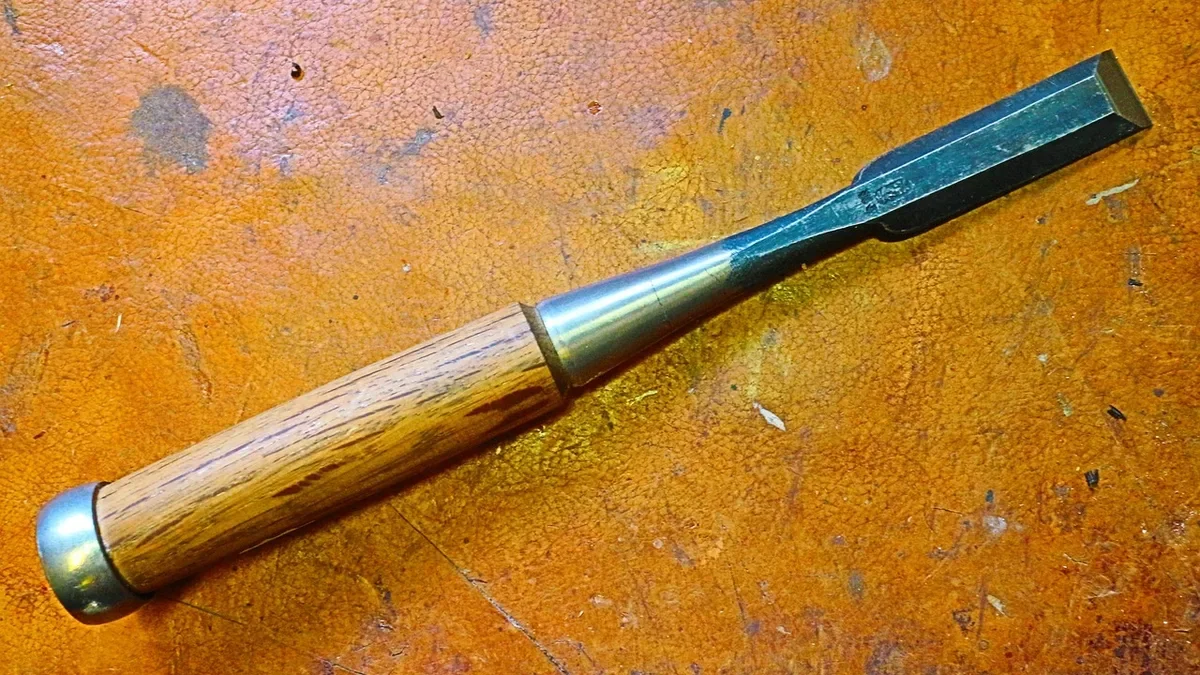
A carving gouge has a curved cutting edge, so it leaves a round-bottom cut without any power tools. Pick a gouge whose curve is close to the groove you want. A flatter sweep makes a shallow, wide groove, and a tighter sweep makes a deeper, narrower one.
- Mark both edges of the groove with a marking gauge or a sharp pencil.
- Make stop cuts across the groove at each end by pressing the gouge straight down. This keeps the ends clean and prevents the wood from splitting past your lines.
- Cut the waste in thin layers, working with the grain and moving from the middle toward the ends. Take several thin curls rather than one heavy cut.
- Check the profile against a dowel or the round object the groove will hold, and continue until it seats.
For shallow grooves along an edge, a shop-made scratch stock, which is a small scraper ground to a rounded profile, or a hollow plane can cut a clean round groove without a router. They are slower than a router but leave very little tear-out. For very small grooves, a rotary tool works too, and we cover the speeds and burr choices in our guide to using a Dremel to cut a groove in wood.
Method 3: Cut Wide, Shallow Grooves on a Table Saw
A table saw can cut a concave cove by running the board diagonally across a raised blade. Clamp a fence at an angle to the blade, raise the blade a tiny amount for each pass, and keep sliding the board across until you reach the full depth. The angle of the fence and the height of the blade set the width and depth of the cove, and you should test both on scrap first. Our guide to cutting cove molding on a table saw shows how to set the fence angle. This method suits wide, shallow grooves on flat stock, not narrow channels.
Use push sticks and a featherboard, take very light passes, and never do this freehand. Because the board crosses the blade at an angle, a heavy pass can kick the work back.
Common Uses and Sizing Examples
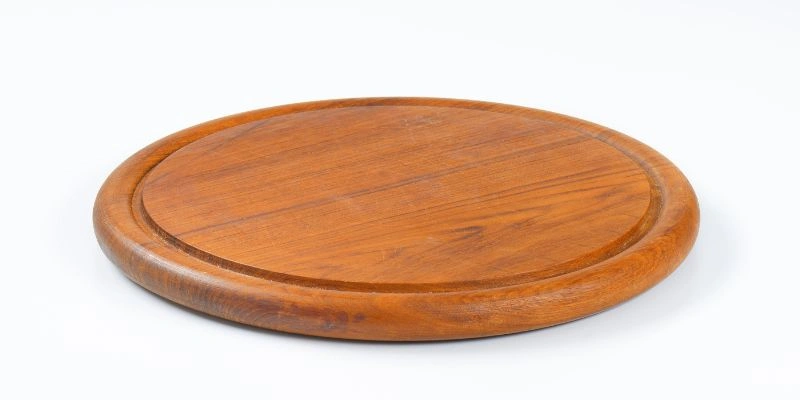
- Juice groove on a cutting board: a 3/8 to 1/2 inch core box bit, cut in two light passes and set back from the edge so the groove does not weaken the rim.
- Marble run: a bit equal to the marble diameter, such as a 5/8-inch bit for a 16 mm marble.
- Cord or wire channel: a bit slightly wider than the cord, usually cut on the underside or back of a piece.
- Dowel cradle or round insert: a bit equal to the dowel diameter, cut to the full radius so the dowel sits half-buried.
Fixing Common Round-Groove Problems
- Burn marks: usually a dull bit, a slow feed, or a stop in the cut. Clean the bit of resin, take a lighter pass, and keep the router moving. Cherry and maple burn easily.
- Ragged edges across the grain: score the edge lines with a knife before routing, or clamp a scrap backer board where the bit exits.
- Groove wider than the bit: the router base tipped or the guide moved during the cut. Keep the base flat and the guide pressed firmly.
- Chatter in a deep cut: take the depth in two or three passes instead of one, and choose a 1/2-inch shank bit when your router allows it.
Sand a finished round groove with sandpaper wrapped around a dowel of the same diameter as the groove, moving with the grain. Our guide to sanding small grooves covers more shapes. When the grooves are part of a joint, see how to join wood with a router.
Whenever you use a router, wear eye and hearing protection and a dust mask, clamp the workpiece, keep your hands away from the bit, and unplug the router before changing bits.
Frequently Asked Questions
What bit makes a round groove in wood?
A core box bit, also sold as a round nose bit, makes a round groove in wood. Its cutter is a half circle, so it cuts a U-shaped channel as wide as the bit’s diameter. Match the bit diameter to the groove width you want, and use a 1/2-inch shank bit when you have a choice because it flexes less than a 1/4-inch shank.
Can you use a round-over bit to make a round groove?
No. A round-over bit shapes an outside edge into a quarter circle and has a bearing that rides the edge, so it cannot cut a channel into a flat face. A core box bit does that job because its cutter is convex and cuts a concave groove.
How deep can a round groove be?
With a core box bit, a true semicircular groove is as deep as the bit’s radius, so a 1/2-inch bit makes a groove about 1/4 inch deep. Cutting deeper than the radius gives a groove with a round bottom and straight sides above it, and it is safest to reach that depth in several light passes.
Can you make a round groove without a router?
Yes. A carving gouge cuts a round-bottom groove by hand, a scratch stock works for shallow grooves along an edge, and a table saw can cut wide, shallow coves with an angled fence. A rotary tool with a round burr also works for small grooves. Hand methods are slower and take more practice to keep the width even.
Sponsored / affiliate links. As an Amazon Associate I earn from qualifying purchases. I may earn additional commission from eligible campaigns.