Where to Buy Ammonium Chloride: Essential Guide
Wondering where to buy ammonium chloride for your woodworking projects? You can find it at chemical supply stores, online marketplaces like Amazon and eBay, and sometimes at larger hardware or garden supply stores. Always prioritize reputable sellers for purity and safety.
Hey there, fellow DIYers and woodworkers! Md Meraj here. Ever found yourself itching to try out some cool wood burning techniques, only to hit a roadblock when it comes to specific supplies? Ammonium chloride is one of those things that can leave you scratching your head, wondering where to find it. It’s a common question, and I’m here to make it super simple for you. We’ll walk through exactly where you can pick up this handy chemical, keeping things safe and straightforward, just like a good woodworking project should be. Ready to find what you need and get back to creating? Let’s dive in!
Understanding Ammonium Chloride for Woodworking
Ammonium chloride (NH₄Cl) is a white crystalline salt that, when used correctly in woodworking, can help achieve interesting patterns and effects on wood surfaces. It’s often used as a component in wood burning or etching solutions. When applied to wood and then heated, it can create subtle color variations and textures that add a unique touch to your pieces. It’s not about harsh burning but about controlled chemical reactions that enhance the natural beauty of the wood.
Many beginners are curious about this substance because it opens up new creative avenues without requiring expensive or complicated tools. However, understanding what it is and where to get it safely is the first step. Think of it like choosing the right type of wood for a project – the right material makes all the difference.
What Makes Ammonium Chloride Useful in Wood Burning?
When ammonium chloride is heated, it decomposes into ammonia gas and hydrogen chloride gas. These gases interact with the wood’s surface. The hydrogen chloride gas can react with the lignin and cellulose in the wood, leading to browning or darkening effects. The ammonia plays a role in the overall reaction, helping to create unique tonal differences. This process can give projects a vintage or rustic look, or it can be used for intricate detail work. It’s a way to add depth and character to carvings, signs, and decorative items.
Using ammonium chloride is a bit like using a resist in dyeing – it helps control where and how the “color” or effect appears. It’s a subtle art, and mastering it starts with having access to a reliable source of the material.
Common Applications in DIY and Woodworking
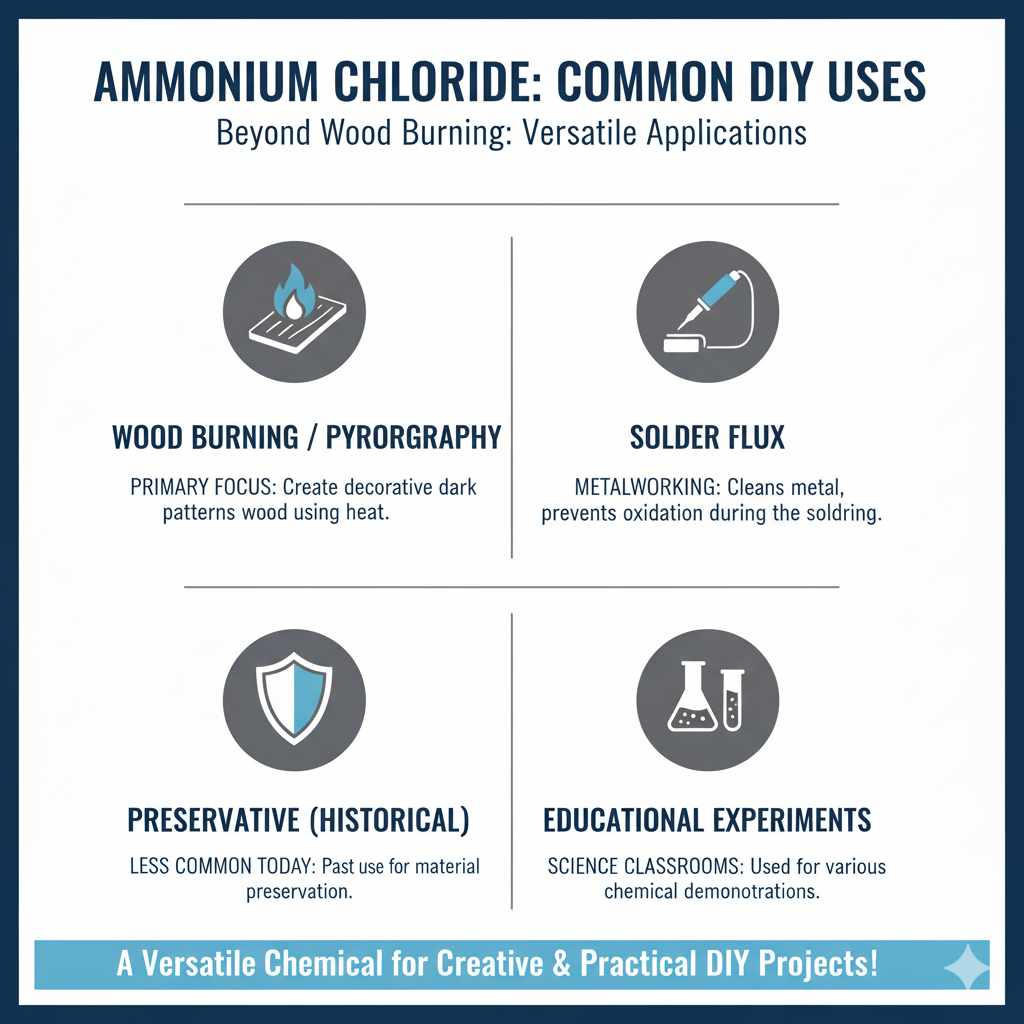
Beyond just wood burning, ammonium chloride has a few other interesting uses that might pop up in your DIY adventures:
- Solder Flux: In metalworking and electronics, it’s used as a flux to clean metal surfaces and prevent oxidation during soldering. While not directly for woodworking, some DIYers might encounter it in other craft-related applications.
- Preservative: Historically, it has seen some use as a preservative for certain materials, though this is less common today.
- Educational Experiments: Due to its chemical properties, it’s often used in science classrooms for various experiments, which means it’s generally available from scientific suppliers.
For our purposes, the primary focus is its role in creating decorative effects on wood. It’s a versatile chemical, but in the woodworking community, its ability to alter wood surfaces with heat is what makes it sought after.
Where to Buy Ammonium Chloride
Finding ammonium chloride is usually straightforward if you know where to look. The key is to ensure you’re buying a product that is suitable for your intended use and from a seller you trust. Purity can matter, especially when you’re aiming for specific results on your projects.
1. Chemical Supply Stores
These are often the most reliable places to find high-purity ammonium chloride. They cater to laboratories, educational institutions, and industrial users, so quality control is usually very good. You might find various grades, such as reagent grade or technical grade. For woodworking, technical grade is typically sufficient, but reagent grade will offer the highest purity.
Pros:
- High purity options available.
- Often have knowledgeable staff who can answer questions about the product.
- Various quantities can be purchased.
Cons:
- May require you to have a business account or a specific reason for purchase.
- Some stores might be less accessible geographically.
- Can sometimes be more expensive than other sources.
2. Online Retailers (Amazon, eBay, etc.)
This is incredibly convenient for most of us! Major online platforms host numerous sellers offering ammonium chloride. You can find it in various forms – powder, crystals, or solutions – and quantities ranging from small lab-sized amounts to larger bags. Reading reviews is crucial here to gauge seller reliability and product quality.
Pros:
- Highly convenient, delivered to your door.
- Wide selection of brands, grades, and quantities.
- Competitive pricing and easy comparison.
- User reviews provide insights into product quality and seller service.
Cons:
- Need to be cautious about counterfeit or impure products.
- Shipping times can vary.
- Less direct interaction with sellers for technical advice.
When searching on these platforms, use terms like “ammonium chloride for wood burning,” “sal ammoniac wood etching,” or “technical grade ammonium chloride.” This will help narrow down the results to products suitable for your needs. For instance, a quick search on Amazon will reveal many options, often under the “sal ammoniac” moniker, which is another common name for ammonium chloride.
3. Specialty Woodworking or Craft Stores
Sometimes, stores that specialize in woodworking tools, finishing supplies, or unique craft materials might carry ammonium chloride, especially if they cater to pyrography (wood burning) enthusiasts. These stores often curate products specifically for hobbyists, so you might find it alongside other finishing and etching agents.
Pros:
- Products are often selected with hobbyists in mind.
- Staff may have knowledge of woodworking applications.
- Can be a good place to discover related products.
Cons:
- Availability can be hit or miss.
- May be more expensive than bulk online retailers.
- Selection might be limited.
4. Garden Supply or Agricultural Stores
Ammonium chloride is sometimes used as a component in fertilizers because it provides nitrogen. You might find it in some agricultural or garden supply stores, often in a granular or powder form. However, be aware that for this application, it’s often mixed with other compounds or may have impurities that aren’t ideal for fine woodworking. If you go this route, ensure you can find an unadulterated source or are prepared to purify it yourself (which is generally not recommended for beginners).
Pros:
- Can sometimes be found at local stores.
- May be available in larger, more economical quantities.
- Nitrogen content makes it a common agricultural chemical.
Cons:
- Likely to be a technical grade or mixed with other substances.
- May not be pure enough for consistent wood burning results.
- Less common than dedicated chemical suppliers.
5. Laboratory and Scientific Suppliers
Similar to general chemical supply stores, dedicated laboratory suppliers are excellent sources for pure chemicals. Websites like Sigma-Aldrich (now MilliporeSigma) or Fisher Scientific offer a wide range of chemicals, including ammonium chloride, in various purity grades. They are a top choice for guaranteed quality.
Pros:
- Guaranteed high purity and quality.
- Detailed specifications and safety data sheets available.
- Ideal for those who need reliable, consistent results.
Cons:
- Often geared towards professional or academic use.
- Minimum order quantities might apply.
- Can be the most expensive option.
Choosing the Right Grade and Form
When you’re shopping, you’ll likely see different grades of ammonium chloride:
- Reagent Grade (ACS): This is the highest purity. If you want the most consistent and predictable results, this is your best bet, but it’s usually pricier.
- Technical Grade: Suitable for most industrial and hobbyist applications. It’s less pure than reagent grade but usually pure enough for woodworking purposes and more affordable.
- Food Grade: Even higher purity than reagent grade, but typically used for food additives and not necessary for woodworking.
For woodworking, technical grade is generally perfectly fine and offers a good balance of purity and cost. You might also see it as white crystals or a white powder. Both work similarly, though powder might dissolve more readily if you’re making a solution.
Safety First: Handling Ammonium Chloride
Even though we’re using it for decorative purposes in woodworking, ammonium chloride is still a chemical, and it’s important to handle it with care. Proper safety measures are vital, just like when using any power tool or strong finish.
Here’s a quick rundown of safety tips:
- Ventilation: Always use ammonium chloride in a well-ventilated area. When heated, it releases gases (ammonia and hydrogen chloride) that can be irritating to the eyes, nose, and throat. A fume extractor or working outdoors is ideal when performing heated applications.
- Personal Protective Equipment (PPE): Wear safety glasses or goggles to protect your eyes. Use gloves to avoid skin contact. A dust mask can be helpful when handling the dry powder to prevent inhalation.
- Storage: Keep ammonium chloride in its original container, tightly sealed, and away from moisture. Store it in a cool, dry place, inaccessible to children and pets. It can be corrosive to some metals.
- Disposal: Dispose of any leftover material or solutions according to local regulations. Do not pour large amounts down the drain.
For more detailed safety information, always refer to the Safety Data Sheet (SDS) provided by the manufacturer. You can often find these online directly from the chemical supplier.
For example, the National Center for Biotechnology Information (NCBI) provides detailed information on ammonium chloride, including its properties and safety considerations.
Preparing a Wood Burning Solution (Optional)
While you can sometimes use ammonium chloride crystals directly in heated applications, many woodworkers prefer to create a solution. This can offer more control over the application and the resulting patterns. Here’s a basic idea of how you might do it, but always experiment on scrap wood first!
Basic Solution Preparation:
- Gather Materials: You’ll need your ammonium chloride, distilled water, a clean glass or plastic container, and a stirring rod.
- Mix: A common starting point is a saturated solution, meaning you add as much ammonium chloride as the water can dissolve. You can also aim for a specific ratio, like 1 part ammonium chloride to 4 parts water, depending on the desired effect.
- Stir: Stir the mixture until the ammonium chloride is fully dissolved. If you’re making a saturated solution and some crystals remain at the bottom, that’s okay.
- Application: Apply the solution to your wood surface with a brush or cloth. Let it dry completely.
- Heating: Once dry, you can use a heat gun, a torch (with extreme caution and proper technique), or even a soldering iron to carefully heat the treated areas. You should see subtle color changes develop.
Important Note: Always test your solution and heating method on scrap pieces of the same wood you plan to use for your project. This helps you understand how the wood reacts and achieve the look you’re going for without ruining your main piece.
Comparison of Purchase Locations
To help you decide where to buy, here’s a quick comparison table:
| Purchase Location | Pros | Cons | Best For |
|---|---|---|---|
| Chemical Supply Stores | High purity, knowledgeable staff, variety of grades. | May require specific account setup, less accessible for some. | Guaranteed purity, bulk purchases, specific grades. |
| Online Retailers (Amazon, eBay) | Convenient, wide selection, competitive pricing, reviews. | Risk of quality variations, potential shipping delays. | Beginners, convenience, easy price comparison. |
| Specialty Woodworking/Craft Stores | Hobbyist-focused products, knowledgeable staff. | Variable availability, potentially higher prices. | Discovering related tools, local shopping. |
| Garden/Agricultural Stores | Potentially economical for large quantities. | Often mixed or impure, not ideal for fine work. | Large-scale DIY where purity isn’t critical (use caution). |
| Laboratory Suppliers | Highest purity guaranteed, detailed specs. | Expensive, geared towards professional/academic use. | Professional results, consistent quality needed. |
Troubleshooting Common Issues
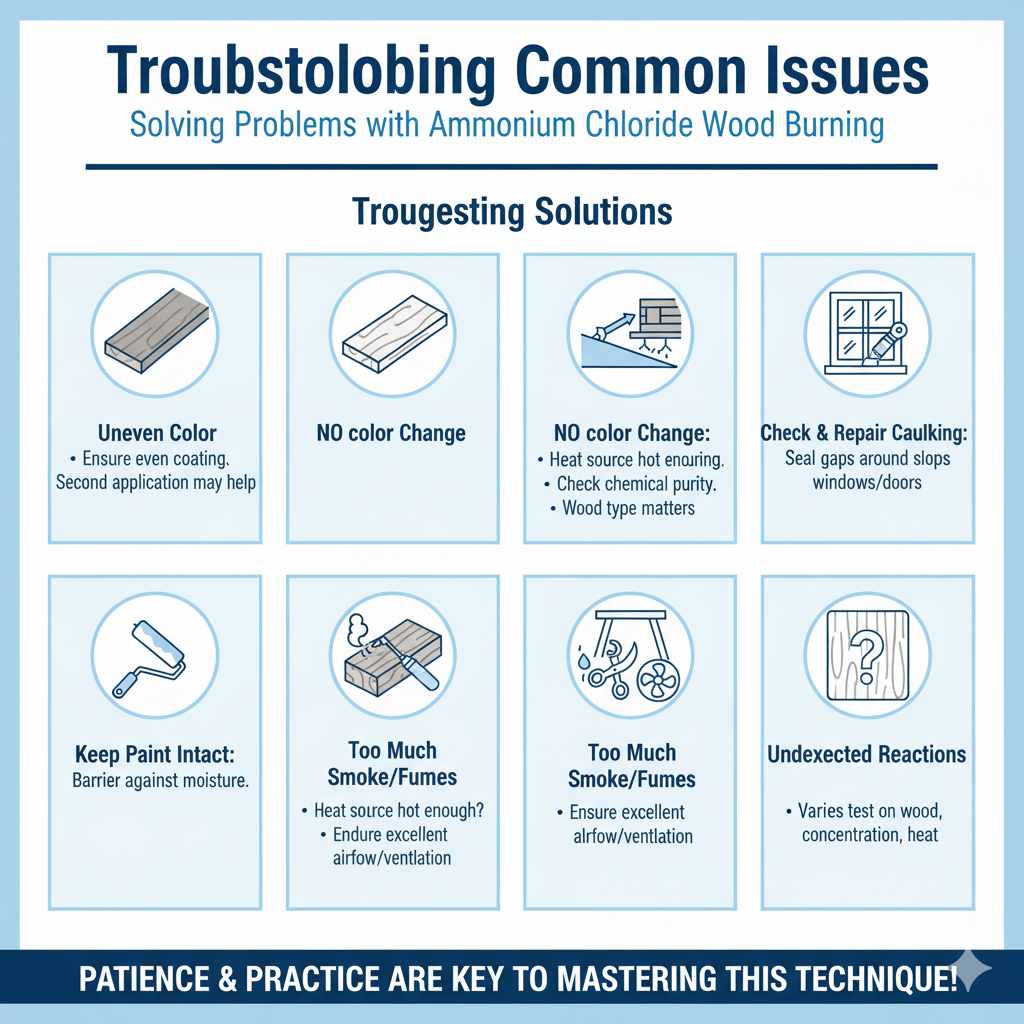
Sometimes, things don’t go as planned. Here are a few common issues and solutions when working with ammonium chloride:
- Uneven Color: This can happen if the solution wasn’t applied evenly, or if the wood surface itself has variations. Ensure even coating and drying. Sometimes, a second application can help.
- No Color Change: Make sure your heat source is hot enough and applied consistently. Also, check the purity of your ammonium chloride and the type of wood you are using; some woods react differently.
- Too Much Smoke/Fumes: This implies you’re heating too aggressively or not using enough ventilation. Reduce heat intensity and ensure excellent airflow.
- Unexpected Reactions: Always test on scrap. Different woods, different concentrations, and different heating methods all produce varied outcomes.
Patience and practice are key! Like any woodworking technique, mastering wood burning with chemicals takes time and experimentation.
Frequently Asked Questions (FAQ)
Q1: Is ammonium chloride safe to use for wood burning?
A1: When used with proper safety precautions (good ventilation, gloves, eye protection) and applied as intended, ammonium chloride can be used safely for wood burning effects. Always refer to the product’s Safety Data Sheet (SDS).
Q2: Can I use ammonium chloride that I bought for fertilizer?
A2: While possible, fertilizer-grade ammonium chloride might contain impurities that can lead to unpredictable results or even undesirable side effects on your wood. It’s best to find a technical or reagent grade for cleaner, more consistent outcomes.
Q3: How is ammonium chloride different from other wood etching chemicals?
A3: Ammonium chloride works by reacting with wood at high temperatures to create color changes. Other methods might involve acids or bases that chemically alter the wood differently, or simply involve burning with a hot tool. Ammonium chloride’s effect is often a subtle darkening or browning.
Q4: Will ammonium chloride damage my wood?
A4: When used correctly and not excessively heated, ammonium chloride should not ‘damage’ the wood but rather create decorative effects. Overheating can scorch or burn the wood too much, so control is important.
Q5: What kind of wood is best for using ammonium chloride?
A5: Hardwoods like maple, oak, and cherry often provide a nice contrast and take well to the process. Softer woods like pine can be more prone to scorching. Experimentation on scrap pieces is highly recommended!
Q6: Where can I find the Safety Data Sheet (SDS) for ammonium chloride?
A6: The SDS is typically available on the website of the company from which you purchase the ammonium chloride, under the product listing or in a dedicated safety section. Searching the chemical name and “SDS” online will also usually bring up results from reputable sources like PubChem or manufacturer sites.
Q7: Do I need a special brush to apply a solution of ammonium chloride?
A7: A standard synthetic brush is usually fine. Avoid using natural bristle brushes, as some chemicals can degrade them. For detailed work, smaller brushes or even applicators like cotton swabs can be useful. Just make sure whatever you use is chemically resistant and you have spares for different colors or techniques.
Conclusion
Finding ammonium chloride for your woodworking and DIY projects is much simpler when you know where to look. Whether you prefer the convenience of online shopping, the guaranteed purity of a chemical supplier, or the curated selection at a specialty craft store, there are plenty of options available.