How to Change a Coping Saw Blade: Tooth Direction + Rotating
To change a coping saw blade, turn the handle counterclockwise to slacken the frame, unhook the old blade’s pins, hook in the new blade, and turn the handle clockwise until the blade rings when plucked. Teeth facing the handle is the usual setup, but it is a default rather than a rule: the same blade can be fitted to cut on the push stroke. This guide covers both frame types, tooth direction, and rotating the blade.
What You Need Before You Change the Blade
Best Blade Assortment Pick |
|
 |
FOXBC 6-1/2 Inch Coping Saw Blade Assortment, 48 Pack, $12.99 Covers the 10, 15 and 20 TPI wood blades from the TPI table below, so the replacement you hook on matches the cut instead of being whatever fits.
|
As an Amazon Associate we earn from qualifying purchases.
The job needs very little: a replacement blade, a clear bench, and a minute. What matters is that the blade matches your frame. Olson, a US blade maker, lists its standard coping blades as 6-1/2 inches long, .125 inch wide and .020 inch thick, in a pin-end design for frames that take 6-1/2 inch pin-end blades. If your saw has two small pin holders, that is the style you are buying.
- A replacement 6-1/2 inch pin-end blade in the tooth count you want (see the TPI tables further down)
- Eye protection, as a precaution in case a slack or twisted blade snaps while you tension it
- A flat, well-lit surface so you can see whether both pins are fully seated
New to the tool itself? Our guide to what a coping saw is used for covers the throat-depth limit and when to reach for something else, and the trim coping walkthrough covers the cutting technique. This page stays on the blade.
How to Change a Coping Saw Blade, Step by Step
Coping saws come in two common tensioning styles, and the release step differs. Check yours first. Irwin’s instructions for its ProTouch saw, and standard how-to guides for handle-tensioned saws, tell you to turn the handle to slacken the blade. Bow-style frames can often be released by squeezing the frame so it flexes inward.
- Release the tension: Turn the handle counterclockwise. Two or three full turns is usually enough for the blade to come off its pins freely. On a frame without a turning handle, squeeze the frame until the blade goes slack.
- Unhook the old blade: Lift one pin out of its holder, then the other. Treat both loose ends as sharp.
- Pick the tooth direction: For the traditional pull-stroke setup, hold the new blade so the teeth point toward the handle. The next section explains why this is the default and when to flip it.
- Hook the far end first: Seat one pin in the holder on the side of the frame opposite the handle, then seat the other pin in the holder attached to the handle.
- Tension the blade: Turn the handle clockwise. It may take a full turn or more to stretch the blade tight enough to use. Keep turning until the pins are far enough apart that the blade stays put without you holding it, then fine-tune.
- Pluck-test it: A correctly tensioned blade gives a clear ping when plucked lightly (This Old House). A flabby twang means it needs more tension, and a short, high, staccato note means you are there (KM Tools).
- Check that it is not twisted: Sight along the blade against the saw’s steady bars at the top and bottom, which is how the frame is designed to keep a thin blade straight and untwisted.
That is the whole job. Most of what goes wrong afterward comes from the next two decisions: tooth direction and tooth count.
Which Way Should the Teeth Face? A Rule That Is Really a Preference
Many guides, including the earlier version of this page, state flatly that the teeth must face the handle. That overstates it. The Wikipedia entry on the coping saw says the blade can be installed for either a push stroke, with the teeth pointing away from the handle, or a pull stroke, with the teeth pointing toward the handle. KM Tools’ coping saw guide puts the choice down to personal preference and application. Here is how the two setups compare, using what those sources and a WOODWEB cabinet and millwork forum thread report:
| Teeth toward handle (pull stroke) | Teeth away from handle (push stroke) | |
|---|---|---|
| Default for most users | Yes. This Old House and Irwin both instruct this setup | No, a deliberate alternative |
| Why people choose it | Pulling keeps the thin blade under tension instead of letting it buckle, which experienced tradespeople in the WOODWEB thread link to better control and fewer breaks | Some prefer it for ergonomics, for example when standing at a bench rather than leaning over the work |
| Tear-out | On the opposite face from the push setup | Lands on the face you cannot see (KM Tools) |
| Good fit | Coping trim, following a line closely | Setups where pulling is awkward |
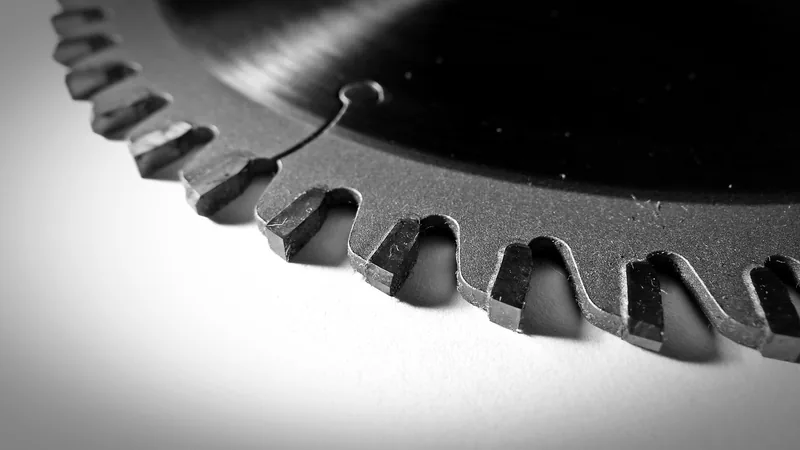
The practical advice: if you are new to the tool, fit the teeth toward the handle, because that is the setup the manufacturer and magazine instructions found for this article assume. If your cuts wander or you cannot see the line, try the blade the other way on one project before you decide. If a cut goes crooked after a blade change, check the tooth direction first, since This Old House lists wrong blade direction among the usual causes of crooked cuts.
Whichever you choose, keep pressure light and let the saw do the work. This Old House recommends light pressure to keep the blade from twisting.
How to Rotate a Coping Saw Blade for Curves and Interior Cuts
A coping saw’s real advantage over a fixed-blade hand saw is that the blade turns. Olson says its coping saw frame turns the blade a full 360 degrees so you can saw in any direction, push or pull, and Bahco describes the blade on its 301 coping saw as turnable 360 degrees. Wikipedia explains the mechanism: the holding pins lock into angled slots in rotatable blade holders, so loosening the handle lets the blade rotate relative to the frame, and retightening the handle both tensions the blade and locks it at the new angle.
- Loosen the handle just enough to free the blade holders. You do not need to unhook the blade.
- Turn the blade to the angle you want, so the frame points away from the part of the workpiece it would otherwise hit.
- Keep it straight: Turn both holders to the same angle so the blade is not twisted along its length. Check it against the steady bars as in the change steps above.
- Retighten the handle until the blade pings again.
Once you are cutting, you can also change direction without stopping, because the thin blade makes direction changes easy (Wikipedia). KM Tools adds two breakage rules worth remembering: turn the blade only on the cutting stroke, and avoid sawing around a curve on the non-cutting stroke, which it lists as a way to snap a blade.
Choosing a Replacement Blade: TPI and Real Blade Specs
Tooth count is the choice that changes the result. This Old House gives about 15 teeth per inch (TPI) as the general-purpose wood blade, noting it avoids clogging with sawdust, and KM Tools describes 5 to 15 TPI as the fast, aggressive range and 20 and up as slower and finer. The table below pulls the numbers together:
| Material | Suggested TPI | Source |
|---|---|---|
| Wood, general purpose | About 15 | This Old House |
| Plastic and soft metals | About 18 | This Old House |
| Nonferrous metal (copper, brass) | 18 | This Old House |
| Steel and sheet metal | 24 | This Old House |
| Thin-walled tubing | 32 | This Old House |
| Thick wood where dust clogs the teeth | Lower TPI, or a skip-tooth blade with bigger gullets | KM Tools |
The spec table below is the part most guides skip. A 6-1/2 inch blade is not one product: dimensions and tooth counts differ by maker and by blade type, so match the replacement to what you are cutting and what your frame takes. Olson publishes its blade dimensions in its catalog, which is where the first two rows come from.
| Blade or saw | TPI | Dimensions or length | Source |
|---|---|---|---|
| Olson medium coping blade | 15 | 6-1/2 in long, .125 in wide, .020 in thick, pin-end | Olson catalog |
| Olson fine coping blade | 20 | 6-1/2 in long, .125 in wide, .020 in thick, pin-end | Olson catalog |
| Bahco 301 coping saw | 14 | 6-1/2 in blade | Fine Woodworking listing |
| Irwin ProTouch 2014400 saw | 17 | 6-1/2 in blade | Retailer specs |
| Irwin replacement blades (fine) | 21 point | 6-1/2 in | Retailer listing |
| FOXBC assortment, wood blades | 10, 15, 20 | About .125 in wide, .020 in thick | Amazon listing |
| FOXBC assortment, metal blade | 32 | About .250 in wide, .014 in thick | Amazon listing |
The last row is the one to notice: the 32 TPI metal-cutting blade in that assortment is twice as wide and thinner than the wood blades. Same overall length, different blade. If you buy a mixed assortment, test-fit the wide blade in your frame before you need it mid-project.
Blades in these listings are specified for 6-1/2 inch pin-end frames. If your frame holds the blade with pins, buy pin-end. For work that moves toward finer fretwork or metal, the comparisons in fret saw vs coping saw and jewelers saw vs coping saw explain when a different saw is the better answer than a finer coping blade.
Troubleshooting a Blade That Still Cuts Badly
| Symptom | Likely cause | Fix |
|---|---|---|
| Blade pops loose mid-cut | A pin resting in the holder rather than fully seated, or too little tension | Re-seat both pins, then tension until the blade pings |
| Blade snaps repeatedly | Too little tension, too much pressure, or turning the blade on the non-cutting stroke (KM Tools, This Old House) | Ease off the pressure, check tension, turn only on the cutting stroke |
| Cut goes crooked | Wrong blade direction for your technique, or a twisted blade (This Old House) | Check tooth direction, then re-sight the blade against the steady bars |
| Slow cutting | Dull blade, or a blade that does not match the material (This Old House) | Replace the blade and pick a TPI from the table above |
| Teeth clog with dust in thick stock | TPI too high for the thickness (KM Tools) | Drop to a coarser or skip-tooth blade |
Safety Notes on Blade Breakage
A coping blade is a thin strip of hardened steel under tension. When one breaks, the ends are sharp, and the same edges can cut your hands when you handle a loose blade. The sources used here tie breakage to slack tension, twisting, heavy pressure, and turning the blade on the return stroke. Keep eye protection on while tensioning and cutting, hold the saw by the handle rather than by the blade, and bin snapped blades so the pieces do not end up on the shop floor. These handling points are common-sense precautions rather than maker instructions, so check your saw’s own manual too.
Where This Fits With Our Other Coping Saw Pages
- What a coping saw is used for: the saw itself, throat depth, and a saw comparison table
- How to use a coping saw for trim: the coped joint cutting method
- Cutting crown molding without a miter saw: coping crown profiles
- Vintage coping saw history: where the saw design came from
- Shaping curves in wood: the wider set of curve-cutting methods
Frequently Asked Questions
How do you change a coping saw blade?
Turn the handle counterclockwise two or three turns, or squeeze the frame on a bow-style saw, to slacken the blade. Unhook the old blade, hook the new one onto the pins with the teeth toward the handle for a pull stroke, then turn the handle clockwise until the blade pings when plucked.
Which way do the teeth go on a coping saw blade?
For the standard pull-stroke setup the teeth point toward the handle. The blade can also be fitted with the teeth pointing away from the handle to cut on the push stroke, which puts tear-out on the face you cannot see.
How do you rotate the blade on a coping saw?
Loosen the handle so the blade holders turn, rotate the blade to the angle you need, keeping both ends at the same angle so it is not twisted, then tighten the handle again. The pins sit in angled slots, and tightening the handle locks the angle and tensions the blade.
What size blade does a coping saw take?
Standard coping saws take blades 6-1/2 inches long between the pins. Olson lists its coping blades at 6-1/2 inches long, .125 inch wide and .020 inch thick, in a pin-end design for frames that accept 6-1/2 inch pin-end blades.
How tight should a coping saw blade be?
Tight enough to ring. Pluck the blade like a guitar string: a clear ping or a short, high note means good tension, and a flabby twang means it needs tightening. Too little tension lets the blade wander or pop loose, and it is one of the listed causes of breakage.
The Short Version
Slacken the handle, swap the pins, point the teeth toward the handle unless you have a reason not to, and tension until the blade rings. Match the TPI to the material using the tables above, keep the blade straight against the steady bars, and treat broken blades as sharp. If a finer blade is not enough for the work in front of you, the comparison pages linked above show when to change saws instead.
Sponsored / affiliate links. As an Amazon Associate I earn from qualifying purchases. I may earn additional commission from eligible campaigns.