Why Choose Butcher Block Top Benefits Explained
Many people wonder about Why Choose Butcher Block? Top Benefits Explained. It sounds like a big question, especially if you’re new to kitchen design.
You might feel a bit lost trying to figure out if it’s the right choice for you. Don’t worry, it’s actually quite simple once you break it down. We’ll walk through it step by step to make everything clear.
The Appeal of Butcher Block Counters
Butcher block countertops are a popular choice for kitchens and other areas. They offer a warm, natural look that many people love. This type of countertop is made from strips of wood glued together.
It brings a unique charm to any space. People are drawn to its beauty and practical qualities. We’ll explore what makes butcher block so special.
What is Butcher Block Exactly?
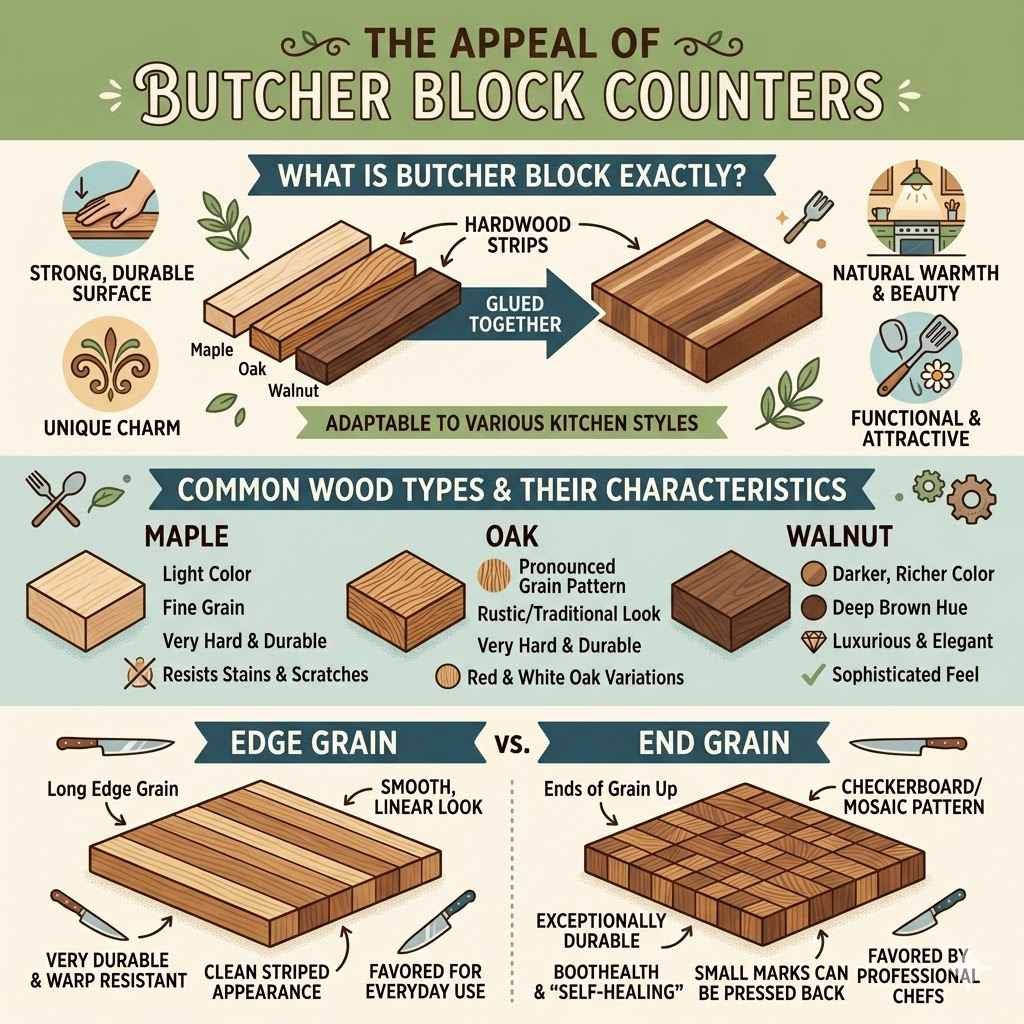
Butcher block is a type of wooden countertop. It’s constructed by gluing together narrow strips of hardwood. These strips are typically edge-grained or face-grained.
The result is a strong, durable surface that looks beautiful. It’s often made from woods like maple, oak, or walnut. Each wood type offers a different look and feel.
This makes it adaptable to various kitchen styles.
The construction method is key to its strength. Gluing the wood strips creates a stable and solid material. It can withstand a lot of use.
This is why it has been used in professional kitchens for ages. It’s known for being both functional and attractive. You get a surface that is hard-wearing.
It also adds a natural warmth that other materials might lack.
Wood Types and Their Characteristics
Different woods bring different qualities to butcher block. Maple is a very common choice. It’s known for its light color and fine grain.
Maple is hard and durable, making it great for a busy kitchen. It also resists stains and scratches well. Its smooth surface is pleasant to work on.
It can be finished to a very sleek look.
Oak is another popular wood. It has a more pronounced grain pattern. This gives it a rustic or traditional look.
Oak is also very hard and durable. It can stand up to heavy use. Red oak and white oak are both used, each with slight variations in color and grain.
Oak’s distinct texture can add a lot of character to your kitchen.
Walnut offers a darker, richer color. It has a beautiful, deep brown hue with attractive grain. Walnut is a bit softer than maple or oak.
However, it is still very suitable for countertops. It offers a luxurious and elegant appearance. For those who prefer darker woods, walnut is an excellent option.
It can make a kitchen feel very sophisticated.
Edge Grain vs. End Grain
There are two main ways butcher block is constructed: edge grain and end grain. Edge grain is the most common and often the most affordable. The wood strips are laid on their sides, so you see the long edge of the grain.
This creates a smooth, linear look. Edge grain butcher block is very durable and resistant to warping.
End grain construction is different. The wood blocks are oriented so the ends of the grain are facing up. This creates a checkerboard or mosaic pattern.
End grain butcher block is exceptionally durable. It’s also considered self-healing. Small knife marks can often be pressed back into place.
This is why it’s favored by professional chefs for cutting.
The visual difference is significant. Edge grain has a clean, striped appearance. End grain has a more complex, textured look.
Both are beautiful, but they offer different aesthetics. The choice often depends on personal preference and intended use. For everyday use, edge grain is perfectly sufficient.
For serious food prep, end grain has advantages.
Why Choose Butcher Block? Top Benefits Explained
When considering countertop materials, butcher block stands out. Why Choose Butcher Block? Top Benefits Explained reveals its unique advantages.
It’s not just about looks; it’s about functionality, warmth, and value. Many people are drawn to its natural appeal. It adds a sense of homeliness and tradition to a kitchen.
But the reasons go deeper than just aesthetics. We will explore these key benefits.
Aesthetic Warmth and Natural Beauty
One of the biggest draws of butcher block is its inherent warmth. Unlike cold stone or laminate, wood brings a natural, inviting feel to a kitchen. The grain patterns and natural colors create a cozy atmosphere.
This can make a kitchen feel more like the heart of the home. It’s a material that ages beautifully. It develops a patina over time.
This patina is like a story. It shows the life and use of the kitchen. It’s a characteristic that many people cherish.
A well-used butcher block counter can have a unique character. This is something synthetic materials often cannot replicate. The natural beauty is timeless.
It fits well with many different kitchen styles, from modern farmhouse to classic traditional.
The variations in wood grain mean no two butcher block countertops are exactly alike. This uniqueness adds to its charm. You get a truly custom look for your kitchen.
The natural wood can also complement other kitchen elements. Think about how it looks with natural stone backsplashes or stainless steel appliances. It creates a balanced and appealing design.
Durability and Longevity
Butcher block is incredibly durable. Hardwoods like maple and oak are tough. They can withstand daily wear and tear in a busy kitchen.
While it can scratch, these marks can often be sanded out. This means a butcher block countertop can last for many years, even decades, with proper care. Its ability to be refinished is a major advantage.
This repairability makes it a long-term investment. If scratches or dents appear, you don’t need to replace the whole countertop. A simple sanding and resealing can restore its beauty.
This makes it a more sustainable choice too. It reduces waste compared to materials that must be fully replaced. The longevity of butcher block is a key factor in its appeal.
Think about a family using their kitchen daily. Cooking, homework, and gatherings all happen here. Butcher block can handle all of this.
It’s a resilient material. Its strength comes from the quality of the wood and how it’s constructed. This durability ensures it remains a functional and beautiful part of your home for a long time.
It’s built to last.
Workability and Functionality
Butcher block offers a practical work surface. It’s firm enough to chop directly on, especially end-grain varieties. While this is not recommended for all wood types or for maintaining a pristine finish, it is a capability.
This makes it a functional choice for those who love to cook. You can have a dedicated cutting area right on your counter.
The smooth surface is also easy to clean. Regular wiping with a damp cloth is usually enough. For tougher messes, mild soap can be used.
This ease of cleaning contributes to its overall functionality. It means less time spent on maintenance and more time enjoying your kitchen. It’s a hands-on material that encourages interaction.
Many cooks appreciate the feel of working on wood. It’s not as hard as granite or quartz. This can be easier on your hands and knives.
The warmth of the wood under your hands adds to the cooking experience. It’s a surface that feels good to use. This combination of durability and pleasant workability makes it a top choice.
Cost-Effectiveness Compared to Other Materials
When comparing countertop costs, butcher block often comes out favorably. While prices vary based on wood type and construction, it can be more affordable than natural stone like granite or quartz. Laminate is cheaper, but it lacks the durability and natural beauty of wood.
The initial cost can be moderate. However, the long-term value is high. Because it can be refinished, it can extend the life of your kitchen without major renovations.
This repairability saves money over time. It avoids the need for frequent replacements. This makes it a smart financial choice for many homeowners.
Consider the lifespan and maintenance. A well-cared-for butcher block counter can look great for twenty years or more. When you factor this in, the cost per year becomes quite low.
It’s an investment that pays off in both beauty and savings. This makes it an attractive option for budget-conscious renovators. It offers high quality without the highest price tag.
A Sustainable and Eco-Friendly Choice
Wood is a renewable resource. When sourced from sustainably managed forests, butcher block can be an eco-friendly option. Many manufacturers now offer wood from certified sustainable sources.
This means you can feel good about your choice for the environment. It’s a natural material that can be responsibly harvested.
The ability to refinish butcher block also contributes to its sustainability. Instead of discarding worn-out countertops, you can restore them. This reduces waste significantly.
It prolongs the life of the product. This is a key aspect of eco-friendly living. Choosing materials that can be repaired and reused is always a good idea.
Compare this to materials that are difficult to recycle or dispose of. Butcher block offers a more circular approach. It can be repaired, and at the end of its very long life, wood can often be recycled or composted.
This makes it a conscious choice for those who care about their environmental impact. It’s a beautiful and responsible option.
Caring for Your Butcher Block Countertops
Proper care is essential for keeping butcher block looking its best. It’s not a high-maintenance material, but it does require attention. Simple, regular tasks can ensure its longevity and beauty.
Understanding how to clean and protect it will make a big difference. Let’s explore the best ways to care for your investment.
Daily Cleaning and Maintenance
For everyday cleaning, a damp cloth is usually sufficient. Wipe up spills and crumbs as soon as you notice them. This prevents liquids from soaking into the wood and causing stains or damage.
For slightly more stubborn spots, use a soft cloth with a little mild dish soap and water. Always wipe the counter dry afterward with a clean, soft cloth.
Avoid using harsh chemicals or abrasive cleaners. These can strip the finish and damage the wood. Steel wool or scrub brushes should also be avoided.
They can scratch the surface. Regular, gentle cleaning will maintain the countertop’s appearance and hygiene. It’s a simple routine that keeps the wood looking fresh and clean.
It’s also a good idea to avoid excessive moisture. Don’t leave wet sponges or cloths sitting on the surface. Also, be mindful of direct heat.
While butcher block can handle moderate heat, prolonged exposure to high temperatures can cause damage. Use trivets or hot pads for hot pots and pans.
Sealing and Oiling Your Butcher Block
Butcher block countertops typically come with a protective finish. This can be a food-safe mineral oil, a beeswax blend, or a varnish. If your counter is oiled, it will need regular reapplication of the oil.
This helps to keep the wood hydrated and protected. It also provides a barrier against stains and moisture.
How often you need to reapply oil depends on usage. If the water no longer beads up on the surface, it’s time to re-oil. Apply a generous amount of food-grade mineral oil.
Let it soak in for at least 15-20 minutes, or even overnight. Then, wipe away any excess. This simple process revitalizes the wood.
If your counter has a varnish or polyurethane finish, it’s more like sealing a wooden table. These finishes are more durable and require less frequent maintenance. However, if the finish starts to wear down, it will need to be reapplied.
This might involve light sanding before applying new coats. The type of finish will dictate the maintenance routine.
Sanding Out Scratches and Stains
One of the best things about butcher block is its ability to be repaired. Minor scratches and surface stains can be removed by sanding. Start with a medium-grit sandpaper, around 120 grit.
Sand the affected area following the grain of the wood. Be gentle and sand evenly.
After sanding with the medium grit, smooth the area with a finer grit sandpaper, like 220 grit. This will remove any sanding marks from the coarser paper. Once the area is smooth and free of imperfections, you’ll need to reapply a finish.
If it’s an oiled finish, re-oil the entire surface. If it’s a varnished finish, apply new coats of sealer.
For deeper scratches or gouges, you might need to use a wood filler before sanding. However, for most common marks, sanding is sufficient. This repairability means your butcher block can look new again, even after years of use.
It’s a testament to its lasting quality and value.
Protecting Against Heat and Moisture
While butcher block is durable, extreme heat and prolonged moisture can cause damage. Always use trivets or hot pads for hot pots and pans. Avoid placing hot items directly on the wood surface.
This can lead to scorching or discoloration.
Similarly, excessive moisture is a concern. Don’t let standing water sit on the surface for extended periods. Clean up spills immediately.
If you have a sink integrated into the butcher block, ensure the seams are well-sealed to prevent water damage. Proper sealing is crucial around sinks and dishwashers.
If your butcher block is in a humid environment, consider using a more robust sealant. Some modern finishes offer better protection against moisture. Regular maintenance, especially re-oiling or resealing, is your best defense.
It keeps the wood sealed and less susceptible to water absorption and heat damage. It’s about smart use and consistent care.
When to Choose Butcher Block For Your Kitchen
Deciding on kitchen countertops involves many factors. Butcher block is an excellent choice for specific needs and preferences. Its appeal spans both aesthetics and practicality.
Let’s look at when butcher block truly shines as a countertop material.
For a Warm and Inviting Kitchen Aesthetic
If you dream of a kitchen that feels cozy and welcoming, butcher block is ideal. Its natural wood tones bring warmth that is hard to match. It can make a kitchen feel more lived-in and comfortable.
This is especially true if you are going for a rustic, farmhouse, or traditional design style.
The organic patterns and textures of wood add depth and character. This can create a focal point in your kitchen. It softens the overall look.
It balances out harder materials like stainless steel or tile. If your goal is a homey atmosphere, butcher block delivers. It’s a material that truly enhances the feeling of a warm home.
For Cooks Who Love To Prep Food
For those who spend a lot of time in the kitchen preparing meals, butcher block offers practical benefits. The surface is firm and forgiving. It can handle chopping and dicing.
While not all butcher block is designed as a cutting board, many can be used for this purpose, especially end-grain varieties. This dual functionality is very appealing.
It reduces the need to constantly move cutting boards around. You have a built-in prep space. The natural material is also pleasant to work on.
It provides a good grip for ingredients. For busy home chefs, this efficiency and functionality are invaluable. It makes the cooking process more enjoyable and streamlined.
When Budget is a Consideration
Compared to many other countertop materials like granite, quartz, or marble, butcher block can be more budget-friendly. While high-end exotic woods can be expensive, common options like maple and oak offer excellent value. It provides a premium look and feel without the premium price tag.
Furthermore, its repairability means lower long-term costs. If damage occurs, it’s often cheaper to sand and refinish than to
For Eco-Conscious Homeowners
If sustainability is a priority, butcher block can be a great option. Wood is a renewable resource. When sourced responsibly, it has a lower environmental impact than mining or manufacturing other materials.
Many suppliers offer wood from certified sustainable forests.
The ability to refinish butcher block also aligns with eco-friendly principles. It reduces waste by extending the product’s lifespan. Instead of discarding and replacing, you restore.
This circular approach to material use is highly sustainable. It allows you to create a beautiful kitchen while being mindful of the planet.
Potential Downsides to Consider
While butcher block offers many advantages, it’s important to be aware of potential drawbacks. Understanding these will help you make a fully informed decision. No material is perfect, and butcher block has its own set of considerations.
Susceptibility to Scratches and Dents
Wood is a softer material than stone or solid surface countertops. This means it can be more prone to scratches, nicks, and dents. If you are very particular about maintaining a pristine surface, this might be a concern.
Dropping heavy items or dragging pots can easily leave marks.
While these marks can be sanded out, the process requires effort and time. If you prefer a countertop that looks untouched after years of use, butcher block may not be the ideal choice. However, for those who embrace the natural wear and tear of wood, these marks can add character.
Vulnerability to Heat and Water Damage
As mentioned earlier, prolonged exposure to extreme heat or water can damage butcher block. High temperatures can cause scorching and discoloration. Standing water or constant moisture can lead to warping, staining, and even mold growth if not properly sealed and maintained.
This means you need to be diligent about using trivets and wiping up spills promptly. In areas with high humidity or around sinks, extra care and maintenance are required. If you tend to be forgetful with these tasks, you might face issues with water damage over time.
Requires Regular Maintenance
Butcher block countertops are not a “set it and forget it” material, especially if they have an oiled finish. They require regular cleaning, and periodically, re-oiling or resealing. This maintenance is necessary to protect the wood and keep it looking its best.
If you prefer a low-maintenance option, other materials might be more suitable.
The amount of maintenance depends on the finish. Oiled finishes need more frequent attention than sealed or varnished finishes. However, even sealed finishes will eventually wear and need reapplication.
This ongoing commitment to care is a key consideration for anyone choosing butcher block.
Comparison: Butcher Block vs. Other Countertop Materials
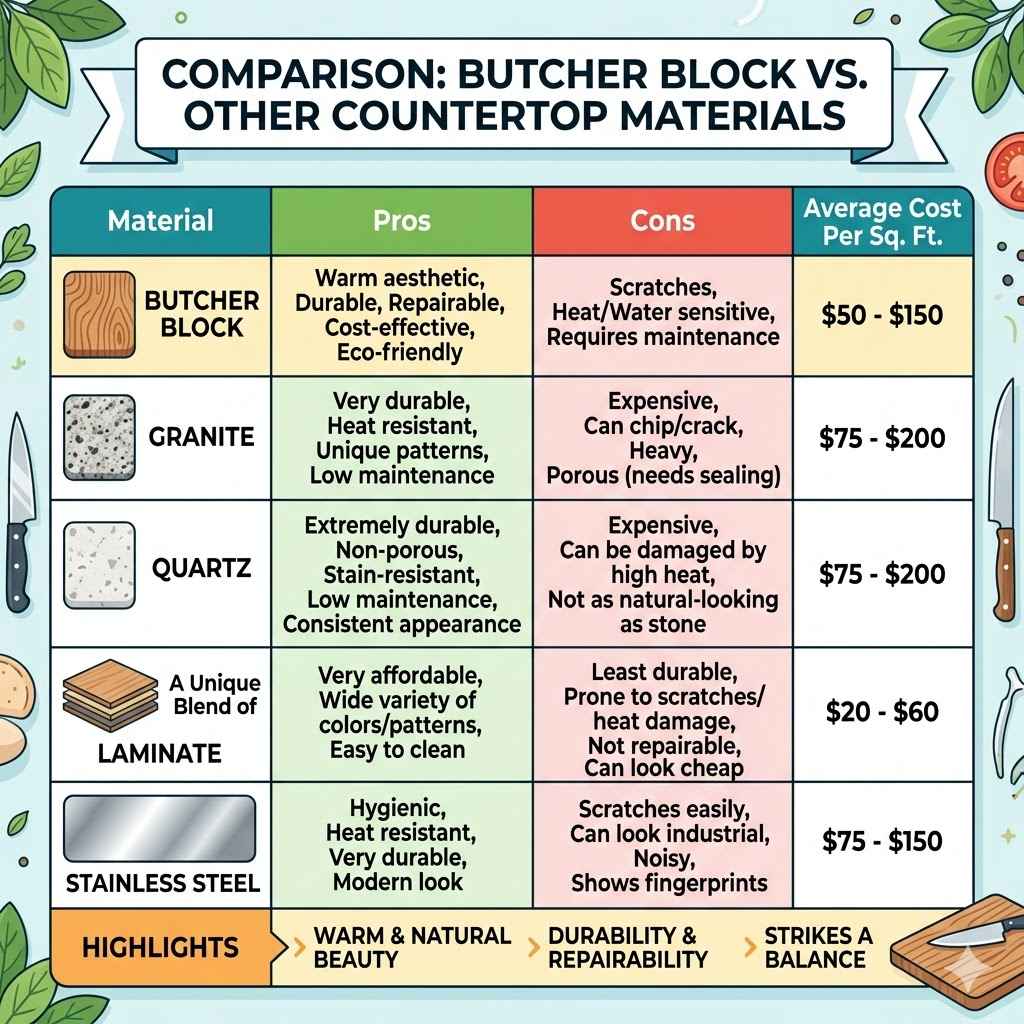
To truly understand the value of butcher block, it helps to compare it to other popular countertop options. Each material has its strengths and weaknesses. This comparison highlights where butcher block fits in.
| Material | Pros | Cons | Average Cost Per Sq. Ft. |
|---|---|---|---|
| Butcher Block | Warm aesthetic, durable, repairable, cost-effective, eco-friendly | Scratches, heat/water sensitive, requires maintenance | $50 – $150 |
| Granite | Very durable, heat resistant, unique patterns, low maintenance | Expensive, can chip/crack, heavy, porous (needs sealing) | $75 – $200 |
| Quartz | Extremely durable, non-porous, stain-resistant, low maintenance, consistent appearance | Expensive, can be damaged by high heat, not as natural-looking as stone | $75 – $200 |
| Laminate | Very affordable, wide variety of colors/patterns, easy to clean | Least durable, prone to scratches/heat damage, not repairable, can look cheap | $20 – $60 |
| Stainless Steel | Hygienic, heat resistant, very durable, modern look | Scratches easily, can look industrial, noisy, shows fingerprints | $75 – $150 |
As you can see, butcher block offers a unique blend of benefits. It provides the warmth and natural beauty of wood, combined with surprising durability and repairability. While it requires more maintenance than granite or quartz, its cost-effectiveness and aesthetic appeal make it a strong contender for many kitchens.
It strikes a balance that many other materials cannot.
Frequently Asked Questions
Question: Is butcher block good for a kitchen countertop?
Answer: Yes, butcher block is a very good choice for kitchen countertops. It offers a beautiful, warm aesthetic, is durable for everyday use, and can be repaired if scratched or damaged. It’s also often more budget-friendly than stone countertops and is an eco-friendly option.
Question: How do I clean butcher block countertops?
Answer: Clean butcher block with a damp cloth and mild soap. Wipe spills immediately and dry the surface afterward. Avoid harsh chemicals or abrasive cleaners.
For tougher messes, gentle scrubbing with a soft cloth is recommended.
Question: Can I cut directly on butcher block?
Answer: You can cut directly on end-grain butcher block, as it’s designed to be self-healing. For edge-grain butcher block, it’s generally not recommended if you want to preserve the finish, though it can withstand minor cuts. Using a separate cutting board is best for maintaining the surface long-term.
Question: How often should I oil butcher block?
Answer: If your butcher block is oiled, you should re-oil it whenever water stops beading on the surface. This could be monthly, quarterly, or even less often, depending on usage and humidity. Regular oiling keeps the wood hydrated and protected.
Question: Will butcher block warp or swell?
Answer: Butcher block can warp or swell if exposed to excessive moisture or drastic changes in humidity without proper sealing and maintenance. Ensuring the wood is well-sealed and cleaning up spills promptly helps prevent this from happening.
Final Thoughts
Choosing butcher block countertops offers a beautiful blend of warmth and practicality. You get a durable surface that adds natural charm to your kitchen. Its ability to be repaired makes it a lasting choice.
Consider the care it needs, but enjoy its unique appeal.