How to Whittle a Stick: Safe Cuts, Best Wood, First Project
To whittle a stick, pick a straight, thumb-thick stick of a soft or green wood, sit down, and shave it with a sharp fixed-blade knife using short cuts that always travel away from your body and away from your other hand. Start by peeling the bark, then practice on a simple tapered point before you try anything fancier.
This guide covers the basics that most articles skip: how hard common woods really are, which cuts to learn first, how to set up a safe work zone, and how to finish a first project in under an hour. When you are ready for shapes, jump to easy whittling projects or simple stick carving patterns.
The Knife You Actually Need
Best Stick Whittling Knife
 |
BeaverCraft C4 Sloyd Knife, $16.99 A 3.14-inch high-carbon steel sloyd blade on an oak handle, a good size for peeling bark and cutting tapers on sticks.
|
You do not need a chest of tools to whittle a stick. One sharp knife with a short, fixed blade does nearly everything. A blade of roughly 2.5 to 3.5 inches gives you control close to the tip, which is where most stick work happens. A basic locking pocketknife works if it is truly sharp, but a fixed blade has no hinge to fold on your fingers, and its handle usually fits the hand better.
Sharpness matters more than price. A dull blade needs more force, and more force is what turns a slip into an injury. A leather strop with a little polishing compound restores an edge in a minute or two, so touch up the blade every 15 to 20 minutes of carving instead of waiting until it drags.
Best Wood for Whittling a Stick
Softer woods cut easily and forgive small mistakes. The table lists typical Janka hardness, the force in pounds needed to embed a steel ball into the wood, so you can compare woods by numbers instead of guesses. Lower means easier to whittle.
| Wood | Janka hardness (lbf) | Whittling notes |
|---|---|---|
| Aspen | about 350 | Very soft, cuts cleanly, dents easily |
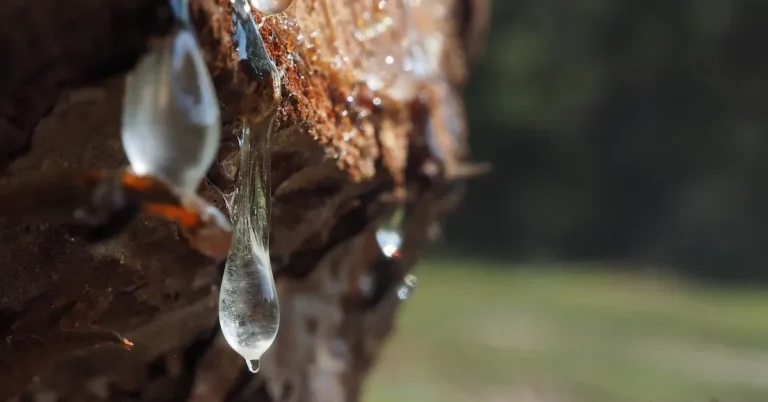
| Eastern white pine | about 380 | Soft, but resin can gum the blade |
| Basswood | about 410 | The standard carving wood, even grain, few knots |
| Butternut | about 490 | Soft with a pleasant grain, holds detail |
| Black cherry | about 950 | Medium, carves well when green, polishes nicely |
| Red oak | about 1,290 | Hard, tears out across the open grain |
| Sugar maple | about 1,450 | Very hard, slow and tiring for a beginner |
| Hickory | about 1,820 | Tough and durable, best left for later |
Green wood versus dry wood
A common belief is that dry, seasoned wood is always easier because it is “finished.” For most hardwoods it is the opposite. Freshly cut green wood is full of moisture, so the fibers slice with far less force, which is why traditional whittlers often carve a hardwood such as maple or cherry while it is still green. The trade-off is that green wood shrinks and can check (crack) as it dries. For a stick that just needs to be shaped, that hardly matters. For a piece with fine detail, use dry basswood.
Whichever you pick, avoid sticks with many knots, rot, or a crooked grain that runs out of the surface. A knot is the hardest, most unpredictable spot in a stick and the place blades most often skip. Not sure about a harder species? See is oak good for carving for a closer look at grain risk.
Safety Before the First Cut
Whittling injuries are almost always the same story: a cut that ended in the holding hand, thigh or wrist. A few habits prevent most of them.
- Clear a “blood circle.” Extend your knife arm fully and sweep it around you. Nobody, including pets, should be inside that circle while a blade is open.
- Wear a cut-resistant glove on the hand that holds the stick. Look for a glove rated to a recognized cut standard such as ANSI/ISEA 105 or EN 388. Cut-resistant does not mean cut-proof, and it will not stop a stab from the tip, so it backs up good technique rather than replacing it.
- Cut away from your body and away from your holding hand. Never cut toward your thumb, fingers, knee or thigh. If the blade could land on you when it slips, change your grip or reposition the stick.
- Sit with your elbows braced on your knees or a table so the cut is short and controlled. Do not whittle while standing with the stick against your leg, and avoid whittling in poor light.
- Make short, shallow cuts. Removing thin shavings looks slower but is much safer than trying to take off a big chunk at once.
- Keep the knife sharp and put it away. Close a folder or sheathe a fixed blade every time you stop, and never hand a blade over point first.
- Keep a first aid kit and a clean cloth within reach. A deep cut from a sharp knife needs pressure and, often, medical care.
One correction to advice you may see elsewhere: cuts that draw the blade toward you are not a beginner technique. A controlled pull cut exists, but only when the blade is stopped by your own thumb braced on the stick, and it should wait until the push cuts feel routine.
The Four Basic Cuts
- Push cut: Grip the knife like a handshake, brace the stick against your body or the bench for support, and push the blade forward and away from you. Good for taking off bark and roughing out.
- Thumb-assisted push cut: Hold the stick with the thumb of the holding hand behind the spine of the blade and push, using the thumb as a lever for small, precise shavings. The blade travels away from the thumb, never toward it.
- Stop cut: Cut straight across the grain to a shallow depth, then make a second cut that runs toward it. The shaving pops out and stops at the first cut instead of running down the stick. It is how you make a clean shoulder or ring.
- Paring cut: A controlled slice with the thumb of your knife hand pressing on the back of the blade, used for smoothing and fine finishing.
How to Whittle a Stick Step by Step
The tapered point is the ideal first project because it teaches grain direction and knife control on one piece of wood. You can turn it into a walking-stick tip, a plant marker or a roasting stick.
- Choose a stick. Pick a straight piece about as thick as your thumb and 10 to 12 inches long for practice, with as few knots as you can find.
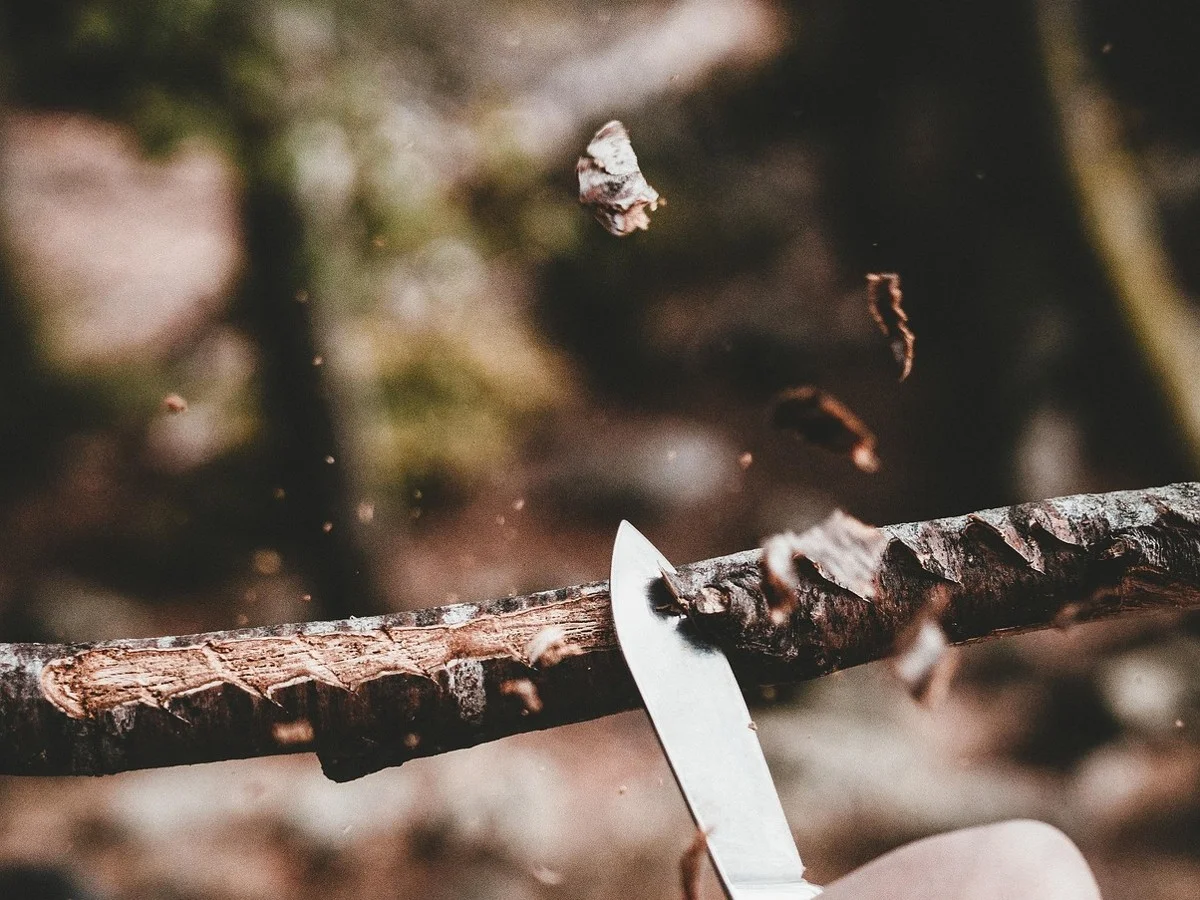
- Peel the bark. Use push cuts along the length of the stick, working away from your body. Green bark peels in long strips. Dry bark often chips off in pieces, so take shallow cuts.
- Read the grain. Look at the fibers as they run along the stick. You want the blade to move with the fibers so they lie down under the edge, sometimes called cutting downhill. If the wood tears or roughens, turn the stick around and cut from the other direction.
- Set the taper. Mark where the point begins, about 2 inches from the end for a thumb-thick stick. Rotate the stick a quarter turn after each set of cuts so the taper stays even.
- Shave four flat sides. Make long, shallow push cuts toward the tip, working from the widest part of the taper down to the point. You will end up with a rough square pyramid.
- Round it off. Shave the four corners into eight facets, then sixteen, until the taper looks round. Go slowly near the tip, since that is where a thin point snaps.
- Smooth and check. Finish with paring cuts, or a light pass of sandpaper, and run a gloved hand over the surface to catch any splinters.
Make a Marshmallow Roasting Stick
A roasting stick is a practical use of the same skills, but the wood choice matters because food touches it. Cut a fresh, straight green stick of a non-toxic hardwood such as maple, birch or hazel. Green wood also resists scorching longer than dry wood.
- Aim for about 30 to 36 inches so your hand stays clear of the heat.
- Peel the bark from the last 4 to 6 inches and shave a gentle taper to a point.
- Do not use unknown shrubs. Some plants, including oleander, yew and rhododendron, are toxic, and poison sumac or poison ivy can cause a bad reaction. If you cannot positively identify the plant, skip it.
- Avoid resinous conifers such as pine for food use, since the sap can leave an off flavor.
Common Whittling Mistakes
- Gripping too hard. A tight grip tires the hand fast and makes cuts jerky. Hold firmly but loosely enough that the blade guides itself.
- Cutting too deep. A deep cut follows the grain into the wood and splits off more than you intended. Take thin shavings and repeat.
- Ignoring grain direction. If the wood rips instead of slicing, you are cutting against the grain. Reverse direction.
- Working with a dull knife. Dullness makes you push harder. Strop often.
- Starting with hard wood. Oak and hickory are tiring and discouraging for a first stick. Practice on basswood or a green branch.
Where to Go Next
Once the tapered point feels natural, try decorated sticks with simple stick carving patterns, small projects in easy whittling projects, or the broader tool and wood guide in how to carve wood. If you want a functional project, a carved whistle is a natural step: see how to make a whistle out of wood.
Frequently Asked Questions
What kind of stick is best for whittling?
A straight, knot-free stick from a soft or green wood is best. Basswood, aspen and butternut are very easy to cut, while green maple, cherry or willow also whittle well. Very hard, dry woods such as oak and hickory are tiring for beginners.
Is it easier to whittle green or dry wood?
Green wood is generally easier because the moisture makes the fibers slice with less force. Dry wood is better for fine detail because it will not shrink or crack as it dries.
What knife should I use to whittle a stick?
Use a sharp knife with a short fixed blade of about 2.5 to 3.5 inches. A sloyd or dedicated whittling knife is ideal, and a sharp locking pocketknife will also work.
How do I whittle a stick safely?
Cut away from your body and your holding hand, sit with your arms braced, wear a cut-resistant glove on the hand holding the stick, keep the knife sharp, and keep other people outside your arm-length blood circle.
Whittling a stick teaches the fundamentals of every carving project: sharp tools, good grain reading and short, controlled cuts. Start with a tapered point, add the stop cut and paring cut, and you will be ready for spoons, animals and patterns.
Sponsored / affiliate links. As an Amazon Associate I earn from qualifying purchases. I may earn additional commission from eligible campaigns.