Is Melamine Waterproof? No, Just Water-Resistant
Melamine is water-resistant, not waterproof. The hard resin surface sheds spills, steam and wet sponges, but most melamine board is particleboard or MDF underneath, and that core soaks up water through any edge, seam or screw hole that is not sealed. This guide shows the four places water actually gets in, which rooms are safe, and how to seal the weak points before they fail.
Why Melamine Resists Water but Is Not Waterproof
Best Melamine Seam Sealer
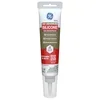 |
GE Advanced Silicone Caulk for Kitchen & Bathroom, White, 2.8 fl oz ($7.97) A 100% silicone sealant for the seams where melamine cabinets and panels meet a sink, wall or countertop, which is exactly where water gets in.
|
Melamine board is made by pressing resin-soaked decorative paper onto a particleboard or MDF panel with heat and pressure. That fused surface is dense and non-porous, so a spill beads up and wipes away, and it does not stain the way bare wood or raw MDF does. The panel underneath is compressed wood chips or fibers held together with glue, and those fibers swell when they take on water.
So the surface and the core behave like two different materials. The surface is close to waterproof. The core is the opposite. Whether a melamine piece survives a wet room depends on how completely the surface layer is wrapped around the core, and that comes down to edges and seams, not to the melamine itself.
Myth Check: A Wipe-Clean Surface Does Not Mean a Waterproof Panel
Two beliefs cause most melamine water damage. The first is that a wipe-clean surface means a waterproof panel. The second is that edge banding seals the panel for good. Neither holds up. A factory edge band is a thin strip held on with hot-melt glue, and water can travel along that glue line or in at the corners, where two bands meet and leave a small gap. The damage is usually slow, a series of small leaks over months rather than one big spill, which is why it tends to show up long after anything got wet.
A related mix-up is melamine dinnerware. Plates and bowls sold as melamine are solid molded resin all the way through, so they have no absorbent core to swell. This page is about melamine board used for cabinets, shelving and furniture. If you are weighing melamine against other cabinet materials, see melamine cabinets vs wood.
The Four Places Water Gets Into Melamine
Nearly every case of swollen melamine traces back to one of these entry points. The surface itself is rarely the culprit, which is good news, because entry points are the part you can seal.
| Entry point | Why it leaks | What to do |
|---|---|---|
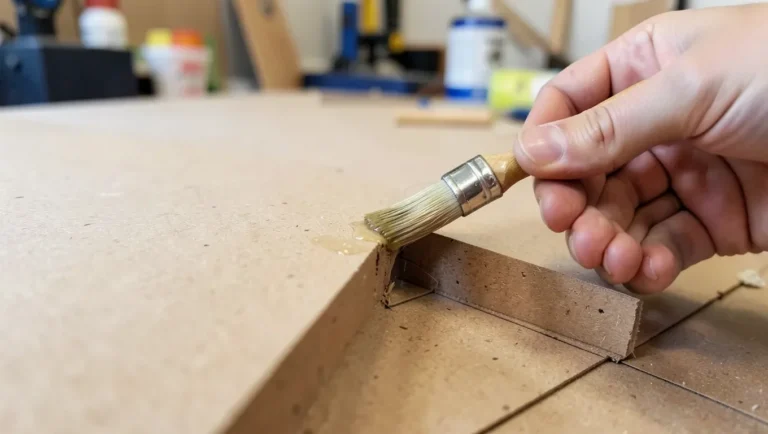
| Cut edges | Sawing exposes bare particleboard or MDF with nothing over it | Iron on or glue edge banding, or coat the raw edge with oil-based polyurethane or epoxy |
| Factory edge banding seams | The glue line and the corner joints can let moisture wick in slowly | Run a thin bead of 100% silicone along vulnerable seams in wet areas |
| Screw, hinge and drill holes | Each hole opens the core to the inside of the panel | Dab sealer or glue into holes near water before driving the fastener |
| Bottom edges and sink cutouts | Water pools here and sits against the core for hours | Raise the base off the floor, and seal the sink cutout edge fully |
Which Rooms Melamine Can Handle
Exposure type matters more than any clock. A spill wiped away in seconds never reaches the core. What harms melamine is water that stays in contact with an unsealed edge for hours, or that returns week after week. This table gives a practical verdict by location.
| Location | Verdict | Condition for success |
|---|---|---|
| Bedroom or office furniture | Fine | Normal cleaning only |
| Kitchen wall cabinets and drawers | Fine | Wipe up spills, keep edges intact |
| Sink base cabinet | Riskiest kitchen spot | Seal the cutout, fix leaks fast, protect the base panel |
| Bathroom vanity | Acceptable with care | Good ventilation and sealed bottom and back edges |
| Laundry room or basement | Marginal | Moisture-resistant board or another material is safer |
| Garage, deck or any outdoor use | Not suitable | Use exterior plywood; see whether melamine is weather resistant |
The sink base deserves special attention. It has the most plumbing connections in the room, the panel bottom sits closest to the floor where a leak spreads, and the cabinet is usually closed so a slow drip can go unnoticed for weeks. If you are installing melamine there, check under the sink now and then with your hand or a flashlight, not just when something looks wrong.
How to Seal Melamine Against Moisture
You cannot make the board waterproof, but you can close the entry points. Work in this order.
- Seal before assembly. Coat every cut edge and drilled hole with oil-based polyurethane or epoxy while the panels are still flat. This is far easier than sealing after the cabinet is built.
- Band the edges. Iron-on or glued banding closes the exposed core on a cut edge. If you want the banding to match a stained look, see how to stain edge banding.
- Silicone the seams that see water. Run a bead where the panel meets a sink, wall or countertop, then tool it smooth. Choose 100% silicone for wet areas and keep it off any surface you plan to paint, since silicone will not accept paint.
- Lift the bottom off the floor. Use feet, a plinth or a toe-kick with a small gap so a mop or a leak does not sit against the bottom edge.
- Fix leaks quickly. A dripping trap under a sink base is a common way to ruin a melamine cabinet slowly. Dry a wet panel promptly, since swelling from a long soak is permanent.
What Swollen Melamine Looks Like and Whether You Can Fix It
Early damage shows up as a slightly raised or bubbling edge, laminate lifting at a corner, or a bottom panel that has gone thicker than the rest. Once the core has swelled, particleboard does not return to its original thickness. Minor edge lifting can sometimes be re-glued and sealed. A panel that has bulged or crumbled usually has to be replaced. That is why sealing beforehand matters far more than repairing afterward.
A quick check on an existing piece: press along the bottom edge and around the sink cutout with a thumb. Firm and flat means the core is fine. A spongy spot, a ridge, or a slightly darker or puffy edge means moisture has already reached it.
Moisture-Resistant Boards and Other Options
Moisture-resistant boards, often recognizable by a green-tinted core, hold up better than standard particleboard, but they are still not waterproof. They buy you extra margin, not immunity. For a wet location where you would rather not depend on sealing at all, plywood with a proper finish is a more forgiving substrate, because it tends to swell less at the edge than particleboard.
| Material | Water behavior | Fit for wet areas |
|---|---|---|
| Standard melamine on particleboard | Surface sheds water, core swells permanently if wet | Only if fully sealed |
| Melamine on MDF | Similar surface, dense core that also swells when wet | Only if fully sealed |
| Moisture-resistant core (green tint) | More resistance, still not waterproof | Better, still needs sealed edges |
| Plywood with finish | Layers tolerate short wetting better, finish still needed | Generally the more forgiving choice |
If you are unsure whether a panel is particleboard or MDF, the difference matters for moisture too. The two are compared in MDF vs melamine, and fiberboard waterproofing covers the fiber-based cores in more detail. If you need to glue something to a melamine surface, wood glue and melamine explains why the slick surface resists most glues.
Frequently Asked Questions
Is melamine waterproof?
No. The melamine resin surface is water-resistant and non-porous, but melamine board has a particleboard or MDF core that absorbs water. Once moisture gets past a cut edge, seam or screw hole, the core swells and the damage does not reverse.
Can melamine be used in a bathroom?
Yes, for a vanity or wall cabinet in a ventilated bathroom, if every cut edge, sink cutout and seam is sealed. The surface handles steam and splashes. What fails is unsealed edges, especially at the bottom of a vanity where water pools.
Does edge banding make melamine waterproof?
No. Edge banding slows water entry, but the glue line and the seam at the corners can still wick moisture. PVC or ABS banding on a well-bonded edge resists splashes and cleaning, not standing water.
What happens when melamine gets wet?
Water on the surface just wipes off. Water that reaches the core makes the particleboard swell, most visibly as bubbling laminate, a raised edge or a bulging bottom panel. Swollen particleboard does not shrink back to its original thickness.
How do you waterproof melamine?
You cannot make it fully waterproof, but you can seal the entry points. Cover cut edges with edge banding, seal seams and sink cutouts with 100% silicone, and coat any exposed raw edge or drilled hole with oil-based polyurethane or epoxy before assembly.
Sponsored / affiliate links. As an Amazon Associate I earn from qualifying purchases. I may earn additional commission from eligible campaigns.