Why Does MDF Bow? The Real Cause and How to Stop It
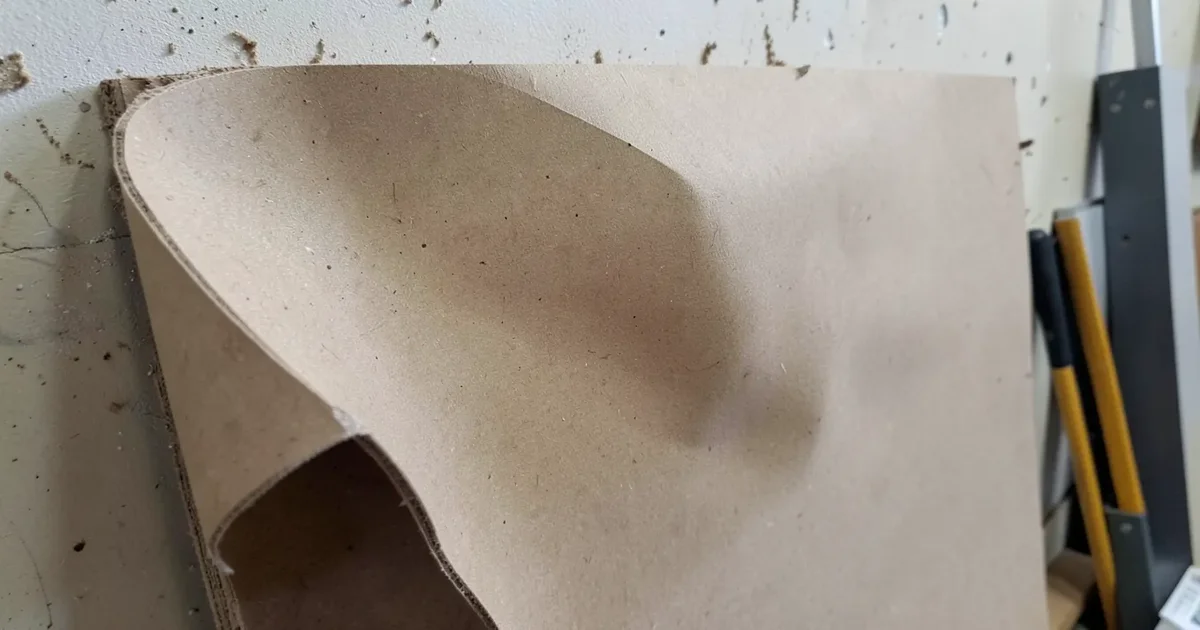
MDF bows almost always because of uneven moisture absorption between its two faces or edges, not because of the material’s grain structure – MDF has no grain direction to begin with. When one side of a panel is sealed with paint or veneer and the other is left raw, or one face sits against a humid wall while the other faces open air, that side absorbs more moisture and swells more than the other. The mismatch bends the panel toward the drier, less-swollen side, the same way a green board of solid wood cups, just driven by asymmetric sealing instead of grain orientation.
That’s the mechanism, and it points straight at the fix: MDF bows when it’s treated inconsistently, not just when it “gets wet.” A panel sealed identically on all six sides in a stable environment is genuinely resistant to bowing – it’s the asymmetry that causes the problem, more than moisture on its own.
Why Uneven Sealing Causes Bowing
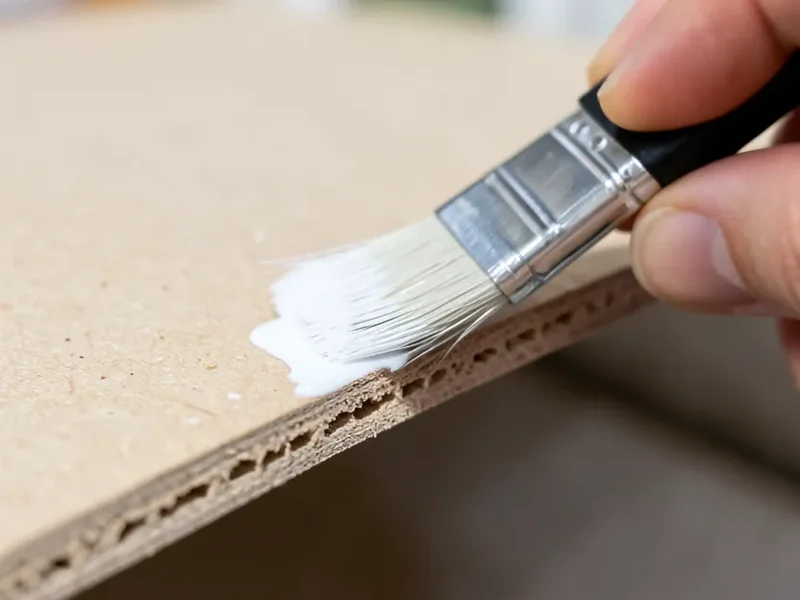
Seal Raw Edges First
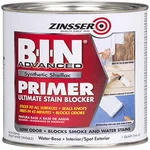 |
Zinsser B-I-N Advanced Primer-Sealer – $25.58 Raw MDF edges are the most exposed fiber on any cut panel – a shellac-based sealer soaks in and seals them almost as effectively as the factory-smooth faces.
|
MDF’s two faces come from the factory pre-compressed and relatively sealed by the manufacturing process itself, which is why a factory face resists moisture noticeably better than a freshly cut edge. Every cut edge exposes loose fiber with far more surface area for moisture to enter – it’s the single most vulnerable spot on any MDF panel, and it’s also the spot people most often forget to seal, since it’s easy to paint or laminate the visible faces and never think about the edge underneath a countertop lip or behind a cabinet door.
The other common asymmetry: painting or veneering one face of a panel (say, the visible front of a cabinet back panel) and leaving the hidden back raw. The sealed side resists moisture; the raw side doesn’t. Over months in a kitchen or bathroom with normal humidity swings, that mismatch is enough to bow a panel that would have stayed flat if both sides had matched.
Temperature, Storage, And Its Own Weight
MDF does expand and contract with temperature and humidity swings, though less dramatically than solid wood – the effect compounds with uneven sealing rather than causing bowing entirely on its own. Keeping panels in a stable-temperature space reduces the stress, but it’s a secondary factor next to the moisture-asymmetry mechanism above.
Storage matters for a different reason: MDF has lower stiffness for its weight than plywood, so an unsupported panel – leaned against a wall at an angle, or stacked with support only at the ends – can develop a real sag over time purely from its own weight, independent of moisture. Store sheet MDF flat, fully supported across the whole surface, not resting on a few contact points. If you’re stacking multiple sheets, keep the stack on a flat, level surface and avoid letting any sheet overhang unsupported.
Impact Of Bowing On Projects
Structural Issues
Once a panel bows, it’s genuinely difficult to correct without replacing it – MDF doesn’t respond to the same “wet it and clamp it flat” tricks that sometimes rescue a cupped solid-wood board, because the swollen fiber has already deformed permanently in most cases. Shelves sag, cabinet doors stop aligning, and tabletops develop a rock that no amount of shimming fully solves. For shelving specifically, thicker MDF and closer support spacing both help – a 3/4-inch MDF shelf under real weight (books, dishes) benefits from support every 24 inches or less, tighter than the spacing you’d use for plywood of the same thickness, since MDF flexes more under sustained load.
Aesthetic Concerns
A bowed panel distorts paint and veneer unevenly, since the finish was applied flat and now sits on a curved surface. Doors bind, drawers stick on their runners, and reveal lines between cabinet parts go crooked. These issues tend to show up gradually, which is exactly why catching early asymmetric moisture exposure – before real bowing sets in – is worth the small extra effort of sealing every side.
Choosing MDF That Resists Bowing
Standard MDF and moisture-resistant MDF (often called MR-MDF, usually tinted green so it’s identifiable) are genuinely different products, not just a marketing label – MR-MDF uses a wax and resin formulation that reduces water absorption into the fiber itself. It costs more, but for any application near a sink, in a bathroom, or in a humid climate, it’s worth the difference. High-density fiberboard (HDF) is denser still and resists moisture and sag better than standard MDF, at a further cost and weight increase.
Beyond the moisture-resistant variants, quality varies more by manufacturer consistency than by any official grading system the way plywood has A/B/C face grades – buying from a reputable supplier and checking that a sheet is flat and free of soft spots before you buy matters more than chasing a specific “grade” label.
Installation And Fastening Practices
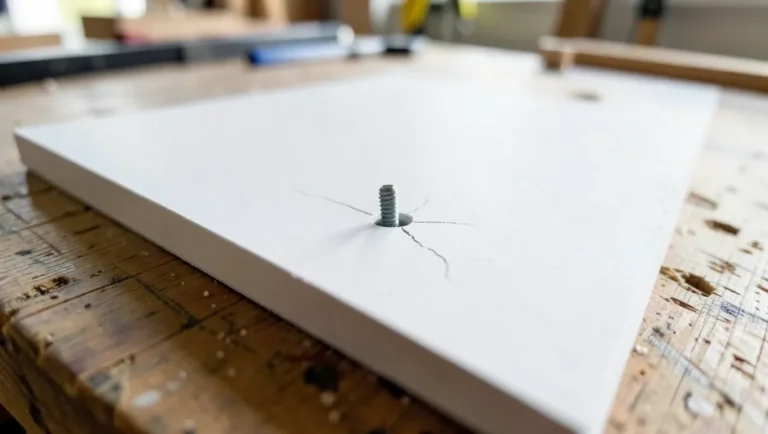
MDF holds screws less securely than plywood or solid wood, especially near an edge, so pre-drilling is genuinely necessary, not just good practice – driving a screw without a pilot hole risks crumbling the fiber around it rather than the panel splitting the way solid wood would. Use screws designed for MDF or particleboard, which have a more aggressive thread pattern than standard wood screws, and add glue at structural joints for extra holding power, since screws alone in MDF loosen more easily under repeated stress than in solid wood.
For anything spanning a distance – shelves, countertops, cabinet tops – support spacing matters more than it does with solid wood or plywood of the same thickness, precisely because MDF flexes more per inch of unsupported span. When in doubt, add a support rather than relying on the panel’s own stiffness.
Regular Maintenance And Catching Problems Early
MDF that’s starting to bow is worth catching early, before it becomes a permanent, replace-the-panel problem. Check unsealed edges and undersides periodically, especially in kitchens and bathrooms – a small area of raw, unsealed fiber that’s started absorbing moisture is far easier to seal now than to fix after real deformation sets in. A soft spot, a slightly swollen edge, or the first hint of a curve are all worth addressing immediately with sealant rather than waiting to see if it gets worse.
Frequently Asked Questions
How To Stop MDF From Bowing?
Seal all six sides of the panel identically – both faces and every cut edge – so moisture can’t get in unevenly on one side. Store panels flat with full support, keep them in a stable-temperature space, and avoid painting or laminating one face while leaving the other raw, since that mismatch is the actual mechanism behind most bowing.
How Do You Stop MDF Shelves From Bowing?
Use thicker MDF for anything carrying real weight, add support brackets or a center support so no unsupported span exceeds about 24 inches under load, and seal the underside and edges the same as the visible top – an unsealed underside is a common overlooked cause of shelf bowing specifically.
Is MDF Prone To Warping?
MDF doesn’t warp from grain-direction shrinkage the way solid wood does, since it has no grain at all – but it’s genuinely prone to bowing from uneven moisture absorption between its faces and edges. Sealing consistently on all sides and controlling humidity largely prevents it, which is different from being immune to it.
Why Does MDF Bubble?
Bubbling under paint or laminate usually means moisture got into the MDF core before or after the finish was applied, and it’s trying to escape or has swollen the fiber underneath the film. Sealing raw MDF properly before finishing, and keeping the finished surface away from standing water, prevents most bubbling.
Conclusion
MDF bows when moisture gets to one side of a panel more than the other, not simply because MDF “doesn’t like water” in general terms. Seal every face and every cut edge the same way, store panels flat and fully supported, and use moisture-resistant MDF for anything near real humidity exposure. Get those three things right and MDF is a genuinely stable, predictable material to build with – the bowing problems that give it a bad reputation almost always trace back to one side of a panel being treated differently than the other.
Sponsored / affiliate links. As an Amazon Associate I earn from qualifying purchases. I may earn additional commission from eligible campaigns.
 FIXOSHEE Sturdy Solid Wood Board for Projects Rectangular Furniture Divider Panel for Home Decor Versatile Crafting Material Unfinished Wood Board
 MECCANIXITY MDF Wood Board for Crafts,3/18"(4mm) Thick Medium Density Fiberboard Unfinished Wood for DIY Projects, Art Classes, Carpentry, Painting (12 x 16 in,2Pcs)