Why Is My Chainsaw Smoking? What the Smoke Color Means
If your chainsaw is smoking, stop cutting and figure out why before you use it again. Smoke from a running saw means something is overheating or burning where it shouldn’t be, and that’s a real mechanical and fire-safety warning, not just an annoyance. The good news is that the cause is almost always one of a handful of well-known problems: a dull or over-tight chain dragging against the bar, low or degraded bar-and-chain oil, an incorrect two-stroke fuel mix, or a clogged air filter starving the engine. The color and smell of the smoke narrow it down fast, and most of these fixes take less time than a drive to a repair shop.
Check the Bar and Chain Before You Touch the Engine
Most people assume smoke automatically means an engine problem, but on plenty of saws the smoke is coming from friction at the bar and chain, not combustion at all. A chain that’s dull, over-tightened, or simply running dry against the bar generates enough heat to smoke and produce a distinct hot-metal smell, well before anything inside the engine is actually at fault.
Best Bar and Chain Oil
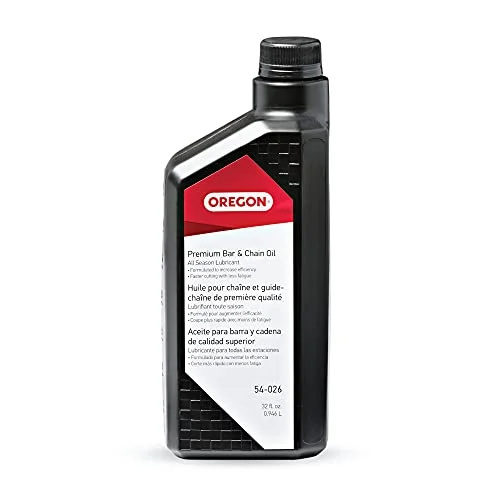 |
Oregon Premium Bar & Chain Oil, 1 Quart – $9.99 A dry, starved bar and chain is one of the most common causes of chainsaw smoke – this all-season formula clings to the bar instead of flinging off, so the chain stays lubricated even in hot weather.
|
Before you go any further, run three quick checks. First, with the chain brake off, rotate the chain around the bar by hand – it should move freely and you should be able to see a thin film of oil on the bar rails. Second, check tension by lifting the chain away from the bottom of the bar at its midpoint: it should lift only slightly and snap back, not sag loosely or bind up tight. Third, confirm the automatic oiler is actually reaching the bar by revving the saw a few inches above a piece of cardboard or light-colored wood and watching for a faint spray line of oil. A saw with no visible oil throw, a chain that’s stiff to pull around by hand, or bar rails that look blued or heat-discolored near the tip has been running dry, and that alone is enough to cause smoke. A chain that’s gone dull needs sharpening, not just oil – our guide to chainsaw sharpening tools covers how to tell when it’s time.
What the Smoke Color Actually Tells You
Once you’ve ruled out a dry or dull chain, the exhaust smoke’s color is one of the fastest diagnostic clues you have for what’s happening inside the engine itself.
| Smoke Color | Most Likely Cause | What to Check First |
|---|---|---|
| Black | Air-fuel mixture running too rich, usually from a clogged or restricted air filter | Pull the air filter and hold it up to light; if you can’t see light through it, clean or replace it |
| White | Moisture condensing and burning off inside the engine, common after storage in a humid shed or garage, or old fuel | Check how long the saw sat before this session and whether the fuel is more than a month or two old |
| Blue-gray | Oil being burned inside the engine – either an over-oiled fuel mix or, less commonly, worn piston rings letting oil into the combustion chamber | Re-check your fuel mix against the ratio in your owner’s manual; if the ratio is correct and blue smoke continues, the engine likely needs a professional compression check |
The bar-and-chain friction smoke from the first section doesn’t really have an exhaust “color” of its own – it shows up as light smoke or haze right around the bar itself, usually paired with a hot-metal or scorched-oil smell rather than the engine-exhaust smell of the causes above.
Smoke near the bar usually means friction, not the engine – check oil and chain tension first.
Engine Causes: Fuel Mix Ratio and a Dirty Air Filter
Most gas chainsaws run a two-stroke engine, where oil is mixed directly into the gasoline instead of sitting in a separate crankcase reservoir – our guide on whether chainsaws are 2-stroke covers the mechanical reason why that matters. Because the oil is part of the fuel itself, getting the ratio wrong in either direction causes problems: too much oil relative to gasoline and the mix burns dirty, fouling the spark plug and producing visible smoke; too little oil and the engine loses lubrication and can seize. There’s no single ratio that’s correct for every saw – 40:1 and 50:1 are both common, but the only number that matters is the one printed in your specific saw’s owner’s manual, since it varies by engine design and manufacturer. If you’ve lost the manual, the ratio is almost always printed on the fuel cap or the chainsaw’s own body near the fuel tank.
Never substitute plain motor oil, or any two-stroke oil not rated for air-cooled outdoor power equipment, for the correct pre-mix oil – our article on using motor oil in a chainsaw explains why that substitution causes exactly this kind of smoking and, over time, engine damage.
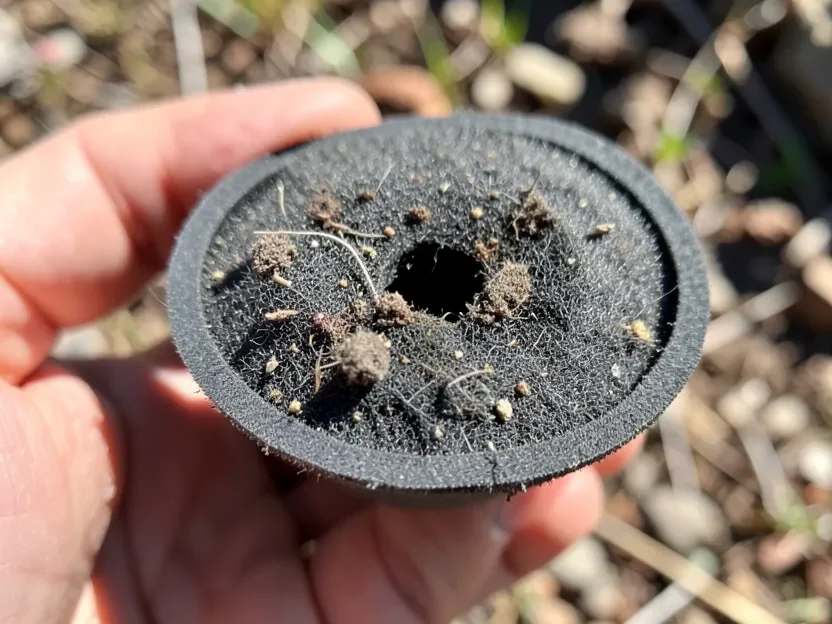
The air filter sits between the outside air and the carburetor, and its job is to keep sawdust and debris out of the engine. Once it’s caked with dust, it starves the engine of air, which throws off the air-fuel ratio and produces black smoke even if your fuel mix was measured correctly. Most chainsaw air filters pop out from under a cover near the top of the engine without tools. A lightly dirty foam or felt filter can usually be tapped clean or rinsed and fully air-dried; a heavily soiled or torn one should just be replaced, since a damaged filter lets debris through even after cleaning.
Clogged Cooling Vents and Overheating
Chainsaw engines are air-cooled, which means the cylinder’s cooling fins and the flywheel’s cooling shroud depend on a clear path for outside air to move across them. Sawdust, bar oil residue, and resin from cutting sap-heavy softwoods build up around the flywheel and cylinder fins over time, and once that buildup blocks airflow, the engine runs hotter than it’s designed to and can start smoking even with a correct fuel mix and a clean air filter. This tends to show up during long cutting sessions rather than right at startup, since it takes time for a partially blocked engine to heat past its normal operating range. A stiff brush and compressed air, used with the spark plug wire disconnected, is usually enough to clear the fins and shroud – it’s a five-minute check worth doing as part of routine maintenance, not just when something’s already smoking.
Serious Warning Signs: Stop the Saw Immediately
Most smoking-chainsaw causes are routine maintenance issues, but a few combinations of symptoms point to real internal damage and mean you should stop cutting right away rather than finish the job. Thick black smoke paired with a burning-plastic or burning-oil smell, smoke that doesn’t taper off once you release the throttle, or a sudden loss of power along with the smoke can mean a cracked piston, a scored cylinder wall, or a melted internal seal – damage that gets worse, not better, the longer the saw keeps running. Continuing to run a saw in that condition risks a full engine seizure while the chain is still moving, which is a genuine kickback and loss-of-control hazard, on top of the fire risk from a saw that’s actively overheating. If you see or smell any of these signs, shut the engine off, engage the chain brake, set the saw down, and let it cool completely before you inspect it further. Don’t try to “run it through” a smoking chainsaw hoping it clears up on its own.
How to Fix a Smoking Chainsaw, Step by Step
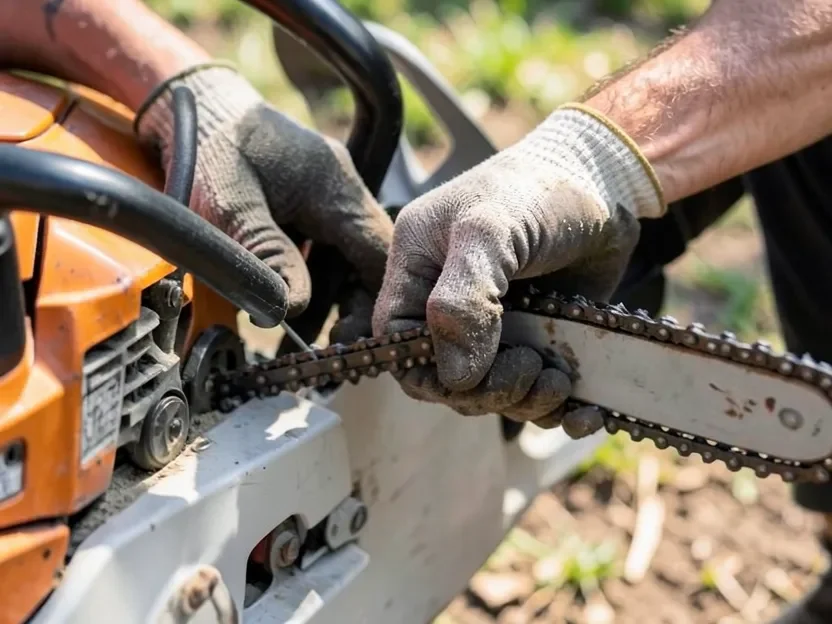
- Shut off and cool down. Turn the saw off, engage the chain brake, and let it cool before touching the bar or opening any covers.
- Check the bar oil reservoir and oiler flow. Top off the bar oil if it’s low, then confirm the automatic oiler is actually spraying the bar as described above.
- Check chain tension and sharpness. Adjust tension if it’s sagging or binding, and sharpen or replace the chain if the cutters are visibly dull or the saw has been throwing fine, powdery sawdust instead of clean chips.
- Verify the fuel mix ratio. Check it against your owner’s manual, not a generic number. If you’re not confident in the last batch you mixed, drain it and remix fresh fuel at the correct ratio.
- Clean or replace the air filter. A quick visual check against a light source tells you immediately whether it’s restricting airflow.
- Clear the cooling fins and flywheel shroud. Brush or blow out built-up sawdust and resin with the spark plug wire disconnected.
- See a certified small-engine mechanic if it persists. If black smoke and a burning smell continue after all of the above, or you suspect worn piston rings or a compression problem, that’s a job for a professional compression test, not further guesswork.
Frequently Asked Questions
Question: Why does my chainsaw chain smoke while cutting?
Answer: Chain smoke almost always means friction, not an engine problem – a dry bar with no oil reaching it, a dull chain that needs more force to cut, or a chain tensioned too tightly against the bar. Check bar oil flow and tension first before assuming it’s a bigger issue.
Question: What does white smoke from a chainsaw mean?
Answer: White smoke is usually moisture condensing and burning off inside the engine, common after a saw has sat in a humid shed or garage, or after sitting with old fuel. It’s distinct from the blue-gray smoke of an oil-burning issue and typically clears up once the engine warms up fully.
Question: Why is my chainsaw chain burning or smells like it is burning?
Answer: A burning smell at the chain is caused by friction, usually from low or absent bar oil, a clogged oiler port, or tension that’s too tight. Stop the saw, check the oil reservoir and oiler flow, and check tension before continuing.
Question: What causes a chainsaw to overheat?
Answer: The most common causes are a dull chain, low or no bar oil reaching the chain, a clogged air filter, or cooling fins and the flywheel shroud blocked with sawdust and resin. Running the saw for long stretches without a break makes any of these worse.
Question: Is it safe to keep using a chainsaw that is smoking?
Answer: No. Shut the saw off and inspect it before continuing. Most causes are simple fixes, but running a smoking saw risks turning a minor issue into real engine damage, and in the case of thick black smoke with a burning-plastic smell, it can mean the engine is already failing internally.
Final Thoughts
A smoking chainsaw is worth taking seriously, but it’s rarely a mystery once you work through it in order: bar and chain friction first, since it’s the most overlooked cause, then the smoke’s color to narrow down the engine-side possibilities, then fuel mix, air filter, and cooling fins. The one combination that’s not routine maintenance is thick black smoke with a burning-plastic smell or a sudden loss of power – that’s your signal to stop and get a professional compression check rather than keep troubleshooting on your own.
Sponsored / affiliate links. As an Amazon Associate I earn from qualifying purchases. I may earn additional commission from eligible campaigns.
 20 Inch Gas Chainsaw, 58CC 2-Stroke Professional Gasoline Powered Chainsaw 2.4KW 10000RPM Handheld Cordless Petrol Chain Saws Power Head for Cutting Wood Outdoor Garden Farm & Home (Orange)
 Top Handle Gas Chainsaws, 20 Inch Bar Power Chain Saws, Cycle Gas Powered Chainsaw, Chainsaw 2 Stroke Handed Petrol Gasoline Chain with Tool Bag, Gas Chain Saw for Cutting Wood Pruning Branches(52cc)