Wide Plank White Oak Floors: Cost, Pros & Cons (2026 Guide)
Wide plank white oak floors cost $5 to $28 per square foot installed, with the exact price driven by plank width, construction type, and finish. Planks wider than 5 inches need engineered construction, not solid, or seasonal humidity swings will cause gaps and cupping. This guide covers real cost ranges by width and construction, the Janka hardness advantage over red oak, and the acclimation step most installers skip.
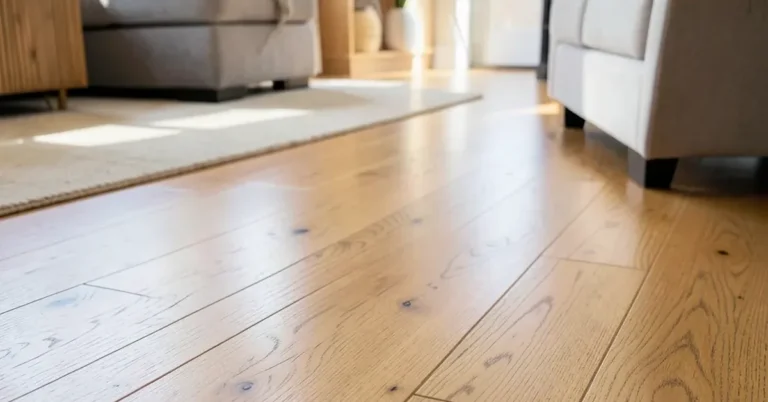
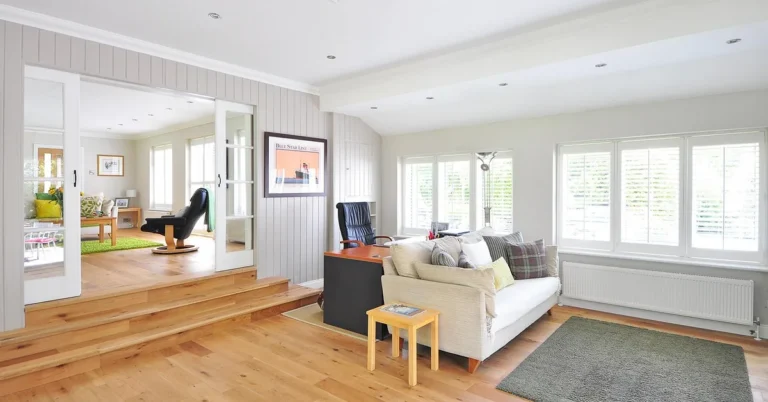
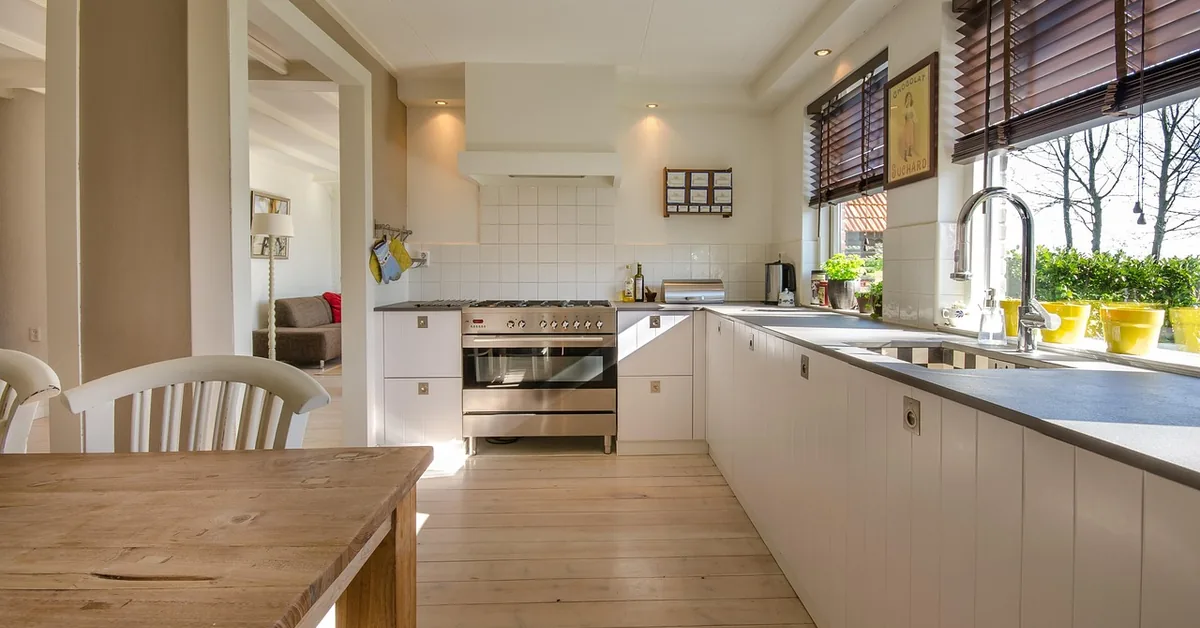
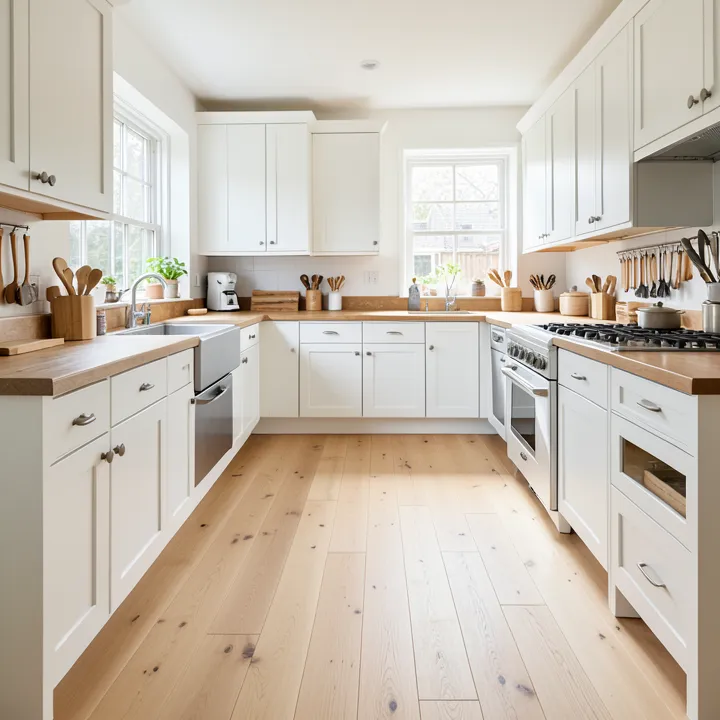
Wide plank white oak is one of the most requested options in our full wood flooring guide, and for good reason: the tight, straight grain and neutral tone (no red undertone, unlike red oak) create a warm but versatile look that suits both traditional and contemporary interiors. That’s why it’s a common choice for kitchens like the one below and for modern white kitchen oak floor designs.
Solid vs. Engineered: Which Should You Choose for Wide Plank?
Best Wide Plank White Oak Pick
HOMELEGEND Gunstock White Oak Engineered Hardwood (5 in, 19.7 sq ft/case)
A real white oak wear layer over an engineered core at the 5-inch width — the widest point where solid is still an option, but engineered removes the risk entirely.
- Best for: homeowners who want the wide-plank white oak look without solid-wood acclimation risk
- Why we picked it: genuine white oak veneer, mid-range price point matches the $12–$20/sq ft engineered bracket above
- Main drawback: engineered wear layers can only be refinished 1–2 times vs. 4–7 for solid
Compare more wide plank white oak essentials
 Option 1 Mullican Engineered White Oak, Unfinished (3-1/4 in)
|
 Option 2 General Tools MMD4E Wood Moisture Meter
|
 Option 3 Bona Hardwood Floor Polish, Low Gloss
|
As an Amazon Associate we earn from qualifying purchases.
Engineered wide plank white oak is a multi-ply hardwood floor with a real white oak wear layer bonded over a stable plywood-style core. It resists the expansion and contraction that ruins wide solid boards. Solid white oak, milled from a single piece of wood, is more susceptible to seasonal movement once a plank exceeds roughly 5 inches wide.
This is the decision competitors’ guides skip: plank width should drive your construction choice, not personal preference alone. The table below combines typical installed cost with the stability call for each width range.
| Plank Width | Recommended Construction | Typical Installed Cost | Why |
|---|---|---|---|
| 3–5 in | Solid or engineered | $8–$16/sq ft | Both stay stable; solid allows more future refinishes |
| 5–7 in | Engineered strongly preferred | $12–$20/sq ft | Solid risks visible gapping and cupping above 5 in |
| 7–10 in | Engineered only (quality mills) | $15–$24/sq ft | Movement across a solid board this wide is unmanageable |
| 10 in+ | Engineered, premium/custom mills | $19–$28+/sq ft | Requires a multi-ply engineered core for dimensional stability |
If budget allows a premium engineered option in the wider range, the 5-inch-plus white oak flooring options are a good starting comparison point before you commit to a mill.
Wide Plank White Oak Cost Breakdown
Material-only pricing varies more than installed pricing because it depends on grade, finish, and sourcing. Unfinished solid white oak runs $1.75–$3.50 per square foot; finished solid runs $5–$12. Domestic engineered white oak runs $4–$12 per square foot, while premium European engineered wide plank — thicker wear layers, wider format — runs $8–$18+ per square foot before installation.
Labor for wide plank is often $3–$4 per square foot, and can actually run slightly less per square foot than narrow strip flooring since fewer, larger boards cover the same area in less time. Site-finished installed pricing for 5–8 inch white oak typically lands at $15–$28 per square foot, all-in.
- Unfinished solid (DIY finish): $1.75–$3.50/sq ft material only
- Prefinished solid, mid-grade: $5–$12/sq ft material only
- Domestic engineered: $4–$12/sq ft material only
- Premium European engineered wide plank: $8–$18+/sq ft material only
- Fully installed, site-finished (5–8 in): $15–$28/sq ft
How Hard Is White Oak? Durability and Janka Rating
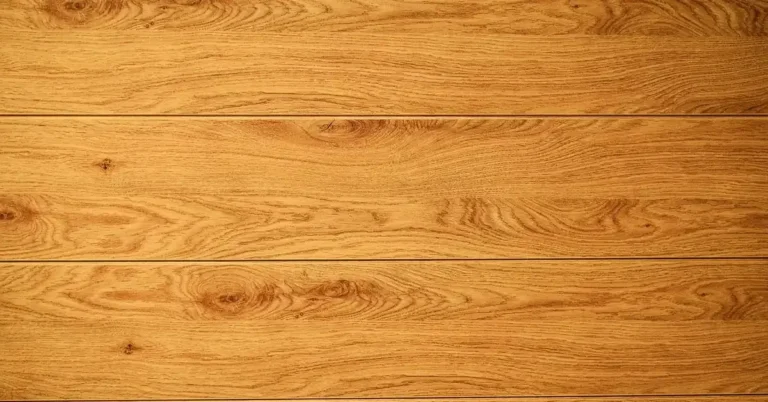
White oak is a dense, closed-grain hardwood with a Janka hardness rating of about 1,360 — roughly 5% harder than red oak’s 1,290 and well ahead of most domestic softwoods used in flooring. That closed grain is also why white oak resists water absorption and staining better than open-grain red oak, which matters more on wide boards where every seam is more visible.
Construction type changes how long that durability lasts. Solid white oak can be sanded and refinished 4 to 7 times over a lifespan of 50+ years. Engineered white oak, limited by its thinner wear layer, typically handles 1 to 2 refinishes over a 20–30 year lifespan. For a floor you expect to own for decades, that refinish count is worth weighing against the stability engineered offers at wider widths.
Durability And Hardness: white oak flooring in a gunstock or natural finish shows this hardness advantage clearly in high-traffic hallways and living rooms.
Installing Wide Plank White Oak: Acclimation and Subfloor Prep
Wide plank floors move more per board than narrow strip flooring, so skipping acclimation is the single most common cause of gapping and cupping complaints. According to the National Wood Flooring Association, solid wood flooring should acclimate in the installation space for several days to a couple of weeks, with the room held at normal living conditions and 30–50% relative humidity, before a single board goes down.
- Deliver the flooring early: bring cartons into the actual room where they’ll be installed, not a garage or basement with different humidity.
- Run HVAC at normal settings: keep the space at the temperature and humidity the home will normally see, not construction-site conditions.
- Check moisture with a meter, not a guess: confirm subfloor and plank moisture content are within the mill’s spec before installing — a $30–$50 pin or pinless meter pays for itself on a floor this expensive.
- Confirm subfloor flatness: wide boards telegraph subfloor dips more visibly than narrow strip flooring; flatten high/low spots before installation.
- Leave the acclimation window before install: follow the manufacturer’s stated period exactly — it varies by product and is printed on the carton.
Use the site’s wood shrinkage calculator to estimate how much a given width will move across seasonal humidity swings before you commit to solid over engineered.
Maintenance and Cleaning Wide Plank White Oak Floors
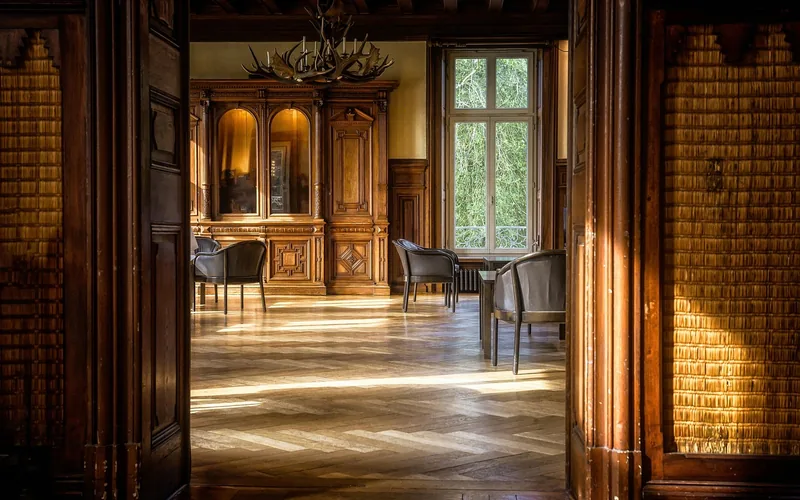
White oak needs less babying than softer species, but wide boards show dirt and scratches in wider, more visible strips. Sweep or vacuum (no beater bar) weekly, and use a hardwood-specific cleaner rather than an all-purpose spray — ammonia and vinegar-based cleaners strip the finish over time and cause the streaking that’s the most common wide-plank complaint.
- Wipe spills immediately — standing water is the fastest way to cause cupping on wide boards
- Use felt pads under furniture legs and avoid rolling heavy furniture directly on the finish
- Keep indoor humidity in the 30–50% range year-round with a humidifier in winter, dehumidifier in summer
- Re-apply a low-gloss polish when traffic patterns start to dull the finish, before scratches reach bare wood
- Plan a full refinish once deep scratches or gray patches appear — a belt sander built for floors is the right tool for solid white oak; engineered floors need a lighter touch given the thinner wear layer
Disadvantages and Environmental Considerations
White oak isn’t the right call for every project. Weighing these against the durability and resale numbers above is worth doing before you order material.
Disadvantages of White Oak Flooring
- Costs 10–20% more than red oak per square foot
- Solid wide plank is prone to water damage and seasonal gapping if not acclimated or if built above 5 inches wide
- Requires regular maintenance to keep the finish protected
- Vulnerable to scratches and dents in high-traffic zones without felt pads or rugs
- Natural color variation between boards, even within the same grade
Environmental Considerations
- Confirm sourcing from sustainably managed forests (look for FSC certification on the product listing)
- Engineered cores use less old-growth timber per square foot than solid boards of the same width
- Solid white oak’s 50+ year lifespan and multiple refinishes reduce long-term replacement waste versus engineered
- Low- or no-VOC finishes reduce impact on indoor air quality during and after installation
For color pairing once your floor is in, see this site’s wall color guide for oak floors.
Frequently Asked Questions About Wide Plank White Oak Floors
Should I choose solid or engineered for wide plank white oak?
Choose engineered for anything wider than 5 inches. Solid white oak stays stable up to about 5 inches wide; beyond that, seasonal humidity swings cause visible gapping and cupping that engineered’s multi-ply core resists.
How much does wide plank white oak flooring cost installed?
Installed, site-finished wide plank white oak (5–8 inches) typically runs $15 to $28 per square foot, including labor. Wider premium engineered formats above 10 inches can run $19–$28+ per square foot.
What is the Janka hardness of white oak vs. red oak?
White oak rates about 1,360 on the Janka scale, roughly 5% harder than red oak’s 1,290. White oak’s closed grain also resists water and staining better than red oak’s more open grain.
What are the disadvantages of white oak flooring?
The main concerns are cost (10–20% more than red oak), color variation between boards, vulnerability to scratches without protective pads, and moisture sensitivity in solid wide plank above 5 inches if not properly acclimated.
How wide can you get white oak flooring?
Engineered white oak is typically available up to about 12 inches wide from quality mills, and custom solid options can reach 15+ inches, though solid boards over 5 inches carry a real stability risk without engineered construction.
Is wide plank flooring still in style?
Yes. Wide plank flooring remains popular because fewer seams make a room read as larger and more current, and the format works in both traditional and contemporary interiors.
Conclusion
Wide plank white oak floors deliver a durable, Janka-1,360-rated surface with a timeless, neutral look — but the width you choose should decide the construction type, not the other way around. Stay at or under 5 inches for solid, go engineered above that, budget $15–$28 per square foot installed, and don’t skip acclimation. Get those three right and the floor should outlast the mortgage.
Sponsored / affiliate links. As an Amazon Associate I earn from qualifying purchases. I may earn additional commission from eligible campaigns.