Will Rustoleum Bed Liner Stick to Wood? Yes – Here’s the Prep
Yes – Rust-Oleum’s roll-on truck bed liner coatings bond well to wood, but only if the wood is sanded, clean, and completely dry first. Skip any one of those three steps and you’ll get peeling within a season, not because the product is wrong for wood, but because the surface wasn’t ready for it.
This is a common question because bed liner coatings were designed for steel truck beds, not wood. But the same rubberized polyurethane that grips a sandblasted steel bed will grip sanded plywood or dimensional lumber just as well – wood just needs different prep to get there.
Which Rust-Oleum Products Actually Work on Wood
Best Roll-On Bed Liner for Wood
 |
Rust-Oleum 323529 Professional Grade Truck Bed Liner Kit – $129 This is the roll-on kit referenced throughout this guide – it includes the etching prep step that makes the difference on a porous surface like wood.
|
Rust-Oleum sells bed liner under a few different formats, and they don’t all behave the same on wood:
- Roll-on kits (like the Professional Grade Truck Bed Liner Kit) – thickest film, best abrasion resistance, the format most people use on wood decking and stair treads
- Spray-on aerosol coatings – thinner per coat, faster to apply, fine for smaller wood projects like tool boxes or a workbench top, but you’ll need more coats to match the durability of a roll-on kit
- Truck bed coating in a can (brush/roll) – similar chemistry to the kit, cheaper, slightly less textured finish
All three are polyurethane or urethane-modified coatings, and all three need the wood prepped the same way. The kit format simply gives you the most coverage and includes an etching/cleaning step in the box, which matters more on porous wood than it does on steel.
How to Prep Wood So the Coating Actually Bonds
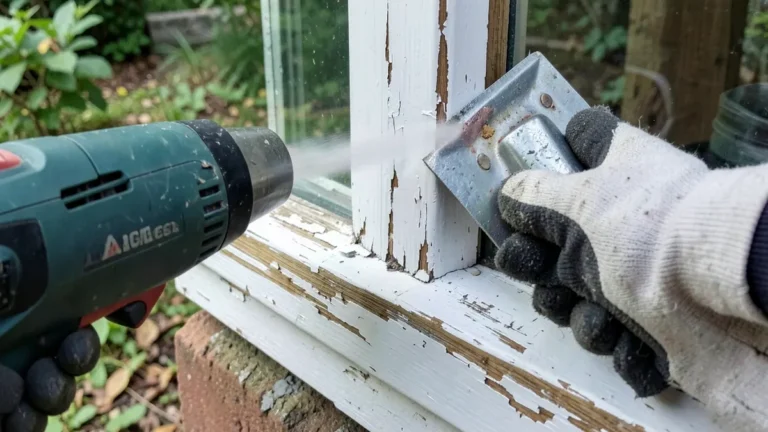
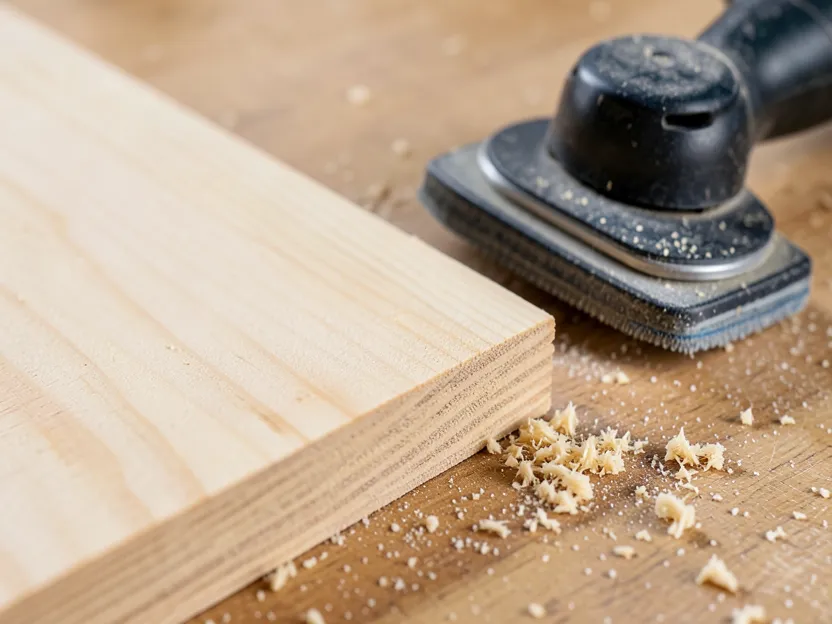
- Sand to bare, open wood grain – 80-120 grit is enough. You’re not trying to make it smooth, you’re trying to give the coating “tooth” to mechanically grip. A glossy or painted surface needs to be sanded down first; bed liner will not bond to old paint or sealed finish.
- Degrease and clean – wipe with a wax-and-grease remover or denatured alcohol, then vacuum every trace of sanding dust. Dust left in the grain is the single most common cause of a coating that peels in sheets a few months later.
- Let the wood dry completely – if it’s been rained on, pressure washed, or is new pressure-treated lumber, give it several dry days minimum. Trapped moisture under a urethane film has nowhere to go and will eventually blister the coating from underneath.
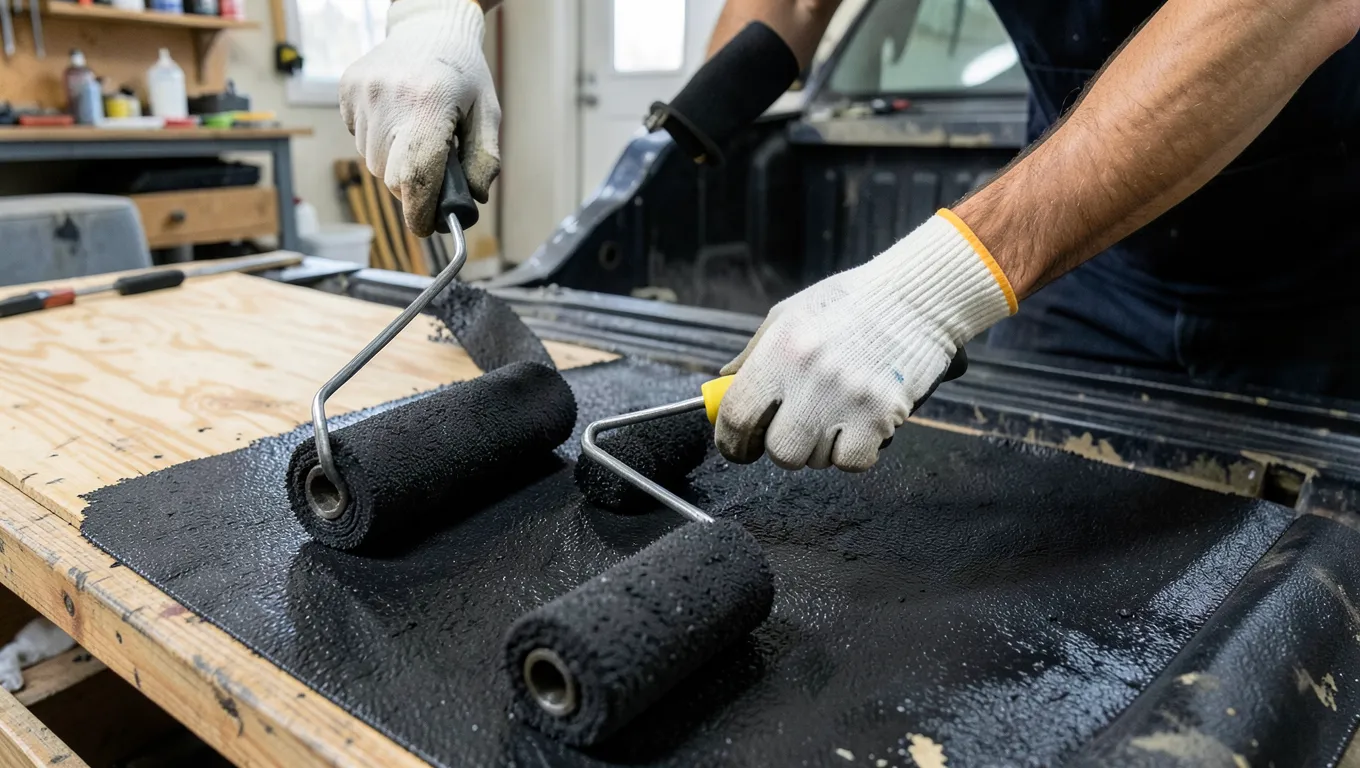
- Apply thin coats – two to three coats with a roller, tipping off any bubbles while wet. Thick single coats trap solvent and cure unevenly.
- Respect cure time – most Rust-Oleum bed liner products are dry to the touch in 2-4 hours but need 24-72 hours before foot traffic or heavy use, longer in cold or humid conditions.
Where It’s Worth It (and Where It’s Overkill)
Bed liner earns its cost on surfaces that take real abuse: a plywood truck bed floor on an older vehicle, a trailer deck that sees cargo dragged across it, a boat deck, or exterior stair treads that need slip resistance in wet weather. The rubberized texture also muffles the rattle of cargo shifting, which is part of why it became popular on wood truck beds in the first place.
It’s overkill for a deck or fence that just needs weather protection – a dedicated exterior deck stain or solid-color deck paint flexes better through seasonal wood movement and costs less per square foot. Bed liner is a thick, fairly rigid film; on a large outdoor deck that expands and contracts with humidity, that rigidity is more likely to crack at the boards’ seams over a few years than a product designed for exterior wood movement.
Coverage and What to Budget For
A gallon-size roll-on kit typically covers a mid-size pickup bed (roughly 35-50 sq ft) in two coats – check the specific product’s label, since coverage varies by formula and how porous the wood is (raw wood soaks up more of the first coat than primed or previously coated surfaces). For a smaller project like stair treads or a workbench top, the quart or aerosol versions are more cost-effective than opening a full gallon kit.
Frequently Asked Questions
Will bed liner paint stick to wood?
Yes, as long as the wood is sanded to bare, dust-free, and completely dry before you apply it. Bed liner will not bond to painted, sealed, or damp wood – it needs a clean, open-grain surface to mechanically grip.
Does spray-on bed liner stick to plywood?
Yes, with the same prep as any other wood surface – sand, degrease, and dry. Spray-on formats lay down a thinner film per coat than roll-on kits, so plan on 3-4 light coats on plywood rather than the 2 coats typical of a roll-on kit.
How do you apply bed liner to wood?
Sand the wood to 80-120 grit, degrease and vacuum all dust, confirm the wood is fully dry, then roll on 2-3 thin coats with the roller included in most kits, letting each coat dry 2-4 hours before the next. Allow 24-72 hours of cure time before putting the surface into heavy use.
Can I put roll-on bed liner on wood?
Yes – roll-on is actually the preferred format for wood because it lays down a thicker, more abrasion-resistant film than aerosol spray coatings. It’s the better choice for high-wear surfaces like a truck bed floor, trailer deck, or stair treads.
Conclusion
Rustoleum bed liner sticks to wood reliably – the coating chemistry isn’t the limiting factor, prep is. Sand it, clean it, dry it completely, and apply thin coats with full cure time between them, and it will outlast a standard deck coating on any surface that takes real abrasion. Skip the prep and it will peel regardless of how good the product is.
Sponsored / affiliate links. As an Amazon Associate I earn from qualifying purchases. I may earn additional commission from eligible campaigns.