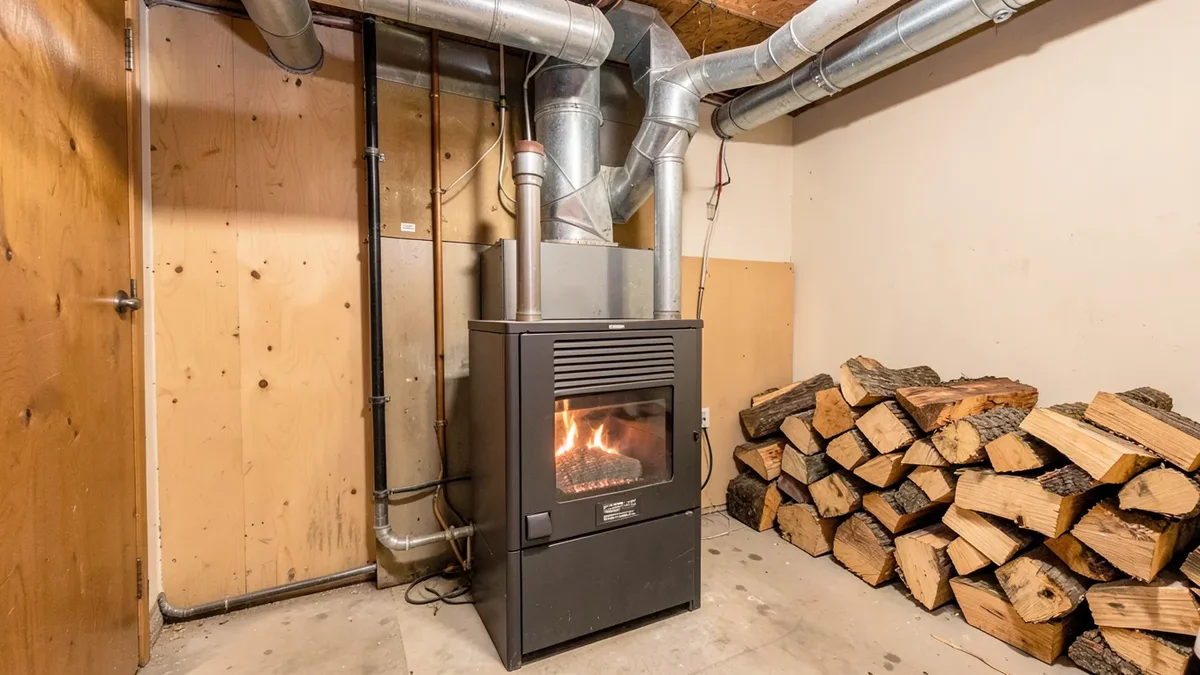
Wood Burning Forced Air Furnace: How It Works, Sizing, and Safety
A wood burning forced air furnace burns wood in an enclosed firebox, then uses a blower fan to push the heated air through ductwork to the rest of the house, the same way a gas furnace distributes heat. That’s the key difference from a wood stove, which just radiates heat from where it sits. A forced-air furnace can heat an entire house evenly from one central location, which is why they’re common in larger homes and rural properties with access to cheap or free wood.
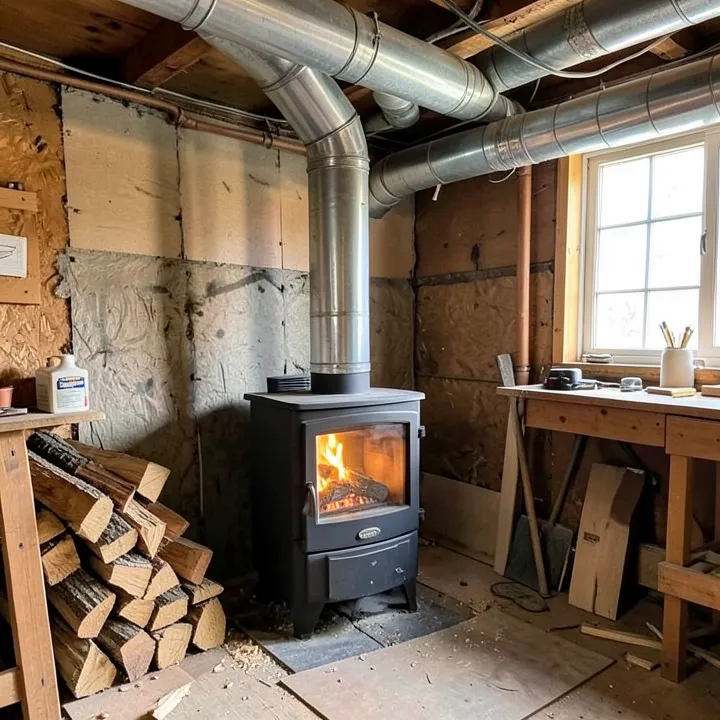
How a Wood Burning Forced Air Furnace Works
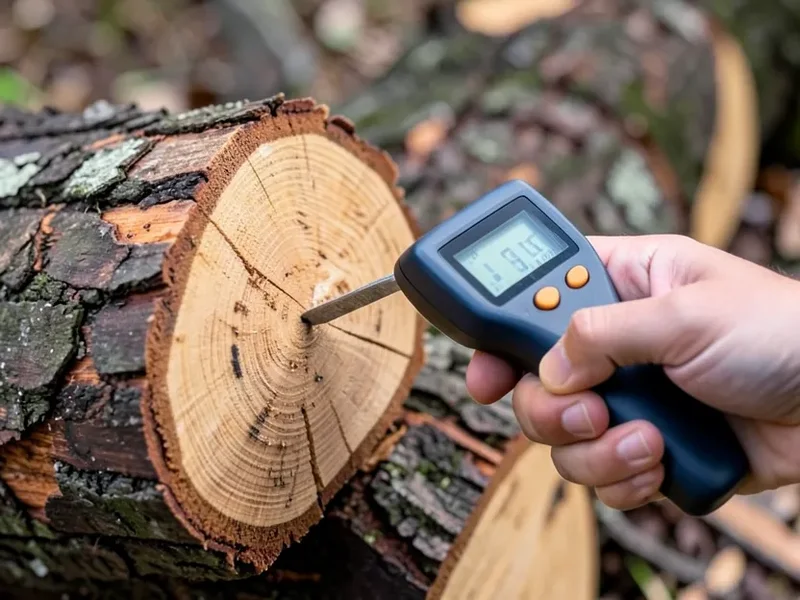
Check Your Wood Before You Burn It
 |
Dr.meter 2-in-1 Wood Moisture Meter – $26.99 Wood moisture, not species, is the single biggest factor in how much smoke and creosote a furnace produces. This checks a split log in seconds.
|
The core parts are simple: a firebox where the wood actually burns, a heat exchanger chamber around it that the blower pushes air through, a blower fan (often the same squirrel-cage design used in gas furnaces), and a chimney or flue that vents combustion byproducts outside. Some models also add a secondary gas or oil burner as a backup, so the house stays heated automatically if the wood fire burns down overnight.
Indoor vs. Outdoor Wood Furnaces
| Feature | Indoor Furnace | Outdoor Furnace |
|---|---|---|
| Location | Basement or utility room | A separate structure outside |
| Floor space | Uses indoor space | Frees up indoor space |
| Installation | Ties into existing ductwork more directly | Needs buried, insulated water or air lines to the house |
| Mess and smoke | Ash and bark stay indoors | Loading and ash cleanup stay outside |
| Exposure | Protected from weather | Exposed to weather, which adds maintenance |
Indoor furnaces are generally simpler and cheaper to install since they connect more directly to existing ducts. Outdoor units, sometimes called outdoor wood boilers, keep all the mess, smoke, and fire risk away from the living space, at the cost of a more involved installation and exposure to weather. Regional and local air-quality rules can also restrict outdoor wood burning in some areas, so it’s worth checking local regulations before choosing an outdoor unit.
Sizing and Choosing a Furnace
- Size to your home’s square footage. A common rule of thumb is roughly 35-45 BTUs per square foot in a moderate climate, so a 2,000 sq. ft. home lands around 70,000-90,000 BTUs—a manufacturer’s sizing chart or a local dealer can refine that for your specific climate and insulation level.
- Look for EPA certification. EPA-certified wood furnaces burn more completely and produce less particulate pollution and creosote than uncertified older designs.
- Budget for the full cost. Unit prices typically run $2,000-$12,000 depending on size and features, and installation (ductwork, chimney, electrical) commonly adds another $1,000-$3,000.
If you’re comparing specific models rather than just furnace types, our roundup of Hardy wood burning heater models looks at one of the more established outdoor-furnace brands in detail.
Using the Furnace Day to Day
- Check the firebox and ash pan before loading, and clear out built-up ash so airflow isn’t restricted.
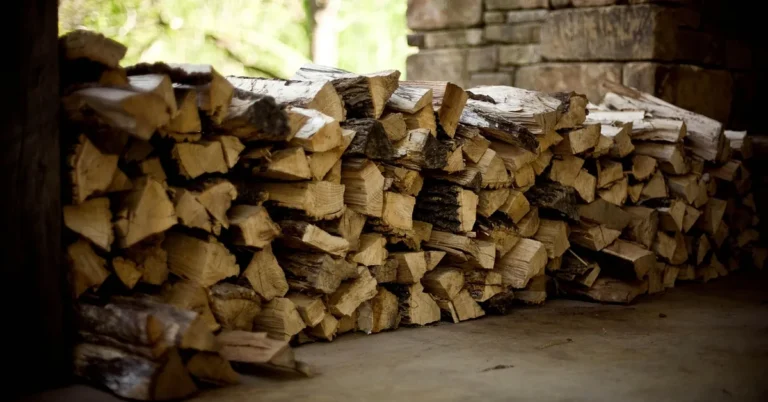
- Load seasoned wood that’s been split and dried for at least 6-12 months, not wood cut the same season.
- Start with kindling and small splits to build a hot bed of coals before adding larger pieces.
- Adjust the damper to control airflow into the firebox—more air burns hotter and faster, less air stretches the burn but risks a smoldering, smokier fire.
- Let the blower run to distribute the heat once the firebox is up to temperature.
- Clean ash regularly rather than letting it accumulate, since a deep ash bed insulates the firebox and lowers efficiency.
Moisture content matters more than species. A common myth is that softwoods like pine cause more creosote than hardwoods; in reality, unseasoned wood of any species smolders and produces heavy creosote, while properly dried softwood burns reasonably clean, just faster and with less heat output per load than a dense hardwood. Seasoning time and a moisture reading under about 20% matter far more than whether the log is oak or pine.
Safety and Maintenance
- Install and maintain a chimney liner to reduce creosote buildup and contain any chimney fire that does start.
- Have the chimney professionally cleaned at least once a year, more often if you burn heavily or use less-seasoned wood.
- Install smoke and carbon monoxide detectors near the furnace and on every level of the house.
- Keep a fire extinguisher rated for the job within reach of the furnace.
- Check the blower and motor periodically for dust buildup, which can reduce airflow and stress the motor.
Wood Furnace vs. Other Heating Options
| Heating Type | Operating Cost | Efficiency | Day-to-Day Effort |
|---|---|---|---|
| Wood furnace | Low, especially with free or cheap wood | High with an EPA-certified unit | Requires regular loading and ash removal |
| Gas furnace | Moderate to high, tied to gas prices | High | Minimal, mostly automatic |
| Electric resistance heat | Highest per BTU in most regions | Moderate | Minimal, fully automatic |
The tradeoff is straightforward: a wood furnace can cost the least to run, especially with a free wood source, but it’s the only option here that requires physical labor and daily attention. Gas and electric systems trade a higher operating cost for near-zero day-to-day effort.
Common Mistakes That Cost Efficiency
- Burning unseasoned or wet wood, which produces heavy smoke, wastes heat boiling off moisture, and accelerates creosote buildup.
- Letting ash accumulate instead of clearing it regularly, which restricts airflow and lowers burn efficiency.
- Undersizing the furnace for the home’s actual heat loss, which leaves cold rooms far from the furnace and forces constant reloading.
- Skipping the annual chimney inspection, which is when a dangerous creosote buildup is most likely to be caught before it becomes a chimney fire.
Frequently Asked Questions
What Is a Wood Burning Forced Air Furnace?
It’s a heating system that burns wood in a firebox, then uses a blower fan to push the heated air through ductwork to warm the rest of the house, similar to how a gas furnace distributes heat. It’s suited to larger homes and locations with access to affordable wood.
How Much Does a Wood Furnace Cost?
Unit prices typically run $2,000-$12,000 depending on size and features, with installation (ductwork, chimney, electrical work) commonly adding another $1,000-$3,000. A free or low-cost wood supply is what makes the ongoing operating cost lower than gas or electric heat.
Is a Wood Furnace Safe?
Yes, when it’s properly installed and maintained. A chimney liner, an annual professional chimney cleaning, working smoke and carbon monoxide detectors, and burning only seasoned wood are the core safety practices that keep the risk of creosote-fueled chimney fires low.
Can I Install a Wood Furnace Myself?
It’s possible for an experienced DIYer, but the work involves ductwork, chimney or flue installation, and often electrical connections for the blower, all of which have real safety and code implications if done incorrectly. Most homeowners have a licensed HVAC or chimney professional handle at least the venting and initial setup.
What’s the Best Wood to Burn?
Dense, properly seasoned hardwoods like oak, maple, and ash burn longest and produce the most heat per load. But moisture content matters more than species: any wood burned before it’s fully seasoned, hardwood or softwood, produces excess smoke and creosote. A moisture reading under about 20% is the target, regardless of what species you’re burning.
Are Wood Furnaces Eco-Friendly?
An EPA-certified furnace burns wood more completely and produces significantly less particulate pollution than an older, uncertified design. Wood is also a renewable resource, but real-world emissions depend heavily on burning properly seasoned wood and keeping the unit well maintained.
Bottom Line
A wood burning forced air furnace can heat an entire house for less than gas or electric heat, especially with access to cheap wood, but it trades that savings for daily loading, ash cleanup, and annual chimney maintenance. Size it to your home’s actual heat loss, buy EPA-certified if you can, and burn only wood that’s tested dry rather than assuming a season of stacking was enough.
Sponsored / affiliate links. As an Amazon Associate I earn from qualifying purchases. I may earn additional commission from eligible campaigns.