Wood Stove Damper Open Position: High or Low?
On most wood stoves, “high” means the damper is open or fully open for maximum draft, while “low” means partially closed or nearly closed to slow the burn; if the handle points differently, check the stove manual. Wrong damper position can cause smoky starts, weak heat, creosote buildup, or an overfire. This guide explains what each position does on different stoves and which setting to use at start-up, cruising, and shutdown.
What high and low mean

“High” and “low” describe how much the damper opens the flue path, not a universal handle direction. On many stoves, a handle parallel to the stovepipe means open, but that is not true for every model. Some handles move opposite of what the word suggests, so the safe reading is simple: check the blade or plate position, then match that to the fire’s behavior.
A wood stove damper controls flue gas flow. The air intake control regulates combustion air entering the firebox and is commonly the main burn-rate control on many modern EPA-certified stoves. That difference matters because a flue damper changes how easily smoke leaves the stove, while the air control changes how much oxygen the fire gets.
Older stoves may use the damper more directly to shape burn speed. Many modern catalytic and non-catalytic stoves still respond to draft, but they often depend more on the air intake and, on some models, a bypass damper for startup and reloading. If the stove seems “off,” touch the correct control first.
Damper versus air control
The damper changes resistance in the flue. The air control changes burn rate in the firebox. If smoke is backing up or the fire is sluggish right after lighting, the first check is often damper position, because the stove may not yet have enough draft to move smoke out of the box.
For a modern EPA stove, the air control often carries most of the day-to-day burn adjustment. For an older stove, a flue damper may do more of the work. That difference is why two stoves can have the same-looking handle position and behave very differently.
Do not treat a bypass damper as the same part as a flue damper. A bypass damper is found on some catalytic and some non-catalytic stoves, and it is commonly opened for startup and reloading, then closed after the fire is established. It is a flow path around the catalyst or burn system, not a general burn knob.
When should the damper be open?
The damper should be open fully at startup and during reloads, then moved down gradually once the fire is established. It should not be fully closed until combustion has ended. If you close it too far, smoke can spill into the room and the stove can smolder.
Startup and reload settings
At lighting, open the damper fully. That gives the chimney the strongest path for smoke and lets the fire establish faster. For reloads, open the damper, and if the stove has a bypass, open that before opening the loading door. This reduces smoke spill when you add wood.
Active burn settings
Once flames are steady and the stovetop or flue is warming in a normal way, move from fully open toward a more restricted setting only as far as the stove still burns cleanly. The right position depends on stove type, wood, chimney, and damper design. The goal is stable flames, not a smoky, lazy fire.
Overnight burn settings
For an overnight burn, many stoves need reduced airflow, but not a shut damper. To close the damper almost completely when only embers remain, yet that is not a license to choke a live fire. If smoke rolls back out or the flames go lazy and dark, the stove is too restricted.
Say your stove starts well with the damper fully open, then 20 minutes later the flames are still active but the fire is racing and the pipe is running hot. That usually means draft is strong enough that you should reduce airflow in stages, not leave the stove wide open for the whole burn.
Damper position by stove stage and symptom
Use handle position as a starting point, then read the stove’s response. A fully open damper should give the easiest smoke exit and the strongest draft. A more closed damper should slow the flue flow, but if it goes too far, smoke gets lazy and creosote risk rises.
| Stove stage | Handle position | Expected flame/smoke behavior | What to change next |
|---|---|---|---|
| Lighting | Fully open | Smoke exits quickly; kindling catches with active flame | Keep open until the fire is established |
| Reloading | Fully open, or bypass open on applicable stoves | Smoke stays in the flue instead of rolling into the room | Close gradually after the new load is burning |
| Active burn | Partially open | Flames stay bright and steady; smoke is lighter and more transparent | Reduce a little more only if the stove is still clean-burning |
| Low burn / coaling | Partially closed to nearly closed | Heat output drops; flames shrink to embers if too restricted | Open slightly if flames become lazy or smoke gets heavy |
| Shutdown | Leave open enough for remaining embers | Embers continue to burn out safely | Do not fully close until combustion has ended |
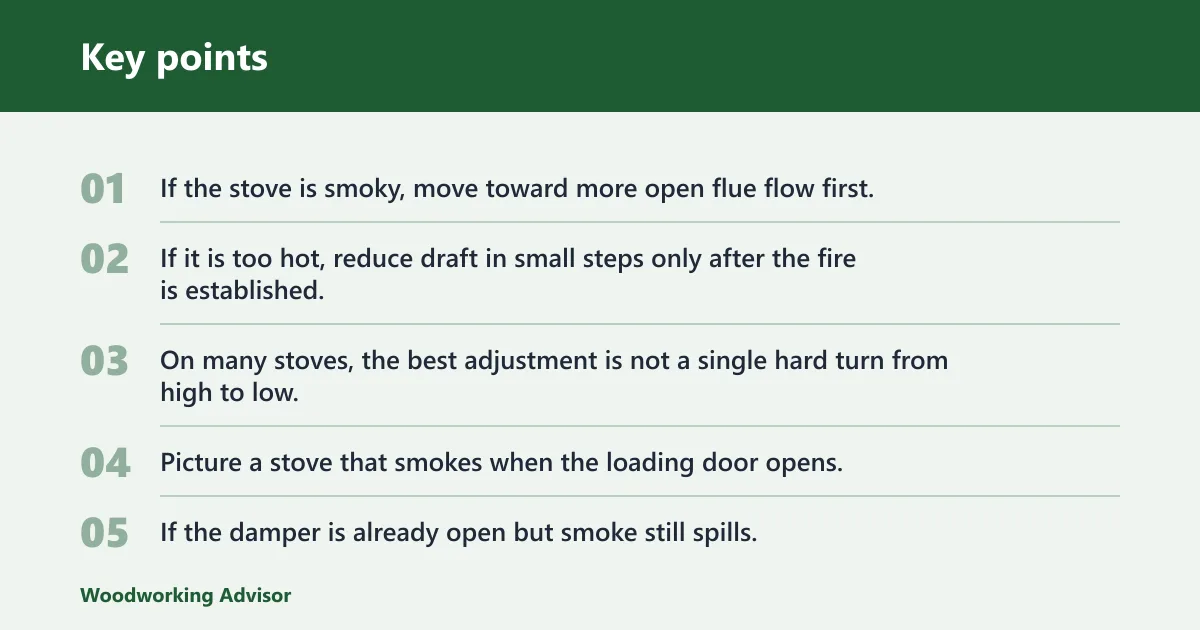
If the stove is smoky, move toward more open flue flow first. If it is too hot, reduce draft in small steps only after the fire is established. On many stoves, the best adjustment is not a single hard turn from high to low; it is a gradual change that keeps the flame active.
Picture a stove that smokes when the loading door opens. If the damper is already open but smoke still spills, the issue may be weak chimney draft, a cold flue, or a blocked path rather than handle position alone. Opening the damper further only helps if it was not already fully open.
Do you have the right damper type?
The answer depends on the pipe and the stove design. A stovepipe damper is usually installed in the first section above the stove collar, and it is commonly used in single-wall black stovepipe. Many manuals prohibit a stovepipe damper entirely, and some double-wall pipe systems do not accept one.
Stovepipe dampers in single-wall pipe
A stovepipe damper is a rotating plate with an external handle. It is generally installed in the first section above the stove collar. On compatible single-wall pipe, it gives you a direct way to trim draft on older stoves or on stoves with stronger-than-needed chimney pull. One guide places the price range at roughly $20 to $60.
Why double-wall pipe may need a different setup
Double-wall stovepipe changes the answer because some damper inserts do not fit or are not approved in that pipe. In that case, the manufacturer may require a different arrangement, such as a factory damper section or no flue damper at all. If your manual forbids it, do not add one on your own.
Bypass dampers on catalytic and some non-catalytic stoves
A bypass damper is not the same as a stovepipe damper. It opens a shortcut for startup and reloads, then closes after the fire is stable. If your stove has a bypass, use that control first for smoke management during loading, and use the air control or flue damper for burn shaping only as the manual allows.
How do you know it is too closed?
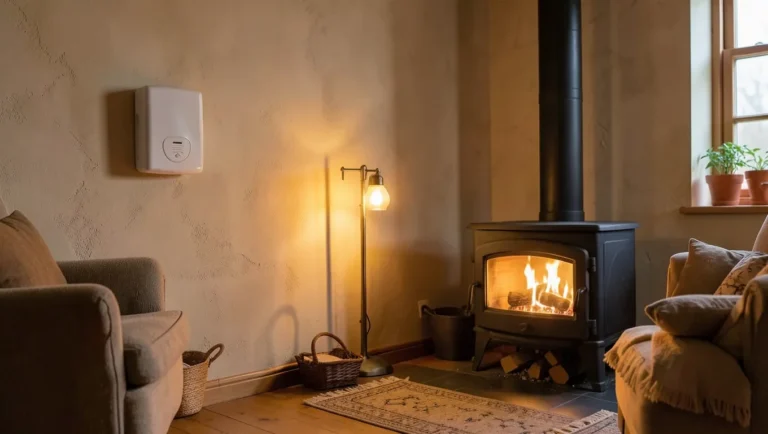
Too much restriction shows up fast. If the damper is too closed, smoke can roll back into the room, flames turn lazy, and the stove may smolder instead of burn cleanly. Carbon monoxide risk can rise when airflow is restricted too far, so working CO detectors are strongly recommended.
| Symptom | What it usually suggests | Next check |
|---|---|---|
| Smoke spillage at startup or reload | Too much restriction or weak draft | Open the damper fully; check chimney height, temperature, and blockage |
| Lazy, dark flames | Airflow is too low | Open the damper or air control slightly; watch for cleaner flame |
| Black deposits in pipe or chimney | Creosote risk from smoky burns | Back off the restriction and inspect the flue for buildup |
| Very fast burning with high flue temperature | Too much draft | Reduce draft in small steps if the manual allows it |
| Smoke smell, dizziness, headache | Possible CO exposure | Leave the area and check detectors and ventilation immediately |
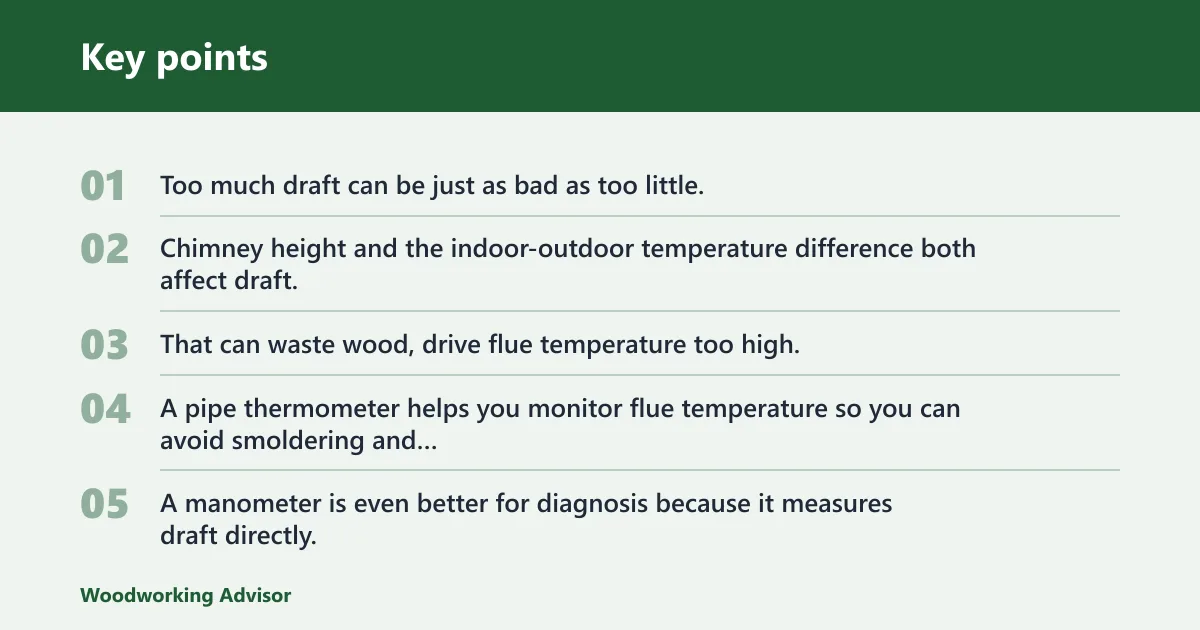
Too much draft can be just as bad as too little. Chimney height and the indoor-outdoor temperature difference both affect draft, and a strong chimney can pull too hard. That can waste wood, drive flue temperature too high, and push the stove toward overfire risk.
A pipe thermometer helps you monitor flue temperature so you can avoid smoldering and see when the stove is running hot. A manometer is even better for diagnosis because it measures draft directly. That is useful when the damper is open but the stove still runs oddly, or when the chimney seems unusually strong.
Suppose a short stove pipe section has soot at every seam, and the fire only stays calm when the damper is nearly shut. That can point to a chimney that drafts too hard, not a need for more restriction. In that case, a manometer reading and a manual check are more useful than simply closing the damper further.
How do you open the damper on a wood stove?
Open the damper fully by moving the handle to the position that aligns the internal plate with the flue path. On many stoves, that means the handle is parallel to the stovepipe when open, but not always. If the stove manual shows the orientation, use that instead of guessing from the handle shape.
For startup, open the damper before lighting. For reloads, open it before opening the loading door. If the stove also has a bypass, open that first on the stoves that require it. The aim is to let smoke move up the chimney instead of into the room.
Does a wood stove need a damper?
Not every wood stove needs a flue damper, and some manuals prohibit one. Many modern EPA-certified stoves rely more on the air intake or a factory-specified bypass than on a stovepipe damper. Older stoves and some draft-heavy installations benefit more from a damper because they need help slowing excess pull.
The right answer depends on the stove model, the chimney, and the pipe type. Single-wall black stovepipe may accept a rod damper, while double-wall pipe may require a different setup or none at all. If the stove already burns cleanly across the needed range, a separate pipe damper may be unnecessary.
Frequently asked questions
Should a wood stove damper be open or closed?
It should be fully open for lighting and reloads, then moved gradually toward a more restricted position after the fire is established. It should not be fully closed while embers are still burning. If the stove smokes, stalls, or rolls smoke into the room, open it more and reassess draft.
What is the proper wood stove damper setting?
There is no single proper setting for every stove. The correct setting depends on stove type, wood, chimney height, outdoor temperature, and damper design. A common approach is fully open at startup, then gradually reduced until the stove burns cleanly without smoke spill, lazy flames, or runaway heat.
What is a wood stove pipe damper?
A wood stove pipe damper is a rotating plate in the stovepipe that changes how easily flue gas leaves the stove. It is usually installed in the first section above the stove collar and is common in single-wall black pipe. It may not be allowed or practical in double-wall pipe.
What is the difference between a damper and an air control?
The damper changes flue gas flow after combustion has happened, while the air control changes how much combustion air enters the firebox. On many modern stoves, the air control is the main burn-rate setting. The damper is more about draft management, smoke control, and limiting excess chimney pull.
Can a wood stove damper be too open?
Yes. If it is too open and the chimney draft is strong, the stove can burn too fast, waste wood, and push flue temperatures too high. That raises overfire risk. The fix is usually to reduce draft in steps while keeping enough airflow for a clean burn.
How do I install a wood stove damper?
Install it only where the stove and pipe manufacturer allow it. A stovepipe damper is usually placed in the first section above the stove collar on compatible single-wall pipe, but some manuals prohibit it entirely. Double-wall pipe may require a different factory part or no damper at all, so the manual comes first.
Sponsored / affiliate links. As an Amazon Associate I earn from qualifying purchases. I may earn additional commission from eligible campaigns.