How Much Does It Cost to Build a Composite Deck Per Square Foot?
An installed composite deck often costs roughly $40 to $80 per square foot, with simpler jobs sometimes near $30 and more complex builds potentially exceeding $100 when framing, stairs, railings, and site work are included. Miss the extras and your budget can jump by thousands after demolition, permits, or code-required substructure changes. This guide breaks down installed base cost, common add-ons, and overrun risks so you can price a real project.
Typical cost range


Composite deck pricing comes from three main pieces: boards, labor, and structure. Material-only composite decking runs $4 to $12 per square foot, while installed composite decks in Southern Maine range from $45 to $70 per square foot. Fixed costs such as permits, footings, and inspection work get spread across more square feet on larger decks, so the per-foot rate usually drops as the project gets bigger.
Installed cost versus material-only cost
Material-only pricing misses much of the bill. Composite boards may be only part of the cost, while labor, framing, posts, footings, railings, stairs, and inspections fill out the rest. Trex decking itself runs $5 to $10 per square foot, but installed pricing is much higher because labor and structure often exceed the board cost.
Why deck size changes the rate
Deck size affects both total cost and cost per square foot. A standard 12×16 deck equals 192 square feet, so even modest add-ons can move the total quickly. Bigger decks can be more efficient per square foot, but only if the site is simple and the design stays single level.
How site conditions change the quote
Slope, drainage, access, frost depth, and existing framing can change the price more than the board choice. Southern Maine frost-depth footings are typically 48 inches deep, which can increase excavation and concrete work. A simple ground-level platform and a second-story deck are not priced the same, even at identical square footage.
Composite deck cost table
This calculator uses common budget allowances to show how the parts stack up. The totals are planning figures, not bids, and they assume typical residential work with standard permit and inspection needs.
| Deck size | Tier | Framing | Composite boards | Railings | Stairs | Permits | Demolition | Likely total | Overrun risk |
|---|---|---|---|---|---|---|---|---|---|
| 12×16, 192 sq. ft. | Standard composite | $2,900 to $4,300 | $800 to $1,800 | $900 to $1,800 | $500 to $1,200 | $225 to $500 | $0 to $1,200 | $6,500 to $10,800 | Moderate if railings or stairs are added |
| 12×16, 192 sq. ft. | Mid-grade composite | $3,100 to $4,500 | $900 to $2,000 | $1,000 to $2,000 | $600 to $1,300 | $225 to $500 | $0 to $1,200 | $7,000 to $11,500 | Moderate if old framing needs replacement |
| 12×16, 192 sq. ft. | Premium PVC/composite | $3,400 to $5,000 | $1,300 to $2,800 | $1,100 to $2,400 | $700 to $1,500 | $225 to $500 | $0 to $1,200 | $8,000 to $13,500 | High on elevated layouts |
| 16×20, 320 sq. ft. | Standard composite | $4,800 to $7,200 | $1,400 to $3,200 | $1,400 to $3,000 | $700 to $1,800 | $225 to $500 | $0 to $1,500 | $9,000 to $15,000 | Moderate if access is easy |
| 16×20, 320 sq. ft. | Mid-grade composite | $5,100 to $7,600 | $1,700 to $3,600 | $1,500 to $3,200 | $800 to $1,900 | $225 to $500 | $0 to $1,500 | $10,000 to $16,500 | Moderate to high with custom details |
| 16×20, 320 sq. ft. | Premium PVC/composite | $5,400 to $8,200 | $2,400 to $4,800 | $1,700 to $3,500 | $900 to $2,000 | $225 to $500 | $0 to $1,500 | $11,500 to $18,500 | High if second-story support is needed |
| 20×20, 400 sq. ft. | Standard composite | $6,000 to $9,000 | $1,800 to $4,000 | $1,800 to $3,800 | $900 to $2,200 | $225 to $500 | $0 to $2,000 | $10,500 to $17,500 | Moderate if the site is flat |
| 20×20, 400 sq. ft. | Mid-grade composite | $6,300 to $9,400 | $2,000 to $4,400 | $2,000 to $4,000 | $1,000 to $2,300 | $225 to $500 | $0 to $2,000 | $12,000 to $19,500 | Moderate to high if stairs are long |
| 20×20, 400 sq. ft. | Premium PVC/composite | $6,800 to $10,000 | $2,800 to $5,600 | $2,200 to $4,400 | $1,100 to $2,500 | $225 to $500 | $0 to $2,000 | $14,000 to $23,000 | High on elevated or multi-level designs |
What does labor add to installed cost?
Labor for deck construction typically runs from $15 to $35 per square foot, and it changes with location, deck size, and material type. Smaller decks often cost more per square foot because setup, cuts, and detailing take the same time on less area. More complex framing can push labor beyond the simple range.
When labor rises for complex framing
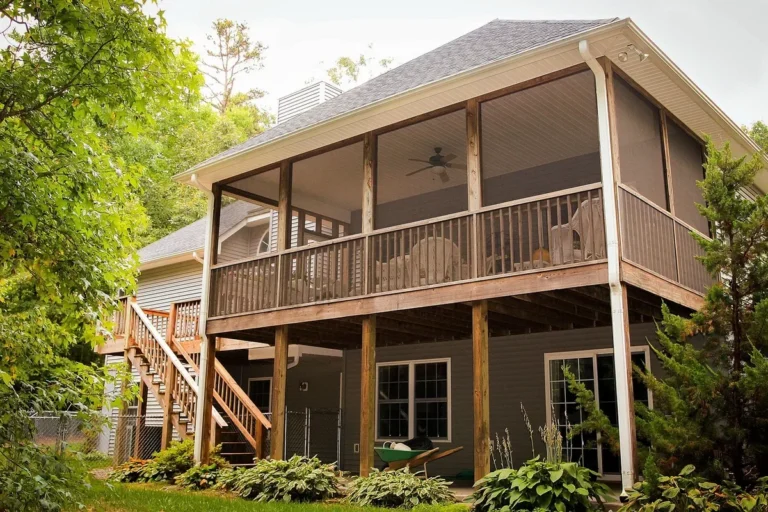
Labor climbs when the deck needs more beams, longer spans, custom stairs, or a ledger tie-in that requires careful flashing and inspection. A second-story or multi-level deck usually takes more labor than a flat platform because the support structure is more demanding. More corners also mean more cuts and more fastening time.
How local market conditions change pricing
Rates vary by region, crew availability, and building-code requirements. A contractor in a higher-cost market may quote the upper end of the range even for a small deck, while a simpler ground-level build in a lower-cost area may sit near the bottom. Local bids matter more than national averages.
What do railings, stairs, and footings add?
Railings, stairs, and footings can add several thousand dollars to a deck budget. Railings commonly cost $50 to $150 per linear foot, depending on material and code requirements. Stairs, posts, beams, and concrete footings are often the difference between a low quote and a realistic final bill.
Railing cost per linear foot
Railing price depends on the material. Basic pressure-treated rails cost less, while composite or metal systems push the price higher. On a 12×16 deck with multiple open sides, the railing package can add more than the boards if the design needs long runs or code-compliant guards.
Stairs and landing costs
Stairs are priced by run, width, and material, not by square foot alone. A straight stair set is usually simpler than a wraparound layout or a stair with a landing. If the deck is elevated, stairs often become a required part of the design rather than an optional upgrade.
Footings, posts, and beam costs
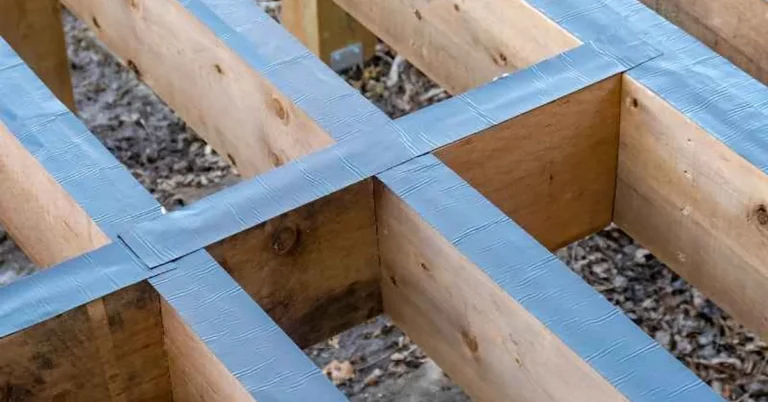
Concrete footings, posts, and beams support the structure and can swing the quote more than the decking surface itself. Raised decks need deeper excavation, more post hardware, and more structural lumber. In frost-prone areas, the footing depth requirement can add labor and concrete volume before a single board is installed.
How much does deck size change the total?
Deck size changes total cost almost line by line. A 192-square-foot deck may fit a modest budget, but once you move to 320 square feet or more, railings, stairs, and footings rise with the footprint. Size does matter because fixed costs like permits and footings get divided over more square footage on larger decks. Size alone does not predict cost if the deck is elevated or built over poor existing framing.
Small deck examples
A 12×16 deck often lands in the lower budget band for a composite build if the site is flat and the design is simple. Most Southern Maine homeowners should budget between $6,500 and $13,500, which fits many small to mid-size projects when add-ons stay limited.
Mid-size deck examples
A 16×20 deck commonly moves into the mid-range because the framing, railings, and stairs scale with the larger footprint. If you add a second stair run or higher guardrail demands, the total can climb fast. Larger multi-level or elevated decks can reach $25,000 or more.
When square footage undercounts structural cost
Square footage alone can hide the hard parts. A deck built on a slope, over an old landing, or on a second story needs more support than a simple ground-level platform. When the footings, ledger, or framing need correction, the project shifts from replacement to rebuild.
Suppose a 16×20 deck needs a deeper footing layout because the soil and frost line do not match the original plan. The board price may stay the same, but the extra excavation, concrete, and inspections can add more than the homeowner expected.
Where do permits, removal, and site issues raise price?
Permits, demolition, drainage, and access can raise deck cost even when the design looks basic on paper. Permit cost averages $225 to $500 for a traditional deck, and local code can require inspections before framing is covered. Existing deck removal adds labor and disposal before new work even starts.
Permit fees and inspection needs
Most decks need local permits, especially when they are attached to the house, elevated, or large enough to trigger guardrail and footing review. Inspections can affect scheduling and labor because work may pause until the next sign-off. Code requirements may also change the support details after the permit is reviewed.
Existing deck demolition and disposal
Removing an old deck can add a few hundred dollars to more than a thousand, depending on size and access. If the old structure is rotten or partially hidden, the contractor may need to tear out more than expected. That is how a rebuild becomes more expensive than a new deck on a clear site.
Drainage, slope, frost depth, and access
Drainage and slope can force more posts, taller framing, or deeper footings. Narrow access for materials raises labor time because crews cannot move lumber, concrete, and debris quickly. In cold regions, frost-depth footing requirements can change the entire support plan, especially on elevated decks.
Is composite worth more than pressure-treated wood long term?
Composite usually costs more up front than pressure-treated wood, but it cuts back on maintenance. Pressure-treated wood decks run $30 to $45 per square foot installed, while composite decks range from $45 to $70 per square foot installed in Southern Maine. Over 10 to 15 years, upkeep can narrow the real cost difference.
Upfront cost comparison
Composite costs more at the start because the board material itself is higher and the installed package is usually more complex. Pressure-treated wood remains the lower-cost option if the goal is the smallest initial bill. For owners comparing bids, the starting price difference is often visible before any upgrade is added.
Maintenance frequency and upkeep costs
Pressure-treated wood usually needs regular cleaning, stain or seal cycles, and periodic board replacement over time. Composite avoids most finish-related upkeep, which matters over a 10- to 15-year horizon. The exact maintenance bill varies, but the wood deck usually asks for more frequent attention.
When the long-term gap narrows
The gap narrows when composite needs expensive railings, a raised frame, or a difficult permit path. A pressure-treated deck with simple geometry can stay much cheaper for years if maintenance stays light. But once a wood deck needs repeated refinishing and board replacement, the long-term savings shrink.
A common first-timer mistake is focusing only on the decking boards and forgetting to include framing, fasteners, and labor in the per-square-foot total. A homeowner may see pressure-treated wood at the lower installed range and composite at the higher one, then forget that railings, stairs, and periodic maintenance can change the 10-year total more than the decking surface itself.
Frequently asked questions
How much does it cost to build a composite deck per square foot?
A typical installed composite deck costs about $40 to $80 per square foot, with Southern Maine composite pricing ranging from $45 to $70 per square foot installed. Material-only composite boards cost $4 to $12 per square foot. Simple ground-level decks sit lower, while elevated or code-heavy builds cost more.
What is the labor cost to build a deck per square foot?
Labor cost to build a deck per square foot is between $15 and $35. The rate changes with location, deck size, and material choice. Complex framing, steep sites, and second-story layouts usually move labor toward the top of the range because they take more time and structural work.
How much more does composite decking cost than pressure-treated wood?
Composite decking installed pricing is usually higher than pressure-treated wood. In Southern Maine, composite runs $45 to $70 per square foot installed, while pressure-treated wood runs $30 to $45. The upfront gap is often about $15 to $25 per square foot before upgrades, stairs, or demolition are added.
What size deck fits in a typical budget?
A standard 12×16 deck equals 192 square feet and often fits a typical composite budget when the layout is simple. Most Southern Maine homeowners should budget between $6,500 and $13,500. A larger 16×20 deck usually needs a higher budget because railings, stairs, and support framing increase with size.
What extra costs increase composite deck pricing?
Railings, stairs, permits, demolition, footings, and raised support work are the main add-ons. If the old framing is damaged, replacement work can push the total well above the starting quote.
Do raised or multi-level decks cost more?
Yes. Raised or multi-level decks cost more because they need more beams, more posts, deeper footings, and often more stairs. Southern Maine frost-depth footings are typically 48 inches deep, which can add excavation and concrete cost. Larger multi-level or elevated decks can reach $25,000 or more.
Sponsored / affiliate links. As an Amazon Associate I earn from qualifying purchases. I may earn additional commission from eligible campaigns.