Is Wood Siding Bad? Pros and Cons
Wood siding is not bad by default, but it becomes a poor choice if you cannot commit to repainting or restaining every 3 to 7 years, choosing climate-appropriate species, and paying for careful installation. Skip those requirements, and you risk rot, swelling, paint failure, higher repair costs, and shorter service life. This guide compares wood siding with vinyl, engineered wood, and fiber cement, and shows when wood makes sense.
Wood siding at a glance
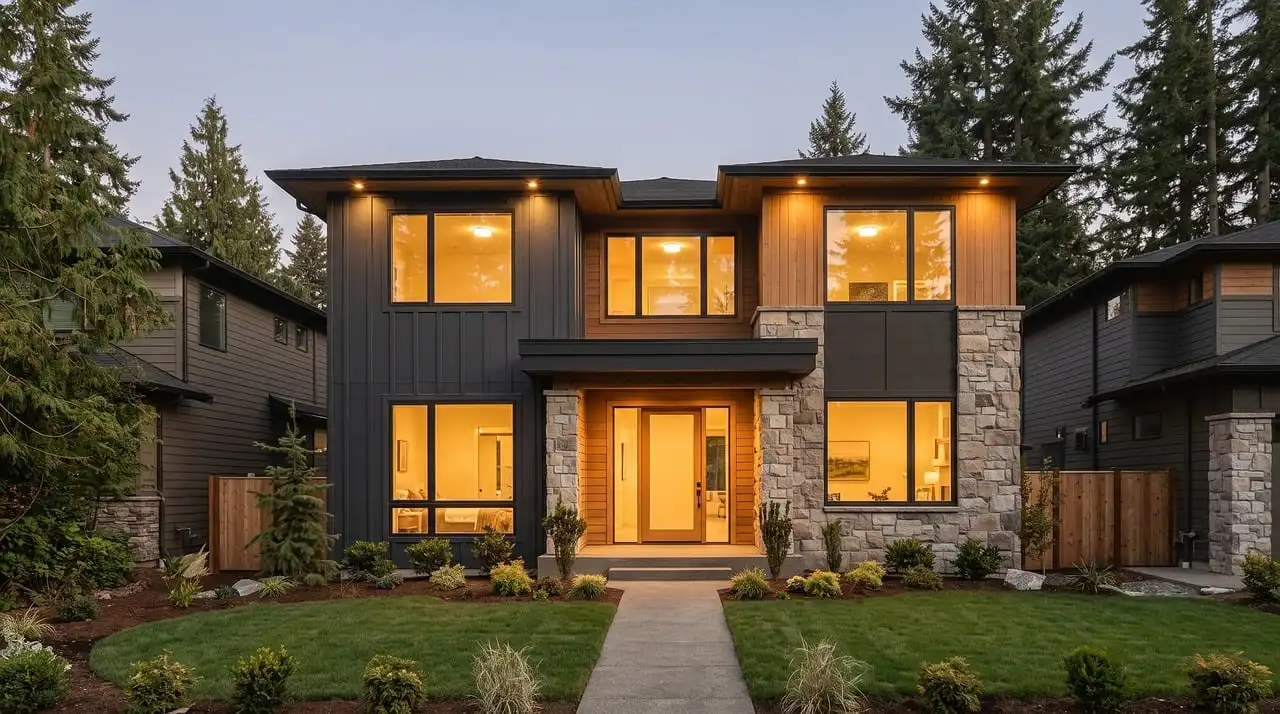

- Goof proof formula with no back brushing required
- Provides excellent moisture resistance and UV protection
- Low odor formula can be applied using sprayer, roller or brush
Wood siding is a natural exterior cladding made from species such as cedar, pine, redwood, and fir. It usually costs about $5.00 to $12.00 per square foot installed, with cedar often quoted higher at $10 to $20 per square foot. It can last 20–40+ years with upkeep, but only if moisture control and coating maintenance stay on schedule.
The main trade-off is simple. Wood gives a natural appearance and modest insulating value, around R-1.0 to R-1.4 for wood shake, but it asks for more upkeep than vinyl and tighter moisture control than fiber cement. Engineered wood lowers the entry cost for a wood-like appearance, while fiber cement usually offers the best durability and fire resistance.
Main upsides
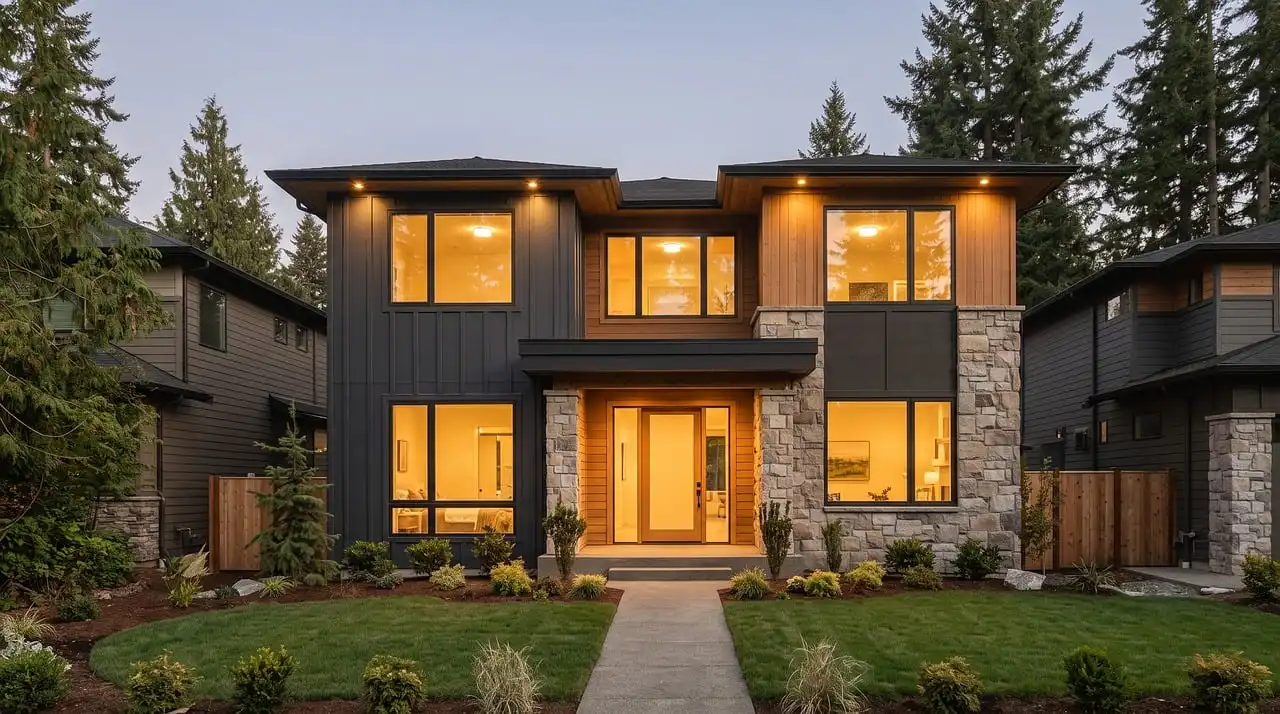
Wood siding gives you real wood grain and a look that many buyers still favor on traditional homes, cottages, and historic properties. It can support curb appeal, and it has modest insulating value compared with thinner cladding materials. That said, its visual appeal only helps if the siding stays straight, dry, and coated.
Main downsides
The weak points are well known: rot, termites, mold, warping, cupping, and splitting. Wood also needs repeated paint or stain work to protect against moisture and UV damage. In fire-prone areas, it is combustible and less fire resistant than fiber cement. Poor installation makes every one of those problems more likely.
How it compares with vinyl, engineered wood, and fiber cement
Vinyl usually costs less up front and needs less routine care, though it does not have the same look as natural wood. Engineered wood is a lower-cost wood-like option made from wood chips and resin compressed into a hard board, but it is still vulnerable to moisture intrusion and swelling. Fiber cement is the durability benchmark for many buyers.
| Material | Typical installed cost | Maintenance | Moisture risk | Fire performance | Best fit |
|---|---|---|---|---|---|
| Wood siding | $5.00 to $12.00 per square foot | Paint or stain every 3 to 7 years; some conditions push closer to 10 years | Higher if flashing, clearances, or sealant are weak | Combustible | Owners willing to maintain a wood exterior |
| Engineered wood siding | Usually below premium natural wood | Lower than natural wood when pre-finished, but still needs upkeep | Vulnerable to continued exposure to moisture | Varies by product | Budget-conscious buyers wanting a wood look |
| Vinyl siding | $3.50 to $7.00 per square foot | Occasional cleaning | Does not rot | Varies by product | Low-maintenance, lower-cost homes |
| Fiber cement siding | Varies by product and install | Lower routine care than wood | Resists rot and termites | Fire resistant | Homes that need durability and better fire performance |
When wood siding makes sense vs when it does not
Wood siding makes sense when the home sits in a drier climate, the owner accepts regular coating work, and the installation details are done carefully. Wood siding is generally a poor choice when moisture exposure is frequent, the budget is tight over the long run, or the site has high fire risk.
| Climate | Maintenance tolerance | Budget | Fire risk | Desired lifespan | Best siding choice |
|---|---|---|---|---|---|
| Dry, mild climate with good sun exposure | Willing to repaint or restain on schedule | Can absorb ongoing upkeep | Moderate to low | 20–40+ years with care | Wood siding |
| Dry climate, lower budget, but still wants a wood look | Some upkeep, but less than natural wood | Needs lower upfront cost | Moderate | Longer than basic paint cycle | Engineered wood siding |
| Wet climate, shaded lot, or poor drainage | Low tolerance for routine maintenance | Wants predictable ownership cost | Any level | Long, with less repair risk | Fiber cement siding |
| Wildfire-prone area | Any | Any | High | Long and durable | Fiber cement siding |
| Historic home where wood matches the original exterior | High | Can fund maintenance | Managed carefully | Preserve original look | Wood siding |
Simple scorecard
- Choose wood siding if you want natural wood appearance, accept a 3 to 7 year coating cycle, and can manage moisture details.
- Choose engineered wood siding if you want a wood look at a lower entry cost and can still keep water off the walls.
- Choose fiber cement if you want the strongest mix of fire resistance, rot resistance, and lower routine concern.
Is wood siding bad?
Wood siding is not bad by default. It is a workable exterior on the right home, with the right climate, and with an owner who will keep up with coating and inspection. It becomes a poor choice when moisture exposure is constant, fire risk is high, or the install quality is weak enough to let water reach the wood.
When wood is a good choice
Wood can be a sound choice for dry or moderate climates, especially when the home needs a traditional look or a period-correct exterior. It also makes sense when the budget covers not only installation but also long-term coating and spot repairs. Cedar is often selected when natural appearance matters most.
When wood becomes a poor choice
Wood is a weak fit when the home has frequent wetting from rain, snow, splashback, or roof runoff, or when the owner does not want repeat maintenance. It is also a poor choice for sites with wildfire exposure or for homes where flashing, clearances, or caulk work are likely to be neglected.
What are the pros and cons of wood siding?
The biggest pro is appearance, followed by curb appeal and a moderate insulating value. The biggest cons are maintenance, moisture sensitivity, pest risk, and fire exposure. If you want the look without the upkeep, a different material may fit better. If you value the material itself, wood can still be the right answer.
Pros
- Natural appearance that suits traditional and historic homes.
- Can support curb appeal and resale interest in the right setting.
- Wood shake has an R-value near 1.
- Available in common species such as cedar, pine, redwood, and fir.
Cons
- Needs paint or stain every 3 to 7 years in many settings.
- Vulnerable to rot, termites, mold, warping, cupping, and splitting.
- Combustible and less fire resistant than fiber cement.
- Can become expensive over time if coating or repairs are delayed.
Picture a 2,000-square-foot house in a wet climate with shaded walls and short roof overhangs. If the siding gets repeated splashback near grade and the paint fails at the bottom boards, rot can start at the joints and lower courses. The material choice may not be the real problem. Water control may be.
How long does wood siding last and how much upkeep does it need?
Wood siding commonly lasts 20–40+ years with upkeep. The upkeep is not optional decoration; it is what slows moisture entry, UV wear, and coating failure. Most guidance points to painting or staining every 3 to 7 years, with some cedar refinishing schedules stretching closer to 10 years when exposure is lower and the coating remains sound.
What maintenance actually protects against
Paint or stain helps keep water out of the wood surface and slows sun damage that dries and checks the boards. Good maintenance also gives you a chance to spot failed caulk, open joints, loose fasteners, and early rot before they spread. Without that cycle, small defects turn into board replacement.
Moisture management matters as much as coating
Wood siding lasts longer when the wall assembly is built to shed water. That means flashing at openings, housewrap or another weather barrier behind the siding, clearances at grade and rooflines, sealant at joints where needed, and installation gaps that let the material move without crushing or splitting.
Which siding type is the better fit: wood, engineered wood, vinyl, or fiber cement?
The better fit depends on the balance between look, upkeep, exposure, and cost. Wood wins when appearance and authenticity matter enough to justify maintenance. Vinyl wins when low routine care and lower cost matter most. Engineered wood sits between them. Fiber cement is often the safest pick where durability and fire resistance matter most.
| Comparison point | Wood siding | Engineered wood siding | Vinyl siding | Fiber cement siding |
|---|---|---|---|---|
| Appearance | Real wood grain | Wood-like, often pre-finished | Less authentic | Varies by profile |
| Routine care | Higher | Moderate | Lower | Lower than wood |
| Moisture tolerance | Depends on upkeep and install | Vulnerable to continued exposure to moisture | Does not rot | Strong |
| Fire resistance | Lower | Varies | Varies | Higher |
| Cost pressure over time | Higher if maintenance slips | Moderate | Lower | Moderate |
Wood siding vs vinyl siding
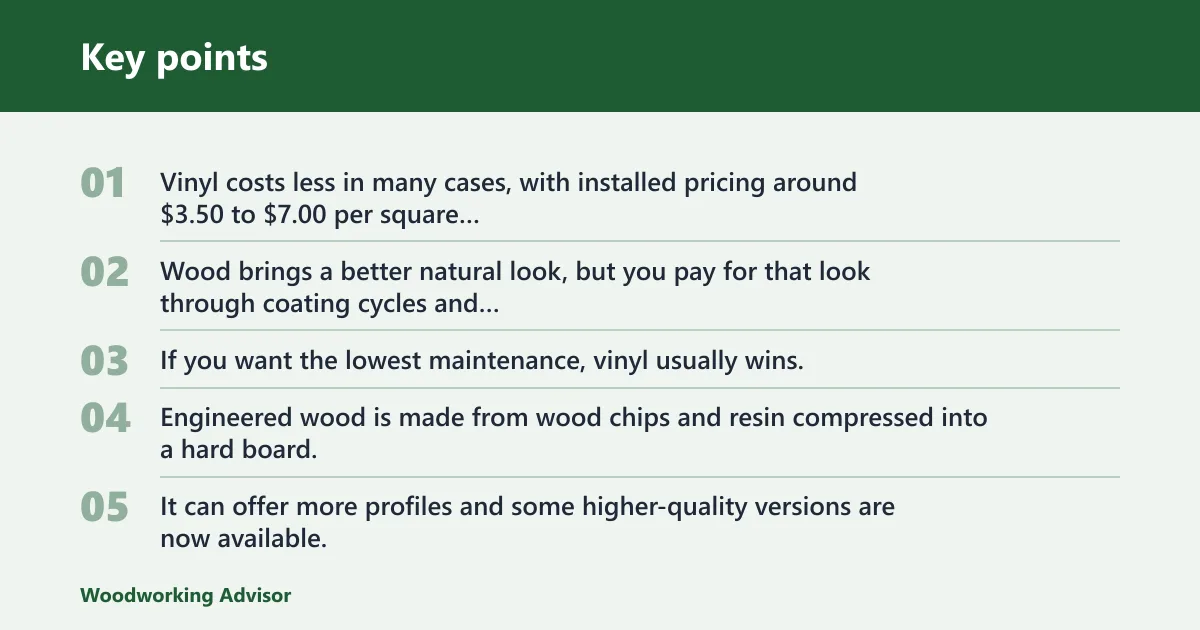
Vinyl costs less in many cases, with installed pricing around $3.50 to $7.00 per square foot, and it asks for far less routine attention. Wood brings a better natural look, but you pay for that look through coating cycles and moisture control. If you want the lowest maintenance, vinyl usually wins.
Wood siding vs engineered wood siding
Engineered wood is made from wood chips and resin compressed into a hard board. It can offer more profiles and some higher-quality versions are now available, often with pre-finished options and a reported 15-year product warranty. It is still vulnerable to moisture intrusion, so the savings only matter if the wall stays dry.
Wood siding vs fiber cement siding
Fiber cement is the sturdier comparison point when you want lower rot risk and better fire resistance. Wood can look warmer and more traditional, but fiber cement usually asks less of the owner over time. In high-risk locations, that difference often matters more than the grain pattern.
How can you tell if wood siding is failing?
Failure usually shows up first at the bottom edges, joints, and places where water sits or runs back toward the wall. Look for swollen boards, peeling paint, open seams, soft spots, and fasteners that no longer hold cleanly. If several areas show the same defect, the wall may need more than spot repairs.
Signs of rot, swelling, and movement
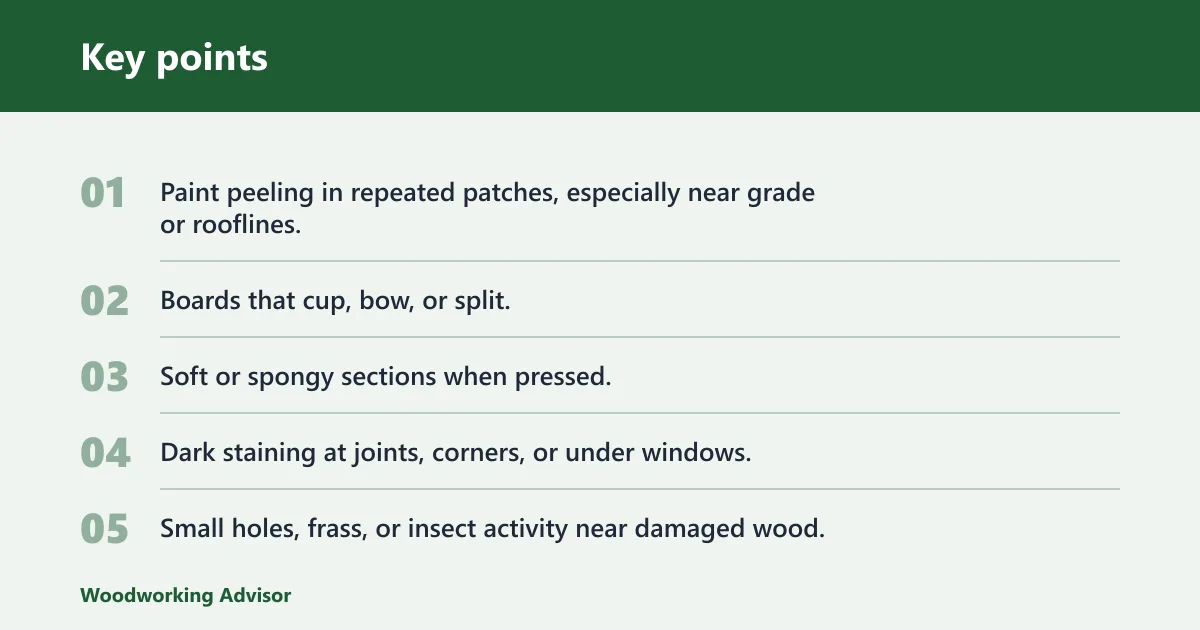
- Paint peeling in repeated patches, especially near grade or rooflines.
- Boards that cup, bow, or split.
- Soft or spongy sections when pressed.
- Dark staining at joints, corners, or under windows.
Pest damage and water entry clues
- Small holes, frass, or insect activity near damaged wood.
- Gaps around trim, window edges, or penetrations.
- Caulk that has cracked away from the joint.
- Staining below roof intersections, decks, or splash zones.
Suppose a homeowner notices peeling paint and a soft corner board beside a downspout on a 1,600-square-foot house. If the problem stays limited to one wet location, repair may be enough. If the same pattern appears under multiple windows, the siding system may have a broader drainage or flashing problem.
Inspection checklist before repair or replacement
- Check lower boards for softness, staining, and visible swelling.
- Inspect all horizontal joints for open gaps or failed caulk.
- Look at window and door flashing for drainage paths or leaks.
- Confirm clearances above grade, decks, and roof surfaces.
- Look for peeling finish, especially on the sunniest and wettest sides.
- Probe any suspicious areas to confirm whether damage is superficial or deep.
Choose wood siding if… / Choose engineered wood or fiber cement if…
Choose wood siding if you want natural wood, have a dry or moderate climate, and can keep up with routine coating and inspections. Choose engineered wood if you want a lower-cost wood look and can still manage moisture carefully. Choose fiber cement if you want the most forgiving option for wet weather, fire exposure, or long ownership cycles.
Best fit for wood siding
- You own a historic or traditional home where real wood matters.
- You can repaint or restain on schedule.
- Your site has good drainage and limited splashback.
Best fit for engineered wood siding
- You want a lower-cost path to a wood look.
- You are comfortable with continued care, but want more profile options.
- Your wall system can stay dry and well detailed.
Best fit for fiber cement siding
- You want better resistance to rot and termites.
- You live in a fire-prone area.
- You want less routine concern than natural wood requires.
Frequently asked questions
Is wood siding bad: wood siding is not bad?
Wood siding is not bad by default. It becomes a poor choice when moisture control is weak, maintenance gets delayed, or fire exposure is a serious concern. If you can manage coating, drainage, and installation details, wood can work well for the right home and climate.
Is wood siding good?
Wood siding is good when you value a natural look, accept routine upkeep, and choose a climate where it can stay dry enough to perform well. It fits especially well on historic or traditional homes. The material choice works best when maintenance is part of the plan, not an afterthought.
How long does wood siding last?
Wood siding often lasts 20–40+ years with upkeep. That range depends on climate, exposure, and finish quality. Regular painting or staining, plus good flashing and drainage, help it reach the upper end of that range. Without those steps, service life can drop much sooner.
How much maintenance does wood siding need?
Plan on repainting or restaining every 3 to 7 years in many settings, with some conditions stretching closer to 10 years. You should also inspect joints, trim, and lower boards for damage. Maintenance is not only cosmetic; it helps block moisture, reduce UV damage, and catch early failure.
Is wood siding better than vinyl siding?
Wood is better if your priority is a real wood look and you are willing to maintain it. Vinyl is better if you want lower cost and less routine care. Neither is superior in every home. The right choice depends on climate, budget, and how much upkeep you are willing to own.
Sponsored / affiliate links. As an Amazon Associate I earn from qualifying purchases. I may earn additional commission from eligible campaigns.