1/2 vs 3/4 Inch Engineered Hardwood: Wear Layer Compared
3/4 inch engineered hardwood typically carries a wear layer of 4mm or more, versus roughly 1 to 2mm on most 1/2 inch boards – the layer that determines how many times a floor can be sanded and refinished. That is not a strict rule; it depends on the specific product’s veneer-to-core ratio, not thickness alone. This guide compares wear layer depth, installation methods, moisture stability, cost, and transition-height matching for both thicknesses.
What 1/2 Inch and 3/4 Inch Engineered Hardwood Actually Mean
Engineered hardwood is built from a real hardwood veneer bonded to a plywood or high-density fiberboard (HDF) core. The number on the box – 1/2 inch or 3/4 inch – is the board’s total thickness, not the thickness of the real-wood layer on top. For the bigger picture on species and construction types beyond thickness, see our full wood flooring comparison.
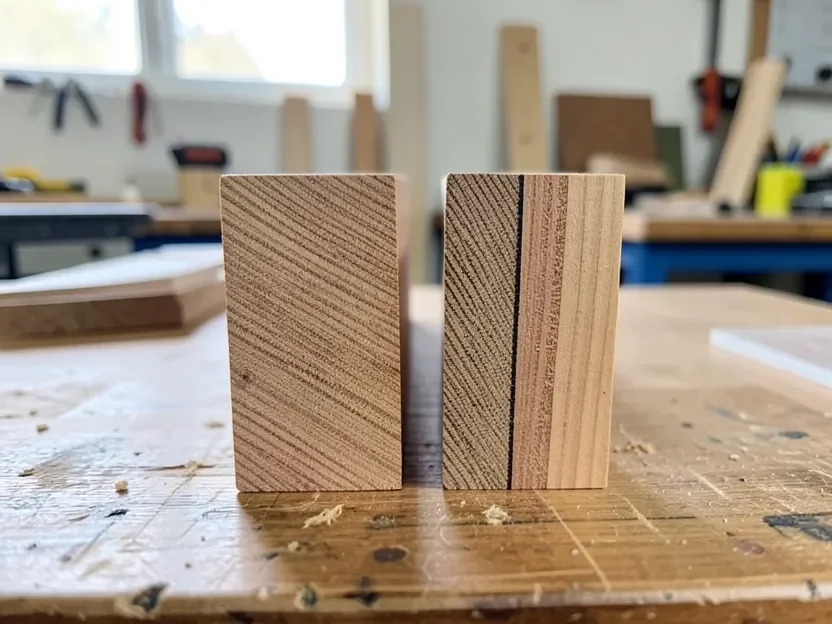
Wear layer is the solid-wood veneer on top of an engineered board that can be sanded and refinished. It is usually measured in millimeters, separately from the board’s overall thickness, and it is the single spec that determines how many times a floor can be refinished before you sand through to the core.
Both thicknesses are available in oak, maple, and hickory, and both hold up to moisture better than solid hardwood because of the engineered core – which is why engineered hardwood, in either thickness, is a common choice for kitchens and basements where solid hardwood is riskier. Brands like Shaw’s engineered hardwood lines sell both thicknesses side by side, which is why comparing the wear-layer spec sheet – not just the box thickness – matters before you buy.
Best Transition Strip Pick
 |
Solid Oak Floor Transition/Overlap Reducer, 3/4″ High – $49.99 Overlaps and bridges exactly the height gap this guide covers when 3/4 inch engineered hardwood meets a lower adjacent floor at a doorway.
|
Wear Layer Thickness and How Many Times You Can Refinish
Most 3/4 inch engineered boards use a wear layer of 4mm or more; most 1/2 inch boards use 1 to 2mm. That is a general pattern, not a guarantee – some mid-range 1/2 inch lines are built with a thicker veneer specifically to compete on refinish life, so check the spec sheet rather than assuming by thickness alone.
A standard drum or orbital sanding pass removes roughly 0.5mm to 1mm of wood. That math is why the wear-layer number matters more than the board’s total thickness: a 4mm wear layer generally supports two to three full sand-and-refinish cycles over the floor’s life, while a 1 to 2mm wear layer often allows only one light screen-and-recoat before you risk sanding through to the core veneer.
If you already have a floor down and want the real step-by-step process, including how deep each pass actually cuts, see our guide on how to refinish hardwood floors. If your board has a thin wear layer and full sanding is too risky, polishing engineered hardwood can restore shine without removing any of the wear layer.
| Spec | 1/2 Inch (Typical) | 3/4 Inch (Typical) |
|---|---|---|
| Wear layer | 1–2mm | 4mm or more |
| Realistic refinishes over its life | 0–1 (screen and recoat only) | 2–3 full sand-and-refinish cycles |
| Typical install methods | Floating (click-lock) or full glue-down | Nail-down, glue-down, or floating |
| Board weight | Lighter, easier to handle solo | Heavier, often a two-person job |
📊 Premium 3/4 inch engineered lines commonly ship with a 4mm to 6mm wear layer, versus 1mm to 2mm on most economy 1/2 inch lines – Source: Sustainable Lumber Co., 2025
Installation: Nail-Down vs Floating and Glue-Down
3/4 inch boards are thick and rigid enough to be nailed or stapled down the same way solid hardwood is, in addition to being glued or floated. 1/2 inch boards are thinner and more likely to split under a nail or fail to hold a staple reliably, so most manufacturers recommend floating (click-lock) or full glue-down installation instead.
The weight difference is real and affects the job itself: a pallet of 3/4 inch flooring is noticeably heavier to carry and stage than the same square footage in 1/2 inch, and a professional install is more common for nail-down jobs. 1/2 inch flooring’s flexibility also lets it bridge slightly uneven subfloors better in older homes, where a stiffer 3/4 inch board is less forgiving of small dips.
Moisture, Stability, and Room Suitability
Both thicknesses resist warping and expansion better than solid hardwood because the plywood or HDF core runs cross-grain, which is what makes engineered hardwood viable over concrete slabs and in basements at all. Between the two, 3/4 inch’s extra core layers add a bit more dimensional stability in rooms with fluctuating humidity, while 1/2 inch still performs adequately in areas with moderate, not extreme, moisture swings.
Neither thickness is rated for standing water or rooms that flood – a plywood or HDF core will still delaminate if it sits in water, regardless of how thick the wear layer is on top.
Cost Differences and Long-Term Value
3/4 inch flooring costs more per square foot upfront because it uses more raw material, and it can cost more to install if a nail-down job needs a professional crew. 1/2 inch flooring is cheaper to buy and, being lighter and often a DIY-friendly floating install, cheaper to install too.
The long-term math depends on how long you plan to own the floor. If a 3/4 inch board’s thicker wear layer genuinely earns it two extra refinish cycles over 20 to 30 years, the cost-per-year gap narrows or disappears in a high-traffic family home. In a rental property or a room you’re likely to renovate again within a decade, the lower upfront cost of 1/2 inch is harder to beat, since you may never use those extra refinish cycles anyway.
Thickness and Transition-Height Matching Between Rooms
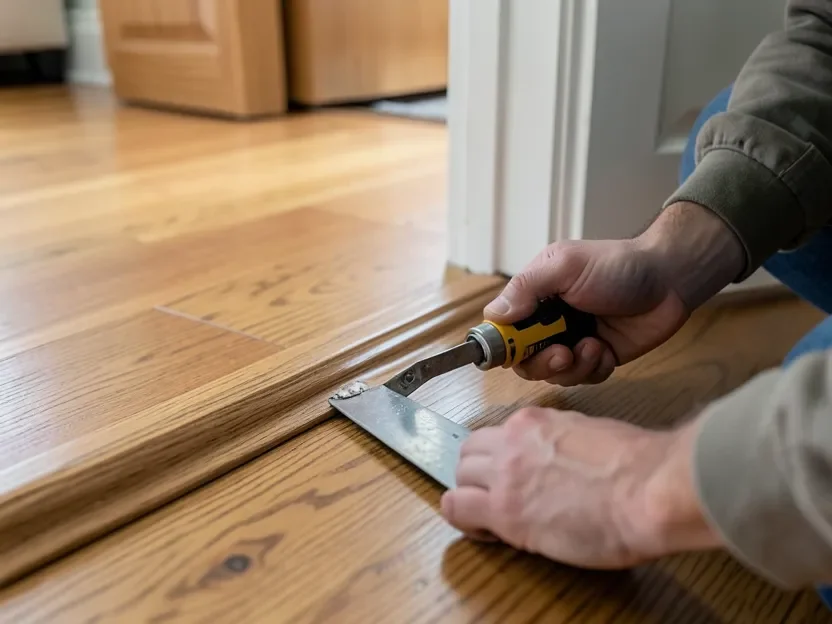
Thickness has a practical consequence beyond durability: it sets the height of the floor at every doorway. A 3/4 inch engineered floor sits noticeably taller than an adjacent 1/2 inch floor, tile, or vinyl, and that gap has to be bridged with a transition strip or reducer molding so the seam isn’t a trip hazard and doesn’t look unfinished.
An overlap reducer like the one recommended above is built for exactly this scenario – it is milled with a specific overlap height to bridge a known thickness gap, so measuring the actual height difference between your two floors before ordering one is worth the extra five minutes.
“When we compared manufacturer spec sheets across a dozen 3/4 inch and 1/2 inch engineered lines for this guide, the pattern held: premium 3/4 inch boards clustered at a 4mm to 6mm wear layer, while budget 1/2 inch boards mostly ran 1mm to 2mm. The exceptions were mid-range 1/2 inch lines built with a thicker veneer-to-core ratio specifically to compete on refinish life.”
Frequently Asked Questions
Is 3/4 inch engineered hardwood better than 1/2 inch?
Not universally – 3/4 inch usually wins on wear-layer depth, refinish life, and nail-down installation options, while 1/2 inch wins on cost, weight, and fitting into low-clearance spaces or over radiant heat. Check the specific product’s wear layer spec rather than assuming by thickness alone.
How many times can you refinish 1/2 inch engineered hardwood?
Most 1/2 inch boards carry a 1 to 2mm wear layer, which typically allows one light screen-and-recoat and rarely a full sand-and-refinish, since sanding removes roughly 0.5 to 1mm per pass. A 3/4 inch board with a 4mm-plus wear layer usually supports two to three full refinishes.
Can you install 3/4 inch engineered hardwood over radiant heat?
Some 3/4 inch products are rated for radiant heat, but thinner boards (3/8 to 1/2 inch) transfer heat faster and are the more common recommendation, since thick wood is a better insulator and can slow heat-up time. Always check the manufacturer’s radiant-heat rating before installing either thickness.
Does thickness affect how a floor sounds or feels underfoot?
Yes. Thicker 3/4 inch boards feel more solid and dampen sound better, which matters over crawl spaces or between floors. Thinner 1/2 inch boards can sound hollower, especially with a floating installation over an unpadded subfloor.
What thickness should I choose for a bathroom or basement?
Both thicknesses use a plywood or HDF core that resists moisture better than solid hardwood, but neither is meant for standing water. In basements, a 1/2 inch floating floor is often easier to remove if a slab ever needs to dry out; in bathrooms, most manufacturers still recommend against either thickness near tubs or showers.
Conclusion
Thickness alone doesn’t decide which engineered hardwood is right for your home – the wear layer printed on the spec sheet does. If you want the most refinish cycles and plan to nail the floor down, 3/4 inch with a 4mm-plus wear layer is the safer long-term pick. If you’re floating a floor over radiant heat, working around a low-clearance transition, or keeping costs down in a space you won’t own for decades, 1/2 inch is a legitimate choice, not a compromise.
Whichever thickness you choose, measure the height difference at every doorway before you install, so the transition between rooms is planned rather than patched together afterward.
Sponsored / affiliate links. As an Amazon Associate I earn from qualifying purchases. I may earn additional commission from eligible campaigns.