How to Remove Sticky Residue from Hardwood Floors
To remove adhesive residue from a finished hardwood floor, match the remover to the glue: lift the bulk with a plastic scraper, then dissolve what is left with Goo Gone Original or rubbing alcohol on a cloth, and finish with a pH-balanced cleaner. Test a hidden spot first, because solvents can dull some finishes. Below: a residue-type table, step-by-step removal, and why vinegar and steam often make floors stickier.
What Removes Sticky Residue From a Finished Hardwood Floor?
It depends on what the stickiness is. Tape, sticker and label glue need a solvent that dissolves adhesive. A hazy, tacky film after mopping is usually leftover cleaner, and it needs less product, not a stronger one. Work out which one you have before you open any bottle.
Best Tape Residue Pick
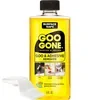 |
Goo Gone Original Liquid Adhesive Remover, 8 oz ($14.98) The maker lists the Original line for finished wood, which matches the test-spot, short-dwell, soapy wipe-down routine in the steps below.
|
As an Amazon Associate we earn from qualifying purchases.
Identify the Residue Before You Pick a Remover
Most sticky floors fall into one of five groups. Use the table to pick a first move, and start with the gentlest option that fits.
| What you see | Likely cause | Try first | Avoid |
|---|---|---|---|
| Tacky square or strip that picks up lint | Tape, sticker or label adhesive | Plastic scraper, then a finished-wood adhesive remover on a cloth | Metal blades, soaking the boards |
| Hazy, tacky film in mop streaks | Cleaner, soap or vinegar solution left to dry on the floor | Damp cloth with a pH-balanced hardwood cleaner, then dry | More vinegar, oil soap or steam |
| Hard, shiny sticky patch | Dried sugar from soda, juice or syrup | Blot with a damp cloth and a small amount of pH-balanced cleaner | Hard scrubbing |
| Dull, gummy buildup in walking paths | Wax or polish layered over time | Stop adding product and ask the finish maker or a flooring pro | Another coat of polish, solvents on a waxed floor |
| Tacky spots under furniture or mats | Plastic or rubber floor protectors or mat backing | Lift, scrape gently, then spot-test a remover | Putting the same pads back |
A quick check helps: dab the spot with a cloth dampened in warm water and a drop of dish soap. If it softens and wipes off, it was spilled sugar or cleaner film. If it smears, strings or rolls into gum, it is adhesive and needs a solvent.
Step-by-Step: Remove Tape, Sticker and Glue Residue
- Test a hidden spot first. Pick a closet corner or a spot under a rug. Apply the remover, wait the stated time, wipe, and look for dulling, cloudiness or a soft, tacky finish. Goo Gone’s own guidance is to test on an inconspicuous area first.
- Lift the bulk. Peel off what comes away by hand, then slide a plastic scraper or an old credit card under the edge at a low angle. Metal blades scratch the finish.
- Soften lightly. Press a cloth dampened with warm water and a little dish soap onto the spot for a minute. Do not flood the boards.
- Apply the remover to a cloth, not the floor. For Goo Gone Original, Goo Gone’s FAQ describes a wait of about 3 to 5 minutes before wiping with a clean white cloth. Work from the outside of the spot inward so the glue does not spread.
- Repeat in short rounds. Two light passes beat one long soak. If a corner of the finish starts to look cloudy, stop.
- Remove the remover. Wipe with a cloth dampened in warm water and dish soap, then with a damp cloth and a pH-balanced hardwood cleaner, and dry the spot right away.
- Check the result in daylight. Look at the spot from a low angle. A faint dull patch means the finish reacted, so stop using that product on the floor.
Which Adhesive Remover Is Safe for Hardwood Floors?
The label and the safety data sheet (SDS) tell you more than most blog posts. The table compares what the makers and SDS documents say. It is a safety comparison, not a ranking of cleaning power.
| Remover | What the maker or SDS says | Hazard notes | Best use |
|---|---|---|---|
| Goo Gone Original | Maker says it is safe on finished wood only and to test an inconspicuous spot first. SDS lists petroleum distillates (60 to 100%) and d-limonene (1 to 5%). | Flash point 185 F (85 C), flammable liquid category 4, skin sensitizer, aspiration hazard. Wear gloves. | Tape, sticker and label glue on sealed floors |
| Goo Gone Pro-Power | The maker’s finished-wood statement lists the Original products, not this line. | Check the bottle for its own warnings. | Not our pick for floors |
| Odorless mineral spirits | The Klean-Strip SDS lists hydrotreated light distillate at 100%. It gives no flooring guidance, so spot-test. | Flash point above 105 F, flammable liquid category 3, may be fatal if swallowed and enters airways. Ventilate, no flames or sparks. | Old, hardened glue, in small amounts, as a last step |
| Rubbing alcohol (isopropyl) | No SDS reviewed for this article. Spot-test first, since alcohol can cloud some older finishes. | Flammable per the label. Keep away from flames. | Light tape or label residue |
| WD-40 Multi-Use | WD-40’s own article says it dissolves sticker adhesive and to wipe a wood floor clean afterward. | Leaves an oily film that can make a floor slippery. | Only if you will degrease the area fully afterward |
Cleanup matters as much as removal. The National Wood Flooring Association (NWFA) warns that improper cleaning products can cause adhesion problems for future maintenance coats, so an oily or waxy leftover can cost you later. Always finish with a pH-balanced hardwood cleaner and a dry cloth.
Sticky Floor but No Adhesive: Cleaner Film, Spills and Wax
If nothing was ever stuck to the floor, the stickiness is usually coming from the cleaning routine. The most common culprit is vinegar. Many older guides, including an earlier version of this page, recommended a vinegar and water mop. NWFA’s homeowner guidance says the opposite: vinegar’s acidity can damage the finish over time, and it can leave a sticky residue that attracts more dirt. Bona, a major floor finish maker, also advises against water and vinegar, soap-based cleaners, wax and steam cleaners on hardwood.
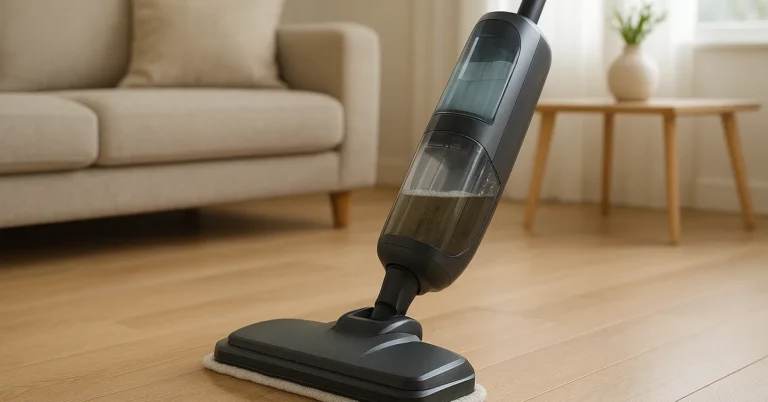
Steam is a related myth. Bona says steam cleaners put heat and excess water on the floor, which can lead to cupping. If a steam mop was part of your routine and the floor now feels tacky, stop using it and switch to a lightly damp microfiber mop with a pH-balanced cleaner.
How to Fix a Cleaner Film
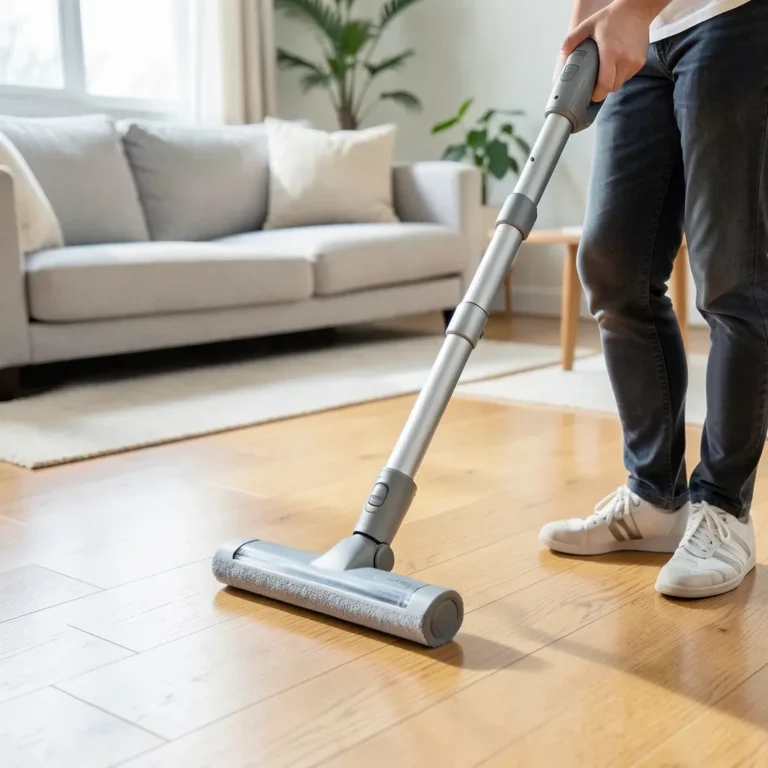
- Mop with a barely damp microfiber pad and plain water to lift the top layer of film.
- Follow with one pass of a pH-balanced hardwood cleaner, used at the label dilution, and dry right away.
- Repeat on a second day if streaks remain. Layering stronger products usually adds film.
- If the floor stays hazy afterward, see our guide to why hardwood floors look dull after cleaning.
Spills, Pet Accidents and Wax Buildup
For sugary spills, NWFA advises blotting with a soft cloth and a small amount of pH-balanced cleaner instead of rubbing. Dried pet accidents can leave a sticky patch too, and the stain may need separate treatment, as covered in our guide to getting urine stains off a hardwood floor. On wax, NWFA says many modern factory-finished floors should avoid waxes and oils entirely because they may stop future maintenance coats from adhering. If buildup has already dulled the boards, renewing wood floors without sanding covers the next step.
The same stickiness on furniture is a different job, because tabletops often carry different finishes. For that, read how to clean a wood table that is sticky.
When the Finish Itself Feels Tacky
A floor that feels tacky across the whole room after a recent refinish may not have finished curing. Check the finish can for its cure time and call the installer before you try any solvent, since solvents can soften a finish that is still hardening.
Keep Floors From Getting Sticky Again
- Use felt pads under furniture legs, as NWFA recommends, instead of rubber or plastic protectors.
- Put doormats at entrances to cut down on the dirt and moisture that mix into film.
- Follow the cleaner label dilution. More product does not mean cleaner floors.
- Clean spills promptly by blotting, not rubbing.
- Skip wax and oil-based polish on factory-finished floors.
- Read how to care for hardwood floors for a routine that avoids residue.
Also skip bleach and ammonia-based cleaners, which NWFA says can strip the finish. For a brand-specific check, see whether Mr. Clean is safe on hardwood.
Frequently Asked Questions
Is Goo Gone safe on hardwood floors?
Goo Gone says its Original products are safe on finished hardwood, not unfinished wood. Test an inconspicuous spot first, apply the product with a cloth, wipe it off after a few minutes, then wash the area with warm soapy water and dry it. The maker’s finished-wood statement does not cover the Pro-Power line.
Does rubbing alcohol remove glue residue from hardwood floors?
It can lift light tape and label residue, but it is a stronger solvent than water and can cloud some finishes, so test a hidden spot first. Use a cloth, not a pour, wipe the area quickly, then clean with a pH-balanced hardwood cleaner. Keep it away from flames because it is flammable.
Can I use WD-40 to remove sticker residue from a hardwood floor?
WD-40 says its Multi-Use Product dissolves sticker adhesive and advises wiping a wood floor clean afterward. It leaves an oily film that can make the floor slippery and may interfere with future coats, so degrease the spot with a pH-balanced cleaner and dry it completely.
Why is my hardwood floor sticky after cleaning with vinegar?
Vinegar and water can leave a film as it dries, and NWFA notes that the residue attracts more dirt. Mop with a barely damp microfiber pad and plain water, then use a pH-balanced hardwood cleaner at label strength. Stop using vinegar on a finished floor.
How do I remove tape residue from unfinished or waxed wood floors?
Solvents are riskier on unfinished or waxed wood because the liquid can soak in or dissolve the wax, and Goo Gone’s finished-wood guidance does not cover them. Peel off what you can, scrape gently with plastic, and ask a flooring professional before using any remover.
“Test on an inconspicuous area first.”
Conclusion
Identify the residue, test a hidden spot, and use the gentlest remover that works. Adhesive responds to a finished-wood-safe remover applied with a cloth, while a tacky film responds to less product and a pH-balanced cleaner. Skip vinegar and steam, and finish every job with a damp wipe and a dry cloth.
Sponsored / affiliate links. As an Amazon Associate I earn from qualifying purchases. I may earn additional commission from eligible campaigns.