Teak Wood Main Door Designs for a Grand Entrance: Sizes and Costs
A teak wood main door built for a grand entrance runs $800 to $3,000 installed, and anything narrower than a 60-inch double-door opening will look undersized against a tall entryway. Get the proportions wrong and even a $2,000 hand-carved door reads as an afterthought. This guide covers the sizing and cost math grand entrances actually need, 12 design styles that hold up at scale, and the maintenance schedule that keeps teak’s honey color from turning gray.
Insert your Affiliate Disclosure reusable block here
How Big Should a Grand Entrance Teak Door Be?
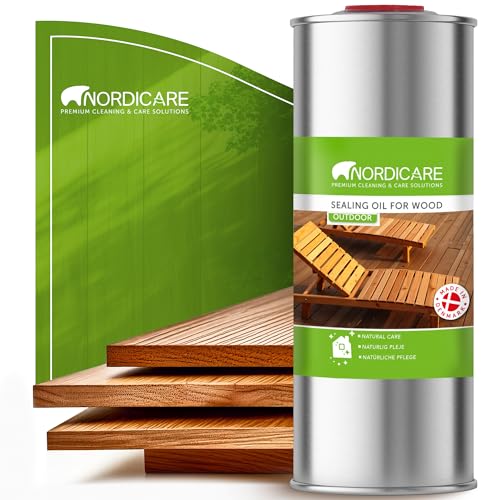
Best Teak Door Oil Pick

Watco Teak Oil Wood Finish, Quart
A one-step penetrating oil built for dense woods like teak, mahogany, and rosewood – dries tack-free in 8 hours and covers up to 170 sq. ft.
- Best for: protecting a new or freshly-sanded teak main door before its first season outdoors
- Why we picked it: works from within the wood instead of sitting on top, so it won’t chip or peel like a surface film
- Main drawback: a quart covers roughly one large double door per full application, so oversized doors need two cans
Compare more teak door oil options
 Option 1 Furniture Clinic Teak Oil
|
 Option 2 Star Brite Golden Teak Oil
|
 Option 3 Minwax Helmsman Teak Oil
|
As an Amazon Associate we earn from qualifying purchases.
A single door reading 36 inches wide by 80 inches tall meets standard building code, but it looks small set into a two-story foyer or a wide portico. “Grand” main doors are almost always double doors, and the total opening needs to scale with the wall around it – not just the doorway itself.
| Entrance type | Typical width | Height | Best for |
|---|---|---|---|
| Standard single door | 36 in. | 80 in. | Code-minimum entries, smaller homes |
| Wide single door | 42 in. | 80-84 in. | Single-story homes with a tall porch |
| Standard double door | 60-64 in. (2 x 30-32 in.) | 80 in. | Most grand-entrance remodels |
| Oversized double door | 72-96 in. | 84-96 in. | Two-story foyers, luxury and custom builds |
If you’re replacing an existing frame, measure the rough opening before choosing a design – a hand-carved 72-inch double door built for a 64-inch opening is not a minor fitting job. Custom teak millwork typically needs 3-6 weeks lead time, so confirm the opening size early.
What Does a Teak Wood Main Door Cost?
Teak lumber runs $7 to $40 per square foot depending on grade – Grade A heartwood from mature trees, free of knots, sits at the top of that range. A finished main door built from it typically lands between $800 and $3,000 before installation, with custom carving, oversized dimensions, or glass inserts pushing costs toward the high end.
A standard 36 in. teak main door averages $800-$1,500 installed; a 60-72 in. custom double door with carving runs $2,000-$3,000+. Installation typically adds $200-$500. – Source: industry cost guides, 2026
Myanmar (Burmese) teak commands the highest prices and is generally reserved for premium projects; Indonesian and Indian teak cost less and still hold up well for exterior doors when properly sealed.
12 Teak Wood Main Door Styles That Work at Grand-Entrance Scale
Not every design that looks good on a 36-inch door scales up cleanly to a 6-foot double door. Panel proportions, carving density, and hardware size all need to grow with the door, or the design reads as busy rather than grand. Here are 12 styles proven to work at that larger scale, grouped by look.
Classic and Carved
- Traditional relief carving – floral, geometric, or mythological motifs cut directly into large center panels; on a double door, keep the carving symmetrical across both leaves so it reads as one composition rather than two competing patterns.
- Raised panel classic – deep-set rectangular panels with beveled edges; the panel count typically increases from 4-6 on a standard door to 8-10 on an oversized one, so spacing has to be recalculated, not just stretched.
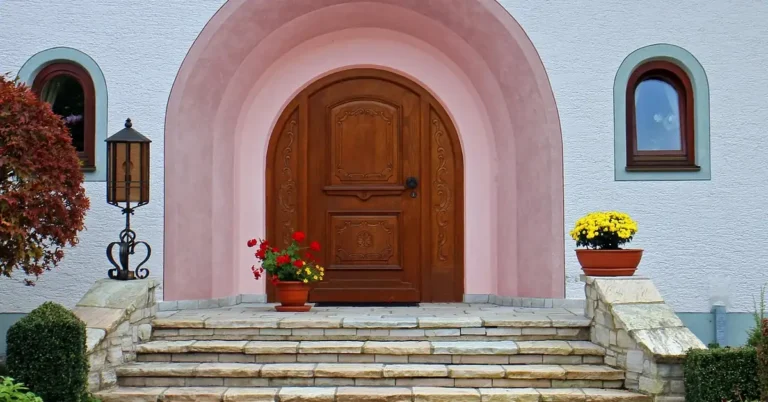
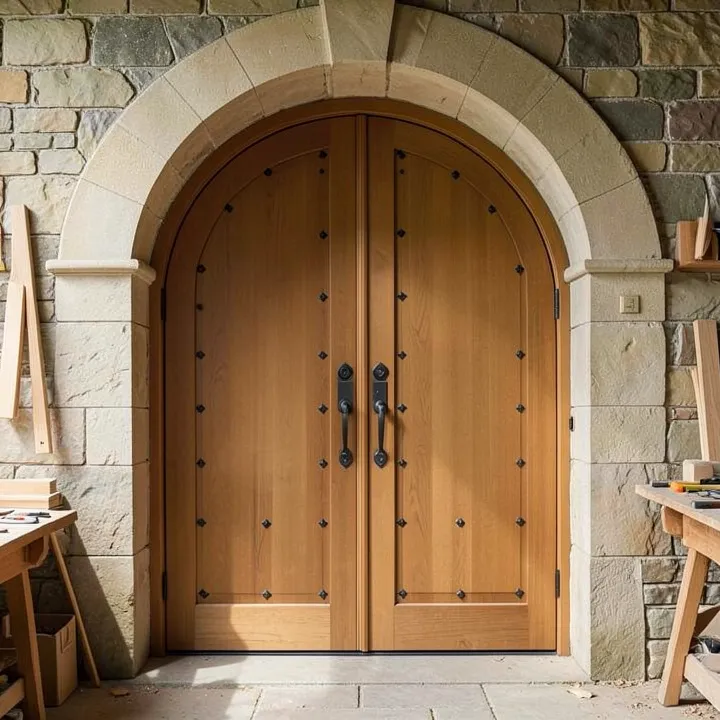
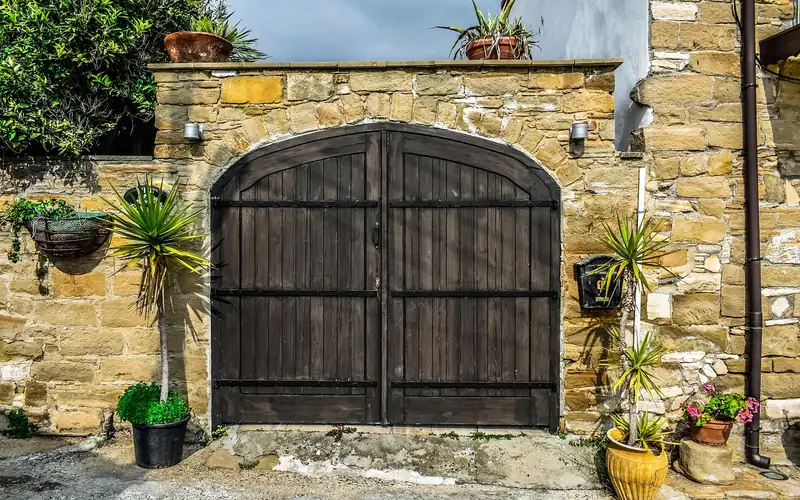
- Heritage arch-top – the door follows an arched frame rather than a rectangular one, common on stone or brick entrances built with a matching arched opening.
Modern Minimalist
- Flush-panel modern – a single uninterrupted slab face with no visible panels, relying entirely on teak’s natural grain for visual interest; this style hides fingerprints and dust less than a paneled door, so plan for more frequent wiping.
- Linear groove – shallow horizontal or vertical grooves routed into the face at regular intervals; on a wide double door, vertical grooves make the opening read taller, horizontal grooves make it read wider.
- Metal-trim contrast – narrow strips of blackened steel, brushed brass, or bronze inset along the door’s edges or panel lines; keep metal trim to no more than 10% of the visible face or it competes with the wood instead of framing it.
Double-Door Symmetrical
- Mirror-panel pair – both leaves carved or paneled identically so the closed door reads as one balanced composition; this is the most common configuration for 60-72 inch grand entrances.
- Active-and-passive leaf – one door does the daily opening and closing while the second stays bolted shut except for large deliveries or events; lets you use a narrower daily-use panel while still getting a wide finished opening.
- Glass-and-teak combination – solid teak panels paired with frosted or reeded glass inserts, usually along the top third of each leaf, balancing privacy with natural light into the foyer.
Rustic and Custom
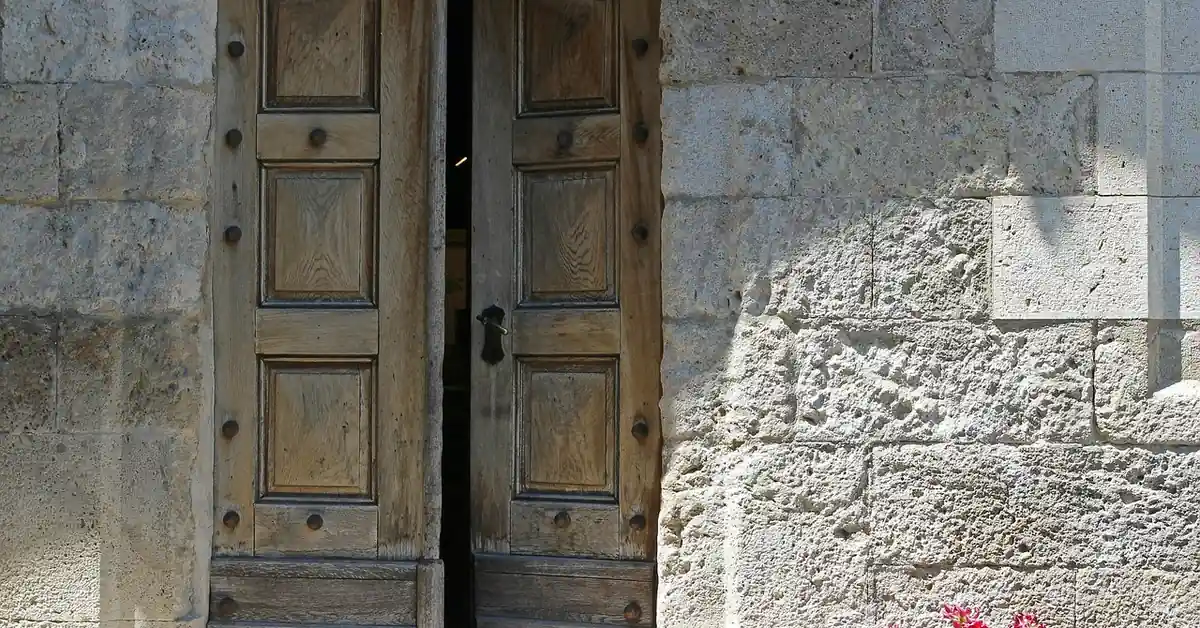
- Reclaimed-look rustic – visible saw marks, hand-forged strap hinges, and a distressed oil finish for a farmhouse or lodge-style entrance.
- Fusion / regional blend – pairs a traditional Southeast Asian carving style with a contemporary frame, common in custom architect-designed homes.
- Fully custom commission – built to a specific opening and design brief by a millwork shop; expect a 3-6 week lead time and the top end of the $2,000-$3,000+ cost range for a large double door.
For finish selection, our guide to why teak outperforms other door woods covers how teak’s natural oil content compares to oak, mahogany, and fir for exterior use.
How to Keep a Teak Main Door Looking Grand
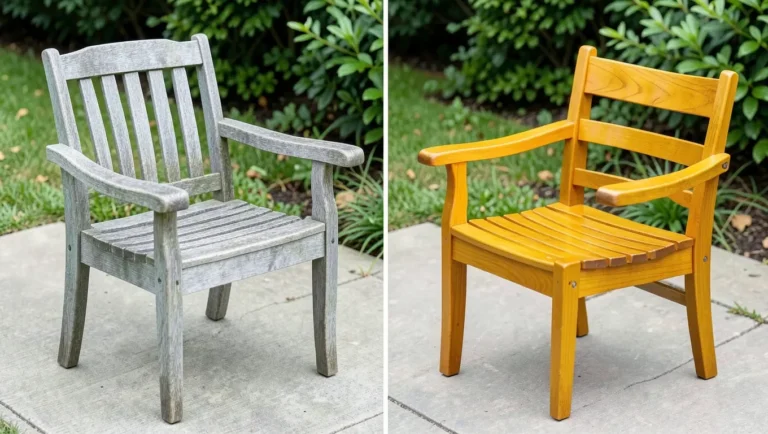
Teak doesn’t need oil to survive outdoors – its natural oils already resist rot and insects, and an untreated teak door can last 50 years or more. Oiling is purely cosmetic: it’s what keeps the honey-brown color from fading to the silvery gray teak turns when left bare.
- Clean first: wipe the door with a soft cloth and mild soapy water, then let it dry fully before applying any oil.
- Apply teak oil every 6-12 months: south- and west-facing doors with heavy sun exposure need it closer to the 6-month mark; shaded, covered entrances can stretch to 12.
- Wipe off excess: apply with a lint-free cloth, let it soak in for 10-15 minutes, then wipe away anything that hasn’t absorbed – pooled oil left on the surface goes tacky.
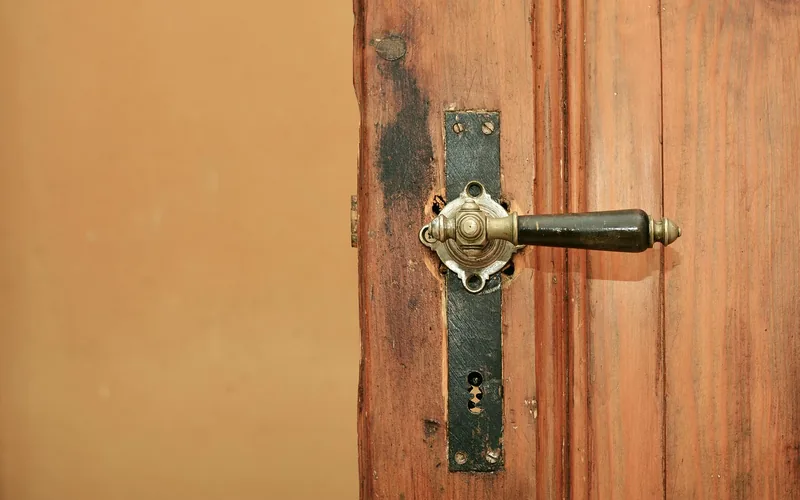
- Check hardware separately: hinges, handles, and locksets on a heavy oversized door take more daily stress than on a standard one; tighten screws and lubricate the mechanism twice a year.
“The doors that hold up longest at full scale aren’t the ones with the most carving – they’re the ones where the hinges and frame were sized for the extra weight from day one. An oversized teak leaf can run 150 lbs. or more; standard residential hinges aren’t rated for that.”
If your door is already showing gray patches, our step-by-step teak oiling guide covers surface prep and application in more depth than the summary above, and painting over teak explains why most finishers recommend against it.
For teak basics like color variation and cost by grade, see our teak wood hub.
Frequently Asked Questions
How wide does a double door need to be for a grand entrance?
Most grand-entrance double doors measure 60 to 72 inches total width (two 30-36 inch leaves), with 80 inches of height. Custom builds for two-story foyers can go up to 96 inches wide and 96 inches tall, but anything over 72 inches usually needs reinforced hinges and a structural header check.
Does a teak main door need to be oiled to survive outdoors?
No. Teak’s natural oils already resist rot, insects, and moisture without any added finish, and an untreated door can still last decades. Oiling every 6-12 months is a cosmetic step to keep the color golden brown instead of letting it weather to gray.
How much does a custom teak main door cost compared to a standard size?
A standard 36-inch single teak door runs $800 to $1,500 installed. A custom double door in the 60-72 inch range with carving or glass inserts typically runs $2,000 to $3,000 or more, largely driven by teak grade, carving labor, and the 3-6 week lead time for custom millwork.
Can teak wood doors withstand harsh weather?
Yes. Teak’s high natural oil content makes it one of the few woods rated for direct outdoor exposure without a protective finish, which is why it’s been used in boatbuilding for centuries. Heavy freeze-thaw climates still benefit from a functioning storm door or overhang to limit swelling at the frame joints.
A grand entrance starts with getting the size and budget right – once those are set, teak’s range of finishes, from deep relief carving to a flush modern slab, gives you room to match almost any architectural style without sacrificing the durability that makes teak worth the investment in the first place.
Sponsored / affiliate links. As an Amazon Associate I earn from qualifying purchases. I may earn additional commission from eligible campaigns.