Best Decking Paint: DeckOver vs RockSolid vs Solid Stain
The best decking paint depends on how worn your boards are. A thin solid stain like Behr DeckPlus (about 3 mils dry in two coats) suits sound wood, while thick resurfacers like Behr DeckOver (10.9 mils in two coats) or Rust-Oleum RockSolid 20X (20 mils in one coat) are built for cracked, weathered boards. This guide compares them using the manufacturers’ own data sheets: film thickness, coverage, dry times, and gallons needed.
What Is the Best Paint for a Wood Deck?
Best Ready-to-Use Solid Deck Stain Pick
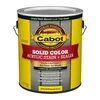 |
Cabot Solid Color Decking Stain, Driftwood Gray A 100% acrylic solid-color stain that arrives pre-colored, so there is no tinting step before you start.
|
As an Amazon Associate we earn from qualifying purchases.
There is no single winner, because “deck paint” covers three different jobs. What separates them is how much dry film each coat leaves on the wood, and that number comes straight from the technical data sheets rather than from marketing copy.
- Deck in decent shape, just faded: a solid-color stain such as Behr DeckPlus Solid Color. Thin film, easy recoat, and the wood texture still shows through.
- Weathered boards with small cracks and splinters: Behr Premium Advanced DeckOver or RockSolid 6X Deck Coat, which build a much thicker, slip-resistant film.
- Heavily worn or cracked boards: RockSolid 20X Deck Resurfacer, the thickest of the group at 20 mils dry film per coat.
Our Amazon pick above is a pre-colored solid stain because that is the easiest product to order online without a mistake. The Behr and Rust-Oleum resurfacers in this guide must be tinted before use, and the RockSolid 20X Amazon listing we checked shows a tint base label on the pail, so confirm the color before you buy any of them.
Our comparison is built from the manufacturers’ published data sheets, not from our own lab testing, so treat the numbers as label specifications that real decks will vary from. If you are still deciding between a film-forming coating and a penetrating finish, our guide to the best deck stain covers the stain side in depth.
Deck Paint Compared by Film Thickness
Film thickness is the number most buying guides skip, and it explains almost everything else: why thick coatings hide cracks, why they cover fewer square feet per gallon, and why they cost more to apply. A mil is one thousandth of an inch.
| Product | Dry film thickness | Coverage per gallon | Recoat | Light traffic | Full cure |
|---|---|---|---|---|---|
| Behr DeckPlus Solid Color Stain | 2.0 mils (1st coat) + 1.0 mil (2nd coat) | 200-400 sq ft | 1-2 hours | 24-48 hours | 72 hours |
| Behr Advanced DeckOver Smooth | 5.4 mils per coat, 10.9 for two coats | 75 sq ft (2 coats required) | 4-6 hours | 24-48 hours | 72 hours |
| RockSolid 6X Deck Coat | 8 mils, one coat | Up to 80 sq ft | One coat (touch dry 4-6 hours) | 24 hours | 7 days |
| RockSolid 20X Deck Resurfacer | 20 mils, one coat | Up to 40 sq ft | One coat (touch dry 4-6 hours) | 24 hours | 7 days |
Sources: Behr technical data sheets for DeckPlus Solid Color (rev. 01/2020) and Advanced DeckOver Smooth No. 5000 (rev. 12/2018), and Rust-Oleum data sheets RSD-56 and RSD-55 (rev. 060922). Drying figures assume roughly 77 F and 50 percent humidity; cold or humid weather stretches them.
Read the table this way: DeckPlus leaves about 3 mils total, DeckOver about 11, and 20X about 20, roughly six to seven times the DeckPlus film. That is why a stain cannot hide a crack and a resurfacer can. It is also why the thick coatings look textured and why Behr states that even the slip-resistant DeckOver finish may still be slippery when wet.
How Many Gallons Do You Need for a 12 x 16 Deck?
Most gallon counts online ignore that coverage drops as film thickness goes up. Using the data-sheet coverage rates, a 12 x 16 foot deck floor (192 square feet of boards, before railings and stairs) works out like this:
| Product | Data-sheet coverage | Coats | Gallons for 192 sq ft |
|---|---|---|---|
| Behr DeckPlus Solid Color Stain | 300 sq ft/gal (1st), 600 sq ft/gal (2nd) | 2 | About 1 gallon at spec, 2 if boards are thirsty |
| Behr Advanced DeckOver | 75 sq ft/gal for 2 coats | 2 | 3 gallons (2.6 calculated) |
| RockSolid 6X Deck Coat | Up to 80 sq ft/gal | 1 | 3 gallons (2.4 calculated) |
| RockSolid 20X Deck Resurfacer | Up to 40 sq ft/gal | 1 | 5 gallons (4.8 calculated) |
The arithmetic is simply deck area divided by coverage, rounded up. Rust-Oleum notes actual coverage varies with wood type, age, and porosity, and old, dry boards drink more than the label suggests, so buy a little extra rather than a little short. Rust-Oleum also tells you to combine multiple containers to keep color consistent, and both products must be tinted before use, so plan the color before you buy.
The takeaway most guides miss: the cheapest coating per gallon is often the most expensive per deck. A resurfacer that needs five gallons for a small deck can cost far more than a stain that needs one, so only pay for film thickness your boards actually need.
When Should You Paint a Deck Instead of Staining It?
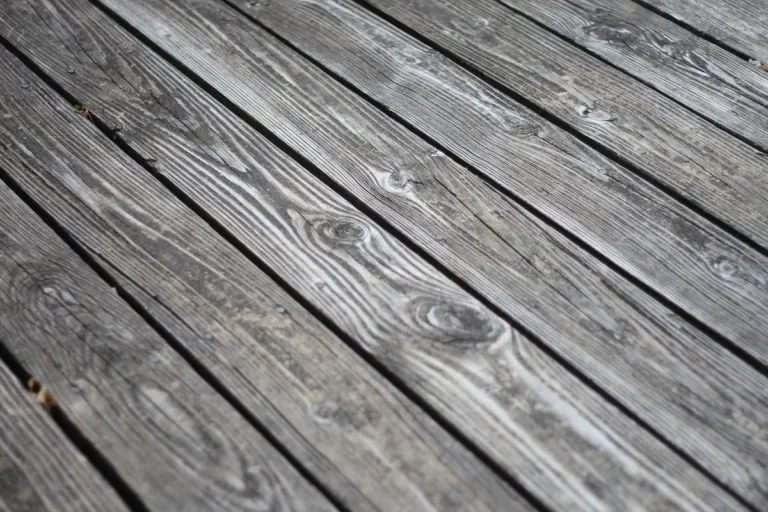
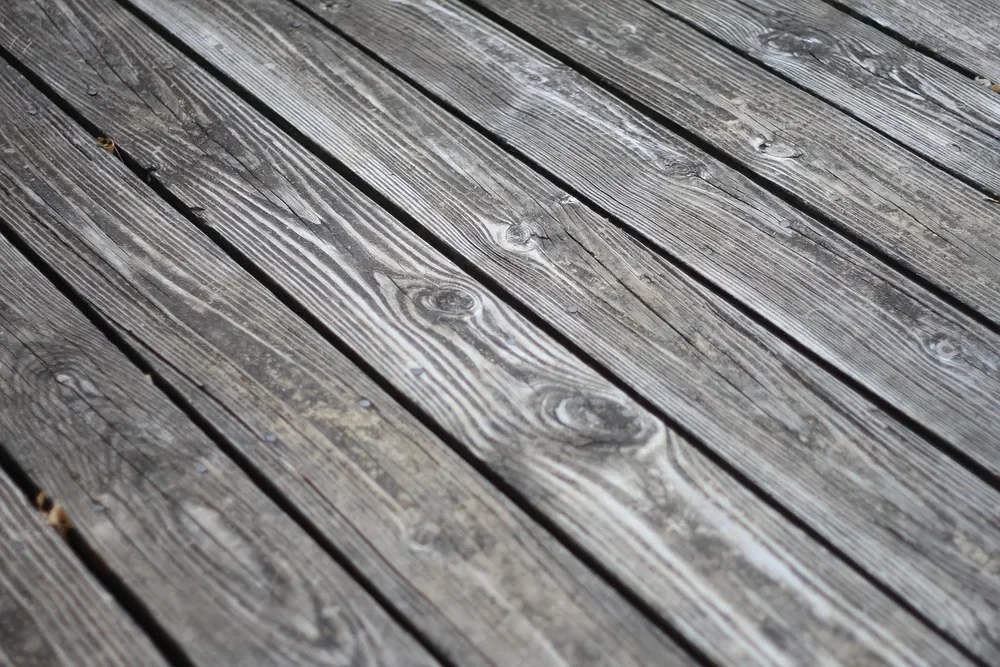
Choose a thick paint or resurfacer when the boards are gray, splintering, or cracked and you want to hide that, not just protect the wood. Choose a stain when the wood is sound and you want the grain to show. A few conditions from the data sheets decide whether painting works at all:
- Weathering first: Rust-Oleum states that new and sealed wood decks need to weather at least 6 months before RockSolid is applied. Skipping this is listed as a cause of poor adhesion and coating failure.
- Temperature window: Behr says use DeckOver only when air and surface temperatures are 50 to 90 F. Rust-Oleum allows 40 to 90 F and wants it to stay in that range for 24 hours after application.
- Rain and humidity: both companies say not to apply if rain is expected within 24 hours, and Behr adds to avoid painting if humidity is expected to exceed 80 percent.
- Sun and hot boards: Behr says to avoid applying in direct sunlight or on hot surfaces.
- Not for vehicles: DeckOver and RockSolid are both marked not for driveways, garages, or other vehicle areas.
If the deck already has a failing stain or paint, the deck cleaning guide and our notes on whether you can paint over a stained deck cover what to remove first. Moisture matters too, and our full walkthrough on painting a treated wood deck explains how to check it.
How to Apply Deck Paint So It Does Not Peel
Adhesion failure, not the paint itself, is what ruins most deck coatings. The steps below follow the Behr and Rust-Oleum data sheets:
- Clean and strip: the surface must be clean, sound, dry, and free of dirt, oil, grease, mildew, and organic growth. Both Behr and Rust-Oleum call for a deck cleaner, and Behr says to remove peeling paint or stain and loose wood fibers before coating.
- Repair the boards: secure raised nail heads and screws, remove loose splinters, and replace rotting or unstable boards. A coating cannot bridge a soft board.
- Prime if the product calls for it: Rust-Oleum lists RockSolid Deck Start Wood Primer as a preparation step in its data sheets, so read the primer label before you begin.
- Fill cracks first: for DeckOver, brush the coating into nail holes and cracks up to 1/4 inch and let it dry before rolling. Deep holes and cracks need more than one fill.
- Apply the right coat count: DeckOver requires two coats and should not be thinned. RockSolid 6X and 20X are one thick coat each, rolled generously to a wet edge with the matching RockSolid roller cover.
- Work a few boards at a time: Rust-Oleum says to coat one or two boards, then run a putty knife between the boards to remove excess so it does not glue the gaps shut.
- Keep off it: do not put furniture back until the light-traffic time in the table has passed, and longer if it is still soft or tacky.
One safety point applies to any deck with old paint: scraping or sanding it can release lead dust if the paint is old enough to contain lead. Both manufacturers warn about this, and the EPA has guidance at epa.gov/lead. Use a NIOSH-approved respirator and follow wet-clean-up practices.
Deck Paint Drawbacks Most Reviews Skip
- It stays slippery when wet: Behr states that textured DeckOver may still become slippery when wet.
- Hot underfoot: Rust-Oleum warns that coated or uncoated horizontal surfaces in sun can get too hot for bare feet or animal paws.
- Heavy film means harder repair: a 20 mil coating cannot be spot-touched like a stain, and Behr notes that over-applying DeckPlus forms a film that is prone to peeling and flaking.
- Removal is a project: going back to bare wood later means stripping a thick film, so pick the thinnest coating that hides your boards.
Frequently Asked Questions
Is it better to paint or stain a deck?
It depends on the condition of the boards. Sound wood with an even surface takes a solid stain such as Behr DeckPlus, which the data sheet lists at about 3 mils dry in two coats. Cracked, splintered, or heavily weathered boards need a thick resurfacing paint such as Behr DeckOver or RockSolid 20X, which conceal defects a thin stain cannot.
Can you paint a new pressure-treated deck right away?
Not with RockSolid. Its data sheet says new and sealed wood decks need to weather at least 6 months before application, or adhesion suffers. Behr’s DeckOver data sheet takes a different route for new wood: clean it with a wood cleaner to remove mill glaze and open the pores, rinse, and let it dry fully before coating.
Does deck paint fill cracks?
Thick deck paints fill small ones. Behr’s DeckOver data sheet says it conceals splinters and cracks up to 1/4 inch, and you should brush it into nail holes and cracks before rolling. Wider gaps, rotted boards, and loose boards need repair or replacement first, because no coating restores structural wood.
How long before you can walk on a painted deck?
Plan on 24 to 48 hours for light foot traffic with most products. DeckOver lists 24 to 48 hours and full cure at 72 hours. RockSolid 6X and 20X list 24 hours at 50 to 90 F, 48 hours at 40 to 50 F, and about 7 days to full cure. Wait longer if the surface still feels tacky.
Match the coating to the board condition: DeckPlus for sound wood, DeckOver or RockSolid 6X for weathered boards with small cracks, and RockSolid 20X for the worst decks. Check your deck against the gallon table before you shop, and read the data sheet for the exact color and size you buy.
Sponsored / affiliate links. As an Amazon Associate I earn from qualifying purchases. I may earn additional commission from eligible campaigns.