How to Get Rid of Black Mold on a Wood Deck (Safe Bleach Ratio)
Black mold on a wood deck is a fungus that thrives in trapped moisture, not the tannin staining or green algae it is often mistaken for. Left alone, it can weaken deck boards and trigger respiratory symptoms in sensitive people. This guide covers safe removal with vinegar, detergent, or a correctly diluted bleach solution (never mixed with ammonia), plus how to reseal your wood deck so it does not return.
Looking for the full deck-cleaning process, not just black mold? See our general guide to cleaning a wooden deck, which covers the same oxygen-bleach method plus safe pressure-washing technique and prepping the deck for a new stain.
Quick Answer
Spray the mold with undiluted white vinegar or a warm water and dish detergent solution, let it sit 15-60 minutes, then scrub with a stiff brush and rinse. For heavier growth, use no more than 1 cup of bleach per gallon of water per CDC guidance — never combine bleach with ammonia. Reseal the deck once it is fully dry to keep mold from coming back.
Is It Mold, Mildew, Algae, or a Tannin Stain?
Best Deck Mold Cleaner Pick
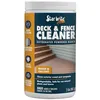
STAR BRITE Oxygenated Deck & Fence Cleaner – $27.30
An EPA-registered oxygenated cleaner gives you the sodium-percarbonate boost this guide recommends as the middle ground between vinegar and bleach — strong on mold without bleaching out your deck’s stain.
- Best for: stained or painted decks where bleach risks discoloring the finish
- Why we picked it: matches the oxygenated-cleaner method covered in Step 5 above
- Main drawback: costs more per use than plain vinegar or detergent
Compare more deck mold-removal options
 Option 1 Mold Armor E-Z Deck, Fence & Patio Wash – $25.50
|
 Option 2 MAXMAN 63in Stiff Wire Deck Scrub Brush – $18.99
|
 Option 3 Olympic WaterGuard Wood Stain & Sealer – $31.98
|
As an Amazon Associate we earn from qualifying purchases.
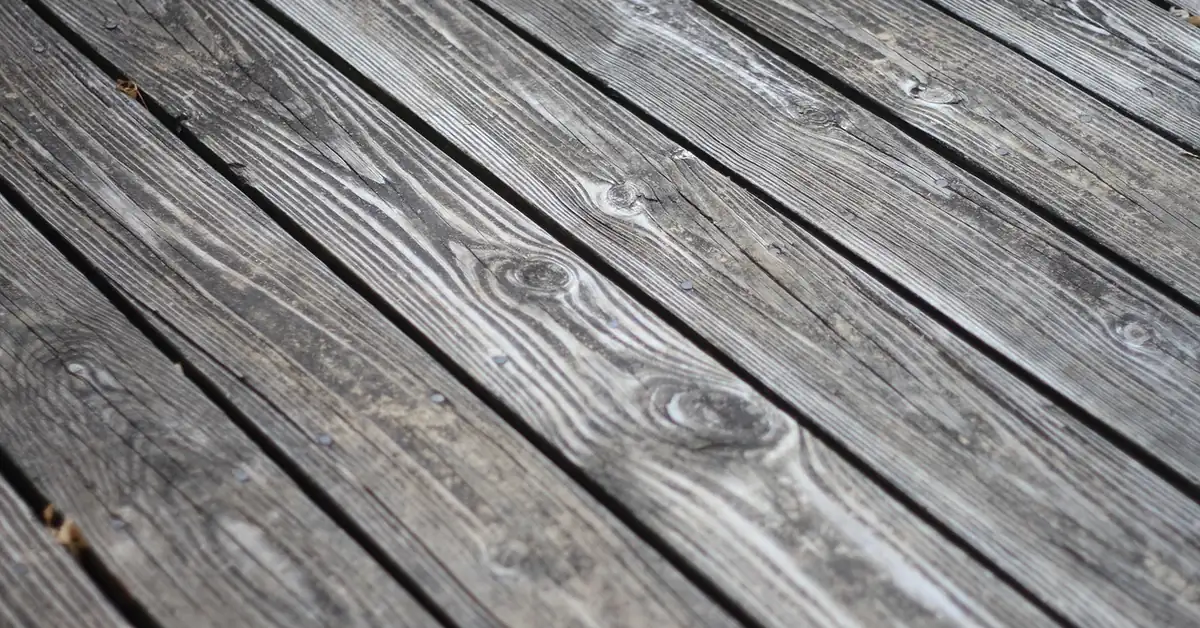
Black mold on a wood deck is a fungus that appears as dark, embedded spots that often look “fuzzy” or blotchy under close inspection and commonly grow in shaded, damp corners or under furniture. It penetrates into the wood grain rather than sitting on the surface, which is why light cleaning often does not fully remove it.
- Mildew looks like a fine, powdery gray or white film sitting on top of the wood rather than embedded in the grain — it wipes off more easily than mold.
- Algae shows up as a green or black slick, usually in spots that stay wet longest, such as under a downspout or in a low corner with poor drainage.
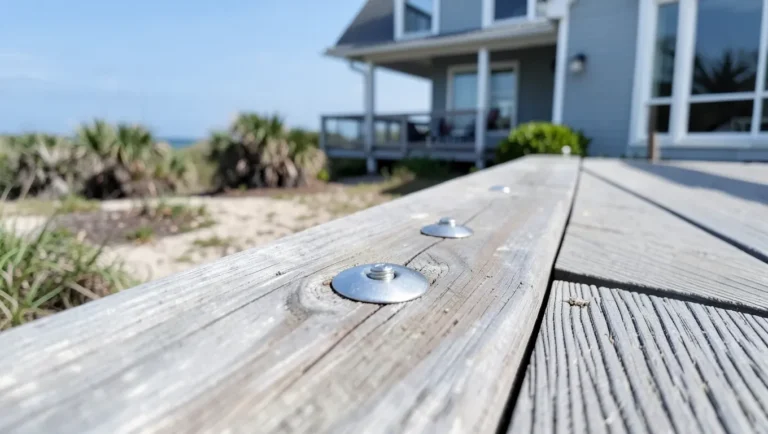
- Tannin bleed is not biological growth at all — it is a chemical reaction between naturally occurring tannins in woods like cedar and redwood and moisture or metal fasteners, producing dark streaks that no amount of scrubbing or fungicide will remove (a brightener or oxalic acid wood cleaner is needed instead).
Knowing which one you are dealing with matters: mold and mildew respond to the cleaning methods below, but a tannin stain needs a wood brightener, not a mold killer, and pressure treated lumber with black under-deck staining is often algae rather than mold.
What Causes Black Mold on a Wood Deck?
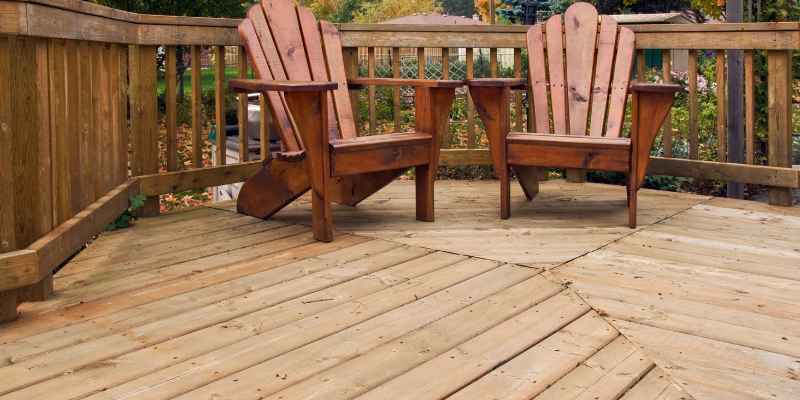
Mold needs three things to grow on a deck: moisture, organic material to feed on (the wood itself, plus dirt and pollen), and limited airflow or sunlight. Rain, sprinkler overspray, and condensation that collects between deck boards create the damp conditions mold spores need to take hold, especially in shaded areas under trees, furniture, or a roof overhang.
Why Is My Wood Deck Turning Black?
A deck usually turns black from one of three causes: mold or mildew growth from trapped moisture, algae in low-draining spots, or tannin bleed on cedar and redwood reacting with moisture and metal fasteners. Regular cleaning and improved drainage prevent all three, but the removal method differs depending on which one you have.
Is Black Mold on a Deck Dangerous to Your Health?
Yes — the CDC notes that mold exposure can trigger nasal congestion, coughing, wheezing, eye or skin irritation, and can worsen asthma symptoms in people who are sensitive or allergic to mold. Wear gloves, eye protection, and an N95 mask when scrubbing away larger patches, and keep the area ventilated during cleanup.
How to Get Rid of Black Mold on a Wood Deck
Start with the gentlest effective method and only move to a stronger one if the mold does not lift. Vinegar and detergent are safer for stained or painted wood; bleach is a last resort and, per the EPA, does not kill mold roots embedded in porous wood the way it does on tile or glass — it mainly bleaches the color out, which is why mold often returns after a bleach-only cleaning.
Step 1: Prep the Deck
Clear furniture, planters, and debris off the deck. Sweep away loose dirt and leaves so the cleaning solution reaches the mold directly instead of soaking into surface debris. Put on rubber gloves, eye protection, and an N95 mask, and open up the surrounding area for airflow.
Step 2: Try Vinegar First
Fill a spray bottle with undiluted white vinegar (or a 1:1 vinegar-to-water mix for a milder pass on painted or stained wood) and saturate the moldy area. Let it sit for 15 to 60 minutes so the acidity penetrates into the wood grain, then scrub with a stiff-bristle brush and rinse away the vinegar residue thoroughly with a hose. Vinegar is effective on surface-level mold and mildew and is safe on most finishes, but repeat the treatment for stubborn or long-established growth.
Step 3: Use Detergent for Deeper Buildup
Mix warm water with a few tablespoons of dish or laundry detergent. Unlike bleach, detergent breaks down the residue mold roots feed on rather than just bleaching the surface color, so it reaches slightly deeper into the grain. Scrub with a brush, working with the direction of the wood grain, then rinse well and let the deck dry completely before applying any sealant.
Step 4: Use Bleach Safely (Only If Needed)
If vinegar and detergent do not fully clear a heavy patch, mix no more than 1 cup of bleach per gallon of water — the CDC’s standard cleanup ratio, far weaker than the 1:3 concentration often recommended elsewhere. Apply with a brush, let it sit 10 minutes, then scrub and rinse thoroughly. Test on a hidden spot first, since bleach can lighten stain or paint.
Step 5: Try an Oxygenated or Commercial Mold Remover
Oxygenated deck cleaners built around sodium percarbonate are registered by the EPA as a mold-fighting ingredient and are gentler on stain and sealant than chlorine bleach, making them a good middle ground when vinegar is not strong enough but you want to avoid bleach altogether. Follow the label’s dilution and dwell time exactly, since concentration varies by brand.
📊 If the moldy area covers more than about 10 square feet, the EPA recommends bringing in a professional mold remediation contractor rather than tackling it with household cleaners alone — Source: EPA, A Brief Guide to Mold, Moisture and Your Home.
How to Stop Black Mold From Coming Back
Cleaning removes existing mold, but the deck will regrow it unless the underlying moisture problem is addressed. Combine these three habits for the best long-term result.
Clean on a Schedule
Wash the deck at least twice a year — once in spring after winter moisture and again in fall before leaves and debris accumulate. Sweep debris out of the gaps between boards regularly, since trapped organic matter is what feeds new mold growth.
Reseal or Restain the Wood
A quality sealant or stain with a mildewcide additive creates a barrier that keeps water from soaking into the wood grain in the first place. Most exterior deck stains need reapplication every one to three years depending on sun and foot-traffic exposure. If you have not chosen a product yet, see our guide to the best deck stain before you shop; see our full walkthrough on how to stain a treated wood deck the right way for the full process, including dry times before the first coat.
Improve Airflow and Drainage
Trim back nearby shrubs and branches so sunlight and air reach the deck surface, and confirm water drains away from the structure rather than pooling underneath it. Gaps between boards should stay clear so water passes through instead of sitting on the surface.
Vinegar vs. Detergent vs. Bleach vs. Oxygenated Cleaner
| Method | Kills Embedded Mold Roots? | Safe on Stained/Painted Wood? | Best For |
|---|---|---|---|
| White vinegar | Yes, on surface-level growth | Yes | Light to moderate mold, routine cleaning |
| Detergent + water | Better than bleach on porous wood | Yes | Everyday grime plus mild mold |
| Bleach (1 cup/gallon) | No — bleaches surface color, per EPA | No, can lighten finish | Bare, unfinished wood with heavy staining |
| Oxygenated cleaner | Yes, EPA-registered active ingredient | Yes | Stained decks with stubborn mold |
Frequently Asked Questions
How do you get rid of black mold on a deck?
Spray the mold with undiluted white vinegar or a warm water and dish detergent solution, let it sit 15 to 60 minutes, then scrub with a stiff brush and rinse thoroughly. For heavier growth, use no more than 1 cup of bleach per gallon of water, following CDC guidance, and never mix bleach with ammonia.
What kills black mold on wood?
White vinegar, a detergent-and-water solution, an EPA-registered oxygenated cleaner, or a correctly diluted bleach solution (1 cup per gallon of water) all kill surface mold on wood. Vinegar and detergent are gentler on stain and paint; bleach mainly bleaches the color and does not kill mold embedded deep in porous wood, per the EPA.
Why is my wood deck turning black?
A deck typically turns black from mold or mildew growth in damp, shaded spots, algae in areas that stay wet longest, or tannin bleed on cedar and redwood reacting with moisture and metal fasteners. Regular cleaning, better drainage, and a mildew-resistant sealant address all three causes.
Does vinegar kill mold on decks?
Yes. Spray undiluted white vinegar on the mold, let it sit for 15 to 60 minutes so the acidity penetrates the wood grain, then scrub with a brush and rinse. It is effective on surface-level and moderate mold and is safe on most stains and finishes, though stubborn growth may need a repeat treatment.
Is it safe to mix bleach and vinegar to clean deck mold?
No. Never mix bleach with vinegar, ammonia, or any other cleaning product. The CDC warns that combining chlorine bleach with ammonia-based cleaners releases toxic chloramine gas, and mixing bleach with vinegar or other acids can release chlorine gas. Use one cleaning method at a time and rinse tools between different solutions.
What is the difference between mold and mildew on a deck?
Mold appears as dark, embedded spots that penetrate into the wood grain, while mildew is a fine, powdery gray or white film that sits on the surface and wipes off more easily. Both respond to the same vinegar, detergent, or bleach cleaning methods described above.
How often should you clean a wood deck to prevent mold?
Clean the deck at least twice a year, in spring and fall, and sweep debris out of the board gaps regularly between cleanings. Decks in shaded, humid, or high-rainfall areas may need cleaning more often, since trapped moisture and organic debris are what feed new mold growth.
Conclusion
Getting rid of black mold on a wood deck comes down to matching the cleaning method to the severity: vinegar or detergent for routine growth, a correctly diluted bleach solution or an oxygenated cleaner for stubborn patches, and never mixing bleach with ammonia or vinegar. Once the deck is clean and dry, sealing it and improving drainage and airflow are what actually keep mold from returning. For a broader look at deck upkeep beyond mold, see our wood care and protection guide or browse the full wood decking hub.
Sponsored / affiliate links. As an Amazon Associate I earn from qualifying purchases. I may earn additional commission from eligible campaigns.