Are Greenworks Batteries Interchangeable With Ryobi? (2026 Guide)
No, Greenworks batteries are not interchangeable with Ryobi batteries, even when both are labeled 40V. Greenworks says its packs work only with tools on the same Greenworks voltage platform, and Ryobi builds its 18V ONE+ and 40V packs for its own tools. If you own tools from both brands, you need a battery and charger for each system.
That answer surprises people because the numbers look the same on the label. This guide covers what each brand says about its own platforms, why matching voltage does not make packs swappable, what to avoid (adapters especially), and how to plan a mixed-brand yard or shop without buying duplicate batteries. For other brands, see our guides on which cordless tool batteries are interchangeable and Kobalt battery compatibility.
The Short Answer: Same Voltage Number, Different System
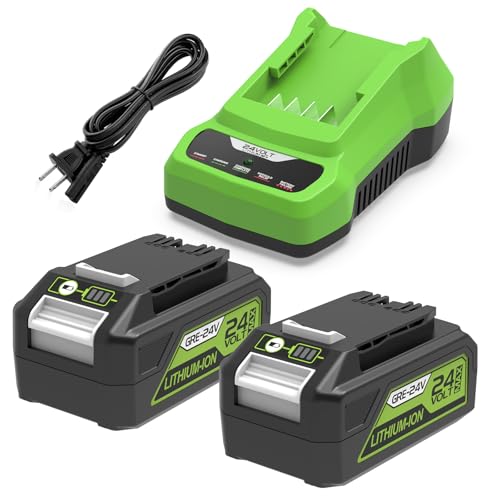
Greenworks states that its batteries are interchangeable with tools of the same voltage platform only, which means a Greenworks 24V battery fits Greenworks 24V tools and nothing else. Ryobi says the same thing from its side: its 40V battery is compatible with Ryobi 40V tools and chargers. Nothing on either brand’s own pages suggests a battery from one brand fits the other.
Best Dual-Platform Charger Pick
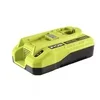 |
RYOBI ONE+ 18V/40V Dual Platform Charger, $45 Greenworks batteries will not fit Ryobi tools, but if your Ryobi tools span the 18V ONE+ and 40V lines, this single charger handles both battery types.
|
Greenworks vs Ryobi Battery Platforms at a Glance
The two lineups overlap on paper at 40V and nowhere else. Greenworks sells four voltage platforms, while Ryobi’s two battery platforms are 18V ONE+ and 40V.
| Platform | Greenworks | Ryobi | Swappable across brands? |
|---|---|---|---|
| 24V | Yes, light-duty yard tools | No 24V line | Not applicable |
| 18V ONE+ | No 18V line | Yes, the long-running ONE+ system | Not applicable |
| 40V | Yes | Yes, over 85 tools per Ryobi | No, separate systems |
| 60V | Yes | No 60V line | Not applicable |
| 80V | Yes | No 80V line | Not applicable |
Ryobi’s current 40V battery prices, as listed on its site when we checked, run from about $159 for 4Ah to $219 for 6Ah, $259 for 8Ah and $359 for 12Ah. Prices move, so treat these as a rough guide to what a second platform costs you.
Why Two “40V” Batteries Still Do Not Swap
The common myth is that matching voltage means matching batteries. It does not. A voltage label tells you what a battery is rated for, but it says nothing about the physical pack shape, the latch, the contact layout, or the electronics that talk to the tool and charger. Each brand designs those pieces for its own tools, and neither Greenworks nor Ryobi publishes a cross-brand fit.
Ryobi’s own 18V ONE+ and 40V lines show the same principle from the inside. Ryobi sells a dual platform charger that works with all ONE+ 18V and 40V batteries, but the product page describes only the charger. It does not claim that an 18V battery runs a 40V tool. The charger being shared is a convenience, not proof the batteries are.
Chargers Follow the Same Rules
Greenworks says each voltage line has designated chargers that charge every battery on that platform regardless of amp-hour rating. So a 2Ah and an 8Ah Greenworks 40V pack use the same family of charger, and higher Ah simply buys longer runtime.
Ryobi’s dual platform charger is listed for both battery types, at a 12A rate for 18V packs and a 6A rate for 40V packs, and the listing says it can charge a 40V 6Ah battery in about one hour. Those figures are from the seller listing, so confirm them against the charger you actually receive. The takeaway: chargers are brand-specific too. Put a Greenworks pack on a Greenworks charger and a Ryobi pack on a Ryobi charger.
Even Inside Greenworks, Same Voltage Has Exceptions
Here is the angle most compatibility posts miss. Same voltage is the rule inside a brand, but Greenworks itself lists exceptions. Its compatibility notes say that the 60V 8.0Ah battery (model 2957102) cannot be used in any 60V snow shovel, snow blower, tiller/cultivator or lawn mower, and that certain older 80V 20-inch snow throwers built before September 2017 accept only 2.0Ah or 2.5Ah batteries. We saw these notes through a search summary of Greenworks’ site because the page itself blocked our fetch, so check the current model list on greenworkstools.com before you buy.
If the manufacturer has to publish exceptions within one brand, cross-brand swapping is not a safe bet. Always check the model number of your tool against the battery, not just the voltage.
What About Adapters and Third-Party Batteries?
Many sites suggest adapters as a workaround. We do not. We found no Greenworks or Ryobi page that documents or endorses using an adapter between brands. An adapter can bypass the fit and charging design that the battery and tool were built around.
Lithium-ion packs store a lot of energy, and mismatched electronics, loose contacts or an unsuitable charger can lead to overheating. This is a general safety point rather than a finding from either brand, so follow the manuals for your tool and charger. Greenworks’ own Amazon listing also warns that aftermarket batteries often lack safety circuits and the official battery management system, and that a non-genuine battery may void the tool warranty.
Third-party replacement packs sold for one specific brand are a separate question from adapters. If you buy one, it should be made for the exact tool line you own, not a pack claiming to work in both brands.
How to Plan a Mixed Greenworks and Ryobi Setup
- Pick one platform per job. Greenworks 24V/40V/60V/80V for yard tools, or Ryobi 18V ONE+ and 40V, is easier to manage than mixing brands within a job.
- Buy tools bare when you can. If you already own batteries in a platform, a bare tool for that platform costs less than a kit with a battery you do not need.
- Match the model number. Check the exact tool model against the battery listing, including Greenworks’ noted exceptions.
- Keep chargers with their batteries. Do not swap chargers between brands.
- Check compatibility with the brand. Greenworks and Ryobi both publish compatibility and support pages, and those beat any forum thread.
One more detail from Greenworks’ Amazon listing: some 24V packs can be used in pairs to run 48V products, described as 2 x 24V. That is still inside the Greenworks system, and it is a reminder to read the tool’s stated battery requirements before assuming a battery fits.
If a Ryobi battery stops holding a charge, our guide on what to do when a Ryobi battery will not charge is a better first step than trying another brand’s charger. For more on Ryobi’s own lineup, see whether Ryobi 40V batteries are interchangeable.
Frequently Asked Questions
Are Greenworks batteries compatible with Ryobi tools?
No. Greenworks says its batteries are interchangeable only with tools on the same Greenworks voltage platform, and Ryobi’s batteries are built for Ryobi’s own 18V ONE+ and 40V tools. Neither brand offers a cross-brand battery that fits the other’s tools.
Do Greenworks 40V and Ryobi 40V batteries work in each other’s tools?
No. Both brands use a 40V label, but a voltage number is a platform name, not a shared standard. Greenworks 40V packs are made for Greenworks 40V tools and Ryobi 40V packs for Ryobi 40V tools, so treat them as separate systems.
Can I use a Ryobi charger for Greenworks batteries?
Do not assume so. Greenworks says each of its voltage lines has designated chargers, and Ryobi’s dual platform charger is listed for Ryobi 18V ONE+ and 40V batteries. Charge each battery with the charger made for it.
Are adapters between Greenworks and Ryobi batteries safe?
Neither brand documents or endorses them in the pages we read. An adapter can bypass the fit and charging design the battery was built around, and it may void a warranty, so we recommend buying a battery made for the tool instead.
Can I use a higher-voltage Greenworks battery in a lower-voltage Greenworks tool?
No. Greenworks states that batteries only work with tools of the same voltage platform, so a 40V battery does not go in a 24V tool, and a 60V battery does not go in an 80V tool.
Conclusion
Greenworks and Ryobi batteries are separate systems, and the shared “40V” label does not change that. Use each brand’s battery and charger with its own tools, check the model number rather than just the voltage, and skip adapters. If you own both brands, budget for a battery and charger on each platform, and lean on a dual charger only where the brand itself sells one, as Ryobi does for its own 18V and 40V packs.
Sponsored / affiliate links. As an Amazon Associate I earn from qualifying purchases. I may earn additional commission from eligible campaigns.