OSB vs Plywood for Roof Sheathing: What Lasts Longer
For roof sheathing, plywood often lasts longer after leaks or attic moisture, while OSB tends to hold up better when it stays dry; if leak risk is not low or replacement is a long way off, plywood is usually the safer choice. I have seen small roof problems turn into swollen panel edges, weak nail bite, and a much bigger reroof bill. This guide compares leak recovery, moisture behavior, reroofing limits, and when each panel makes sense.
This guide is part of our Plywood Thickness Chart: Which Size For Which Project series.
| Factor | OSB | Plywood For Roof Sheathing: Which Lasts Longer | Winner |
|---|---|---|---|
| Upfront cost | Usually has the lower shelf price; a 4 by 8 sheet can cost between $15 and $43. | Usually costs more upfront. | OSB |
| Lifespan in dry conditions | Can last a long time in a dry assembly; if the deck only needs to survive one roof covering and the assembly stays dry, it is often a sound value. | Under dry conditions, the two materials are closer than many buyers expect; both can perform well. | Tie |
| Brief construction wetting | Usually acceptable when APA Rated Sheathing is installed correctly and dries promptly, but edges can stay raised after wetting. | Usually recovers flatter after short-term wetting and is less likely to leave ridges telegraphing through roofing. | Plywood For Roof Sheathing: Which Lasts Longer |
| Minor isolated leak recovery | Can remain serviceable if swelling is limited and fastener zones stay firm, but inspection needs to focus on edge rise and soft nail lines. | Usually gives more margin after a small leak because panel flatness and fastener holding tend to recover better. | Plywood For Roof Sheathing: Which Lasts Longer |
| Chronic leak or long-duration wetting | Replacement risk rises fast once repeated saturation causes edge swell, surface breakdown, and poorer reroof fastener bite. | Still degrades under chronic leaks, but often keeps a more usable surface longer before full redecking is needed. | Plywood For Roof Sheathing: Which Lasts Longer |
| High-humidity attic or slow-drying roof assembly | Works when moisture stays controlled, yet long periods of elevated moisture increase swelling and reroof risk. | Better choice where drying potential is weak, such as humid attics or assemblies with repeated seasonal moisture loading. | Plywood For Roof Sheathing: Which Lasts Longer |
| One reroof cycle | Often fine if kept dry and still flat at tear-off. | Often fine, with more forgiveness if there has been modest wetting in service. | Tie |
| Two reroof cycles or long ownership horizon | Less margin if even one leak episode causes lasting edge swell or weakens refastening zones. | Better bet when the roof deck may need to stay in place through another reroof many years later. | Plywood For Roof Sheathing: Which Lasts Longer |
| Reroofing/fastener holding after moisture | Weak nail bite and poorer reroof fastener bite become bigger concerns after saturation. | Main advantages show up during tear-off and when old fastener lines need to hold up under a second roof cycle; usually gives a cleaner base for reroofing. | Plywood For Roof Sheathing: Which Lasts Longer |
| Best-fit use | Best when leak risk is low, replacement is not far off, or the goal is to get through one roof cycle and the attic stays dry. | Safer choice if leak risk is not low, replacement is a long way off, or the owner wants the deck to stay serviceable through another reroof. | Plywood For Roof Sheathing: Which Lasts Longer |
The core trade-off in one sentence
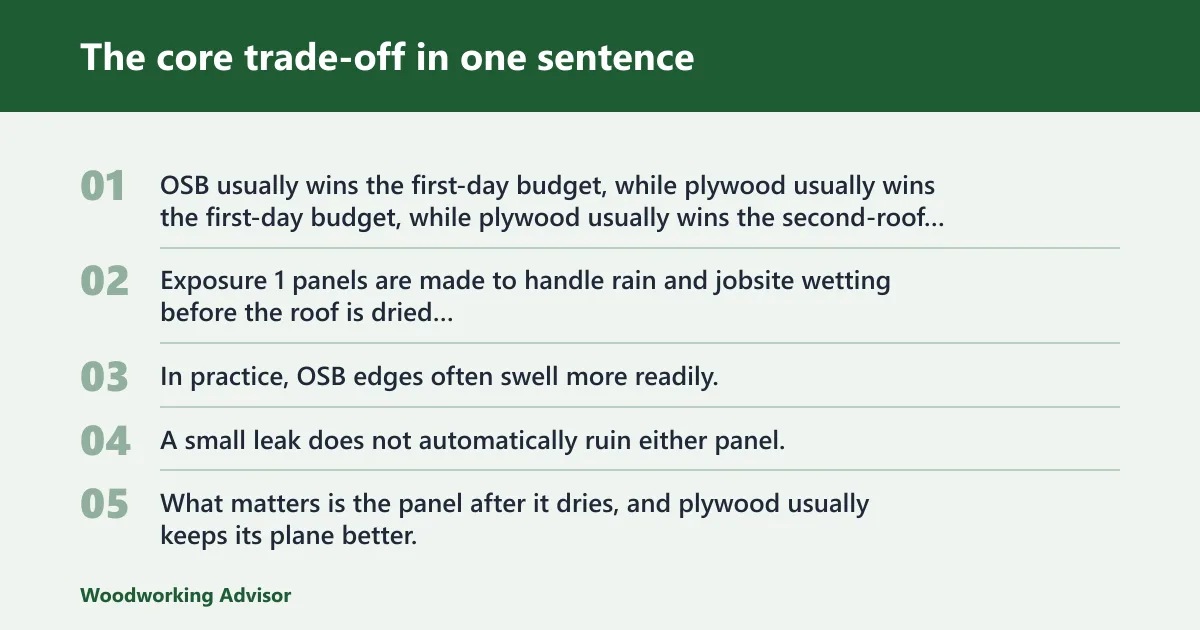


OSB usually wins the first-day budget, while plywood usually wins the second-roof decision after moisture has had time to do damage.
Why brief construction wetting goes to plywood
Exposure 1 panels are made to handle rain and jobsite wetting before the roof is dried in, but the rating only covers temporary exposure and adhesive performance, not a promise that every panel dries back flat. In practice, OSB edges often swell more readily, and those raised joints can remain visible after drying, which can matter on a roof.
Why minor leak recovery goes to plywood
A small leak does not automatically ruin either panel, though plywood may keep its plane a bit better in some cases. What matters is the panel after it dries, and plywood usually keeps its plane better, which helps preserve shingle lay, underlayment contact, and cleaner refastening during repairs.
Why chronic leaks favor plywood even more
Neither panel likes repeated wetting. Once water keeps coming back, OSB edge swell and surface roughening usually push it from “repairable” to “replace it now” faster.
Why humid attics are harder on OSB
Roof sheathing life comes down to drying potential. In a vented attic with good air sealing and controlled indoor humidity, both materials can perform well; in a damp attic or slow-drying unvented assembly, plywood generally gives more tolerance for seasonal moisture loading.
Why reroof horizon matters
If the deck only needs to survive one roof covering and the assembly stays dry, OSB is often a sound value. If the owner expects the deck to make it through one reroof and still be there for the next, plywood buys useful margin.
Why cost still matters, but only once
OSB usually has the lower purchase price, and on a full roof that can save real money on day one. I have also seen that savings disappear fast when swollen panels turn a later reroof into partial or full redecking.
OSB vs plywood for roof sheathing at a glance
What roof sheathing does
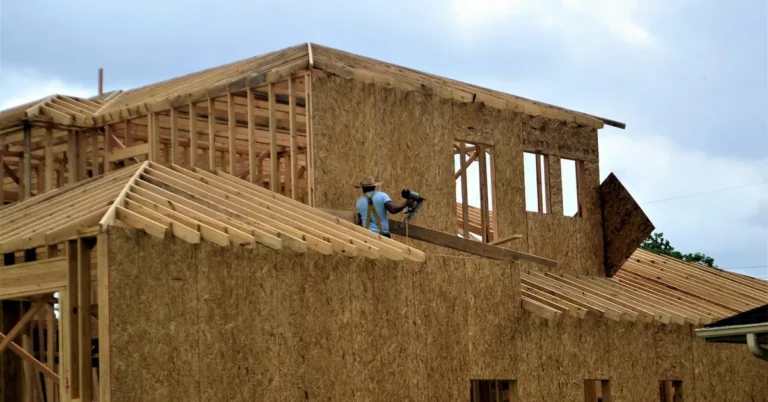
Roof sheathing is the structural decking fastened over rafters or trusses. It carries roof loads between framing members, braces the roof plane, and gives shingles or other roof coverings a solid nailing base. For a code-accepted roof, panel choice follows the stamp on the sheet: rating, exposure classification, orientation, and framing span.
What OSB is
OSB, or Oriented Strand Board, is built from thin rectangular wood strands cross-oriented in layers. It uses moisture-resistant adhesives, has no internal gaps or voids, and is used for wall and roof sheathing and subfloors.
What plywood is
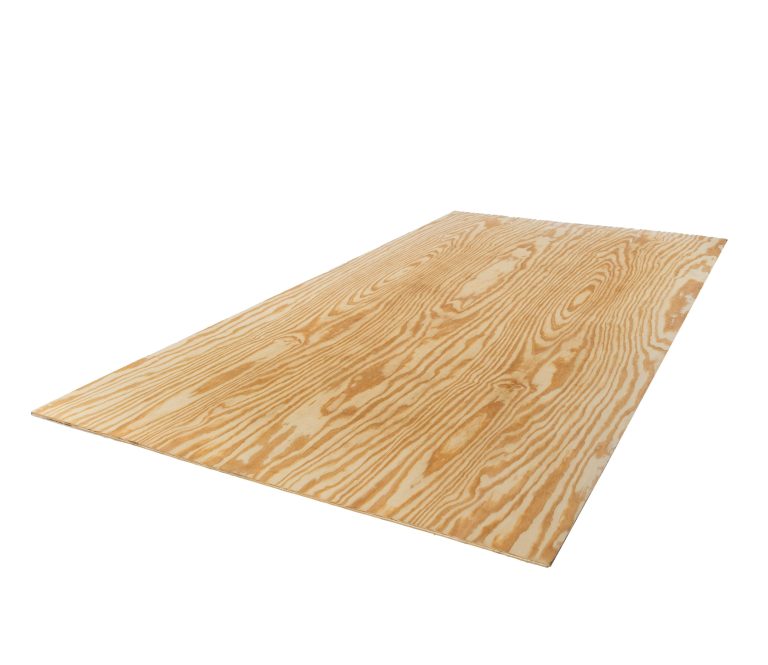
Plywood is the common comparison baseline for roof sheathing: a structural wood panel made from wood veneers laminated in layers. In roofing, its main advantages show up after wetting, during tear-off, and when old fastener lines need to hold up under a second roof cycle.
What the panel stamp tells you
APA Rated Sheathing markings matter more than marketing language. A span rating such as 32/16 uses two numbers; in APA Rated Sheathing, the left number refers to roof sheathing and the right number to subflooring.
That means a panel stamped 32/16 is approved for roof and floor uses within the framing limits attached to that rating. On roofs, the installer should also follow the panel orientation shown by the stamp, and OSB panels have a rough side that should face up on roofs or subfloors for traction.
Exposure 1 and Exterior are different ratings
Exposure 1 panels are built with bond performance meant for the normal rain and moisture a panel sees during construction, but they are not intended to live outdoors or stay wet in service. Exterior panels are made for repeated wetting and redrying, so they carry a different durability classification than standard Exposure 1 sheathing.
How panel thickness and performance category affect roof use
Thickness should be read two ways: the performance category on the stamp and the decimal thickness buyers see on invoices and cut lists. For roof work, thickness alone does not predict life; span rating, framing spacing, leak history, and whether the panel stayed flat matter more than a single thickness label.
Which lasts longer on a roof, OSB or plywood?
Plywood usually lasts longer on a roof when real-world moisture enters the picture, because it tends to recover better after leaks, holds panel flatness better, and usually gives a cleaner base for reroofing. OSB can last a long time in a dry assembly, but its margin drops faster after saturation or chronic humidity.
Service life under normal dry conditions
Under dry conditions, the two materials are closer than many buyers expect. Builders rate plywood and OSB as equal in strength and durability, and both can be code-accepted roof sheathing when the span rating and installation rules are followed.
That is why generic “which is stronger” comparisons miss the real issue. Dry roofs rarely kill sheathing; moisture events do.
What changes after one leak, repeated leaks, or chronic attic moisture
After one brief leak, plywood usually keeps a flatter surface. OSB may still be structurally usable, but edge swelling can leave raised joints that print through thinner roof coverings or create uneven underlayment support.
Repeated leaks change the picture faster. Repeated wetting and drying can increase the chance of permanent edge swell, some softening around fasteners, and visible panel lines at joints.
Chronic attic moisture can do similar damage from below. A humid bathroom exhaust dumping into the attic, weak ventilation, or poor air sealing can keep roof decking damp long enough that the roof fails from interior moisture rather than rain entry.
How replacement horizon changes the answer
If the goal is to get through one roof cycle and the attic stays dry, OSB often makes financial sense. If the owner wants the deck to stay serviceable through a later tear-off and another reroof, plywood is often the safer long-term choice.
The reason is simple: reroofing puts old sheathing under new stress. Workers walk it, old nails come out, fresh fasteners go in, and any prior swelling or softness becomes more obvious than it was under the old shingles.
What actually shortens roof sheathing life?
Roof sheathing life is shortened less by age alone than by how long it stays wet, how well it dries, and whether wetting repeats. The main failure modes are edge swelling, loss of flatness, reduced fastener holding after saturation, and hidden moisture buildup in attics or unvented roof assemblies.
Brief construction wetting versus long-duration wetting
Construction wetting is the rain exposure that hits panels before roofing is dried in. Exposure 1 sheathing is meant to handle that temporary condition, but temporary is the key word.
Long-duration wetting is different. A pipe boot leak that drips for months, ice-dam backup at the eaves, or a roof left uncovered too long can soak the same zones over and over, which is where service life starts to split between OSB and plywood.
Edge swelling, thickness swell, and loss of panel flatness
OSB edges tend to swell when they get wet and remain swollen after drying. On a roof, that means more than appearance. Raised panel edges can telegraph through shingles, disturb underlayment support, and create a less even plane for reroofing.
Plywood can swell too, but the practical roofing issue is whether the sheet dries back close enough to flat that the roof covering still lies cleanly. In many inspections, flatness matters before outright structural failure appears.
Fastener holding after saturation and redrying
Nail holding is where water history matters. A roof deck may still feel solid underfoot yet have weaker bite near old leak paths, panel joints, or areas where fibers or strands have been damaged by repeated saturation.
Plywood usually keeps more trustworthy reroof fastener zones after modest wetting. OSB can still hold nails well when dry, but once repeated moisture has roughened the panel surface or swollen joint areas, confidence drops faster during tear-off and refastening.
Humidity traps in vented attics and unvented roof assemblies
Vented attics usually give roof sheathing better drying potential, provided ceiling air leaks are controlled and vents actually work. Humid attics, however, can keep the underside of the roof deck damp enough that both materials age early.
Unvented roofs can perform well, but the margin for moisture mistakes is smaller. If the assembly dries slowly, the material that better tolerates wetting history becomes more attractive, which often points to plywood for long-term service.
Is OSB or plywood better after a leak or tear-off?
After a leak or during tear-off, plywood is usually the safer panel to keep in service because it more often stays flat and gives better refastening confidence. OSB can remain acceptable after a limited moisture event, but it demands closer scrutiny at edges, seams, and old leak zones.
How each material behaves during inspection from above and below
From above, inspectors look for swollen joints, ridges, soft spots, delamination in plywood, and surface breakup in OSB. From below, they look for staining patterns, mold, sagging between supports, darkened fastener lines, and areas where the panel has stayed damp.
OSB often tells the story at the joints first. Plywood often tells it through veneer checking, staining, or localized softness around a leak path.
When staining is cosmetic and when it points to structural loss
Stains alone do not prove the deck is finished. A dry panel that is still flat, firm around nail lines, and well attached may remain serviceable even if it shows old discoloration.
Replacement becomes more likely when stains come with swelling, crumbling surface fibers, nail withdrawal weakness, panel sag between framing, or recurring moisture readings tied to an active source. Water history matters, but present condition decides the repair.
Replace, dry and monitor, or leave in place
- Leave in place if the leak was brief, the panel is dry, flat, and firm, and fastener zones remain sound.
- Dry and monitor if there is minor staining or slight swelling but no softness, no active leak, and no loss of plane affecting the new roof covering.
- Replace if there is chronic wetting, raised seams that will telegraph, weak refastening zones, sagging between supports, or panel breakdown visible from either side.
Roof-sheathing longevity matrix
Scenario matrix: expected recovery, action, and replacement risk
| Scenario | OSB | Plywood | Recommended action | Replacement risk |
|---|---|---|---|---|
| Short construction wetting | Usually serviceable if dried promptly; watch for swollen joints that stay proud after drying. | Usually serviceable; often recovers flatter with fewer raised joint lines. | Dry fully, check seams and nail lines, proceed only if panels are flat and firm. | OSB: medium if edges stayed swollen; Plywood: low |
| Minor isolated leak | Can remain in place if damage is localized and strands around fasteners are still firm. | Often remains in place if leak was corrected quickly and panel stays flat. | Repair leak, dry deck, probe around fasteners and joints, replace only damaged sections. | OSB: medium; Plywood: low to medium |
| Chronic leak | High odds of permanent swelling, poor reroof base, and weak refastening zones. | Also at high risk, but may keep usable sections outside the wettest area. | Replace affected sections promptly; broad damage often justifies larger redecking. | OSB: high; Plywood: medium to high |
| High-humidity attic | Service life drops if underside stays damp for long periods, especially near eaves and cold spots. | Usually offers better tolerance where humidity is persistent but leaks are absent. | Fix moisture source first, then inspect for flatness, mold, and sagging before deciding on replacement. | OSB: medium to high; Plywood: medium |
| Reroofing over aged decking | Keep only if dry, flat, and nails still bite well; swollen seams often push the decision toward replacement. | Keep if dry, flat, and secure; usually gives more refastening confidence after modest past wetting. | Tear off, inspect from above and below if possible, patch or redeck based on fastener holding and panel plane. | OSB: medium to high; Plywood: low to medium |
How to use the matrix in real decisions
The matrix separates brief wetting from chronic wetting because those are different failures. A few rainy days during framing are one thing; a winter of hidden leakage is another.
It also separates a first roof from a later reroof. Many decks look acceptable until the old covering is stripped and the installer sees how much swelling, softness, or nail-line fatigue is actually there.
What roof sheathing thickness should you use?
Use the panel rating and local code first, then thickness language second. A roof panel should match the framing span, carry an APA Rated Sheathing stamp, and be installed in the stamped orientation; thickness alone does not tell whether it is right for the spacing or likely to last well.
Reading span ratings such as 32/16
OSB panels are available with a 32/16 span rating example. In APA Rated Sheathing, the left number is for roof sheathing and the right number is for subflooring, so the roof decision starts with the left number and the actual framing spacing on the house.
That is why buying by “half-inch” or “five-eighths” alone can lead to mistakes. The stamp is the structural instruction.
Performance category versus decimal thickness
At the yard, buyers may see performance category labels on the stamp and decimal thickness on invoices or product tags. Those terms are related, but for roof service life the bigger question is whether the installed panel matches its span rating and stays dry enough to remain flat and secure.
Why thickness alone does not predict longevity
A thicker panel that sits wet can age out faster than a thinner panel in a dry, well-detailed roof. Longevity comes from the whole assembly: roofing details, attic moisture control, panel rating, framing support, and whether leaks are found early.
Can OSB be used for roof sheathing?
Yes. OSB is used for roof sheathing, and it is code-accepted when the panel carries the proper APA Rated Sheathing markings, has the right span rating for the framing, and is installed with the stamped orientation and fastening schedule. The catch is that roof longevity depends heavily on keeping it dry.
Where OSB makes sense
OSB is a normal roof-deck material in many regions because it is structurally suitable, widely available, and often cheaper than plywood. The fact that OSB uses moisture-resistant adhesives and has no internal gaps or voids supports consistent panel structure when conditions stay within design limits.
Where buyers misread the rating
The common mistake is treating Exposure 1 as a promise of long-term leak tolerance. It is a construction-moisture rating, not permission for repeated wetting in service.
What is the downside of OSB on roofs?
The main downside of OSB on roofs is its lower forgiveness after wetting. It can perform well in dry assemblies, but once leaks or attic moisture appear, edge swelling, loss of flatness, and weaker reroof fastener zones show up sooner, which raises the chance of partial or full redecking later.
Why edge swell matters more on a roof than on paper
Raised seams are not cosmetic. They can telegraph through finished roofing, complicate underlayment contact, and leave a rougher surface for future tear-off and refastening.
Why the cheap panel can become the expensive roof
OSB usually has the lower upfront price, and a 4 by 8 sheet of OSB can cost between $15 and $43. That saving is real at installation, but I would weigh it against replacement risk in humid attics, leak-prone roofs, or houses likely to see a second reroof without a full redeck.
Choose OSB if… / Choose plywood if…
Choose OSB if…
- The roof assembly has good drying potential, such as a well-managed vented attic with controlled indoor humidity.
- The roof design has low leak risk and details are simple, with fewer valleys, penetrations, and ice-dam concerns.
- The goal is the lowest installed cost now, and the owner accepts a tighter margin if moisture problems show up later.
- The deck only needs to get through one roof cycle and current inspection shows dry, flat, sound panels.
Choose plywood if…
- The roof has a higher chance of wetting from climate, design complexity, ice dams, or a past leak history.
- The attic is humid, the roof assembly dries slowly, or the house uses an unvented approach with less forgiveness for moisture mistakes.
- The owner expects the deck to survive one reroof and still have a fair shot at the next.
- The price gap is small compared with the cost and disruption of future patching or redecking.
When the higher plywood cost is worth paying
Plywood earns its premium when replacement risk is expensive. That includes steep roofs, finished interiors where leak discovery may be delayed, houses in humid regions, and any project where tearing off roofing again would cost far more than the panel upcharge did on day one.
Frequently asked questions
Is OSB or plywood better for roof sheathing?
Plywood is usually better when the decision is based on leak recovery and long-term reroofing risk, while OSB is often the better value on roofs that stay dry and have good drying potential. The better choice is tied to moisture exposure, not to a generic “best” label.
Which lasts longer on a roof, OSB or plywood?
Plywood usually lasts longer once leaks, attic humidity, or reroofing stress enter the picture. OSB can last well in a dry roof assembly, but its service margin tends to shrink faster after wetting because edge swelling and loss of flatness are more likely to remain after drying.
Does OSB swell more than plywood when it gets wet?
Yes, that is the main roof-specific weakness to watch. OSB edges tend to swell when they get wet and remain swollen after drying, which can leave raised seams, reduce panel flatness, and create a poorer base for shingles or for a later reroof.
Is plywood stronger than OSB for roof decking?
In dry structural use, builders rate plywood and OSB as equal in strength and durability when the proper rated panels are installed correctly. The practical difference comes after moisture exposure, when plywood usually holds its roofing surface and refastening zones in better condition.
What roof sheathing thickness should I use?
Use the APA Rated Sheathing stamp, the roof framing spacing, and local code before focusing on nominal thickness alone. A span rating such as 32/16 gives the real structural guidance, and thickness by itself does not predict either code fit or long-term moisture performance.
What is Exposure 1 sheathing?
Exposure 1 sheathing is a panel classification for normal construction wetting. It resists moisture during construction but is not for permanent outdoor exposure, so it should not be read as a promise that the roof deck can tolerate repeated leaks or long-term weather exposure in service.
Sponsored / affiliate links. As an Amazon Associate I earn from qualifying purchases. I may earn additional commission from eligible campaigns.