Wood Stain Yellow: Why It Happens and How to Fix It
Wood stain turns yellow for one of two separate reasons: the raw wood itself is reacting to light or tannins under a clear or light-colored finish, or an oil-based topcoat is ambering as it ages. These two causes need opposite fixes, so treating them as one problem wastes time and product. This guide walks through both causes, a 30-second test that tells you which one you’re dealing with, and the specific prevention and repair steps for each — for the full staining process from bare wood to topcoat, see our complete guide to staining wood.
When the yellowing runs too deep for spot repair, stripping the finish entirely is the reset button — our wood stain remover breakdown explains which chemistry to reach for.
Quick Answer
Wood stain looks yellow either because the wood’s own tannins or lignin are reacting to a clear finish and UV light, or because an oil-based polyurethane or varnish topcoat is ambering with age. Wipe the spot with mineral spirits on 0000 steel wool: if the color lifts, it’s the topcoat; if it barely changes, the yellow is in the wood itself.
Why Does Wood Stain Look Yellow? The 2 Real Causes
Best for Tannin Yellow
Zinsser Bulls Eye SealCoat
- Best for: Sealing pine, oak, maple, or cherry before staining to block tannin bleed-through
- Why we picked it: Dewaxed shellac formula dries to the touch in 45 minutes and any finish can go over it
- Main drawback: Alcohol-based fumes require good shop ventilation while it dries
Compare more yellowing fixes
 Minwax Pre-Stain Wood Conditioner Prevents blotchy absorption on pine and maple before staining View on Amazon → |
 Minwax Polycrylic Water-based topcoat that stays clear instead of ambering like oil-based poly View on Amazon → |
 Varathane Weathered Gray Cool gray-toned stain that neutralizes an existing yellow or orange cast View on Amazon → |
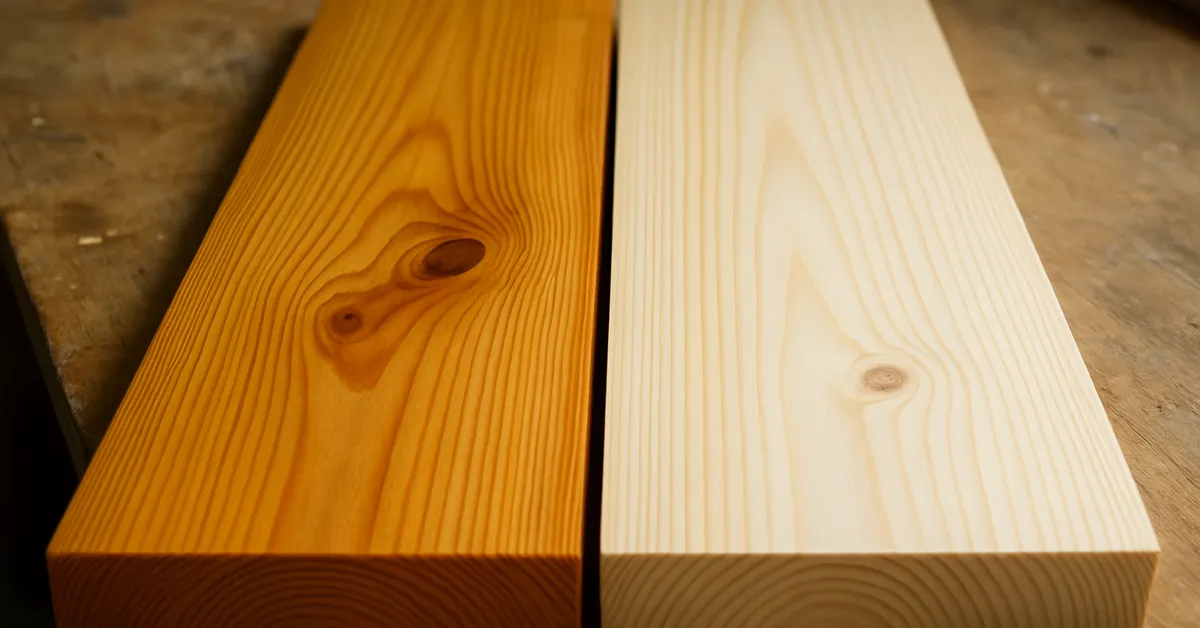
Wood stain looks yellow because of either the wood underneath or the finish on top — not the stain pigment itself. Raw wood tannins and lignin darken toward yellow-brown under UV light and clear coatings, while oil-based polyurethane and varnish carry their own amber tint that deepens for years after application.
These are chemically unrelated problems that happen to look identical from across the room. A pine cabinet door can turn yellow the week it’s finished, from tannin bleed-through alone, while an oak floor with the same stain color can look yellow only after three winters of sun through a window — because in that case the topcoat, not the wood, is doing the aging.
| Signal | Cause 1: Wood/Tannin/UV | Cause 2: Ambering Topcoat |
|---|---|---|
| When it appears | Within hours to days of staining | Builds over 1–5+ years |
| Where it shows | Blotchy, uneven patches, worse near knots | Even yellow-orange cast over the whole surface |
| Common woods | Pine, birch, maple, cherry, alder | Any species under oil-based poly/varnish |
| Triggered by | Tannins/lignin + UV or water-based topcoat | Alkyd resin oxidizing in oil-based finish |
| Fixed by | Sanding back, dewaxed shellac, dye stain | Recoating or stripping to water-based poly |
How Can You Tell Which Cause Is Yours?
Rub an inconspicuous spot with mineral spirits on a pad of 0000 steel wool for 10–15 seconds. If the yellow visibly lightens or transfers onto the wool, the color lives mostly in the topcoat. If the wood underneath still looks yellow-tan after wiping it clean, the color is coming from the wood itself.
Mineral spirits soften and lift the surface of an oxidized oil-based finish without touching cured shellac or water-based poly, which is what makes this test useful. It won’t tell you the exact cause with lab precision, but it separates “this is a finish problem” from “this is a wood problem” in under a minute, which is the decision that determines everything else in this guide.
Why Do Pine, Oak, and Maple Turn Yellow Under Stain?
Pine, maple, birch, and cherry turn yellow under stain because their tannins and lignin react to UV light and to the solvents in clear finishes, producing yellow-to-orange compounds right at the wood surface. Softwoods and light-colored hardwoods show this fastest because they have little natural pigment of their own to mask the reaction.
What Is Tannin Bleed-Through?
Tannin bleed-through is the yellow-to-brown discoloration that appears when tannins inside the wood migrate to the surface and react with a finish, most often a water-based topcoat or a stripper left on too long. Oak, cherry, and mahogany carry the most tannin, which is why a water-based poly over unsealed oak commonly comes out with a yellow-gray cast instead of the clear look the can promised.
Pine and maple carry less tannin but blotch instead, because their grain density swings sharply between the pale earlywood and the darker latewood bands. Stain and finish soak fastest into the softer earlywood, and that uneven absorption reads as patchy yellow-orange rather than a uniform tannin cast.
That same absorption gap is why a stain color can look nothing like its can photo once it hits pine — see how specific stain colors actually render on pine for a side-by-side comparison against how they look on oak.
Does Raw Wood Turn Yellow From Sunlight Alone?
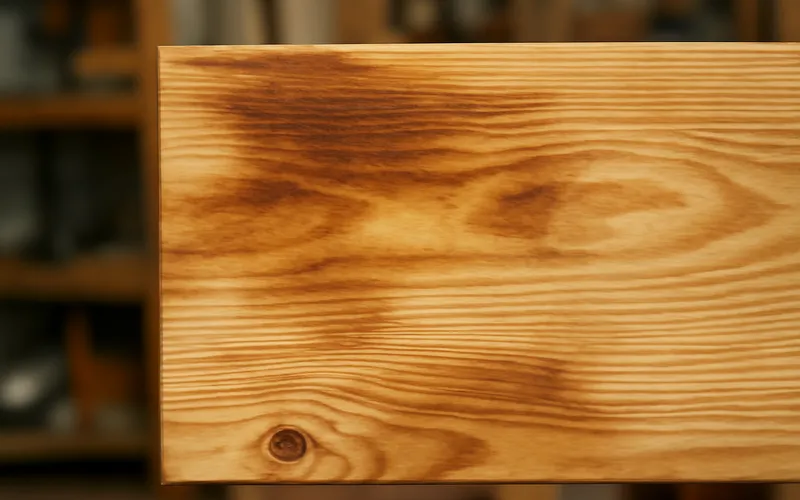
Yes. Unfinished or clear-coated wood yellows from UV exposure alone, with no stain or dye involved. Wood scientists attribute this to lignin photodegradation: light breaks lignin down into phenoxy radicals and quinone compounds, which are yellow to orange, and research from the US Forest Service’s Forest Products Laboratory confirms that visible light, not only UV, penetrates the wood surface and drives this breakdown deeper than UV alone.
Maple is the most visible example: a freshly planed maple board can shift from white to honey-yellow after 2–3 months of indirect window light, with no finish applied at all. Cutting boards, floors near south-facing windows, and outdoor furniture under clear finish all show this same mechanism.
Why Does an Oil-Based Topcoat Turn Yellow Over Time?
Oil-based polyurethane and varnish turn yellow because their alkyd resin carries an amber tint from the day it’s applied, then continues to oxidize and darken for years afterward. This is the topcoat aging, not the stain color changing — the same stain under a water-based topcoat stays close to its original shade indefinitely.
We’ve already covered this specific mechanism in depth, including which finishes are worst and how to slow it down, in our full breakdown of why polyurethane yellows. The short version: oil-based products amber noticeably within the first 1–2 years and keep going, while water-based polyurethane and polycrylic products stay clear for the life of the finish because they don’t contain the same oxidizing alkyd resin.
How Do You Prevent Wood Stain From Turning Yellow?
Prevent tannin and blotch yellowing by sealing the wood with dewaxed shellac or wood conditioner before staining, and prevent topcoat yellowing by choosing a water-based finish instead of oil-based. Each prevention step targets one cause only — there’s no single product that blocks both.
Preventing Yellow From Tannin and Blotching
Brush on a coat of dewaxed shellac sanding sealer before staining pine, oak, maple, birch, or cherry. Dewaxed shellac locks tannins in place so they can’t migrate to the surface and blocks the uneven absorption that causes blotching, and according to Zinsser’s own product specs, a dewaxed shellac sanding sealer like SealCoat dries to the touch in 45 minutes and is ready to sand and stain the same day.
A standard oil-based wood conditioner works as a lighter alternative for pure blotching (no tannin bleed) on pine and maple, but it doesn’t block tannin the way shellac does — we cover exactly which woods need which product in our pre-stain wood conditioner guide. Skip both, and expect the same blotchy or tannin-yellow result covered in our guide to fixing blotchy wood stain.
Preventing Yellow From an Ambering Topcoat
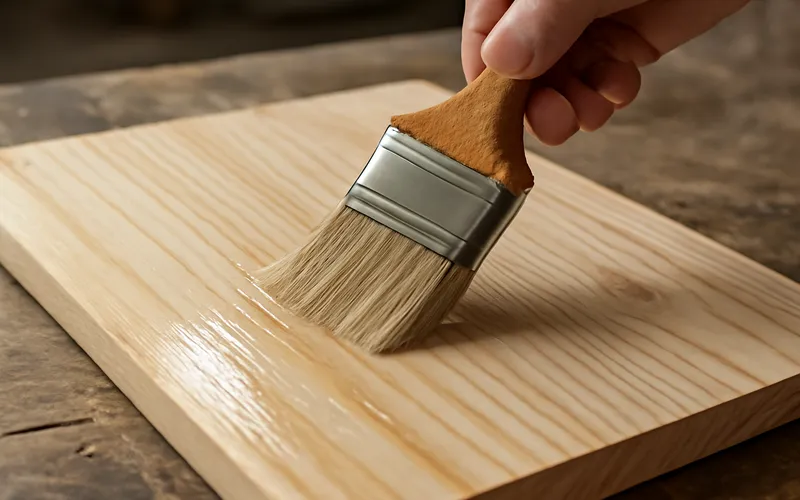
Choose a water-based polyurethane or polycrylic instead of an oil-based product on any light-colored wood, pale stain, whitewash, or gray finish where an amber shift would be visible. Water-based topcoats cost roughly the same per quart as oil-based poly, dry in 2–3 hours instead of overnight, and stay clear indefinitely instead of ambering — the tradeoff is a slightly thinner film build per coat, so plan on 3 coats instead of 2 for the same protection.
Products That Actually Stop Wood Stain From Turning Yellow
These four products map directly to the causes above: one seals tannin before it can bleed, one prevents blotching, one replaces an ambering oil-based topcoat, and one neutralizes a yellow cast that’s already there.
How Do You Fix Wood Stain That Already Turned Yellow?
Fix tannin or UV yellow by sanding back to bare wood and resealing before restaining, and fix an ambering topcoat by recoating with a water-based product or stripping down to the stain layer. Neither fix works on the other cause, which is why the diagnostic test earlier in this guide matters before you start sanding.
Fixing Yellow From Tannin or UV in the Wood
Sand back to bare wood with 120-grit, then 180-grit, removing the discolored top layer completely. Seal immediately with dewaxed shellac before the tannins can migrate again, then restain — our full restaining guide walks through the grit progression and dry times step by step. A cool-toned gray or driftwood stain over the new shellac seal coat will counteract any residual yellow-orange cast better than another warm-toned brown stain will.
Fixing Yellow From an Ambering Topcoat
Scuff-sand the existing oil-based topcoat with 220-grit and apply a coat of water-based polyurethane directly over it — this stops further ambering but won’t remove the yellow tint already baked into the existing coats underneath. To fully remove it, strip down to bare stain with a chemical stripper and recoat with water-based poly from scratch, which is the only way to get back to the original stain color rather than just stopping it from getting worse.
Frequently Asked Questions
Does water-based stain turn yellow?
Water-based stain itself doesn’t amber the way oil-based finishes do, but it’s more likely to pull tannins out of oak, cherry, or mahogany to the surface, which can produce a yellow-gray cast that reads as the stain turning yellow. Sealing with dewaxed shellac before staining prevents this on tannin-heavy species.
Will wood stain yellow over time even indoors, away from sunlight?
Yes, if the topcoat is oil-based polyurethane or varnish. That amber shift comes from the resin oxidizing with ambient oxygen and indoor light, not direct sunlight, so it happens on interior trim, cabinets, and furniture away from windows too, just more slowly than on a sunlit floor.
Can you stop pine from turning yellow?
You can slow it substantially but not stop it completely, since pine’s own resin and lignin will always react to some light exposure. Sealing with dewaxed shellac before finishing and topping with a water-based, UV-inhibited finish keeps pine closest to its original color for the longest period.
Is yellow wood stain a sign of a bad or defective product?
No. Yellowing is a normal chemical property of oil-based finishes and an expected reaction of tannin-bearing wood to light and clear coatings, not a manufacturing defect. It happens with premium and budget stains alike because the cause is the wood chemistry and resin type, not the pigment quality.
Does polyurethane make stained wood look more yellow than varnish?
Oil-based polyurethane and traditional oil-based varnish amber at a similar rate, since both use an oxidizing alkyd or oil-modified resin. See our full comparison of polyurethane yellowing by type for how water-based, oil-based, and spar formulas stack up against each other specifically.
Wood stain turning yellow almost always traces back to one of these two causes, and the mineral-spirits test above tells you which one in under a minute. Seal tannin-prone wood before you stain it, choose water-based topcoats on pale finishes where amber would show, and you’ll avoid the yellow cast rather than fixing it after the fact.
Sponsored / affiliate links. As an Amazon Associate I earn from qualifying purchases. I may earn additional commission from eligible campaigns.