How to Stain Poplar Wood Without Blotching or Green Streaks
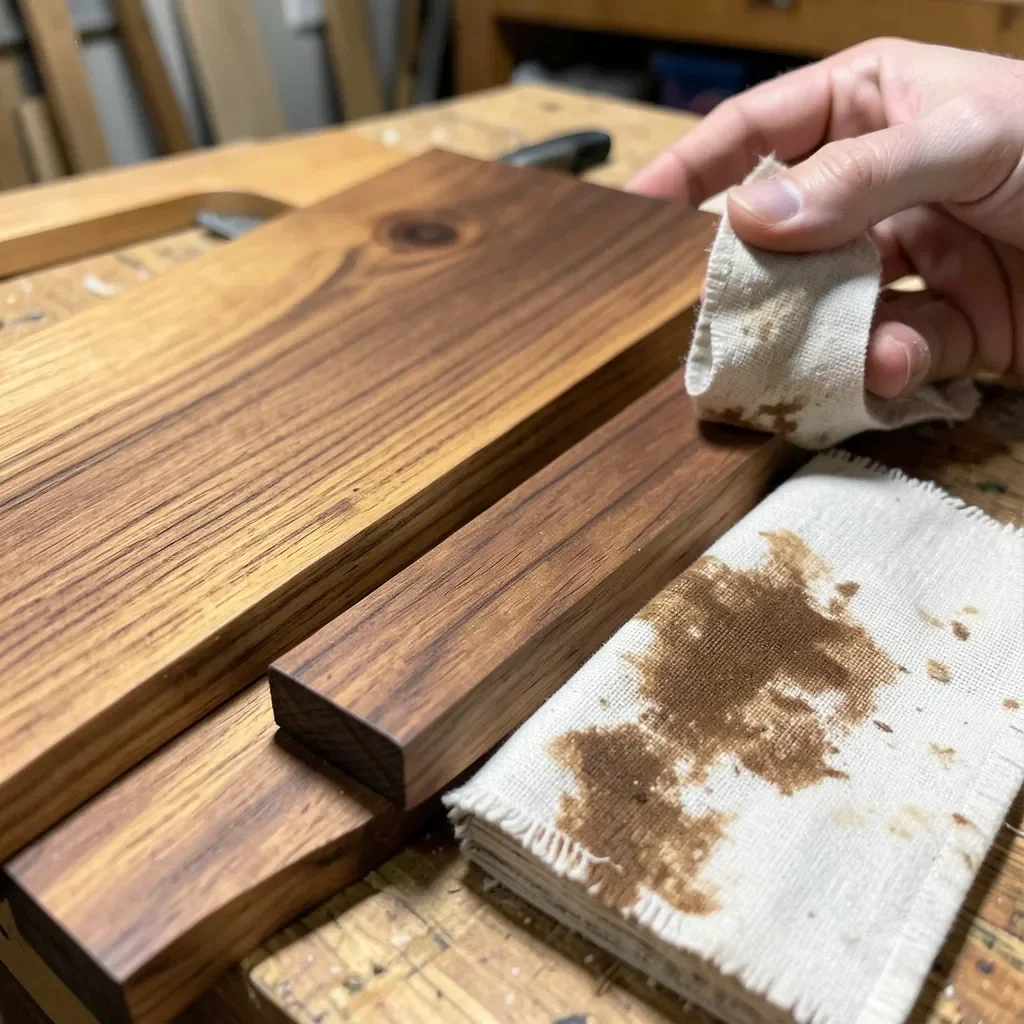
Poplar blotches under liquid stain because its density varies board to board, and no amount of conditioner fully hides the green or purple mineral streaks in the heartwood — though they do fade brown within a few months as the wood oxidizes. A 5–15 minute soak in pre-stain conditioner, wiped off and stained within 2 hours, cuts the blotching; gel stain controls the rest. This guide covers conditioning, gel vs. liquid stain, and what actually happens to the green streaks over time.
Why Poplar Blotches and Won’t Fully Hide Its Green Streaks
Best Gel Stain Pick for Poplar
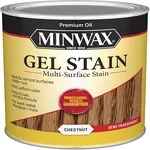 |
Minwax Gel Stain, Chestnut (Quart) – $19.99 Gel stain’s thick consistency is what the conditioning and application steps below are built around — it resists the uneven soak-in that causes blotching on poplar’s variable density.
|
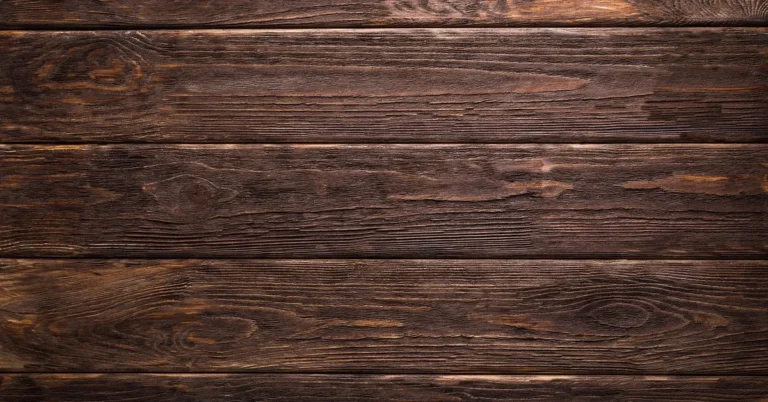
Poplar (Populus) is technically a hardwood, but it behaves like a softwood under stain: its density swings between the pale sapwood and the heartwood, so liquid stain soaks in unevenly and leaves the blotchy patches most guides warn about. What fewer guides mention is the color itself — poplar heartwood commonly runs green, purple, or gray, and no clear conditioner or amber-toned stain fully masks that tint. The good news: freshly cut green streaks oxidize to brown within a few months of light exposure on their own, so a slightly greenish board today will look more uniform later even without refinishing.
How to Condition Poplar Before Staining
Skipping the conditioner is the single biggest cause of splotchy poplar. The step only takes a few minutes and it’s not optional on this species.
- Sand through 220 grit and wipe the surface with a tack cloth — any dust left behind will telegraph through the stain.
- Brush or wipe on pre-stain wood conditioner, covering the surface evenly with the grain.
- Let it penetrate 5 to 15 minutes — check how long to let wood conditioner dry if you’re using a different brand, since dwell time varies slightly by product.
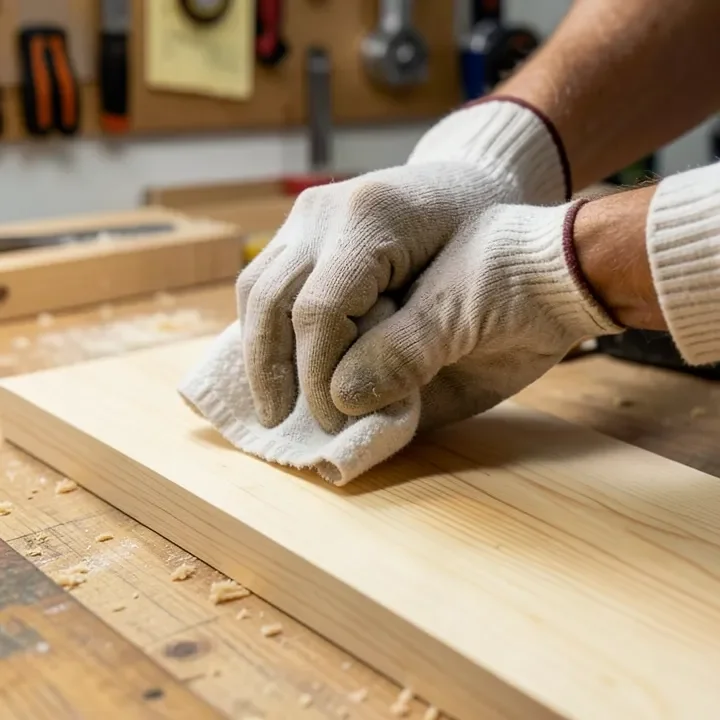
- Wipe off all excess conditioner with a clean, dry cloth before it dries tacky.
- Apply stain within 2 hours of conditioning — past that window the conditioner cures into a light sealer and blocks stain penetration instead of evening it out.
📊 Minwax’s own pre-stain conditioner instructions specify a 5–15 minute penetration window, wiped off before staining and followed by stain application within 2 hours — wait longer and the conditioner cures into a sealer that blocks stain instead of leveling it. Source: Minwax Pre-Stain Wood Conditioner product page.
Gel Stain vs. Liquid Stain on Poplar
Gel stain sits on the surface instead of soaking in unevenly, which is why it’s the more forgiving choice on a blotch-prone species like poplar. See our full gel stain vs. oil stain comparison for other species, but on poplar specifically the tradeoffs break down like this:
| Stain Type | Blotch Resistance on Poplar | Best For |
|---|---|---|
| Gel stain | High — thick consistency resists uneven soak-in | Beginners, vertical surfaces, hiding density variation |
| Oil-based liquid stain | Moderate — needs conditioner and thin, even coats | Deeper penetration, richer color on evenly-prepped boards |
| Water-based dye stain | Low without added solids — conditioner is not recommended with dye stains | Bright, clear colors when blotching isn’t a concern |
How to Apply Stain to Poplar Without Streaks
- Stir, don’t shake: shaking introduces bubbles that show up as tiny craters once the stain dries.
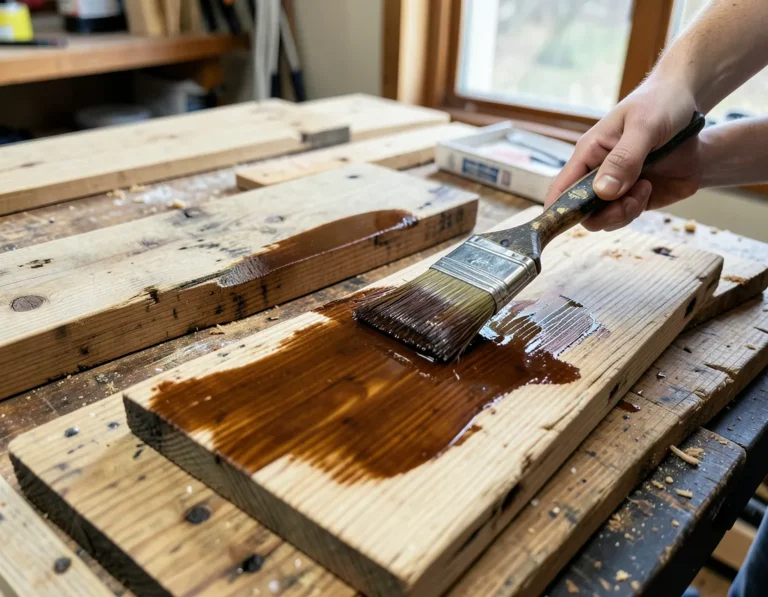
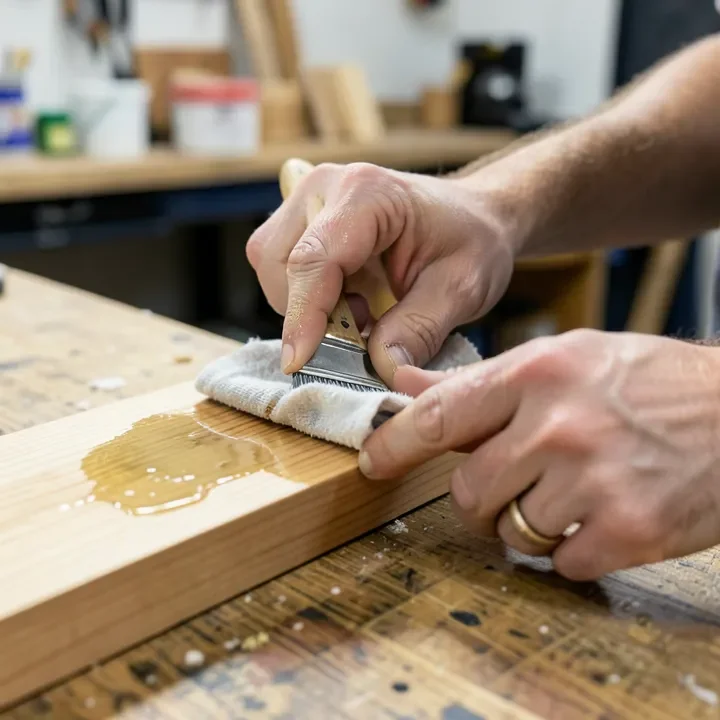
- Apply with a clean rag or brush in a circular motion first to work the stain into the grain, especially with gel stain.
- Wipe with the grain to remove excess and blend out any streaks while the stain is still wet — this step is what actually evens out the color on poplar wood, not the stain itself.
- Let the first coat dry fully (check the can — most oil-based stains want 8+ hours) before deciding whether a second coat is needed.
- Seal once you’re happy with the color — see do I need polyurethane after staining if you’re unsure, and how to spray polyurethane clear coat for a sprayed finish.
Fixing a Blotchy or Uneven First Coat
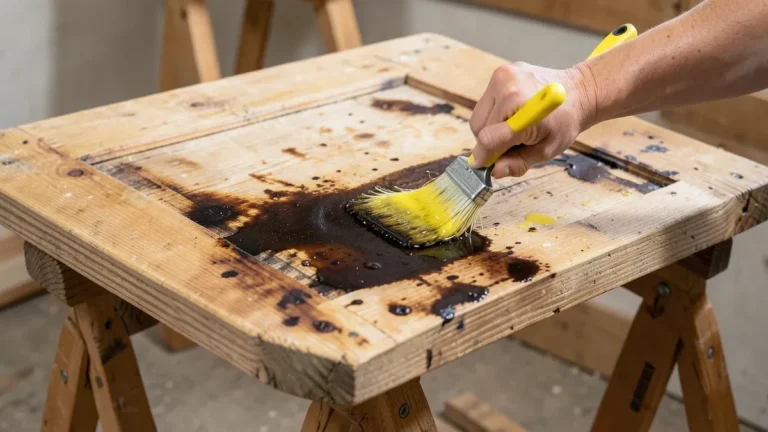
A blotchy first coat on poplar almost always means the conditioner step was skipped, rushed, or left on too long before staining. It’s usually fixable without stripping back to bare wood.
- Light blotching: apply a second coat of the same stain, or switch to a gel stain for the second pass — the thicker consistency evens out patches the first coat left behind.
- Heavy blotching or the wrong color entirely: if the stain hasn’t been sealed yet, you can often color match and blend a new stain over the existing coat rather than sanding back to bare wood.
- Green or purple still showing through: a second coat of a darker stain covers more of the tint than a light coat did; painting or a heavily pigmented gel stain is the only way to hide it completely.
Frequently Asked Questions
Does poplar stain well?
Poplar takes stain unevenly without prep, but with a pre-stain conditioner and either gel stain or thin, even coats of liquid stain, it stains acceptably well. Its natural green and purple streaks are the real limiting factor, not the wood’s ability to absorb stain.
Will the green in poplar go away?
The green tint fades to brown over a few months of light exposure as the wood oxidizes, even under a clear finish. Staining darker speeds up how much of it is visually hidden immediately, but the color shift over time happens either way.
Can you stain poplar dark, like walnut or espresso?
Yes, but expect to need two coats or a pigmented gel stain to fully cover the natural color variation — a single light coat of a dark stain often still shows green or purple through thin spots.
Do you really need wood conditioner on poplar?
Yes for any liquid (non-gel) stain. Skipping it is the most common cause of splotchy poplar. Gel stain is more forgiving and can sometimes be used without conditioner, but conditioning first still gives more even results.
Poplar is one of the more forgiving woods to work with once you accept it won’t take stain as evenly as oak or maple — condition it, favor gel stain or thin coats, and let time handle whatever green tint the finish doesn’t fully cover.
Sponsored / affiliate links. As an Amazon Associate I earn from qualifying purchases. I may earn additional commission from eligible campaigns.