Best Stains for Weathered Redwood (2026): based on specs
For weathered redwood, choose a penetrating oil-based semi-transparent stain for lightly grayed wood, and a semi-solid stain for rough, porous, sun-damaged boards. Match the finish to wood condition, not color. Using the wrong stain can cause blotching, weak adhesion, and peeling that forces earlier prep and recoating. This guide shows how to match stain type to redwood condition on decks, fences, and siding.
This guide is part of our Redwood Grade Chart: Clear, B Grade, Construction Common Explained series.
Quick picks
- Best overall: a semi-transparent penetrating stain, because it fits gray-but-sound redwood and still adds UV protection and water resistance.
- Best for the most natural look: a transparent stain, if the boards are sound and you can keep up with more frequent maintenance.
- Best for decks and fences: a stain and sealer in one, when you want color plus moisture protection in one step.
- Best for fast cleanup: latex exterior stain, especially where quick dry time and soap-and-water cleanup matter.
📊 The latex stain dries to the touch in 30 minutes. Source: Best Redwood Stain and Sealer for Outdoor Wood Projects….
Quick comparison
| Product | Badge | Best for | Price | ||
|---|---|---|---|---|---|
 |
Ready Seal Exterior Wood Stain & Sealer, Redwood, 1 GallonReady Seal | Budget pick | 1 gal · no back brushing · fast rain-ready | $34.79
Price as of 10 Oct 2026
|
View |
 |
DEFY Extreme Wood Stain and Sealer in One – 5 GallonDEFY | Upgrade pick | 5 gal · semi-transparent · zinc UV block | $269.99
Price as of 10 Oct 2026
|
View |
 |
CABOT STAIN 11880 REDWOOD SOLID COLOR DECKING ACRYLIC STAINCabot | Also great | 1 gal · solid redwood color · low luster | $60.98
Price as of 10 Oct 2026
|
View |
 |
Olympic Elite 1 gal Atlas Cedar Semi-Transparent Wood StainOLYMPIC | Our pick | 1 gal · cedar semi-transparent · urethane-fortified | $51.98
Price as of 10 Oct 2026
|
View |
Use the comparison table to match stain type to the condition of the redwood, not to a color sample alone. Weathered boards absorb finish differently than fresh wood, so prep and maintenance matter as much as the hue.
How we chose
This list focuses on how each finish handles weathered redwood, not just the color name on the label. The main criteria were penetration, UV protection, moisture resistance, cleanup, and whether the finish fits gray, porous, or previously coated boards.
We also weighed application practicality for DIY work on decks, fences, and siding. That means clear differences in prep demand, dry time, and how forgiving a product is on old wood.
Finally, the choices favor formulas that can handle exterior exposure without assuming the wood behaves like fresh lumber. That matters on redwood, where oxidation and fuzzing change absorption.
Ready Seal Exterior Wood Stain & Sealer, redwood, 1 gallon: best for easy maintenance coats
Ready Seal is the simplest fit for weathered redwood that still needs a penetrating finish. It is a stain and sealer in one, sold here in 1 gallon, and it is designed to go on without back brushing. That makes it a practical choice when you want color, moisture resistance, and fewer application marks on a porous surface.
It suits decks, fences, and siding that are gray but sound. The main tradeoff is that a 1-gallon size can be limiting on larger projects, so coverage planning matters before you start. This is not the pick for heavily damaged boards that need more surface correction first.
DEFY Extreme Wood Stain and Sealer in One, redwood: best for high-exposure surfaces
DEFY Extreme fits redwood that needs stronger outdoor defense, especially where sun and moisture are both part of the problem. It is a semi-transparent stain and sealer in one, with a 5-gallon format that makes sense for larger decks or fence runs. The added UV protection and moisture resistance is useful on weathered wood that still has enough sound structure to accept a penetrating finish.
The drawback is cost. At $269.99, it is the most expensive option in this group, so it makes the most sense when the project is large or exposure is severe. For a small repair area, it may be more product than you need.
Cabot solid color decking acrylic stain: best for heavily weathered redwood
Cabot’s solid color decking acrylic stain is the better fit when redwood has gone beyond light graying and now shows roughness, blotching, or patchy prior color. A solid finish hides more of the surface variation and can produce a more even look on old boards. The included surface protector is another advantage for weathered decks that need more than basic color refresh.
The drawback is obvious: a solid stain covers the grain. If you want the natural redwood look, this is not the best match. It also shifts the project away from a penetrating appearance and toward a more opaque finish that needs careful prep to avoid adhesion problems.
Olympic Elite Atlas Cedar Semi-Transparent Wood Stain & Sealer in One: best for a natural look with more UV defense
Olympic Elite is a good middle-ground choice for weathered redwood when you want grain visibility but better protection than a clear finish can usually provide. It is a semi-transparent wood stain and sealer in one, and the spec sheet notes rain-ready performance in 2 hours. That makes it appealing for DIY work where weather windows are tight.
It is not the cheapest option at $51.98 for 1 gallon, and the cedar tone may not match every aged redwood surface perfectly. Even so, it is a strong fit when the goal is to keep the wood looking natural while still getting more protection than transparent stain alone.
Best penetrating stain for weathered redwood
A penetrating stain is usually the safer choice for old redwood because it soaks into the wood instead of building a thicker film on top. That matters on gray, porous boards, where old fibers have already changed and fresh-wood behavior no longer applies. Penetration reduces the risk of early peeling and usually fits maintenance recoats better than surface-building finishes.
For weathered exterior wood, the main advantage is forgiveness. Penetrating formulas tend to handle absorption changes better, especially where sun has opened the grain and moisture has shifted the surface profile. They still need cleaning first, though, because dirt and chalky oxidation can block absorption.
Why penetration matters on gray, porous boards
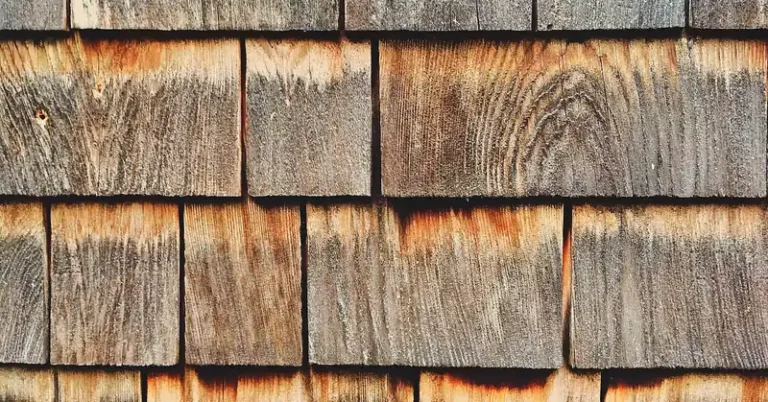
Weathered redwood often absorbs stain unevenly because UV exposure and moisture cycles roughen the surface. A penetrating finish can move with that condition better than a heavier coating, which is why it is often the first category to consider on old decks and fences.
It also helps preserve recoat flexibility. When a finish soaks in rather than sitting as a thick film, maintenance coats are usually simpler and less likely to peel in sheets.
When this option beats a surface-building finish
Choose penetration when the boards are still sound but thirsty, gray, or slightly checked. It is also the better choice when you want to avoid a painted look and keep the grain visible.
If the wood is badly worn, fuzzy, or already carrying a failing coating, a surface-building option may be more forgiving after prep. In that case, condition comes before color.
Best semi-transparent stain for weathered redwood
Semi-transparent stain is usually the best balance for weathered redwood because it keeps some grain visible while adding more pigment and UV protection than a transparent finish. That extra pigment matters on sun-exposed decks and fences, where redwood can fade quickly if the coating is too clear.
This category is often the best overall answer for lightly grayed wood. It also tends to look more even on boards that have uneven absorption, which makes it useful when the surface has aged in patches.
Best balance of grain visibility and UV protection
Transparent stain gives the most natural look, but semi-transparent usually protects better because it carries more colorant. On redwood, that matters because sunlight is a major driver of fading and surface breakdown.
If the boards are still visually attractive but weathered, semi-transparent often lands in the right middle ground. You get visible grain without exposing the wood to the fastest fade cycle.
Where semi-transparent finishes usually last longer
Semi-transparent finishes usually hold up better on south-facing decks, open fences, and siding with full sun. They are also a better fit where the wood sees regular rain and drying cycles.
Maintenance intervals still depend on prep and exposure. Coastal locations and high-UV sites usually shorten the time between recoats.
Best stain and sealer in one for redwood decks and fences
A stain and sealer in one can be the simplest DIY answer for redwood decks and fences because it combines color and moisture protection in one step. That is useful when you want to avoid a separate primer or extra sealer layer, especially on larger horizontal surfaces.
It is not a cure-all. The wood still needs cleaning, and old redwood with heavy oxidation may need more prep than a quick wash before the finish will bond evenly.
What combined color and water protection can do
Combined products can reduce the number of steps, which is valuable on big fence runs or deck boards with many edges. They can also make maintenance more straightforward because the next coat restores both color and water resistance.
For decks, that simplicity matters. For siding, the main concern is whether the finish type fits the board condition and exposure level.
When a combo product is the simpler DIY choice
Use a combo product when the redwood is weathered but still structurally sound, and you want a clear path from prep to finish. It is also useful when cleanup speed and reduced step count are priorities.
If the surface is chalky, fuzzy, or uneven from prior coating failure, start with prep first. No combo product can compensate for dirt, oxidation, or loose fibers.
Which stain type matches your redwood condition?
Match the stain to the condition of the redwood first. Gray but sound wood usually wants a penetrating semi-transparent finish, while heavily oxidized or previously coated boards may need more coverage or more prep. Coastal and high-sun locations also need stronger UV and moisture resistance.
Gray but sound wood
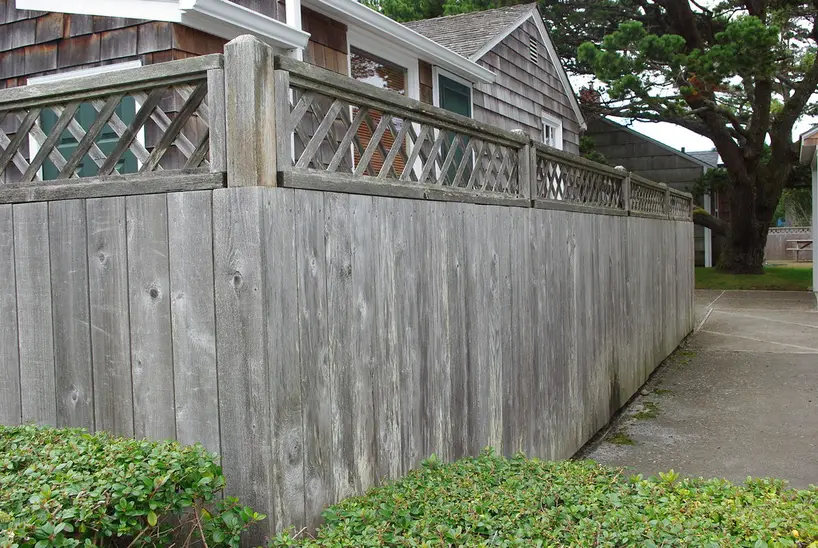
Gray but sound redwood usually works well with a penetrating semi-transparent stain. The surface has aged, but it still has enough integrity to accept a finish that soaks in and leaves the grain visible.
This is the most common “best overall” case for weathered redwood. Clean it thoroughly first so the finish can absorb evenly.
Heavily oxidized or patchy previous finish
When redwood has patchy remnants of an old coating, a solid or more opaque finish can hide more of the color mismatch after proper prep. If the old finish is failing, remove loose material first; otherwise, you risk uneven color and poor adhesion.
More prep is normal here. A rinse alone usually is not enough.
Soft or fuzzy fibers after weathering
Soft, fuzzy fibers usually mean the surface has been damaged by weather and needs more than color. Light sanding after cleaning can knock down raised fibers and improve adhesion.
After that, a penetrating or semi-transparent finish is usually safer than a thick film. It is less likely to exaggerate surface roughness.
Coastal exposure and high sun
Coastal redwood needs a finish that handles UV, moisture, and salt air. A semi-transparent stain with strong water resistance is usually the best balance, because it protects better than a clear coat and still looks natural.
On exposed sites, maintenance timing matters more than brand name alone. More sun and more salt usually mean shorter recoat cycles.
Decision table for weathered redwood
| Surface condition | Best stain type | Prep required | Application method and likely maintenance interval |
|---|---|---|---|
| Gray but sound wood | Semi-transparent penetrating stain | Clean, let dry, remove surface dirt and chalking | Brush, pad, or sprayer with back-brushing; plan on maintenance about every 2 to 3 years in average exposure |
| Heavily oxidized wood | Stain and sealer in one or semi-solid finish | Clean more aggressively; brighten if needed; sand loose fibers | Apply evenly and watch for lap marks; expect closer upkeep, often around 1 to 2 years in harsh sun |
| Patchy previous finish | Solid or semi-solid stain | Remove loose finish, clean, and test adhesion on a small area | Use careful edge control and full-coverage passes; maintenance depends on prep quality and exposure |
| Soft or fuzzy fibers | Penetrating semi-transparent stain after sanding | Wash, dry, sand raised fibers, then stain | Brush or pad, then back-brush for even wetting; recoat as soon as wear starts showing |
How should you choose the right finish?
Choose by opacity, drying behavior, and maintenance interval, not just by the label on the can. Transparent stain looks the most natural but gives the least pigment, semi-transparent balances grain and protection, and latex or solid options hide more of the surface when the wood is in rough shape.
Match opacity to the wood’s condition
If the redwood still looks structurally good, transparent or semi-transparent can keep the grain visible. If the boards are blotchy, heavily weathered, or partly coated already, more opacity often gives a better-looking result.
That is why condition matters more than color names like redwood or cedar.
Match cleanup and drying time to your project
Latex exterior stain is often the easiest cleanup choice because it uses soap and water. The latex redwood stain is a flat finish, dries to the touch in 30 minutes, is ready for recoat in 2 hours, and is fully usable in 4 to 6 hours.
For tighter weather windows, Olympic Maximum can be applied down to 35°F and is ready for rain in 8 hours. That can matter on spring or fall projects.
Match maintenance interval to exposure
Sun, rain, and coastal moisture shorten the life of any finish on redwood. A more pigmented semi-transparent or solid finish usually buys more time than a transparent one, especially on open decks and south-facing fences.
If the site is harsh, choose the finish with the maintenance plan you can actually keep up with.
Which one should you buy?
Buy based on the wood condition in front of you. If the redwood is only gray and still sound, start with a penetrating semi-transparent product. If the surface is rough, patchy, or sun-damaged, move toward more opacity. The best can of stain is the one that matches the board, not the one with the prettiest sample chip.
Best for the budget-conscious DIYer
Ready Seal Exterior Wood Stain & Sealer, Redwood, 1 Gallon is the most approachable entry point here at $34.79. It gives you a stain and sealer in one, with no back brushing and fast rain-ready handling, which keeps the job simple on a smaller project.
The drawback is scale. One gallon may not stretch far on a large deck or long fence.
Best for the most natural redwood look
Olympic Elite Atlas Cedar Semi-Transparent Wood Stain & Sealer in One is a strong choice when you want the grain to stay visible. It keeps the look closer to natural wood than a solid finish while still adding a more protective coating than a clear-only option.
The drawback is that the cedar tone may not line up with every aging redwood color shift.
Best for sun-heavy or coastal locations
DEFY Extreme Wood Stain and Sealer in One is the most compelling option for high-exposure settings because the spec sheet points to strong moisture and UV protection. That makes sense for decks, fences, and furniture that spend a lot of time in bright sun or damp air.
The tradeoff is price, and it is the largest container in this group.
Best for quick recoats and easier upkeep
The latex redwood stain is the fastest route when dry time matters more than a penetrating look. It dries to the touch in 30 minutes, is ready for recoat in 2 hours, and is fully usable in 4 to 6 hours, so it can suit projects that need fast turnaround.
The drawback is the finish style: flat latex does not give the same penetrating appearance as an oil-based semi-transparent stain.
what stain to use on redwood
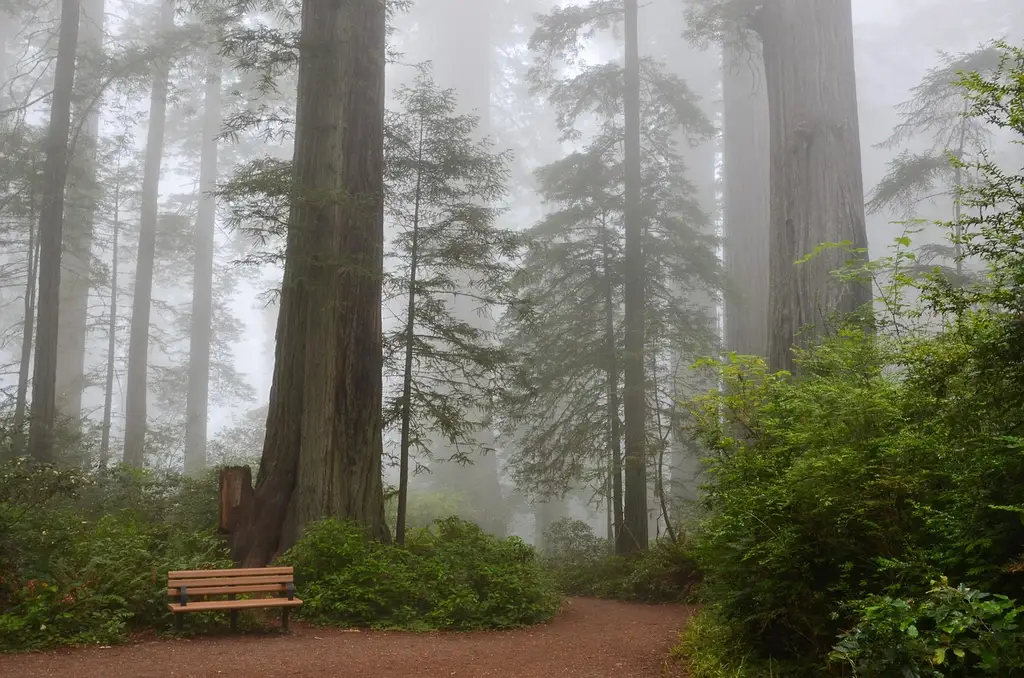
Use a penetrating semi-transparent stain for weathered redwood that is gray but still sound, and move to a more opaque or solid finish if the boards are rough, patchy, or heavily weathered. Redwood changes with age, so the right stain is the one that fits the board’s condition, exposure, and maintenance plan.
Does redwood stain well
Yes, redwood stains well when you match the finish to the wood’s condition and clean the surface first. Weathered redwood absorbs differently than fresh lumber, so dirty, oxidized, or fuzzy boards can stain unevenly if you skip prep.
How to stain weathered wood
Clean first, let the wood dry fully, and remove loose fibers or failed finish before applying stain. On weathered redwood, a light wash is sometimes enough for sound boards, but heavily oxidized surfaces may need cleaning, brightening, and sanding to avoid blotching.
Best stain for old redwood deck
The best stain for an old redwood deck is usually a semi-transparent penetrating stain if the boards are sound, or a more opaque solid finish if the deck is uneven, patchy, or rough. Decks get more wear and water than fences, so moisture resistance and easy recoating matter.
Should I use a stain and sealer on redwood
Yes, a stain and sealer in one is often a sensible choice for redwood decks and fences because it combines color and water protection in one step. It is especially useful when you want a simpler DIY process and do not need a separate primer or topcoat system.
Can I stain weathered redwood without sanding
You can sometimes stain weathered redwood without sanding if the surface is clean, sound, and only lightly grayed. If the fibers are fuzzy, the old finish is failing, or the surface is chalky and patchy, sanding or stronger prep is the safer route.
What finish looks most natural on redwood
Transparent stain looks the most natural because it uses the least pigment and changes the wood’s color the least. The tradeoff is shorter upkeep, since less pigment usually means less UV protection on exposed redwood.
How long does redwood stain take to dry
Dry time depends on the formula. The latex redwood stain dries to the touch in 30 minutes, is ready for recoat in 2 hours, and is fully usable in 4 to 6 hours. Olympic Maximum is ready for rain in 8 hours, which is useful when the weather window is tight.
Which redwood stain is best for coastal weather
The best redwood stain for coastal weather is usually a semi-transparent penetrating formula with strong UV and moisture resistance. Salt air, sun, and frequent dampness wear finishes faster, so prioritize protection and maintenance over the most natural look.
Sponsored / affiliate links. As an Amazon Associate I earn from qualifying purchases. I may earn additional commission from eligible campaigns.