Redwood Grade Chart: Clear, B Grade, Common Grades
Choose Clear for prominent surfaces, B Grade for painted or less-visible parts, and Construction Common for hidden framing or rustic work; boards with cleaner faces, fewer knots, and fewer plugs or patches cost more because they leave you more usable footage. Buy the wrong grade and you either pay premium money for boards no one will ever see, or you spend shop time cutting around knots, sapwood, end checks, and patches where the face needed to stay clean. This guide compares defect tolerance, typical uses, price tradeoffs, and the best grade for fences, decks, furniture, trim, and garden projects.
How the redwood grading system actually works
Appearance grading versus species and strength
Redwood grading is mainly about what the board looks like, not a statement that one board comes from a different species than another. Coast redwood’s scientific name is Sequoia sempervirens, and it is also called coastal redwood and California redwood. Those names identify the species. Grade sorts the boards within that species by visible quality.
That distinction matters because buyers often read “Clear” as if it means better wood in every sense.A lower grade can still work very well if the project hides defects or lets you cut around them.
For this article, the useful question is simple: what will this board look like after it is cut, fastened, sanded, and left outdoors?
Why board-level sorting matters more than bundle labels
Bundle labels help, but each board still has to earn its place. A bunk marked B Grade can hold boards good enough for show faces and others better saved for rails, backs, or short cut parts.
That is normal. Redwood is a natural material, and quality shifts across the stack. Buyers who inspect each face, each edge, and both ends usually get more from lower-cost grades than buyers who trust the top tag alone.
Why grade names can vary a little by mill or supplier
Mill specifications and yard language are not always identical. One yard’s B Grade may look cleaner than another yard’s stock under the same label. That is why defect-based buying beats label-only buying.
Use the grade stamp and supplier tag as a starting point, then verify the board in front of you. Grade tells you far more about face quality than about the species name, and appearance standards can shift a bit by mill.
📊 Before logging, coast redwood covered an estimated 810,000 ha. Source: Sequoia sempervirens.
Redwood grade chart: Clear vs B Grade vs Construction Common
Buyer-first redwood grade comparison chart
| Grade | What it usually looks like in the stack | Knots to accept | Checks and splits to accept | Reject if you see | Waste risk | Price expectation | Best-fit projects |
|---|---|---|---|---|---|---|---|
| Clear redwood | Mostly clean faces, long clear runs, consistent color and grain, very few visible patches or distractions | Tiny tight knots only if they stay off the show face; many buyers reject any knot on furniture-grade faces | Light surface checking may be workable if it sands out; board ends should be clean and square enough to leave full usable length | Open knots, loose knots, end splits, deep checks, obvious sapwood streaks on show faces, heavy machine tearout, patches on visible faces | Low if the yard sorted well | Highest cost because less culling is needed and finish results are cleaner | Outdoor furniture, trim, wide visible boards, bench tops, table tops, exposed fascia, stain-grade work |
| B Grade redwood | Generally attractive with some character, occasional tight knots, mild color variation, more natural variation board to board | Sound tight knots are usually acceptable when small enough that they do not dominate the face or fall on fastener lines | Minor end checks or short surface checks can be acceptable if cut off without losing needed length; avoid checks running into the field of the board | Open knots, knot clusters on a show face, splits crossing fastener zones, severe cup or twist, large bark-edge wane, pitch pockets that will bleed through finish | Moderate because some boards need strategic cutting | Middle range; often the best value when appearance matters but every face is not front-and-center | Fences, planters, pergolas, painted or semi-visible trim, deck skirting, outdoor casework, secondary furniture parts |
| Construction Common redwood | More knots, stronger color variation, more checks, more sapwood, more visual defects, rougher appearance overall | Knots are expected if sound enough to stay put and not break the part’s function; face appearance is secondary | Checks and end splits are common enough that extra length is often needed; expect to trim away some defects | Loose knots ready to fall out, through-splits, severe warp, decay, major cross-grain weakness, defects located where joints or screws must hold | High because culling and trimming increase fast | Lowest sticker price, but waste can narrow the savings | Hidden framing, fence rails, rustic screening, utility garden projects, non-show backs, temporary work, rough outdoor structures |
What to accept, what to reject, and what usually means wasted money
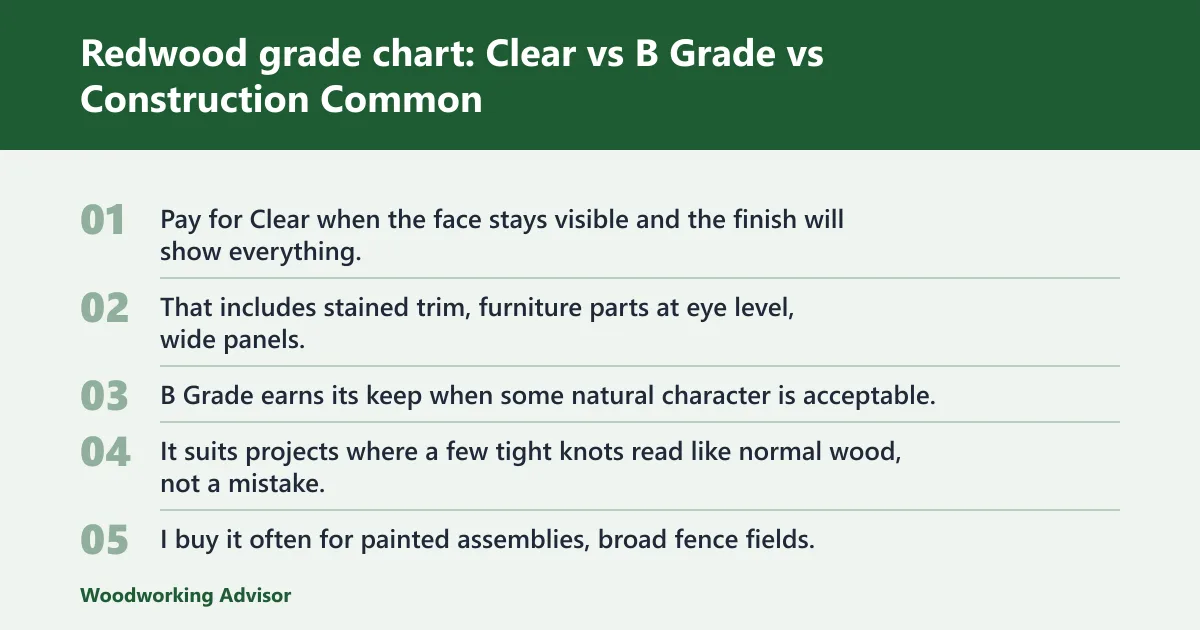
Pay for Clear when the face stays visible and the finish will show everything. That includes stained trim, furniture parts at eye level, wide panels, and parts that are expensive to remake if a knot opens later.
B Grade earns its keep when some natural character is acceptable. It suits projects where a few tight knots read like normal wood, not a mistake. I buy it often for painted assemblies, broad fence fields, and secondary faces on benches or cabinets built for outdoor use.
Construction Common is often honest material for hidden or rough work. The expensive mistake is thinking the lowest sticker price gives the lowest job cost. If checking forces you to cut off extra length, or knots land right where screws and joinery need solid wood, the savings disappear fast.
What is the difference between clear redwood, B grade redwood, and construction common?
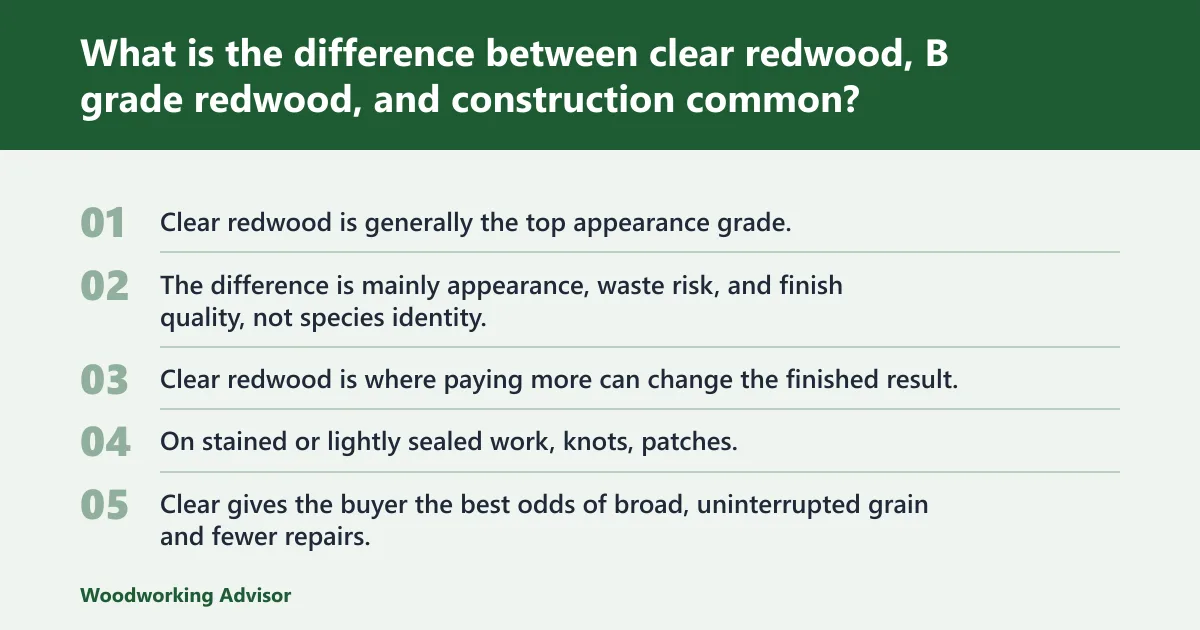
Clear redwood is generally the top appearance grade, with minimal knots and cleaner faces; B Grade allows more visible character and some defects; Construction Common is typically accepted for utility work and allows more knots, checks, and visual flaws. The difference is mainly appearance, waste risk, and finish quality, not species identity.
Clear redwood: where clean faces and finish quality matter
Clear redwood is where paying more can change the finished result. On stained or lightly sealed work, knots, patches, and abrupt color shifts tend to stand out. Clear gives the buyer the best odds of broad, uninterrupted grain and fewer repairs.
It is often the highest-cost option because fewer boards of this type are usually available and there is less defect sorting involved. For visible seats, table tops, trim, and fascia, that cleaner face often saves labor later.
B Grade redwood: how much character is still acceptable
B Grade sits in the middle. It usually has enough clean footage for attractive work, but the buyer should expect some knots, color shift, and more decisions about board orientation.
This is where practical buying matters. A B Grade board with one tight knot near the edge may be an excellent buy if that edge will be ripped off, hidden, or placed low on the project. The same board may be a poor choice for a cabinet door panel or a bench back that sits in direct sunlight at eye level.
Construction Common: when utility-grade boards make sense
Construction Common belongs where appearance carries less weight. Fence rails, hidden support parts, rough garden structures, and backs of built-ins are common uses.
That does not mean buyers should accept anything. Utility grade still has to hold fasteners, stay reasonably straight, and leave enough solid wood at joints. Reject boards with defects that interfere with the actual part layout.
Which defects matter most when you are buying redwood?

Knots, checks, splits, and board shape matter more than color alone. Tight knots may be workable in B Grade, while open or loose knots often belong back in the stack. End checks create hidden waste, and severe warp can ruin layout even when the face looks acceptable at first glance.
Knots: tight, loose, open, and why size changes the grade call
Knots are the main separator in practice. A tight knot is sound and fixed in place. It may still be visible, but it is less likely to drop out during machining or weather exposure. An open knot has visible separation, missing material, or bark trapped in the knot area. That is a different problem entirely.
Size matters because larger knots pull your eye, interrupt sanding, and can push screws off line. They also tend to telegraph through clear finishes. On painted work, some of that visual issue fades, but movement around the knot can still print through over time.
For buying purposes, accept tight knots in B Grade when they are isolated, sound, and not sitting in a joint, fastener zone, or center of a show face. Reject open knots for finish-sensitive faces. In Construction Common, sound knots may be acceptable if the part stays non-appearance and structurally sensible.
Checks are surface openings along the grain. Splits are deeper separations, often starting at the ends. Both become more expensive than they look because they shorten the usable board.
End checks are easy to miss in a stacked bunk. Once cut to final length, that cracked end may land right inside a rail, stile, or deck board. Buyers should inspect both ends before paying a premium grade price.
Outdoor exposure adds another layer. Sun and moisture cycling can open existing checks further, especially on wide exposed faces. A short end check in a fence picket may be acceptable. The same defect in a tabletop board is usually a reject.
Grain, wane, sapwood, pitch pockets, and board shape
Tighter grain often looks better, but grain count alone does not define grade. Wane, bark-edge loss, broad sapwood streaks on show faces, pitch pockets, cup, twist, and bow can all make a board a poor fit for visible work even if the face seems clean from a distance.
Sapwood is worth watching because buyers often expect the deeper heartwood look. If a visible project calls for a more even finished face, broad sapwood on the show side can be a reason to pass unless the board will be painted or cut down.
How do I identify redwood grades at the lumber yard?
Start with the grade stamp and species label, then verify each board by sight. Buyers should inspect both faces, both edges, and both ends for knots, end checks, wane, and warp. Mixed-grade stacks and supplier shorthand are common enough that the tag should never be the final answer.
Look for species identification first. Coast redwood grows in coastal California and southwestern Oregon, and the lumber may be labeled redwood, coastal redwood, or California redwood. Species tells you what it is. Grade tells you how clean that particular board is.
Yard tags may abbreviate grades or combine appearance notes with inventory language. If the bundle says one thing and the boards tell a different story, sort by the boards.
How to inspect boards before loading
- Read the tag for species and grade.
- Pull the board far enough to see the full face, not only the exposed end.
- Sight down the length for bow, cup, and twist.
- Check both edges for wane, bark, and edge splits.
- Inspect both ends for checks that will shorten usable length.
- Mark the better face mentally and decide whether that face fits the project.
- Place knot zones against the cut list, not against wishful thinking.
- Set aside suspect boards before committing to a premium grade price.
Mixed-grade bunks, mislabeled stock, and buyer traps
One common trap is the mixed bunk. Boards get restacked after customers sort through them, and the better pieces disappear first. Another trap is buying wide visible parts from the leftovers of a lower grade because the top few boards looked decent.
There is also confusion between appearance grade and growth origin. A board advertised as old-growth may still need the same defect inspection as any other board in the stack.
What does old-growth versus second-growth mean for grade quality?
Old-growth and second-growth describe forest origin, not appearance grade. Old-growth redwood often shows tighter grain and different visual character, but it can still be sold in different grades. Second-growth boards can also grade clear or common depending on the individual board’s face quality and defects.
Why growth origin is not the same thing as grade
This is where many buyers get crossed up. Old-growth says something about source material. Clear, B Grade, and Construction Common say something about the board’s visible quality.
Coast redwood can reach up to 116.22 m in height and up to 8.9 m in diameter at breast height. Before logging, it covered an estimated 810,000 ha. Those facts explain why old-growth redwood carries a different story and scarcity, but they do not replace grade sorting at the board level. (en.wikipedia.org)
What tighter grain can and cannot tell you
Tighter grain often signals slower-grown material and can be visually appealing, especially on show faces. It may also come with expectations of higher cost. Still, tighter grain does not erase checks, open knots, wane, or a poor cut from the log.
Second-growth redwood is more common in modern lumber streams. Some second-growth boards are clean enough for premium appearance work. Others are clearly utility boards. Grade still varies board to board.
How scarcity and yield affect cost
Old-growth material is often scarcer and can be more expensive. Some buyers seek it for grain character alone. Redwood bark can be up to 35 cm thick, bright red-brown when freshly exposed, and darker with weathering over time. Those species traits help identify redwood, but they do not settle the grade question at the rack.
Pay for the actual face quality you need. If a second-growth Clear board fits the project, the old-growth story may add cost without changing the outcome.
Buy Clear for the faces that stay in view and receive a stain or clear finish, B Grade for secondary visible parts and many painted outdoor builds, and Construction Common for hidden or rough components. Outdoor exposure raises the penalty for knots and checks on wide faces, especially in furniture and trim.
Outdoor furniture and trim: where Clear usually pays off
Furniture and trim are the two places where buyers most often regret saving on grade. Wide armrests, tabletops, bench slats, and face trim show every knot and patch. They also move through sun and moisture cycles that can open small defects.
Clear is usually worth the money when the part is hard to replace, easy to see, and likely to be touched often. Clean grain also tends to produce more even stain and fewer surprises after sanding.
Fencing and decking: when B Grade or Construction Common is enough
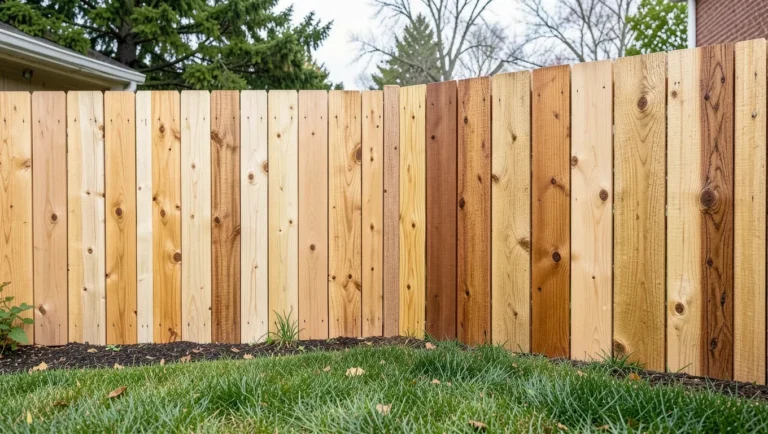
B Grade is often the practical sweet spot for fence boards, pergolas, planter boxes, and many deck-adjacent parts. A few sound knots rarely hurt a fence panel where repetition and distance soften the visual impact.
Construction Common can work for fencing, especially for rails, back framing, and rustic screens, if boards are sorted carefully. For decking, the standard is higher because surface checks, loose knots, and split ends become both an appearance issue and a maintenance nuisance. Utility-grade deck boards often create more culling than buyers expect.
Mixing grades within one project to control cost
Many projects do best with mixed grades. Use Clear for arm caps, top rails, table surfaces, door faces, or exposed trim. Use B Grade for aprons, hidden stretchers, inside faces, and painted components. Use Construction Common for buried or hidden support parts where allowed by the design and local requirements.
That approach cuts cost without spending premium dollars on boards that nobody will ever see.
Price, waste, and finish results: when paying more actually saves money
Why Clear often costs more than the face value suggests
Clear usually carries a steep premium because the buyer gets more usable footage, fewer defects to work around, and cleaner finish results. If a tabletop needs long uninterrupted stiles or wide slats, one usable Clear board may beat two cheaper boards that still fail the cut list.
This is especially true when stain or a transparent exterior finish is planned. Knots and repairs that seem tolerable in the yard often stand out once the finish goes on.
How lower grades can become expensive after culling and cutoffs
Lower grades can be a bargain when the project has short parts, hidden parts, or a rustic target look. They become expensive when the design needs long clear runs, matching faces, or precise joinery placement.
Waste shows up as end trim, discarded boards, changed layouts, and extra trips to the yard. I have seen cheap boards turn costly once half the length gets cut away and the remaining pieces still miss the part sizes. A board bought for less may yield far less.
Finish problems that show up later
Three failure cases deserve attention. Knots can telegraph through paint or clear finishes. Existing checks can open wider outdoors. Mixed-grade bundles can leave one section of a project much cleaner than another, which makes the whole build look patchy even when each individual board seemed acceptable.
Gray weathering is different. Redwood exposed to sun and moisture often turns gray over time, and weathered color alone is not evidence of lower grade. Redwood National and State Parks protect forty miles of coastline, and the species is known for long-lived outdoor exposure in a complicated series of habitats. Surface color change is part of weathering, not a grade stamp.
Frequently asked questions
Which redwood grade is best for outdoor furniture?
Clear is usually the best choice for outdoor furniture because seats, backs, arms, and tops stay in direct view and are often finished lightly enough to reveal every knot and patch. B Grade can work for hidden supports or secondary parts, but Construction Common usually brings too much sorting and defect risk.
Can construction common redwood be used for fencing or decking?
Yes for many fencing parts, especially rails, back framing, and rustic sections where appearance is less strict. Use more caution for decking. Construction Common often carries enough checks, knots, and warp that sorting loss rises fast, and exposed walking surfaces show defects more clearly than fence fields do.
How much more does clear redwood cost than lower grades?
Clear usually costs noticeably more than B Grade and far more than Construction Common because the buyer gets cleaner faces, lower waste, and better finish results. The exact spread varies by yard and supply. The real question is whether cleaner boards save labor, remakes, and visible flaws on the project.
What defects are acceptable in B grade redwood?
Accept sound tight knots, mild color variation, and small checks that can be trimmed off without harming the cut list. Reject open knots, loose knots, long end splits, severe warp, broad wane on visible edges, and defects sitting exactly where joinery, fasteners, or show faces must remain clean.
Use Clear for show faces, stained trim, table surfaces, and eye-level furniture parts. Use B Grade for secondary visible parts, painted assemblies, fences, and general outdoor work where some character is fine. Use Construction Common for hidden supports, rustic utility builds, and parts where extra culling is acceptable.
Is weathering or gray color a sign of lower redwood grade?
No. Gray color usually reflects outdoor exposure, not original grade. Redwood surfaces weather in sun and moisture, and color change can occur on Clear, B Grade, or Construction Common boards alike. Grade is judged by face quality and defects such as knots, checks, splits, and patches, not by weathered color alone.
Sponsored / affiliate links. As an Amazon Associate I earn from qualifying purchases. I may earn additional commission from eligible campaigns.