Are Deck Screws Structural? Only If Rated for It
Standard deck screws are not structural fasteners. They are made to hold decking boards down, and they are not what code or the fastener makers point to for attaching a deck to a house. A ledger connection needs 1/2-inch bolts or lag screws, or a screw that is specifically listed for ledger use. Joist hangers need the fastener named on the connector. A box labeled “deck screws” is neither of those.
That distinction matters more than most fastener questions, because the ledger is the connection that carries an entire deck to the house. Below is what the sources I read actually say, the spacing numbers from the American Wood Council, and how to tell which fastener belongs where. This is general information, not an engineering design, so your local building department has the final word.
Short Answer: Structural Only If It Is Listed for the Job
Best Ledger Screw Pick
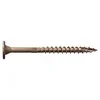 |
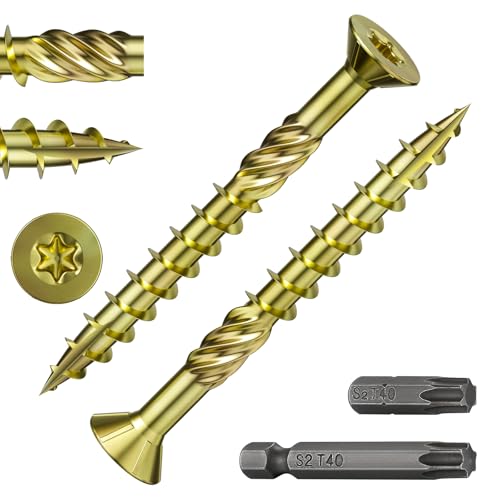
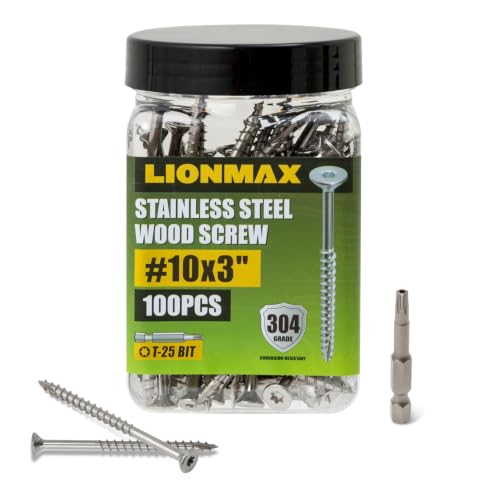
Simpson Strong-Tie SDWS22400DB-RC12 Timber Screw, 0.220 x 4 in., 12-pack, $19.11 A screw sold and documented for structural wood-to-wood work, including deck ledgers, which is exactly the job a generic deck screw is not rated for.
|
“Structural” is not a screw shape or a coating. It means someone tested the fastener, published design values, and had them evaluated against the building code. Simpson Strong-Tie’s Strong-Drive screws are an example: ICC Evaluation Service report ESR-3046 covers them for “steel-to-wood and wood-to-wood connections that are designed in accordance with the IBC and IRC,” and notes that for structures under the IRC they are used where an engineered design is submitted under section R301.1.3. A screw with no such report has no published structural value to design against, however thick or well coated it looks.
I did not find any code provision or manufacturer document that lists a generic deck screw as an approved ledger or connector fastener. Absence in the documents I read is not proof that no such product exists, so if a maker claims a decking screw is rated for ledgers, ask for the evaluation report number and read what it covers.
Where Deck Screws Belong and Where They Do Not
| Connection | What the sources say to use | Generic deck screw? |
|---|---|---|
| Decking boards to joists | Deck screws are sold for this (general practice, not a code citation) | Yes |
| Ledger to house band joist | 1/2-inch bolts or lag screws per IRC and DCA 6, or a screw listed for ledger use (AWC, Simpson) | No |
| Joist hangers and connectors | The nails or Simpson SD Connector screws named for that connector | No |
| Ledger on brick or stone veneer | Do not attach; veneer cannot carry deck load. Use a freestanding deck or a listed connector into the framing (Simpson, citing 2021 IRC) | No |
| Guard posts and stairs | Follow DCA 6 and your local code (I did not verify specific fastener rules for these) | Check first |
For a deeper look at framing choices, see our guide to Deck Framing Screws Or Nails, and for the general wood-screw question see Can You Use Regular Wood Screws for Structural Support.
What Code and AWC Say About the Ledger
The AWC article by engineers Frank Woeste, Loren Ross and Paul Coats reports that deck failure data collected since 2001 points to failed nail-only connections between deck and house as a primary cause of collapses. It states that since the 2009 edition every IRC has required the ledger to be connected to the house floor band joist with 1/2-inch bolts or lag screws, and that the design deck live load has long been 40 pounds per square foot. That is about one person on every 2 by 2 feet of deck.
One caution: the failure data in that article is about nails. I did not find equivalent published failure statistics for deck screws, so I am not claiming that deck screws have caused collapses. The point is narrower: the connection has a documented design path, and a generic screw is not on it.
DCA 6 Lag Screw and Bolt Spacing
Table 5 of AWC DCA 6 (reproduced in the AWC article) gives maximum on-center spacing by deck joist span. The values below are for a 1/2-inch lag screw or bolt through a ledger into a 1-1/2 inch solid-lumber band joist, with no more than 15/32 inch of sheathing between them, at 40 psf live and 10 psf dead load. Other rim materials, loads and species change the answer.
| Deck joist span | 1/2″ lag screw spacing | 1/2″ bolt spacing |
|---|---|---|
| 6 ft or less | 30 in. | 36 in. |
| 6 ft 1 in. to 8 ft | 23 in. | 36 in. |
| 8 ft 1 in. to 10 ft | 18 in. | 34 in. |
| 10 ft 1 in. to 12 ft | 15 in. | 29 in. |
| 12 ft 1 in. to 14 ft | 13 in. | 24 in. |
| 14 ft 1 in. to 16 ft | 11 in. | 21 in. |
| 16 ft 1 in. to 18 ft | 10 in. | 19 in. |

The takeaway from this table is that even the traditional fastener is spaced tightly on a large deck: on a 14-foot span you need a lag screw about every 13 inches, staggered in two rows. Nobody gets that from a handful of decking screws driven wherever they fit.
Installation Details That the Sources Call Out
- The lag screw tip must extend beyond the inside face of the band or rim joist (AWC table footnote).
- Ledgers should be flashed or caulked to keep water off the house band joist (AWC table footnote).
- Stagger fasteners in two rows. AWC gives at least 2 in. from the top and side edges of the ledger and at least 3/4 in. from the bottom edge; Simpson’s post adds a 5 in. maximum vertical gap and a 2 in. minimum end distance.
- A 1/2 in. lag screw needs a 1/2 in. clearance hole through the ledger and a 5/16 in. pilot hole in the band joist, not a full-size hole in the band (Simpson).
- Ledger fastener heads should not be countersunk, and fasteners should be hot-dip galvanized or stainless steel (Simpson, citing 2021 IRC R507.9.1.3).
- Hex-head check: a 1/2 in. lag screw has a 3/4 in. wide head (AWC), which is a quick way to see whether the right diameter went in.
Joist Hangers: The Other Place Deck Screws Go Wrong
Connectors are tested with a specific fastener, and load ratings only apply if you use it. Simpson’s connector fastener guidance says SD10 screws replace 16d common nails in face-mount hangers and straps, SD9 screws replace 8d and 10d nails, and SD screws and nails cannot be mixed in the same connector (Simpson Strong-Tie connector fastener post). Nothing in that guidance lists a generic deck screw as a substitute, and the practical rule follows: use the nail or SD screw the connector calls for. Our Deck Screws vs Wood Screws guide covers what makes decking screws different for the boards themselves.
What a Listed Structural Screw Looks Like in Practice
For ledgers, Simpson’s engineer recommends the Strong-Drive SDWS Timber screw in the Simpson Strong-Tie “Decks Done Right” blog post, and says the fastener spacing for each condition is in its engineering letter L-F-100DCKLIV25. The SDWS is a 0.220 in. diameter screw with a 3/4 in. head, sold for structural wood-to-wood work including ledgers. Simpson says it needs no predrilling in most applications, and the blog says the exception is the ends of the ledger (Simpson SDWS Timber screw brochure (F-F-SDWS14, 2014)).
Two limits are worth knowing. First, that brochure is from 2014 and cites an IAPMO UES report, so check Simpson’s current evaluation report and spacing letter rather than trusting numbers copied from an old sheet. Second, treated lumber is corrosive: ICC-ES report ESR-3046 evaluates SD-series screws for wood treated with ACQ-D at a maximum retention of 0.40 pcf, which shows why a fastener’s corrosion rating is part of its listing and not an afterthought.
Sizing is not guesswork. As simple arithmetic, a 1-1/2 in. ledger plus up to 1/2 in. of sheathing plus a 1-1/2 in. band joist is about 3-1/2 in. of material, and the brochure’s ledger tables reference a 4 in. screw. Your own stack-up may differ, so match the length and spacing to the manufacturer’s table for your exact case.
How to Check an Existing Deck
- Look at the ledger face. If you see only nail heads, AWC calls that a “nailed-only” ledger, a potentially dangerous deck that should be taken out of use and repaired or replaced on the advice of a qualified professional.
- Look for bolt or lag heads. 3/4 in. hex heads in two staggered rows suggest 1/2 in. lags.
- Check from inside if you can. In a crawl space or basement, the lag tip or bolt threads should show on the inside of the band joist.
- Measure spacing against the table for your joist span. Wider spacing than the table allows is a reason to get it inspected.
- Check the flashing. Simpson notes a ledger fails from missing flashing and rot as well as from bad fastening.
Simpson also cites an outdoor deck and porch injury study in its blog: nearly 15 percent of deck-related injuries came from structural failure, and of those about 60 percent were due to the connection to the house. I have not read that study myself, so treat the figure as secondhand.
When to Bring in a Professional
Simpson’s post says a ledger cannot be attached to a cantilevered floor system, because the band joist must be fully supported by a wall or sill plate below. Elevated decks, brick-veneer walls, engineered-lumber rim boards, snow-load areas and any deck with a lateral-load question are the cases where a permit and an engineer or inspector earn their fee. AWC likewise recommends regular inspection of all decks, especially elevated ones.
Frequently Asked Questions
Are deck screws structural?
No, not as a general category. Deck screws are made to fasten decking boards, and I found no code or manufacturer document listing a generic deck screw for ledger or connector use. A screw is structural only when it has published design values and an evaluation report covering the application.
Can I use deck screws to attach a deck ledger?
Not based on the sources I read. The IRC route named by AWC is 1/2-inch bolts or lag screws at the DCA 6 spacing, and Simpson points to listed structural screws such as the SDWS Timber screw with its spacing tables. Confirm with your local building department.
Can deck screws be used in joist hangers?
No. Connector ratings assume the fastener named for the connector, which is a specified nail or a Simpson SD screw in Simpson products. Do not substitute a generic screw, and do not mix nails and SD screws in one connector.
What screws are structural for a deck?
Screws with a code evaluation report for the exact use, such as Simpson Strong-Drive SD Connector screws for hangers and SDWS Timber screws for ledgers. Match the report, size and spacing to your connection.
Sources Read for This Article
- American Wood Council: AWC article “Is Your Deck Safely Connected to Your House?” (2020), including DCA 6 Table 5.
- Simpson Strong-Tie: Simpson Strong-Tie “Decks Done Right” blog post (May 2025).
- ICC-ES: ICC-ES report ESR-3046 (Strong-Drive screws used in wood).
- Simpson Strong-Tie: Simpson SDWS Timber screw brochure (F-F-SDWS14, 2014).
- Simpson Strong-Tie: Simpson Strong-Tie connector fastener post (2016).
Sponsored / affiliate links. As an Amazon Associate I earn from qualifying purchases. I may earn additional commission from eligible campaigns.