5 Best Wood Burning Kits for Carved Projects: Based on Specs
For carved projects, the best wood burning kit is the WEP 939D-VI because its dual detachable wire-nib pens, A/B selector, and 250–750°C range give you the most control over recesses, edges, and texture without burning raised detail.
Quick comparison
| Product | Badge | Best for | Price | ||
|---|---|---|---|---|---|
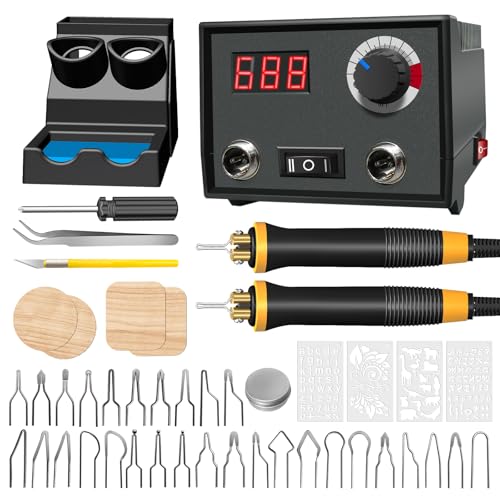 |
FIRElood Wood Burning ToolFIRElood | Our pick | Dual pen · Adjustable temp · 30 tips | $43.99
Price as of 11 Nov 2026
|
View |
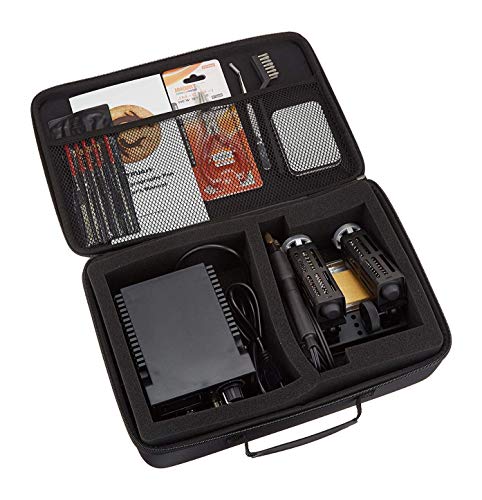 |
TRUArt (Stage 2) Professional Dual Pen Woodburning DetailerTRUArt | Also great | Dual pen · Digital control · 63 tips | $259.95
Price as of 11 Nov 2026
|
View |
 |
Wood Burning Tool,60W Soldering Iron with 35pcsHHYSSG | Also great | 60W · Adjustable temp · 35 tips | $22.09
Price as of 11 Nov 2026
|
View |
 |
Razertip SS-D10 with hevay duty pen cord and BPH PyrographyRazertip | Upgrade pick | 10 amp · Heavy-duty · Interchangeable pen | $212.00
Price as of 11 Nov 2026
|
View |
 |
Woodland Home Professional Wood Burning Kit with LettersWoodland Home | Our pick | $47.69
Price as of 28 Nov 2026
|
View |
This page focuses on carved surfaces, not flat practice boards. The right kit depends on whether you need edge lines, valley shading, texture fills, or safer work on raised relief.
How we chose
Carved-project fit came first. General pyrography claims were not enough.
We compared heat control, tip variety, storage, and beginner accessories. We also looked for models that help with the common failure points on carved work: scorching at sharp edges, uneven burn depth in valleys, and snagging on raised grain.
For each pick, the deciding factors are visible in the manufacturer details or the product listing. No hidden assumptions.
WEP 939D-VI: best for detailed carved work
The WEP 939D-VI is the strongest match if you need to move between narrow outlines, recessed shading, and texture work on carved pieces. It uses two detachable wire-nib pens with an A/B selector, so you can keep one nib set for line work and another for background shading.
Its 250–750°C range gives broad control for carved surfaces, where the right setting changes with grain direction, relief height, and how open the cut is. The 20 included wire nibs also make it easier to choose a liner, shader, or specialty shape without improvising with one point for every task.
The drawback is simple: this is a more demanding tool than a starter iron. If you only want a basic warm-up-and-burn pen for simple outlines, the range and control may be more than you need.
Weller WLIWBK2512A: best for beginner carving projects
The Weller WLIWBK2512A fits beginners who want a simpler solid-tip format and do not need a full wire-nib station yet. At 25W and 120V, with six woodburning tips and three branding tips, it gives you a straightforward entry into outlines, marks, and basic shading on carved work.
The stay-cool handle and heat deflector matter more than they sound. On carved pieces, you often work close to ridges and shallow valleys, so hand comfort and added protection help when you pause, turn the work, and re-enter a tight area.
The limitation is control. A solid-tip wood burning iron usually has one heat setting or only limited adjustment, so it is less precise for delicate relief work than a variable-heat wire-nib station.
YIHUA 930-IV: best adjustable budget kit
The YIHUA 930-IV is the budget pick for buyers who want adjustable heat without stepping up to a pricier dual-pen station. It includes 10 pyrography tips, two unfinished wood pieces, and a flip-up pen stand, which makes it easier to set up and start practicing before you touch a finished carving.
The adjustable heat dial is the key feature here. For carved projects, that matters because a slightly cooler setting often helps on raised relief edges, while a hotter setting can improve flow in open recessed areas. The included practice wood is also useful for testing burn depth before final work.
Its weak point is capacity. A single pen and a smaller tip set mean more swapping if you want to alternate between fine contour lines and broader shaded backgrounds.
What should you look for in a carved-project kit?
For carved work, start with the surface geometry, not the sales copy. Valleys need controlled shading, ridges need clean edge work, and raised relief needs a tool that will not snag and scorch as you move around tight turns.
Wire-nib station or solid-tip iron
Wire-nib pyrography stations are the better fit for detailed carved pieces because they are variable-heat tools, heat up and cool down faster, and usually accept interchangeable nibs. That makes them easier to tune for a valley, an edge, or a texture fill.
Solid-tip wood burning irons are simpler. The guide treats them as having one heat setting or limited control, with branded tip compatibility and slower cooling. That can be beginner-friendly, but the tradeoff is less precision around relief detail.
Heat control that you can actually set
Displayed or dialed heat matters because carved wood does not burn evenly. End grain, thin ridges, and compressed tool marks can darken faster than nearby flat areas, so you need to set heat rather than guess.
For line work, lower heat helps you keep a clean edge. For shading, a moderate setting usually reduces harsh borders and gives you more time to feather the stroke before the nib bites too deeply into the recess.
Tip shapes for lines, shading, and texture
Liner tips are best for outlining edges, contour marks, and narrow recesses. Shader tips work better for broad shadowing and filling carved pockets without leaving a hard outline. Branding tips help when you want a bold accent or a repeated mark on a decorative border.
Tip count matters less than usable tip variety. A kit with storage for its nibs is more practical than a larger set that gets mixed, bent, or lost.
Safety gear and practice material
A good kit should include a stand or holder, a sponge or cleaning tool, and a heat guard or similar protection. Tweezers or a screwdriver help with tip changes, especially on wire-nib systems.
Practice material matters too. Wood blanks, a practice board, or scrap wood let you test heat and nib shape before you touch a carved panel that already has hours of work in it.
Use a wood burning kit by starting on scrap, choosing the correct nib for the task, and setting the heat lower than you think you need for the first pass. On carved wood, work from the cleanest edge inward so you do not drag soot or heat damage across a finished relief surface.
Suppose you are outlining a chip-carved border with shallow V-cuts. Start on offcuts at the same grain direction, then test a liner at a low setting before moving to the final piece. A hotter nib may darken the ridge too fast and leave a shiny burned rim that is hard to sand out.
- Choose the tip shape for the task: liner for edges, shader for valleys, branding tip for bold marks.
- Test the heat on scrap wood that matches the final piece as closely as possible.
- Check how the nib behaves on flat grain, then on a shallow recess and a raised edge.
- Burn with light pressure and short passes to avoid snagging on relief peaks.
- Clean the nib as needed and return it to the stand before changing tips.
Carved-project compatibility matrix
| Task | Best kit type | Recommended heat range | Best tip shape | Why it fits carved surfaces |
|---|---|---|---|---|
| Edge outlining | Wire-nib station | Low to medium | Liner | Tracks ridges cleanly and reduces scorched rims on sharp cuts. |
| Recessed shading | Wire-nib station | Medium | Shader | Fills valleys with smoother tone and less jumping at the edges of the recess. |
| Texture fills | Wire-nib station or adjustable iron | Low to medium | Short shader or branding tip | Helps build grain-like marks without blowing out the surrounding detail. |
| End-grain work | Wire-nib station | Lower than flat grain | Fine liner | End grain darkens quickly, so controlled heat reduces overburn and blotching. |
| Raised relief safety | Wire-nib station with fine control | Low | Liner or narrow shader | Lower heat and a narrow nib reduce snagging on peaks and protect raised detail. |
Which one should you buy?
Buy the WEP 939D-VI if you want the most control for carved detail, especially if your work includes deep recesses, tight edges, and background shading that changes from section to section. Its dual pens and 20 nibs are the best fit for switching between tasks.
Buy the Weller WLIWBK2512A if you want the simplest start and mostly plan to add light pyrography to carved borders, letters, or basic accents. It is the easier path if you want a straightforward iron with safety-minded handling.
Buy the YIHUA 930-IV if you want adjustable heat on a tighter budget and want practice material in the box. It is the best middle ground for beginners who still want to dial heat rather than live with one fixed burn level.
If you are choosing between a dual-pen station and a single-pen kit, ask how often you will switch between line work and shading. Dual pens are worth it when the project has both narrow edges and broad shadow areas that need different nibs and heat settings.
Frequently asked questions
Should I choose a solid-tip or wire-nib wood burning kit?
Choose a wire-nib kit if you need fine control on carved surfaces, especially for recesses, edges, and texture. Choose a solid-tip iron if you want a simpler, more beginner-friendly setup and can work within limited temperature control. For detailed relief work, wire nibs are usually the better match.
What temperature should a wood burning kit use for different woods
There is no single correct temperature for every wood. Softer woods and end grain usually need less heat than dense hardwoods, and raised relief often needs a cooler setting than a flat panel. Start low, test on scrap, then raise heat only until the line or shade forms cleanly.
Which wood burning kit is safest for beginners?
The safest beginner kit is usually the one with stable handling, a stand or holder, and enough control to avoid pushing heat too high. A solid-tip model can be easier to manage at first, but a variable-heat kit with a proper stand gives you more room to correct mistakes on carved pieces.
Can I use a wood burning kit on carved wood?
Yes. Carved wood is often a better pyrography surface than plain flat stock when you want shadow, depth, or decorative contrast. The key is to adjust for valleys, ridges, and raised relief so you do not scorch the edges of a cut or catch the tip on a peak.
What tips do I need for outlining and shading carved projects?
For outlining, use a liner tip that can follow edges without flooding the cut. For shading, use a shader tip that spreads heat more evenly across a recess. Branding tips are useful for bold accents, but they are not the first choice for delicate carved contours.
Can I use a wood burning kit on leather and wood?
Some kits can be used on both leather and wood, but the settings and tip choices are different. Leather usually needs lower heat and a lighter touch, while carved wood may need a hotter setting in some recesses. Check the tip compatibility and always test on scrap first.
Sponsored / affiliate links. As an Amazon Associate I earn from qualifying purchases. I may earn additional commission from eligible campaigns.