Wood Tools USA Chip Carving Set Review
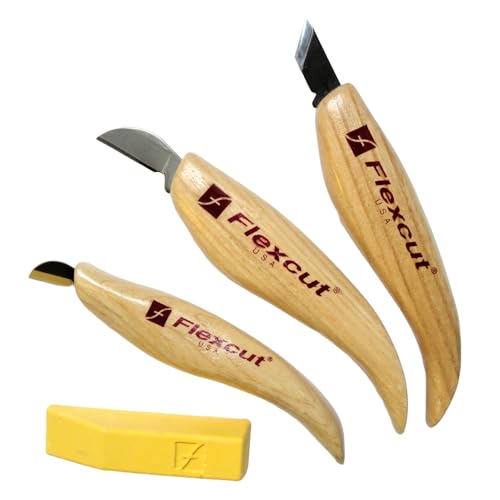
The Wood Tools USA chip carving set is a solid buy for a beginner who wants to start chip carving quickly with the right knives and a usable stropping setup. It fits chip carving better than a random multi-tool kit because the knives, compound, and geometry are made for chip work, not general whittling.
Verdict
The catch is cost. If you already own a strop, compound, and a practice board, the bundle benefit drops fast. For a first-time carver who still needs the basics, though, this is the kind of set that can reduce setup friction and cut the number of wrong purchases.
Pros and cons
- Pros: Three knives selected for chip carving.
- Pros: Includes Flexcut Gold polishing compound.
- Pros: 1095 high carbon steel blades are listed as razor-sharp out of the package.
- Cons: You still need basswood practice wood and pattern sheets.
- Cons: No storage roll is listed in the supplied product details.
- Cons: A beginner may still need to learn stropping and resharpening sooner than with a heavier general carving knife set.
Who this is for
Choose this set if you want a dedicated chip carving knife group and a fast path to first cuts. It suits a beginner who values a ready-to-use edge more than a large accessory bundle, and it also fits an intermediate carver who wants a compact chip carving setup.
Skip it if you want a full starter box with practice wood, templates, a roll, and extra accessories in one carton. In that case, a larger mixed kit may cost less on paper, even if the knife quality is less focused.
Specs at a glance
| Item | What is included or stated | Why it matters for a beginner |
|---|---|---|
| Knife count | 3 knives | Enough to cover common chip-carving cuts without buying a separate starter set. |
| Knife types | Chip carving knives | Better suited to V-grooves, triangles, and straight chip patterns than broad whittling blades. |
| Blade steel | 1095 high carbon steel | Easy to sharpen, but it still needs regular edge care. |
| Handle material | Ashwood handle | A shaped handle can help control fatigue during short sessions. |
| Sharpening accessory | Flexcut Gold polishing compound | Means you are not starting from zero on edge maintenance. |
| Storage | Not listed in the supplied product details | You may need a separate tool roll or case for safe storage. |
| Practice wood | Not included in the supplied product details | You still need basswood or another soft practice board before first layout. |
| Pattern materials | Not included in the supplied product details | Printed or digital patterns still need to be sourced separately. |
Who is this set for?
This set is for a beginner who wants a chip carving knife already matched to the task, plus a basic maintenance path from day one. It is less suited to someone who wants one knife for every carving style, because chip carving knives are narrower in use than general carving knives.
It also suits a carver who already knows they want chip carving rather than a mixed project box. If your aim is simple geometric work, a focused set is easier to learn from than a general-purpose collection.
Single knife or set?
A single knife can cover first projects if you only plan to learn one chip-carving pattern family. A set becomes useful when you want different blade shapes for tighter corners, stab cuts, and cleaner access around small motifs. The value is in reducing technique limits, not in collecting tools.
Suppose you are cutting a 4-inch practice square with repeated triangles. One good knife can get you through the pattern. Say you later move to denser borders with overlapping angles and shallow stab cuts. Then a second or third chip carving blade begins to matter.
Chip carving cost table
This table separates first-practice essentials from extras so you can compare the bundle against separate purchases. It also shows what a beginner still needs to buy before the first useful session.
| Component | Required for first practice? | Buy separately if not included | Why it matters |
|---|---|---|---|
| Chip carving knife or set | Yes | Possibly, if you choose a different set | The main cutting tool. Without it, nothing else matters. |
| Strop | Yes | Yes, if not bundled | Used between sessions and during a session to keep the edge working cleanly. |
| Polishing compound | Yes | Yes, if not included | Loads the strop so it can refine the edge instead of just burnishing wood fibers. |
| Basswood practice board | Yes | Yes | Soft, fine-grained stock makes first cuts less punishing. |
| Pattern sheets | Yes | Yes | Gives you a layout to follow instead of freehanding a first board. |
| Transfer marker | No | Optional | Speeds layout and helps pattern lines stay visible. |
| Tool roll or case | No | Optional | Protects blades and helps keep a sharp edge from nicking other tools. |
| Cut-resistant glove | Strongly recommended | Yes, if you do not already own one | Gives some protection during hand placement and chip removal. |
Based on the supplied details, the Wood Tools USA bundle saves money only if you would otherwise buy the knife set and compound together. It does not replace basswood or pattern sheets, so the real comparison is the knife kit price versus the sum of the missing basics. That is where many first-time buyers misjudge cost.
What works well?
The strongest part of this set is the knife focus. Chip carving asks for a blade that can enter wood cleanly at controlled angles, and the listed high carbon steel plus sharpened profile is a better fit for that than a generic carving knife with a broad belly.
Blade geometry matters because chip carving depends on crisp, repeatable cuts. A narrow tip and a controlled edge make it easier to form corners and stop cuts without pushing into nearby grain. For a beginner, that can reduce the number of crushed chips and ragged edges on the first board.
Knife sharpness and hand fit
The supplier details describe the blades as razor-sharp out of the package, which is a useful starting point, not a permanent condition. A beginner still needs to strop often and sharpen when the knife stops slicing cleanly. Sharpness out of the box matters because it lowers the first barrier to learning.
Handle comfort is harder to judge from product text alone, but ashwood handles are usually a reasonable sign of a shaped, hand-friendly grip. For chip carving, handle diameter and length matter because your thumb and index finger may work close to the blade for 30 to 60 minutes at a time. If the handle feels too thin, fatigue shows up fast.
Practice readiness and pattern setup
For first practice, a smooth basswood board is the right target because basswood is soft, fine-grained, and predictable under a sharp knife. A beginner should look for a board around 3/8 to 1/2 inch thick for flat pattern practice, with straight grain and few knots. That makes it easier to see whether the knife is cutting cleanly or bruising the fibers.
Pattern setup should be quick. Printed patterns are easiest for a first board because they avoid screen scaling mistakes, while digital patterns are useful if you can print them at the correct size. A transfer marker can help darken lines fast and keep the layout visible, but it is optional for the first few simple motifs.
What does not?
The main drawback is maintenance work. A beginner should expect to strop often, sometimes after every short session and again if the edge starts to feel less eager in the wood. Resharpening becomes necessary when stropping no longer restores clean slicing, especially on the tip and the corners of a chip carving blade.
Another weakness is what the kit does not include in the supplied details. There is no listed practice board, no pattern pack, and no tool roll. That means the first day still requires separate purchases, and the real “ready to carve” total is higher than the knife set price alone.
Common beginner failure points
A common first-timer mistake is pushing too hard and crushing fibers instead of slicing them. That shows up as fuzzy chip bottoms and bruised grain around the cut. If the edge is sharp but the board still tears, hand pressure and cut angle need attention before buying a different knife.
Say your first board is 6 inches square and the grain changes direction near one corner. If you keep the same cut direction anyway, the result is an overcut corner and a ragged chip edge. That failure is usually a layout and grain-reading problem, not a sign that the set is wrong.
How should you set it up?
Start with the knife, strop, compound, and practice board. That is the shortest path to a first clean chip carving session. If you add a transfer marker and printed pattern, setup gets faster, but those items are still secondary to a sharp edge and stable workholding.
Strop and compound basics
- Load the strop with the included polishing compound or a compatible fine compound if you choose another brand.
- Use light pressure only. A chip carving edge needs refinement, not heavy rubbing.
- Strop the bevel and then the back, keeping the blade flat and controlled.
- Check the edge with a test cut on basswood. If the cut still feels grabby, strop again before resharpening.
A single-sided strop is enough for basic maintenance, though a double-sided strop can be useful if one side carries compound and the other stays clean. The main rule is compatibility: the compound must suit fine edge work, not coarse polishing.
Sharpening materials and grit choice
If stropping stops working, a beginner usually needs sharpening materials rather than a new knife. Common sandpaper progressions for chip carving are 800, 1000, 1500, and 2000 grit on a flat backing such as glass or a hard tile. A flat surface matters more than the brand name of the abrasive.
Sharpening should be brief and deliberate. Re-establish the bevel, remove the wire edge, then return to the strop. If the blade has developed rounded corners or tiny nicks, the knife will feel vague in the wood even after stropping.
Basswood and transfer marker use
Basswood is the best practice wood for most beginners because it cuts cleanly with less force and shows mistakes clearly. Its fine grain helps you see whether the knife is slicing or crushing. A board that is too hard hides the problem and makes hand fatigue worse.
A transfer marker is useful when you want a fast, repeatable layout. It is especially helpful for small geometric patterns where line placement affects the final symmetry. Digital patterns work well if you print them at 100 percent scale and verify the dimensions before tracing.
What should a beginner look for in a chip carving knife set?
Look for a knife that arrives truly usable, a handle that does not fight your grip, and a maintenance system that fits your patience level. For a beginner, the set should reduce setup time, not add extra chores before the first cut.
Pay attention to blade length, handle diameter, and how much control the tip gives you near a tight corner. A knife can be sharp and still feel awkward if the handle is too small or the blade shape makes your wrist bend unnaturally.
Chip carving versus general carving knives
Chip carving knives are narrower and more specialized than general wood carving knives. They are built for controlled, geometric cuts and clean chip removal, while general carving knives often work better for rough shaping, spoon work, and broader relief forms. If your plan is only chip carving, the dedicated set is the better tool match.
If you want one knife for many woodworking tasks, a general carving set may be more flexible. The tradeoff is less precision in chip patterns and more time learning around the blade’s limits.
Alternatives to consider
There are two common alternatives: buying the knife and maintenance pieces separately, or choosing a larger mixed carving kit. The first route gives you exact control over quality. The second gives you more tools, but not always better first-practice performance.

The UJ Ramelson 3 Piece Complete Chip Carving Knives set is a close alternative if you want a stab knife plus two chip knives. Based on the listed hardwood handles and ground-honed edges, it may suit a beginner who wants a little more shape variety than a single-knife start. A drawback is that the supplied details do not mention a strop or compound, so you may still need to buy those separately.

The K KERNOWO 32-piece kit is the opposite approach: many tools, templates, and a storage bag at a low price. That can help if you want extra pattern support and a bag in one purchase, but the tradeoff is focus. For chip carving specifically, a large mixed kit can include tools you will not use first, and the blade quality is harder to judge from a crowded accessory list.
If you are shopping in the USA, look for specialty woodworking retailers, known carving-tool brands, and established marketplace sellers that list exact knife types and maintenance accessories. That is the safest way to avoid vague bundles with weak steel or missing edge-care gear.
Should you buy it?
Buy this kind of chip carving set if your main goal is a direct route into first projects and you do not want to piece together every tool from scratch. The value is strongest when the set includes a real chip carving knife group and enough sharpening support to keep the edge working.
Do not buy it if you expect a complete classroom in a box. You still need basswood, a pattern source, and likely a better storage solution. For a beginner who wants to start cleanly and can accept those add-ons, it is a sensible buy. For everyone else, separate purchases may be the better value.
Frequently asked questions
Is the Wood Tools USA chip carving set worth it for beginners?
It is worth it when the set gives you a sharp chip carving knife, a working maintenance setup, and enough control to start simple patterns fast. If you still need the strop, compound, practice wood, and pattern sheets separately, the bundle only makes sense when the knife quality is clearly better than the extra cost.
What comes in the Wood Tools USA chip carving set?
The set is described here as a three-knife chip carving set with Flexcut Gold polishing compound. Based on the product details shown, that is the core bundle to expect rather than a full starter box with practice wood, templates, or a storage roll.
How do you sharpen a chip carving knife properly?
Start with stropping. Use light pressure on a charged strop, keeping the bevel and then the flat side in full contact. If stropping no longer restores a clean slice, move to a flat sharpening surface with fine grits, often in the 800 to 2000 range, then return to the strop.
What is the best wood for chip carving practice?
Basswood is the usual first choice because it is soft, fine-grained, and forgiving of small mistakes. It lets you read grain behavior without fighting the wood. For first boards, avoid knotty stock and highly figured species, since they make it harder to see whether a cut issue comes from technique or the material.
How do I know if a chip carving set is comfortable for long sessions?
Comfort depends on handle diameter, blade control, and how much strain you feel in your thumb and index finger after 30 to 60 minutes. A set is more comfortable when the handle lets you hold close to the blade without pinching, and when the knife cuts without requiring heavy push force.
What safety gear do I need for chip carving?
A cut-resistant glove is a smart starting point for the hand that holds the work or guides the board, though it is not a substitute for careful technique. Keep the work stable on a bench or non-slip surface, keep fingers out of the cutting path, and cut away from your body at all times.
Sponsored / affiliate links. As an Amazon Associate I earn from qualifying purchases. I may earn additional commission from eligible campaigns.