DIY Furniture Wobbling: Common Causes and Fixes
Find the wobble first: if one leg or joint shifts, fix that connection; if all legs rock, level the floor or add glides; if the frame flexes, reinforce it. Miss the real failure point, and you can damage joints, loosen fasteners, and leave the furniture unsafe. This guide shows how to diagnose wobbling chairs, tables, and sofas, then choose a permanent or temporary fix for the furniture type and floor condition.
What you’ll need
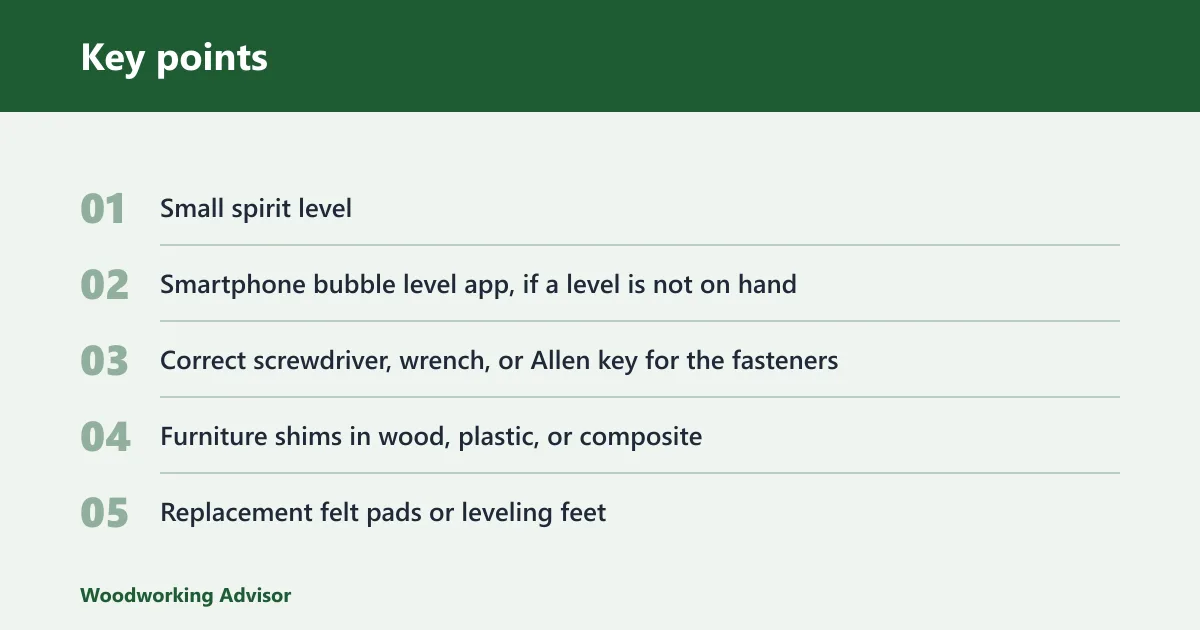
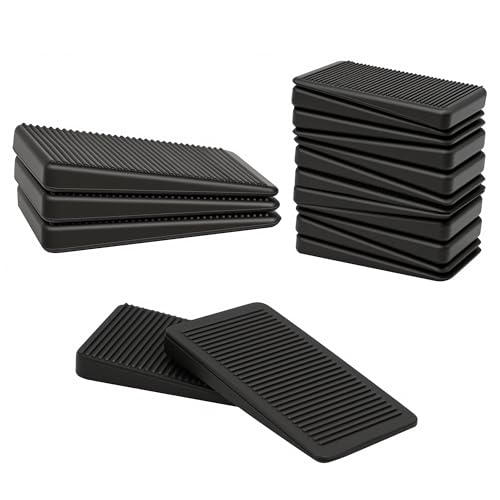


- Small spirit level
- Smartphone bubble level app, if a level is not on hand
- Correct screwdriver, wrench, or Allen key for the fasteners
- Furniture shims in wood, plastic, or composite
- Replacement felt pads or leveling feet
- Thread-locking compound for recurring loose bolts
- Wood glue or epoxy for loose wooden joints
- Clamps for glued joints
- Flashlight for checking inserts, stretchers, and aprons
- Rubber mallet, if a leg needs to seat fully
Wobble diagnosis matrix
| Symptom | Likely cause | Quick test | Permanent fix | Temporary fix | Replacement red flag |
|---|---|---|---|---|---|
| One corner lifts, but the rest feels solid | Uneven leg height or worn pad | Place a spirit level front to back, then side to side | Adjust leveling feet or replace worn pads | Shim the shorter leg | Leg is cracked or split near the foot |
| All legs rock on a hard floor | Uneven floor, or a floor that slopes slightly | Move the piece to another flat area or room | Leveling feet or floor-aware pad setup | Furniture shims under the low leg | Frame still twists after leveling |
| Leg spins when turned by hand | Stripped threaded insert inside a wooden frame | Turn the leg slowly and feel for free spinning | Replace the insert or repair the connector | None that should be treated as durable | Insert pulls out again after reset |
| Chair or sofa shifts only when sat on | Loose bolts, loose screws, or worn joints | Check each connector under load, one at a time | Tighten hardware and add thread-locking compound if it recurs | Re-tighten after a short use period | Cracked stretcher, split apron, or warped frame |
| Side-to-side sway remains after tightening | Loose wood joint, damaged stretchers, or frame flex | Lift and twist the frame without the cushions or top load | Glue or epoxy the joint, then clamp and cure fully | Short-term support block or shim | Frame rails are split or bent |
Why does furniture wobble?
Furniture usually wobbles because the load is no longer shared evenly. Loose bolts, a leg that sits slightly short, a floor that is out of plane, or a damaged joint can all create the same rocking motion. A difference as small as 2mm can cause a noticeable rock.
Chairs and tables usually fail first at the leg connectors and joints. Sofas often show wobble at the base frame, especially near corner legs or center supports. Shelving units can seem fine until the load shifts and one corner starts to lift.
If a table feels steady on tile but rocks on hardwood, the floor or the pad under one leg is the first place to check. If the same wobble appears on every surface, the problem is more likely in the furniture itself.
How do I find the problem leg?
Use a spirit level front to back and side to side, then watch which corner changes when the furniture is rotated. A small level is often best here, and a smartphone bubble level app can work as a backup. The goal is to identify the leg or connector that changes the reading.
- Clear the top and remove cushions or loose items.
- Check the surface with the spirit level in both directions.
- Lift one corner at a time and watch for a gap or a spin.
- Rotate the furniture 90 degrees and repeat the check.
- Move it to a second floor surface to see whether the wobble follows the piece.
Say your dining chair rocks only when the front left corner points toward the doorway. That often means the floor is uneven, not that all four legs are wrong. If the same chair rocks in a different room, the frame or one leg is more likely at fault.
Fix loose hardware first
Loose leg bolts and fasteners are a common cause of wobble, and about 60% of wobble cases are resolved by tightening bolts. Use the correct wrench or Allen key, and stop when the hardware seats firmly. Do not use a power tool when tightening bolts, because threads can strip or wood fibers can crush.
- Match the fastener exactly with the correct driver.
- Tighten each bolt in small turns, moving around the frame in sequence.
- Check for movement after each pass.
- If a bolt keeps backing out, remove it and apply thread-locking compound.
- Stop immediately if the threads feel soft, skip, or spin.
If the bolt bottoms out before the joint closes, the fastener may be too long, the insert may be damaged, or the joint may be distorted. Tightening harder will not fix that. It usually makes the failure worse.
How do you level a wobbly chair or table
Leveling works when the frame is sound but one leg sits shorter than the others. Furniture shims go under the shorter leg, and leveling feet adjust the height directly. Shims are often temporary. Leveling feet are better when you need a repeatable adjustment for an uneven floor.
- Place the furniture in its final spot.
- Check level front to back and side to side.
- Slide a shim under the low leg in about 1mm to 2mm steps, then recheck.
- Trim or replace the shim so it does not shift.
- Adjust or replace leveling feet if the piece has them.
Match the shim material to the floor type. Use harder shims for tile or hardwood, and choose a pad that will not crush on carpet. A felt pad may help on a hard floor, but it is not a cure for a split leg or loose joint.
When is the frame damaged?
Frame damage shows up when tightening does not remove the wobble, or when one leg spins freely in place. That can point to a stripped threaded insert inside a wooden frame. Cracked stretchers, split aprons, and warped rails are stronger red flags than a simple loose fastener.
- Inspect the joint line with a flashlight.
- Look for gaps that open when you load the seat or tabletop.
- Try a gentle hand twist at the leg or stretcher.
- If the joint moves, remove the load and repair the wood joint with glue or epoxy.
- Clamp the joint and allow full cure time before reloading it.
If the insert is stripped, a repair sleeve or full replacement may be needed. A glued joint will not hold if the surrounding wood is split or crushed. That is the point where replacement becomes the safer choice.
Can furniture shims fix a wobbling piece of furniture?
Yes, if the wobble comes from an uneven leg or floor and the frame is otherwise sound. A shim can often stop rocking quickly, and the guide presents a roughly 30-second shim fix as a quick remedy. That makes shims useful for chairs, tables, and some sofas with fixed feet.
Shims are temporary when the goal is simple leveling. They are not a cure for stripped inserts, loose stretchers, or a frame that flexes under load. If the shim keeps slipping out, the foot or floor surface needs a better-fit solution.
What if the furniture is stable on one floor but wobbles on another?
That usually points to floor variation, not a bad piece. Older homes often have uneven floors, and carpet, tile, and hardwood each change how the feet sit. Recheck with a spirit level in both directions and compare the same furniture in the new location.
For hardwood or tile, use pads or leveling feet that keep the load stable. On carpet, a wider foot or a firmer pad may help the leg sit evenly. If the wobble disappears on a known flat surface, the furniture may not need repair at all.
Common mistakes
- Tightening every fastener without finding the moving corner first.
- Using a power tool on bolts and stripping threads.
- Calling a shim a permanent fix when the leg or insert is actually damaged.
- Ignoring floor changes between rooms.
- Forgetting to check both front-to-back and side-to-side level.
- Replacing a leg when the real problem is a loose connector.
A common first-timer mistake is to tighten the visible screws and stop there. If the wobble returns after a day or two, inspect the insert, joint, and floor instead of repeating the same pass.
Prevent future wobble
Recheck bolts after the first few uses, especially on chairs and tables that carry shifting loads. Add thread-locking compound only where a fastener keeps loosening, and keep feet clean so pads and glides sit flat. On heavy sofas, check the base after moving the piece across a threshold or rug edge.
Frequently asked questions
Why is my DIY furniture wobbling?
The usual causes are loose fasteners, uneven leg height, an uneven floor, or a damaged frame joint. Start by checking the leg or connector that moves under load. If one corner shifts, fix that point first instead of tightening every fastener at random.
How do I tell if the wobble is from the legs or the floor?
Check level in both directions, then move the piece to another surface. If the wobble changes with location, the floor is likely involved. If the same corner lifts everywhere, focus on the leg, pad, or connector on that side.
How do you fix a wobbly chair or table leg?
First tighten the correct bolt, screw, or Allen fastener by hand. If the leg still rocks, level it with a shim or adjustable foot. If the leg spins, inspect the insert or connector before you keep tightening.
When should I tighten bolts versus replace a leg?
Tighten first when the hardware feels loose but the frame is intact. Replace the leg or connector when threads strip, the leg spins freely, or the wood splits near the joint. A fastener that no longer holds torque is not a tightening problem anymore.
What tools do I need to fix wobbly furniture?
Keep a small spirit level, the correct wrench or Allen key, a screwdriver, shims, and replacement pads nearby. Add thread-locking compound for recurring looseness and glue or epoxy for wooden joints that need a real repair. A phone bubble level app can stand in for the level in a pinch.
Sponsored / affiliate links. As an Amazon Associate I earn from qualifying purchases. I may earn additional commission from eligible campaigns.