Best Wood Fillers for MDF Chips and Dents (2026): We Compared
For MDF chips, dents, and edge damage, use a sandable two-part polyester filler or thick epoxy for voids. Use lightweight spackle only for tiny dents under paint, not broken edges. Pick the wrong filler and the repair can shrink, crumble, telegraph through paint, or fail at the edge. This guide matches filler chemistry to chips, dents, edge crumble, and corner loss so you can buy the right material the first time.
This guide is part of our MDF board guide: properties, uses, and care series.
Quick comparison
| Product | Badge | Best for | Price | ||
|---|---|---|---|---|---|
 |
Elmer’s E855 Carpenter’s Wood Filler, 3.25-Ounce Tube,FIRE ROSE | Our pick | 3.25-Oz · 6-Pack · White | $21.86
Price as of 15 Oct 2026
|
View |
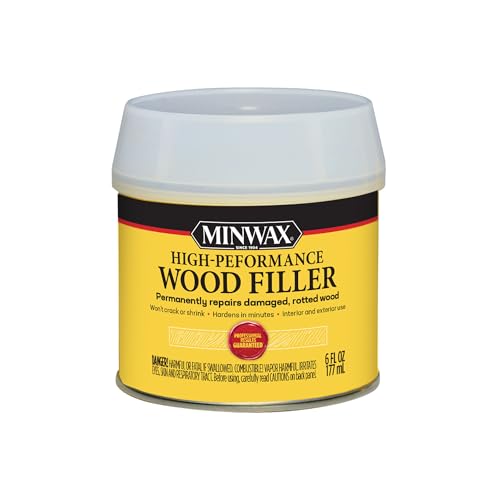 |
Minwax 41600000 High-Performance Wood Filler, 6-OunceMINWAX COMPANY, THE | Also great | 6-Oz · High-Performance · Paintable | $17.15
Price as of 15 Oct 2026
|
View |
 |
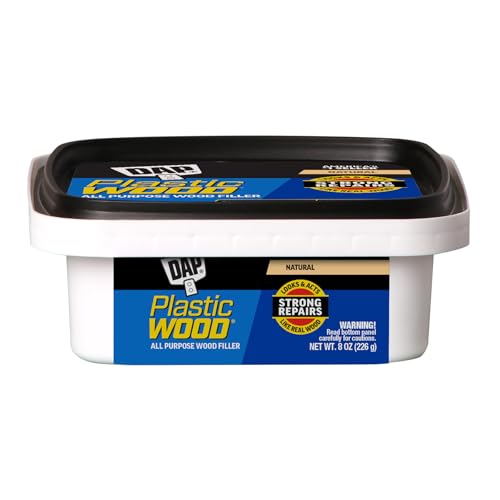
DAP Plastic Wood All Purpose Latex Wood Filler, Natural, 3PLASTIC WOOD | Budget pick | 3-Oz · Latex · Natural Finish | $4.29
Price as of 15 Oct 2026
|
View |
The table below links filler choice to damage depth, paint finish, and cure speed, so you do not force one product into every MDF repair. MDF edges are porous and brittle, so the fit matters as much as the brand.
How we chose
We compared the options on four points: repair depth, paint compatibility, shrinkage risk, and how well the filler holds up after sanding. MDF needs a filler that bonds to a porous surface, then accepts primer and paint without flashing through the finish.
We also looked at cure behavior. Fast curing helps on corner rebuilds, but shallow chips often need a smoother, easier-sanding filler instead of the hardest option on the shelf.
Finally, we weighed edge strength and rebuild ability. MDF chips around screw holes, routed profiles, and outside corners need more than a cosmetic patch.

Elmer’s wood filler: best for shallow chips and dents
This is the best default pick for small MDF chips, shallow dents, and minor surface defects that will be painted. Based on the manufacturer’s details and buyer feedback, it gives you a simple, paintable repair path for light damage where easy sanding matters more than structural strength.
Its main advantage is convenience. A water-based filler spreads easily, levels with fine-grit sandpaper, and works well when you need to fill a chip and move on to primer.
The drawback is clear: this type of filler is not the right answer for broken edges, deep voids, or corner loss. It is also more likely to shrink or telegraph if you push it too deep in one pass.
Where it works best on MDF
Use this style of filler on shallow chips, nail dents, and small handling marks in flat panel faces. MDF has a dense core but fragile edges, so this option is most useful where the damage is cosmetic and the surrounding material is still sound.
If the defect is wider than it is deep, a paintable latex or acrylic filler is usually the cleanest match. It sands smoothly and usually accepts primer without much fuss.
What to expect after sanding
Expect easy leveling with 180 to 220 grit, then a final pass at 320 grit or finer before primer. Because MDF is porous, the filled spot may still need spot-priming to stop flashing and keep the topcoat even.
Use a putty knife or filling knife wider than the defect. Press the filler in firmly, leave it slightly proud, and feather the edges so the repair does not print through the paint line.
When to avoid it
Avoid this filler for edge crumble, screw-hole blowout, and any area that carries impact or movement. If the repair will get bumped, clamped, or drilled, move up to a harder chemistry.
Suppose a cabinet shelf edge loses a 3/8-inch chunk at the front corner. A lightweight filler may look fine before paint, then shrink or chip at the edge after the first knock.
Minwax high-performance wood filler: best for deep repairs
This is the stronger pick for deep gouges, oversized voids, and MDF edge damage that needs a hard, carveable repair. Based on the published product details, it hardens quickly, resists shrinkage, and can be drilled or shaped after cure.
That matters on MDF because deep damage is not a surface-only problem. When the cavity is large, the filler has to hold shape, not sag, and it has to stay stable under primer and paint.
The tradeoff is working time. Hard fillers are less forgiving than lightweight paste, so you need to mix and place them promptly and sand at the right stage.
Deep gouges and oversized voids
Use a two-part epoxy filler or similar high-build hard filler when the defect is too deep for a one-step patch. These products shrink less than many lightweight fillers and are better suited to voids that need real volume.
For MDF, that includes routed corner chips, screw-hole blowout, and recesses where the surface has broken away below the face veneer or paint layer.
Why epoxy suits edge loss
Epoxy bonds well in repairs where the MDF edge has fractured or crumbled. After cure, it can be carved to shape and drilled, which helps on hinge points, corner returns, and profile rebuilds.
That makes it a better repair material than standard filler when the edge must regain a crisp line. A primer still matters afterward because the surrounding MDF remains porous even if the filler itself is not.
Carving, drilling, and cure timing
Most high-performance fillers cure to a harder mass than lightweight paste, so wait until the repair is fully set before shaping.
If the repair needs drilling or a screw to bite nearby, this harder category is the safer choice. A soft filler can crumble around fasteners.
DAP Plastic Wood latex filler: best for painted MDF surfaces
This is the best low-odor option for paint-grade MDF repairs where you want a filler that sands cleanly and is easy to work by hand. Based on the product details, it is a latex-based filler that resists shrinkage, cracking, and crumbling better than many lightweight spackles.
It fits small to medium cosmetic repairs on cabinet sides, trim faces, and other painted MDF parts. The natural color is less important than its paintability, since MDF repairs should be primed and topcoated anyway.
The downside is that it still is not a true structural rebuild material. For broken corners and wide voids, choose a harder filler instead.
Mixing and working time
This type of filler is simple to place and smooth before it sets. Use a filling knife to press it into the defect, slightly overfill, and then scrape it flush once it firms up.
Because it is latex-based, it is often a better choice for indoor repairs where odor matters. That said, it is still a filler, not a substitute for epoxy on deep or load-bearing damage.
Paint prep after cure
Prime the repaired spot before topcoat; MDF can flash through paint if you skip that step.
This is especially important on large flat faces. A repair that feels smooth to the hand can still telegraph under gloss or semi-gloss paint.
Where it falls short
Do not use a latex filler to rebuild a missing outside corner or an edge that has gone soft and crumbly. It may finish nicely, but it does not add the stiffness you need for a high-wear area.
For that kind of repair, epoxy or polyester body filler is the better match.
MDF repair selector table
| Damage type | Repair depth | Best filler category | Paint finish | Cure speed | Prep steps | Sanding grits | Prime before paint |
|---|---|---|---|---|---|---|---|
| Small face chip | Shallow, under 1/8 inch | Latex/acrylic wood filler | Flat, satin, or semi-gloss | Medium | Clean dust, press in filler, overfill slightly, feather edges | 180-220, then 320+ | Yes |
| Dent in panel face | Shallow to moderate | Latex/acrylic wood filler | Painted surface | Medium | Feather damaged area, fill in thin passes, level after cure | 180-220, then 320+ | Yes |
| Deep gouge or void | Moderate to deep | Two-part epoxy filler | Any painted finish | Fast to medium | Roughen edges, mix accurately, pack firmly, build in layers if needed | 180-220, then 320+ | Yes |
| Edge crumble | Deep, unstable edge | Two-part epoxy filler | Painted trim or cabinet edge | Fast to medium | Remove loose MDF, rebuild with hard filler, shape after cure | 180-220, then 320+ | Yes |
| Corner loss | Structural repair | Polyester body filler | Painted corner or profile | Fast | Mix accurately, rebuild in thin lifts, shape before full hardening if needed | 180-220, then 320+ | Yes |
| Screw-hole blowout | Moderate to deep | Two-part epoxy filler | Painted repair | Fast to medium | Remove weak fibers, pack filler, redrill only after full cure | 180-220, then 320+ | Yes |
Which one should you buy?
Pick the latex or acrylic filler if the damage is shallow, paint-only, and easy to sand. That is the best match for small chips and dents on MDF faces.
Pick the two-part epoxy filler if the repair is deep, the edge is broken, or you may need to carve or drill the area after cure. That is the safer choice for voids and edge loss.
Pick polyester body filler if you need a fast, high-strength rebuild on a corner or a profile. It works well when the repair must regain a sharp shape before primer.
For finish quality, the paint system matters as much as the filler. Spot-prime repaired areas, then topcoat once the primer has sealed the porous MDF and the filler is fully cured.
Say your cabinet door has a 1/16-inch dent near the center panel. A sandable latex filler is the cleanest choice because the repair is shallow and will be hidden under primer and paint. Suppose the same door loses a 1/2-inch corner near the hinge side. Move to epoxy or polyester, because the edge needs strength, not just a smooth face.
Damage size
Small face defects call for a paintable filler with good sandability. Larger voids need a hard filler that will not collapse as you level it.
Paint finish
Flat paint hides small flaws better than gloss, but every finish benefits from primer on repaired MDF. A smoother final sheen still depends on clean sanding and feathered edges.
Cure speed
If speed matters, polyester body filler sets fast. If open time matters more, a latex filler or epoxy may be easier to place on detailed repairs.
Edge or corner repair
Any edge that gets touched often should get a harder chemistry than a basic lightweight filler. MDF edges swell and crumble more easily than the face, so they need a more durable patch.
What is a good wood filler for MDF?
A good wood filler for MDF depends on the defect size. For shallow chips and dents, a paintable latex or acrylic filler is usually the best fit because it sands easily and takes primer well. For deep damage, choose epoxy or polyester instead of a lightweight patch.
MDF is dense but edge-fragile, and it swells with water. That means you should sand before filling, fill in slightly proud of the surface, and prime after cure so the repair does not flash through paint.
How do you use wood filler for MDF repairs?
Start by removing loose fibers and dust, then press the filler into the defect with a putty knife.
The knife width should be wider than the damage so you can feather the edges cleanly. On porous MDF, primer is not optional if you want a paint-grade finish.
How do you use wood filler on chipped MDF?
For chipped MDF, clean out every loose crumb first, then pack in a paintable filler that matches the chip depth. Small chips can take latex filler; larger edge chips usually need epoxy or polyester because the repair needs more body and better edge strength.
Work the filler slightly past the damaged outline so you can sand back to the original profile. If the chip is on a visible edge, use a harder filler and expect to spot-prime before the final coat.
How do you fill dents in MDF?
Shallow dents in MDF are best filled with a sandable, paintable filler that can be leveled without tearing the surrounding face. Press the filler into the low spot, leave it a little high, and sand only after full cure so you do not create a hollow around the repair.
For deeper dents, build in thin layers rather than one thick pass. That reduces shrinkage risk and makes it easier to keep the patch flush under paint.
Can you sand and paint MDF filler smooth?
Yes, but only if you choose a filler meant to be sanded and then prime the repair before painting. MDF telegraphs small surface defects, so a smooth hand-sanded patch can still need primer to stop flashing and to blend sheen.
After that, prime the repaired area and check the edge under raking light before topcoat.
What filler works best on MDF edges?
Hard epoxy filler or polyester body filler works best on MDF edges because those areas are fragile and often need structural recovery, not just cosmetic smoothing. Flexible putty is better for movement tolerance, but it usually gives up finish quality and long-term edge durability.
If the edge is only nicked, a paintable latex filler may be enough. If the edge has crumbled or split, use a harder product and rebuild the profile before sanding and priming.
What is the difference between filler, putty, and epoxy for MDF?
Filler is usually the broad category for paintable repair materials, while putty is often softer and more flexible, and epoxy is a harder two-part repair product that cures chemically. On MDF, flexibility helps only when movement matters; hard fillers usually win on edge shape and paint finish.
For cabinet parts and trim, flexible putty can stay more forgiving but may not sand or paint as cleanly. Epoxy gives the strongest repair, especially where the MDF is broken, drilled, or likely to chip again.
Should you use a two-part filler on deep MDF damage?
Yes. Deep MDF damage usually needs a two-part filler because it cures harder, shrinks less, and holds shape better than a lightweight one-step paste. That matters on voids, corner rebuilds, screw holes, and routed profiles where the repair must stay stable under paint.
Use it after removing all loose fibers and roughening the edge of the cavity. Then sand, spot-prime, and paint once the repair is fully cured and flush.
Frequently asked questions
What is a good wood filler?
A good wood filler is one that matches the defect, the substrate, and the finish you plan to apply. For MDF, a paintable latex filler works for small surface repairs, while epoxy or polyester is better for deeper, stronger, or edge-heavy damage.
Sponsored / affiliate links. As an Amazon Associate I earn from qualifying purchases. I may earn additional commission from eligible campaigns.