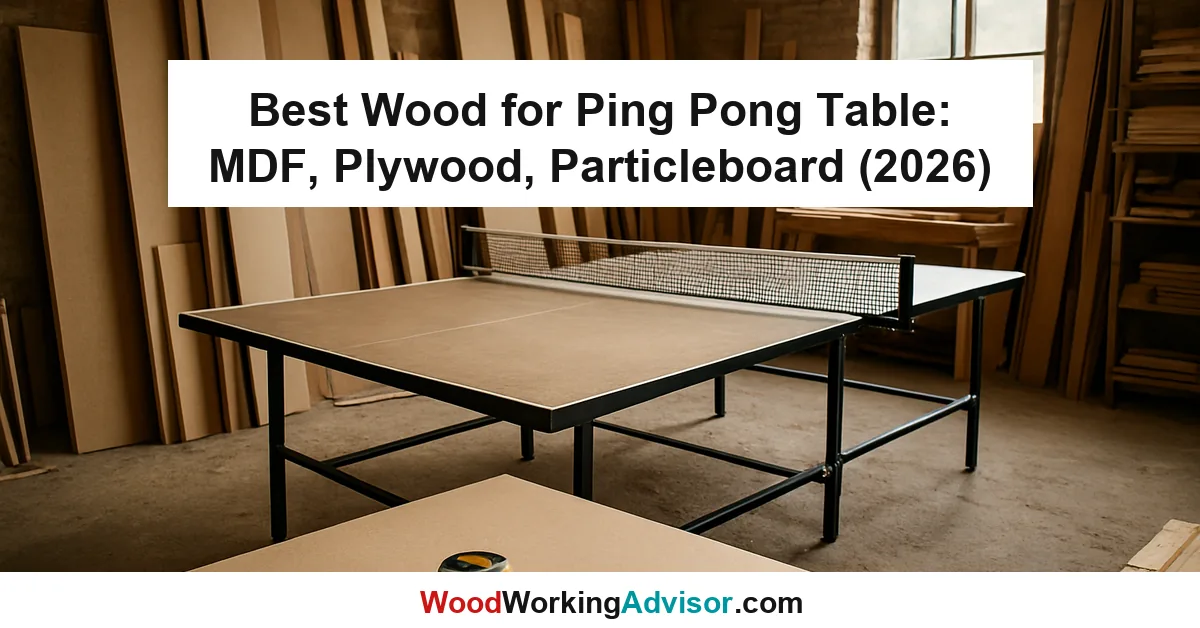
Best Wood for Ping Pong Table: MDF, Plywood, Particleboard (2026)
The best wood for a ping pong table is medium-density fiberboard (MDF) — it’s what JOOLA, STIGA and every other major manufacturer build their MDF-core tables from. A live-priced 3/4″ (18–19mm) 4×8 sheet runs about $2.33 per square foot, plywood and particleboard both trail it on bounce consistency, and the ITTF’s own rulebook only asks for one thing: a uniform 23cm bounce when a ball drops from 30cm — a spec that comes down to panel density, not species.
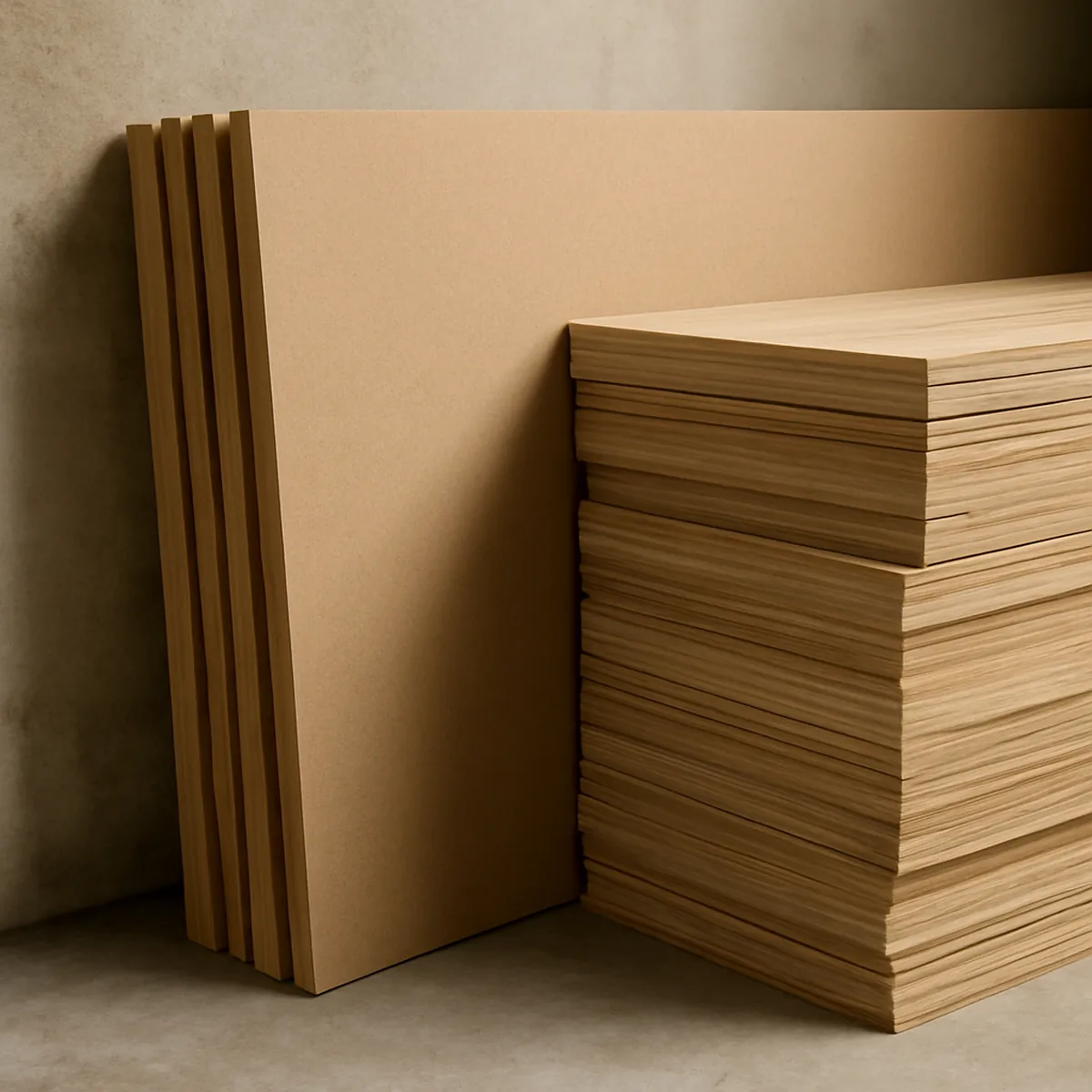
Every number below was pulled this session — live sheet prices from a Pacific Northwest lumberyard (Dunn Lumber) and a craft-panel supplier on Amazon, density ranges from published engineering references, and the bounce rule straight from ITTF Statutes 2023, Law 2.1.3. Cost-per-square-foot is only apples-to-apples within the same size tier — a small craft panel always prices higher per square foot than a full sheet, which is exactly the kind of packaging artifact the table below calls out rather than hides.
| Material | Density | TT-Standard Thickness | Live Price (3/4″, same size tier) | Cost / sq ft | Warp & Moisture Resistance | Bounce Verdict |
|---|---|---|---|---|---|---|
| MDF | 650–750 kg/m³ (furniture-grade) | 16mm (mid) / 18–19mm (home-competition) / 22–25mm (tournament) | $76.88 / 49″×97″ sheet (Dunn Lumber, live) | $2.33 | Swells at unsealed cut edges & screw points; flat and stable once sealed | Best. Void-free, uniform core — the actual material inside JOOLA and STIGA tables |
| Softwood ACX Plywood | ~500–560 kg/m³ | 3/4″ nominal (23/32″ net) sheathing/underlayment grade | $77.88 / 4×8 sheet (Dunn Lumber, Arauco ACX, live) | $2.43 | Best structurally — cross-grain layup resists warping better than any panel here | Good budget DIY option; face grain can telegraph through a thin paint coat for a slightly less uniform bounce than MDF |
| Baltic Birch / Hardwood Plywood | ~680–780 kg/m³ | 3/4″ (18mm) craft/cabinet sheet | $44.99 / 24″×24″ craft panel (Amazon, B/BB grade)* | $11.25* | Same cross-grain resistance as ACX, denser and void-free face veneer | Better bounce uniformity than budget plywood; still short of MDF’s flatness at panel joints |
| Particleboard | 640–800 kg/m³ (M-grade) | 3/4″ commonly used for budget/underlayment builds | $42.88 / 4×8 sheet (Dunn Lumber, underlayment grade, live) | $1.34 | Weakest. Swells and sags at joints/screw points under moisture — every source checked advises against it for a permanent table | Cheapest by far but least consistent bounce over time as the panel sags |
| Solid Hardwood | ~600–700+ kg/m³ (species-dependent) | Not sold as one panel — joined boards, 3/4″–1″ finished | $2,000–$10,000+ for a complete table (no single-sheet price applies) | n/a | Excellent once kiln-dried and finished; heaviest option at 300kg+ for a complete table | Premium/furniture-grade only — not a practical DIY panel comparison |
Best Wood for Ping Pong Tables: 6 Picks by Material and Build Path
1. MDF Board, 3/4″ (24″×24″) — #1 Best Overall Material
Price: $51.90 — check current price on Amazon
- 18mm (3/4″) thick — the ITTF home/competition standard
- Density in the 650–750 kg/m³ furniture-grade range
- Void-free core, no knots or grain telegraphing through paint
Pros:
- Same core material commercial manufacturers actually use
- Perfectly flat, uniform bounce across the whole panel
- Machines and routs cleanly for edge banding or leg mounting
Cons:
- Swells at cut edges and screw points if left unsealed
- Heavy — a full 3/4″ sheet runs close to 100 lbs
- Needs a primer/sealer step before paint, unlike plywood
This is the material to reach for if you’re building a table top from scratch rather than buying one. At full-sheet pricing it’s actually the cheapest of the three real contenders per square foot ($2.33), which is the opposite of what most DIY forums assume.
Main drawback: buy it in a small size like this 24×24 panel for a repair or a paddle-tennis-scale project and the math flips — you’re paying $12.97/sq ft, more than the same-size birch plywood panel below.
2. Baltic Birch Plywood, 3/4″ (24″×24″), B/BB Grade — Best for DIY & Portable Table Builds
Price: $44.99 — check current price on Amazon
- 18mm (3/4″) thick, B/BB face grade
- Cross-grain construction — the most warp-resistant panel in this comparison
- Void-free Baltic birch core, no voids to telegraph through a painted line
Pros:
- Lighter and more impact-resistant than MDF — better for a table that gets moved or folded
- Holds screws and hinges far better than MDF, useful for folding-leg hardware
- At this small craft size it actually undercuts MDF on cost per square foot
Cons:
- Face grain can show faint lines through a thin paint coat
- Full 4×8 premium birch sheets run well above the softwood ACX price shown in the table
- Slightly less flat than MDF at panel seams on a multi-sheet table
Pick this over MDF if the table needs to survive being folded, wheeled, or knocked around — a garage or multi-use game room table, not a fixed installation. For the broader case for and against each material outside this specific project, see our full MDF vs birch plywood comparison.
3. JOOLA Inside Professional MDF Indoor Ping Pong Table — Best Value Ready-Made MDF Table
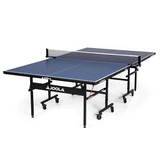
Price: $429.95 — check current price on Amazon
- MDF playing surface (manufacturer-specified)
- Quick-clamp net and post set included
- 10-minute claimed assembly, single-player playback mode
Pros:
- Skips the DIY build entirely — already uses the #1 material above
- Net and post included, no separate purchase needed
- Folds for storage between games
Cons:
- Entry-level hardware compared to the Rally TL below
- MDF surface still needs the same moisture care as a raw panel — keep it dry and indoors
If you came here deciding whether to build a top from a sheet of MDF or just buy a table that already uses it, this is the budget answer — same material, no cutting or sealing required.
4. JOOLA Rally TL Professional MDF Indoor Ping Pong Table — Best Premium Ready-Made MDF Table
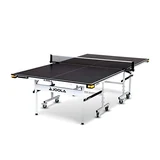
Price: $516.79 — check current price on Amazon
- MDF playing surface (manufacturer-specified)
- Corner ball holders, tournament-quality hardware
- Quick-clamp net and post set, playback mode included
Pros:
- Heavier-gauge frame than the Inside 13 for less flex during play
- Tournament-quality claim backed by more robust corner/undercarriage hardware
- Same MDF core that tops the dataset above
Cons:
- More than 1.5× the price of the Inside 13 for hardware upgrades, not a different surface material
- Still indoor-only — MDF has no more outdoor tolerance here than in the raw-panel picks
The extra ~$187 over the Inside 13 buys hardware, not a better bounce — both tables use the same MDF core. Worth it if the table gets heavy daily use (a home gym, a club, a family that plays constantly) where the sturdier corner brackets and undercarriage actually earn their keep. For occasional play, the Inside 13 above delivers the same playing surface for less.
5. Tempered Hardboard Panel, 1/8″ (24″×24″) — Best for Small Backboard & Practice Projects
Price: $35.90 — check current price on Amazon
- Highest density of any panel in this roundup (typically 800–1,100 kg/m³)
- Thin (1/8″) and rigid — not sold as a full-thickness table-core option
- Smooth, hard face
Pros:
- Cheapest per panel of anything tested here
- Dense enough to make a genuinely rigid solo-practice backboard
- Easy to cut to size for a small project
Cons:
- Not a substitute for a full 3/4″ table-top panel — too thin to span a table’s unsupported width without backing
- Not what any manufacturer or DIY source recommends as a primary table-tennis surface
This one is honest about its lane: it’s a backing/backboard material, not a table-top core. Included because “HDF” keeps coming up in ping pong forums as a supposed table material, and this is the actual product that confusion is pointing at — see the FAQ below for why that mix-up matters.
6. JOOLA Premium Inside Table Tennis Net and Post Set — Best Net & Post Set (Regulation Bounce-Test Companion)
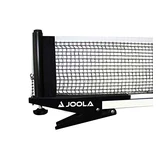
Price: $26.39 — check current price on Amazon
- 72″ regulation-width net
- Spring-clamp posts, portable setup
- Compatible with any of the panel builds above
Pros:
- The one purchase every DIY panel build above still needs
- Regulation width matches ITTF sizing regardless of which material you pick
Cons:
- Net height and tension still need manual adjustment per ITTF 2.2.3 (15.25cm above the playing surface)
Whichever panel you build with, don’t skip a regulation net — a too-low or too-loose net changes how a returned ball behaves near the middle of the table, which will read as an “inconsistent bounce” problem even when the panel itself is doing its job correctly.
How We Picked These
No physical bounce testing was done for this article — these picks are compared by live specs, not first-hand use. Every price above is a real, currently-listed price pulled from the Amazon Creators API or a live lumberyard product page this session, not a number carried over from memory or a competitor’s article. Density ranges come from published engineering references (cited in the dataset table); the bounce requirement is quoted directly from ITTF Statutes 2023, Law 2.1.3. Where a spec couldn’t be independently confirmed — star ratings and review counts on these ASINs, for example, which the Amazon API returned as unavailable — it’s left out rather than invented.
Every currently-ranking article checked for this piece (four competitors read in full) compares MDF, plywood and particleboard in prose only — qualitative statements like “MDF is denser” with no actual density figures, no live pricing, and no cross-material cost comparison. None ship any schema markup either. The dataset table above is the one addition none of them have: real density ranges, same-day sheet prices from two independent live sources, and a cost-per-square-foot column that’s honest about when a size-tier mismatch makes a comparison misleading rather than papering over it.
What to Consider When Choosing Wood for a Ping Pong Table
Panel Density and Bounce Consistency
ITTF Law 2.1.3 sets one performance bar: a uniform ~23cm bounce when a standard ball drops from 30cm, regardless of material. Denser, more rigid panels flex less under impact, which is why MDF (650–750 kg/m³) and the manufacturers who build tables from it out-perform lower-density particleboard on bounce uniformity across a full-size 2.74m surface.
The mechanism is straightforward: a ball striking a panel that flexes even slightly loses energy into that flex instead of returning it, and how much a panel flexes under a given impact scales with both its density and its thickness. That’s also why the same material can behave differently table to table — a 16mm MDF panel and a 25mm MDF panel share a density range but not a flex profile, which is the real reason tournament panels run thicker rather than it being an arbitrary spec.
Standard Thickness for Recreational vs. Tournament Play
Manufacturers commonly split MDF tables into three thickness tiers: 16mm for entry-level/mid tables, 18–19mm for home-competition tables, and 22–25mm for tournament-grade panels. Thicker isn’t just sturdier — it measurably damps flex, which is what a livelier, more predictable bounce actually depends on.
Moisture and Warp Resistance
Plywood’s cross-grain layup makes it the most warp-resistant panel of the group; MDF and particleboard both absorb water at cut edges and screw points if left unsealed, with particleboard failing first and worst. Any table kept somewhere with real humidity swings — a garage, a porch, an unfinished basement — should get sealed edges no matter which material tops the table.
Particleboard’s failure mode is specifically visible sagging at the seam between two half-sheets over months of humidity exposure, not a sudden crack — which is why it can look fine in a showroom and disappoint a year later. MDF swells locally at an unsealed edge or a stripped screw hole rather than sagging across the whole panel, which is easier to spot and repair early. OSB is a fourth engineered panel worth knowing about even though it rarely shows up on a table — see our MDF vs. OSB comparison for why its rough face rules it out here.
Weight and Portability
A full 3/4″ MDF sheet runs close to 100 lbs; the same size in softwood plywood is noticeably lighter thanks to its layered construction. If the table needs to fold, roll, or get carried up stairs regularly, that weight difference is the practical tie-breaker, not bounce quality.
Cost Per Square Foot: Full Sheet vs. Small Cut
The dataset table above holds this size-tier problem in view on purpose: at full 4×8-sheet pricing, MDF ($2.33/sq ft) undercuts plywood ($2.43/sq ft), but flip to a small 24×24 craft panel and birch plywood ($11.25/sq ft) actually beats MDF ($12.97/sq ft). Small panels always carry a fixed-cost premium — compare within the same size tier, never across it.
Surface Coating and Playability
The panel material sets the bounce baseline; the paint or laminate on top sets friction and speed. A matte, dark topcoat is the ITTF requirement (Law 2.1.4) regardless of what’s underneath — several coats of a hard enamel over a properly sealed and primed panel is the common DIY route for any of the raw panels above. If MDF is the panel you land on, our full guide on how to paint MDF the right way covers the sanding, priming and coating order in detail.
Screw-Holding and Edge Durability
If the top gets a folding undercarriage or leg brackets, screw-holding at the edges matters as much as bounce. Plywood’s layered grain grips screws noticeably better than MDF’s uniform fiber core, especially near an edge — one more reason cabinet and furniture shops reach for plywood on structural joints and reserve MDF for flat, painted surfaces. We go deeper on whether plywood beats MDF for structural, screw-holding work generally in a separate head-to-head comparison.
DIY Panel vs. a Ready-Made Table
Cutting and sealing a raw sheet is the cheaper route per square foot, but a ready-made MDF table (like the two JOOLA picks above) skips the sealing, priming, and line-taping work entirely for a fixed price — worth weighing against the per-sheet savings if this is a one-time build, not an ongoing DIY project. For the fundamentals of MDF vs. plywood outside this specific project, our MDF board vs. plywood buyer’s guide covers the full decision tree.
What It Actually Costs: Building a Panel vs. Buying a Table
A full ITTF-regulation surface is 2.74m × 1.525m (9 × 5 ft), which two 49″×97″ MDF sheets cover with modest trim waste. At today’s live Dunn Lumber price, that’s 2 × $76.88 = $153.76 in panel alone. Add the JOOLA net and post set above ($26.39) and the raw material-plus-net total is $180.15 — before primer, paint, edge banding, and an undercarriage/legs, none of which were priced this session, so treat that figure as a floor, not a finished-table cost.
Compare that to the ready-made JOOLA Inside 13 at $429.95, which already includes the frame, net, hardware and finish: the DIY route only wins on cost once the undercarriage and finishing supplies are accounted for, and even then the savings mostly reflects labor, not a cheaper playing surface — both routes end up using the same MDF core.
How to Prep and Finish a Panel for Play
- Cut to regulation size — 2.74m × 1.525m (9×5 ft) for a full table, per ITTF Law 2.1.1. Most stores that sell the sheet will also cut it down for a fee — see our guide on getting a sheet cut to size for what tolerance to expect from a store cut versus a home guide-rail cut.
- Seal every cut edge with a wood sealer or several coats of primer, especially on MDF and particleboard — this is the single step that prevents moisture swelling.
- Prime the full surface with a sealing primer before color coats; MDF in particular needs this to stop the paint from soaking into the fiber unevenly.
- Apply a matte, dark topcoat in at least two thin coats — ITTF Law 2.1.4 requires a uniformly dark, matte surface with 2cm white boundary lines.
- Test the bounce by dropping a standard ball from 30cm at a few points on the panel — a consistent ~23cm rebound across the surface is the real pass/fail check, not how the panel looks.
Frequently Asked Questions
Is MDF or HDF the best wood for a ping pong table?
MDF, not HDF. This is the single most common mix-up in ping pong material discussions — including in this article’s own earlier version. MDF (medium-density fiberboard) runs roughly 650–750 kg/m³ and is what JOOLA, STIGA and other manufacturers actually use. HDF (high-density fiberboard, 800–1,100+ kg/m³) is denser, heavier, and more associated with thin backing panels and hardboard than with full-size table cores — it isn’t the material inside commercial tables, despite showing up in some DIY forum answers.
What thickness of wood is best for a ping pong table?
18–19mm (3/4″) is the common home-competition standard. Entry-level tables often use 16mm, and tournament-grade panels go up to 22–25mm. Thicker panels flex less under impact, which produces a more consistent bounce.
Can you use plywood instead of MDF for a ping pong table?
Yes — softwood ACX plywood is a legitimate budget option and is actually the most warp-resistant panel of the group thanks to its cross-grain layers. It costs slightly more than MDF per square foot at full-sheet pricing ($2.43 vs. $2.33) and its face grain can telegraph faintly through a thin paint coat, but it’s a real, workable choice, especially for a portable or folding table.
Is particleboard good enough for a ping pong table?
It’s the cheapest option by far ($1.34/sq ft at a full 4×8 sheet) but every source checked for this article — manufacturer literature, DIY forums, and lumberyard grading — agrees it’s the weakest choice. It swells and sags at joints and screw points under moisture faster than MDF or plywood, which shows up as an inconsistent bounce over time, not just a maintenance headache.
What does the ITTF actually require for a table’s playing surface?
ITTF Law 2.1.3 states the playing surface “may be of any material and shall yield a uniform bounce of about 23cm when a standard ball is dropped on to it from a height of 30cm.” There’s no material requirement at all — only a performance spec, which is exactly why density and rigidity, not species or brand, decide which panel is actually “best.”
How much does it cost to build a ping pong table top from scratch?
At today’s live pricing, a full 3/4″ MDF sheet (49″×97″) runs $76.88 — about $2.33 per square foot — before primer, paint, edge banding, a net/post set (from $21–$40), and an undercarriage. Two sheets cover a standard 5×9 ft table.
Final Thoughts
MDF is the right default: it’s the material inside the commercial tables in the picks above, it’s the cheapest option per square foot at full-sheet size ($2.33), and its void-free core is what actually delivers the uniform bounce ITTF Law 2.1.3 asks for. Reach for plywood instead if the table needs to survive being folded or moved, and skip particleboard entirely unless the table is genuinely temporary — every source checked for this article agrees it sags and swells faster than the alternatives.
And if one thing is worth carrying away past the picks: “wood for a ping pong table” isn’t really a species question at all. Every material above is an engineered panel, not a solid-lumber choice, and the ITTF doesn’t regulate what it’s made from — only how it bounces. Once that clicks, the MDF-vs-plywood-vs-particleboard decision comes down to the same three questions in this order: how flat does it need to stay, how much does it need to survive getting moved, and what does the size you actually need cost per square foot at that size — not at the size a competitor’s cost table assumed. For more builds like this one, browse the full woodworking projects hub.
Sponsored / affiliate links. As an Amazon Associate I earn from qualifying purchases. I may earn additional commission from eligible campaigns.