Best Wood Gate Hardware Kit for Fences (2026): We Compared
Choose the best wood gate hardware kit by matching hinge and latch capacity to the gate’s actual weight and span, then add at least a 25% safety margin. Wrong sizing causes sagging, latch misalignment, torn screw holes, and premature failure that often means rebuilding the gate. This guide shows how to read load ratings, spot weak kits, and pick hardware for single-swing, double-swing, and wide wood gates.
Quick comparison
| Product | Badge | Best for | Price | ||
|---|---|---|---|---|---|
 |
Heavy Duty Gate Hinges, 2 PCS Upgraded Ball Bearing GateNANDYRACK | Our pick | 2 PCS · 900 lb · Ball Bearing | $46.99
Price as of 16 Oct 2026
|
View |
 |
HILLMASTER Heavy Duty Gate Latch Door Handle Hardware KitHILLMASTER | Also great | Kit · 2 pack · T-strap | $16.99
Price as of 16 Oct 2026
|
View |
 |
TB175Black Gate Closer | TB175Black Gate Closer. DurableLockey USA | Pair with it | Black · 125 lb · Flush Mount | $61.49
Price as of 16 Oct 2026
|
View |
 |
Aiwaiufu 12FT Galvanized Inverted V Track Kit – 3pcs 4FTAiwaiufu | Also great | $46.99
Price as of 16 Oct 2026
|
View | |
 |
Gate Corner Brace Bracket, Heavy Duty Gate Kits for WoodDETYI | Also great | 4 pcs · Adjustable · Anti-Sag | $34.99
Price as of 16 Oct 2026
|
View |
The right kit depends on load, span, and weather exposure. Use the table below to separate a light backyard gate from a long gate that faces rain, snow, or salt air and needs stronger hinges, better fasteners, and a brace plan.
For outdoor gates, finish matters as much as hinge style. Powder-coated black works in mild exposure, hot-dip galvanized suits wet or snowy sites better, and stainless steel is the safer choice where corrosion risk stays high.
How we chose
We compared these kits by five checks: hinge load capacity, adjustability for alignment, latch style and lock compatibility, finish for corrosion resistance, and whether the kit includes or supports anti-sag hardware such as a brace or wheel.
We also weighed gate span and likely failure mode. A kit that looks “heavy duty” on the label is not enough if the screw length is short, the latch has little alignment tolerance, or the finish will pit quickly on treated lumber or coastal fences.
As a rule, lighter gates can get by with simpler hardware, but longer spans need stiffer hinges and better pull-out resistance from the fasteners. Decorative parts work only when they do not weaken the load path.
Best wood gate hardware kit by use case
Heavy Duty Gate Hinges: best for large gates
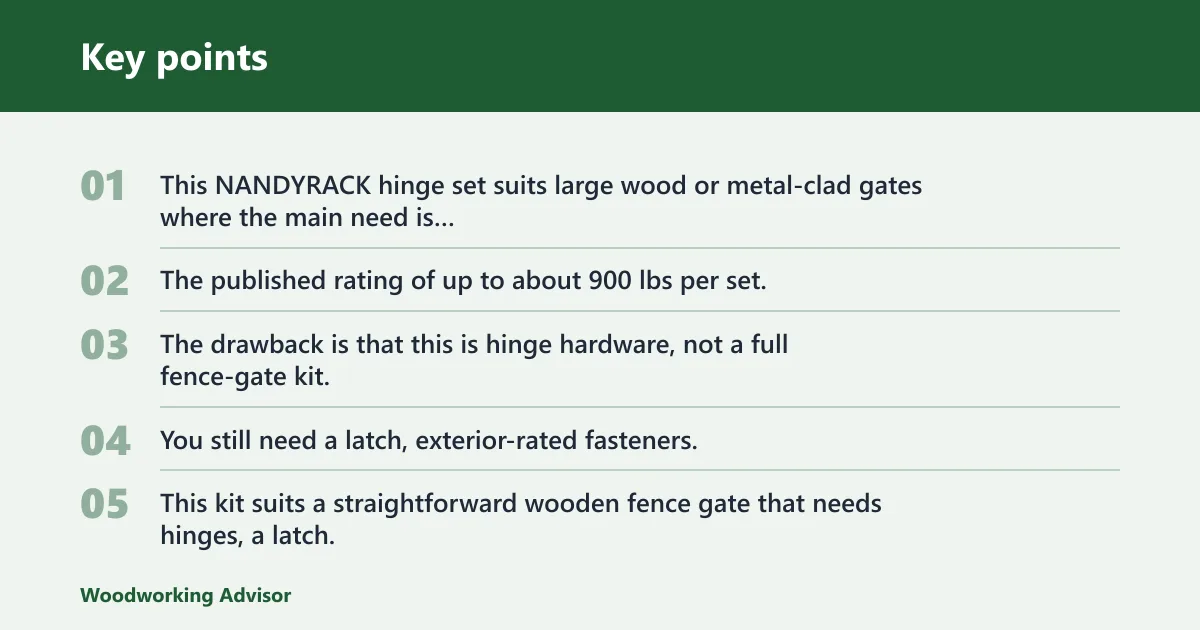
This NANDYRACK hinge set suits large wood or metal-clad gates where the main need is load support. The published rating of up to about 900 lbs per set, plus ball bearings and weld-on or bolt-on options, suggests it is a strong option for high mass and frequent cycling.
The drawback is that this is hinge hardware, not a full fence-gate kit. You still need a latch, exterior-rated fasteners, and a brace if the frame is long or already beginning to drop at the latch end.
HILLMASTER gate latch and hinge kit: best for a basic wood fence gate
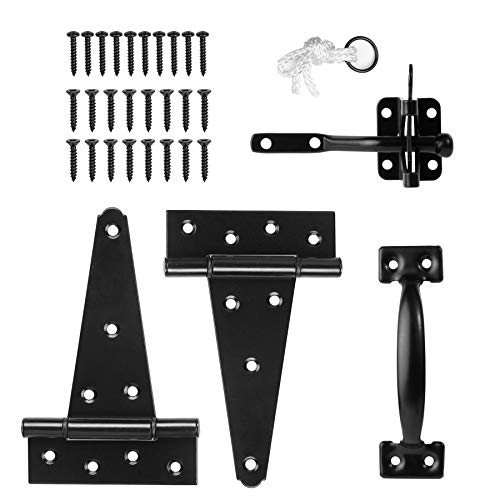
This kit suits a straightforward wooden fence gate that needs hinges, a latch, and a pull handle in one box. The self-closing latch with pull string is useful when you want one-handed closing, and the T-strap hinges make sense on lighter gates with a simple frame.
The drawback is that it is more of a convenience kit than a high-load answer. Decorative parts do not solve sagging, and a light-duty hinge layout is not the right pick for a wide or wet gate that needs better corrosion resistance.
Lockey USA TB175Black gate closer: best for controlled closing
This flush-mount closer fits a gate that needs controlled closing and limited hardware projection. The 125 lb rating makes it more appropriate for lighter gates where closing speed or access control matters more than brute hinge capacity.
The drawback is the load limit. If your wood gate is wide, warped, or already dragging, a closer will not fix the frame, and it is not a substitute for stronger hinges or anti-sag bracing.
Aiwaiufu 12FT galvanized track kit: best for sliding gates
This is for sliding driveway or barn-style gates, not a swinging fence gate. The galvanized rail package fits projects where ground clearance, track alignment, and corrosion resistance matter more than hinge selection.
The drawback is that it answers a different gate problem. If your fence gate swings on hinges, a track kit is the wrong category, and adding one will not solve a sagging frame.
DETYI gate corner brace bracket kit: best for anti-sag repair
This kit is the clearest fit when a wood gate is sagging but the frame is still worth saving. Adjustable brackets, four pieces, and the anti-sag layout help restore diagonal support without needing angle measurements during layout.
The drawback is that it is brace hardware, not a full hinge-and-latch solution. It can reduce creep and racking, but it will not compensate for rotten rails, split corners, or undersized hinges.
Gate hardware decision table
Use this table to match gate width, approximate weight, and exposure to the hardware you actually need. The goal is to prevent the common failure chain: light hinges, screw pullout, latch drift, then sagging that forces a rebuild.
| Gate width | Approximate gate weight | Exposure level | Hinge type | Latch type | Fastener material | Support wheel or brace |
|---|---|---|---|---|---|---|
| Up to 4 ft | Light, under about 40 lb | Sheltered | Butt or light T-hinge, adjustable if alignment is tight | Thumb latch or simple self-latching latch | Exterior-rated galvanized screws | Usually no wheel; add a diagonal brace if the frame is softwood |
| 4 to 6 ft | About 40 to 80 lb | Moderate rain exposure | Strap or T-hinge with stronger load rating per pair | Self-latching latch with some alignment tolerance | Galvanized or stainless screws and bolts | Brace recommended if the gate is wider than it is tall |
| 6 to 8 ft | About 80 to 125 lb | Wet, snowy, or hot-cold cycling | Heavy strap or adjustable hinge with corrosion-resistant finish | Lock-compatible latch with one-handed operation | Stainless or hot-dip galvanized bolts and long exterior screws | Brace first, wheel only if the gate still drags after the frame is corrected |
| Over 8 ft or double-swing layout | Over 125 lb total or uneven split | High exposure | High-capacity strap hinges or rated adjustable hardware | Lock-compatible self-latching latch | Stainless steel preferred; hot-dip galvanized second | Brace each leaf; use a support wheel only for persistent ground contact |
If the gate sags at the latch side but the posts are sound, a diagonal brace often fixes the problem more cleanly than a wheel. A wheel can help carry weight, but it can also hide a weak frame that still needs a new diagonal member.
Failure modes to check before you buy
- Sagging: The latch side drops below square. This usually points to weak hinges, poor brace direction, or fastener pullout.
- Latch misalignment: The latch no longer meets cleanly. That often happens after seasonal swelling or hinge creep.
- Hinge pullout: Screws back out or tear fibers from soft wood. Longer exterior-rated screws or bolts usually help more than cosmetic hardware changes.
- Brace creep: The diagonal member shifts and loses angle over time. This is common on wide gates built from lumber with more movement.
- Swelling: Cedar and pressure-treated pine can move with moisture, changing latch alignment and hinge load.
- Rust: Finish failure shows up first at screw heads, hinge knuckles, and latch springs on exposed gates.
Heavy gate kit: best for sagging spans
A heavy gate kit fits when the opening is wide, the leaf is tall, or the frame already shows drop at the latch end. In that situation, you want stronger hinges, exterior-rated bolts or long screws, and a diagonal brace that pushes against the same corner that wants to sink.
For a single-swing gate, the hinge pair has to carry not only weight but also leverage from span. That is why a rating printed as a pair matters more than a vague “heavy duty” label.
Why this setup fits larger gates
Long gates create more torque at the hinge line. A strap hinge spreads that load better than a small butt hinge, while an adjustable hinge helps when the post, frame, or latch line is slightly out of plane.
A support wheel can help a long gate that still brushes the ground after bracing, but it should not be the first fix. If the wheel becomes the main support, the frame is likely underbuilt or the hinges are undersized.
Hinge and fastener choices
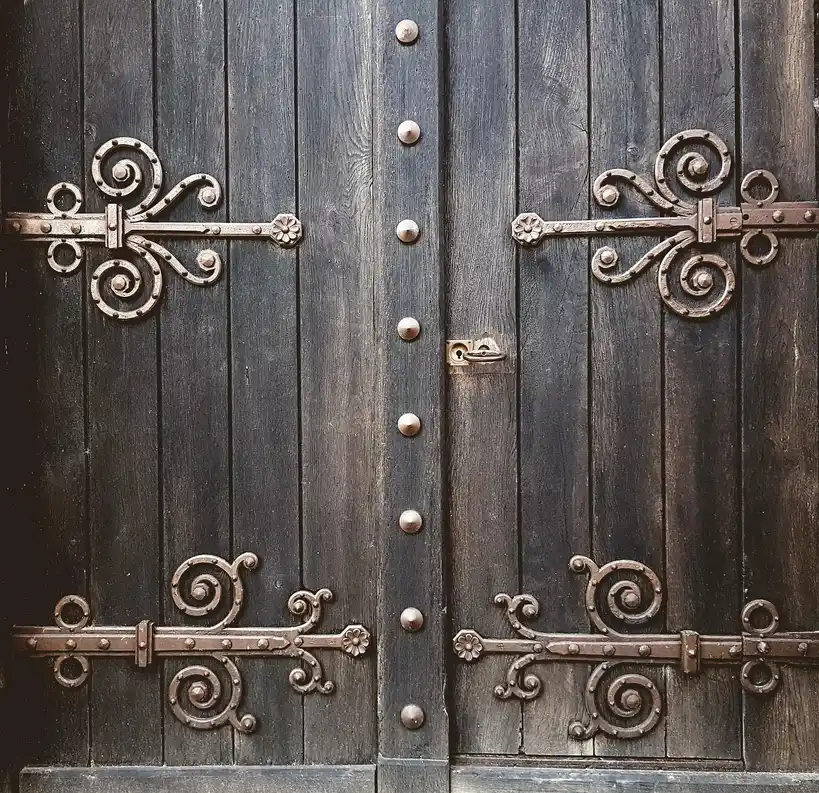
For heavier wood gates, look for a hinge set that lists capacity per pair and gives a clear finish. Stainless resists rust best, hot-dip galvanized does well outdoors, and powder-coated black is fine when exposure is lighter and the coating is intact.
Fasteners should be exterior-rated, not interior trim screws. For pull-out resistance, longer screws or through-bolts usually outperform short fasteners in softwoods such as cedar and pressure-treated pine.
Rust-resistant kit: best for exposed gates
Use a rust-resistant kit when the gate faces rain, snow, irrigation spray, or salty air. In that setting, finish choice matters almost as much as hinge size, because a strong hinge can still fail early if the screw heads, springs, or joint surfaces corrode.
Stainless steel is the safest option for harsher exposure, while hot-dip galvanized hardware is a strong middle ground for most outdoor fences. Powder-coated black is acceptable for drier locations, but it is less forgiving once the coating chips.
Best finishes for rain and snow
Hot-dip galvanized hardware gives better outdoor corrosion resistance than plain plated steel and is a good match for treated lumber and standard backyard gates. Stainless steel costs more, but it is the better choice where repeated wetting or de-icing salts are part of the site.
Do not mix high load with weak finish and short screws. Rust often starts at the fastener, then spreads to the hinge plate and latch spring.
Which woods pair well with stainless or galvanized hardware?
Cedar has good rot resistance and moderate movement, so it pairs well with corrosion-resistant hinges and latches. Pressure-treated pine is stiffer in many builds but can be wetter at installation, which means fasteners need good pull-out resistance and finishes need to tolerate treatment chemicals.
Other softwoods may work, but they move more and hold screws less predictably. For those frames, longer screws, washers, and a brace with a broad bearing surface usually help.
Easy-align kit: best for quick installs
An easy-align kit makes sense when the gate is narrow, the post line is close to square, and you want more tolerance during installation. Adjustable hinges matter most here, because small shifts in height or plumb can save time on a gate that is otherwise sound.
These kits are a better fit for lighter gates than for long spans. They help with setup, but they do not replace load capacity.
Adjustable hinges and alignment tolerance
Adjustable hinges help correct minor hinge-line errors and seasonal movement. They are useful when the latch needs to meet cleanly, but they are not a cure for a badly twisted frame or rotten lower rail.
Choose them when the gate is light to medium weight and the post layout is close to right. If the gate already needs a brace or wheel, use those first.
Thumb latch versus self-latching options
Thumb latches are simple and familiar. Self-latching models are better when you want the gate to close securely with less attention, and lock-compatible versions are the right call when access control matters.
For one-handed operation, check the latch throw and the clearance around the post. If the latch has very little tolerance, a small hinge shift can stop it from closing cleanly.
What gate hardware kit do I need for a wood fence gate?
You need hinges, a latch, and exterior-rated fasteners that match the gate’s weight, width, and exposure. For larger gates, add stronger strap or adjustable hinges and a brace; for exposed sites, move up to galvanized or stainless hardware so rust does not become the first failure mode.
Single-swing versus double-swing layouts
A single-swing gate concentrates load on one hinge line, so the hinge pair must carry the full leaf weight and leverage. A double-swing layout splits that load, but each leaf still needs its own hinge, latch alignment, and corrosion-resistant fasteners.
Measure clear opening, not just the nominal fence span. The hardware has to fit the real gap, the stop point, and the swing direction.
What is included in a gate hardware kit for wood fence?
Most kits include hinges and a latch, and some add screws, bolts, a wheel, a handle, or a diagonal brace. A fuller kit can save time, but you still need to check whether the included fasteners are long enough and whether the finish matches your exposure level.
How do I stop a wooden gate from sagging?
Start with the frame, then the hinges, then the support. A proper diagonal brace set in the right direction, stronger fasteners, and a hinge layout that carries the load near the top and bottom rail usually fix more sagging than a wheel alone.
Say your 6-foot cedar gate hangs square on day one but drops a half-inch at the latch after a wet week. That points to movement in the frame and fasteners, not a latch problem by itself. A brace and longer exterior screws address the cause better than replacing only the latch.
Suppose a 5-foot pressure-treated pine gate swings freely but the latch misses after installation. The likely issue is alignment tolerance, not weight. Adjustable hinges and a self-latching model with a little forgiveness are better than heavier-looking parts with a tighter fit.
Which one should you buy?
Buy the product that matches the gate’s real failure mode. For the strongest load support, choose the NANDYRACK hinge set; for a basic all-in-one fence gate, choose the HILLMASTER kit; for a sagging wood gate that still has a sound frame, choose the DETYI brace kit. The Lockey closer suits light gates that need controlled closing, and the Aiwaiufu track kit belongs to sliding gates only.
By budget
If you need the lowest-cost path into a simple wood gate, the HILLMASTER kit gives you hinges, latch, and handle in one purchase. If the gate already sags, the DETYI brace kit can be a smarter hardware-only spend than buying decorative parts that do not solve the problem.
By gate weight and width
Lighter, narrower gates can use simpler hinges and latches, but once span and weight rise, upgrade the hinge rating first. For long or heavy leaves, a stronger hinge set and better fasteners matter more than a decorative finish.
By exposure and corrosion risk
For sheltered gates, powder-coated black hardware is usually acceptable. For rain, snow, or treated lumber that stays damp, hot-dip galvanized or stainless hardware is the better long-term choice.
When to replace the gate instead
If the rails are rotten, the corners are split, or the frame twists every time the gate closes, new hardware may only delay the same failure. A hardware-only repair is worth it when the frame is sound and the problem is hinge pullout, misalignment, or a missing brace.
Hardware-only fixes are usually cheaper than a full replacement, but only when the wood is still worth saving. Once the frame loses stiffness or the posts move, the cost of repeated adjustments can exceed the price of rebuilding the gate correctly.
What is the best wood gate hardware kit for a wooden fence?
The best wood gate hardware kit is the one that matches your gate’s actual weight, span, and exposure, not the one with the biggest marketing label. For a sound but sagging wood gate, an anti-sag brace kit is often the best value; for a heavier gate, stronger hinges and corrosion-resistant fasteners matter more.
How do I choose heavy duty wood gate hardware?
Choose heavy duty hardware by checking the rated load per pair, the length and type of fasteners, and whether the finish resists corrosion outdoors. The best option for a wide gate is usually a strap or adjustable hinge with long exterior-rated screws or bolts, not a decorative package with short screws.
Do I need a decorative or industrial gate hardware kit for my wood gate?
Use decorative hardware only when the gate is light and the finish is protected from hard weather. Choose industrial-style hardware when the gate is wide, heavy, or exposed, because load capacity, pull-out resistance, and corrosion protection matter more than ornament.
How do I stop a wooden gate from sagging?
Stop sagging by fixing the frame first: add or reset the diagonal brace, replace weak fasteners, and make sure the hinge spacing spreads the load. If the gate still drags, a support wheel can help, but it should support a sound frame, not cover up a bad one.
What is the best wood for a gate frame?
Cedar is a strong choice when you want rot resistance and moderate movement, especially with corrosion-resistant hardware. Pressure-treated pine is also common and can be stiff enough for gate frames, but it needs good fasteners and weather-ready hardware because moisture and treatment chemicals can affect long-term performance.
Which gate hardware works best for a swinging wooden gate?
A swinging wooden gate usually works best with strap or T-hinges, an aligned latch, and a diagonal brace that resists the pull of the free end. For heavier leaves, adjustable or higher-rated strap hinges are safer than compact hinges that do not spread the load well.
Sponsored / affiliate links. As an Amazon Associate I earn from qualifying purchases. I may earn additional commission from eligible campaigns.