Is Black Locust Good Firewood?
Black locust is often regarded as excellent firewood: dense, high-BTU, and long-burning, but it is best used only after full seasoning, which commonly takes about 12 to 24 months depending on split size and stacking. If you burn it wet or overload a small stove, you waste heat, make more smoke, and raise creosote buildup risk. This guide covers heat value, splitting and seasoning, burn behavior, and whether it fits your stove or fireplace.
Heat output and best uses

- Can detect moisture content with accurate performance
- Features 2 modes and 8 calibration scales
- Integrated with 3 colored indicators for fast spot problem identification
Yes, black locust is good firewood for enclosed stoves and for users who want long, steady heat. It ranks near the top of common heating woods for output, and when it is fully seasoned it burns with strong coals and good overnight potential.
Where black locust fits best
Black locust fits best where dense fuel helps most: a wood stove, a masonry heater, or a fireplace used for short burns with careful attention to airflow. It is also a practical choice when you want fewer reloads and a coal bed that keeps heat going after the flame drops.
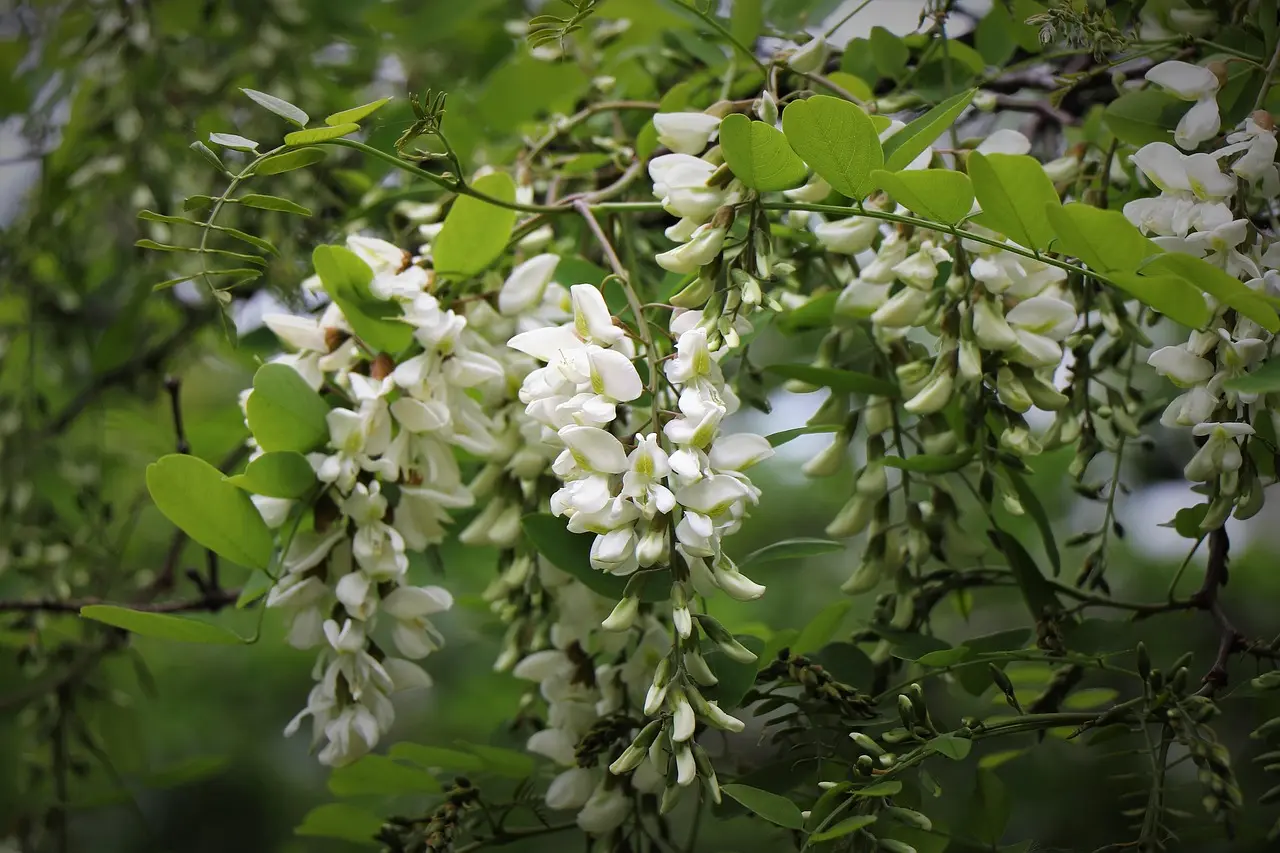
It is also known outside firewood use. Black locust is a rot-resistant native and naturalized tree that is commonly used for fence posts, so it has a reputation for durability in wet conditions. That density is part of what makes it such strong firewood.
When another hardwood may be easier
If you want fast seasoning, easy splitting, or quick kindling-like behavior, another hardwood may be a better fit. Black locust can be demanding to process. It is less forgiving than many softer hardwoods, especially when the grain is twisted or knotty.
| Scenario | Suitability | Recommended split size | Seasoning window | Target moisture | Loading strategy | Watch out |
|---|---|---|---|---|---|---|
| Wood stove overnight heat | Yes | Medium to large splits | 12 to 24 months; longer for big pieces | Below 20 percent | Build a coal bed, then load tightly for a slower burn | Too much wood in a small firebox can overfire the stove |
| Open fireplace | Yes, with caution | Medium splits | At least 12 months | Below 20 percent | Burn smaller loads and keep airflow controlled | Dense fuel can pop; use a screen |
| Shoulder-season fires | Sometimes | Smaller splits | Fully seasoned wood only | Below 20 percent | Use a lighter load for short heat runs | Large loads can make the room too hot and leave a heavy coal bed |
How much heat does black locust give?
Black locust is a high-output firewood. Commonly cited figures place it in the high 20-million-BTU range per cord, with sources differing slightly depending on the basis used.
BTU figures you will see
Published figures place black locust above red oak and near white oak in heat output. Another source estimates a similar value. Those numbers all point to the same result: black locust sits near the top tier of common firewood species.
Why density matters more than appearance
Heat output depends on density and dryness, not just how hard the wood looks. A dense hardwood holds more energy in a given volume, so a cord of black locust can deliver more heat than many lighter woods. That is why it burns hot and can hold a coal bed for a long time.
Common comparison point: oak is also a strong heating wood, but black locust is often cited slightly higher than red oak and just under white oak. Ash lights more easily and often splits more easily, but it usually does not match black locust’s coal life or total output when both are dry.
How long does black locust take to season?
Plan on about 12 months, and often 1 to 2 years for the best results. Shorter windows, but that usually assumes small splits, good airflow, and warm, dry storage. Larger rounds and thick splits dry more slowly, especially if they are stacked poorly.
Why seasoning claims vary
Seasoning advice ranges from about 6 to 8 months to about 2 to 3 years because drying depends on split size, bark remaining on the wood, stack exposure, and local weather. A small split stacked in a breezy, sunny spot can dry much faster than a large, dense piece tucked under a tarp.
A common first-timer mistake is judging by the outside of a split. The surface can feel dry while the center still holds enough water to make smoke and weaken heat output. Dense woods like black locust are especially prone to that problem.
Best moisture target before burning
Use black locust only when it is below 20 percent moisture. That is the practical target for clean burning and better stove performance. Freshly cut wood is far wetter than that, so it still needs seasoning before reliable burning.
How to verify with a moisture meter
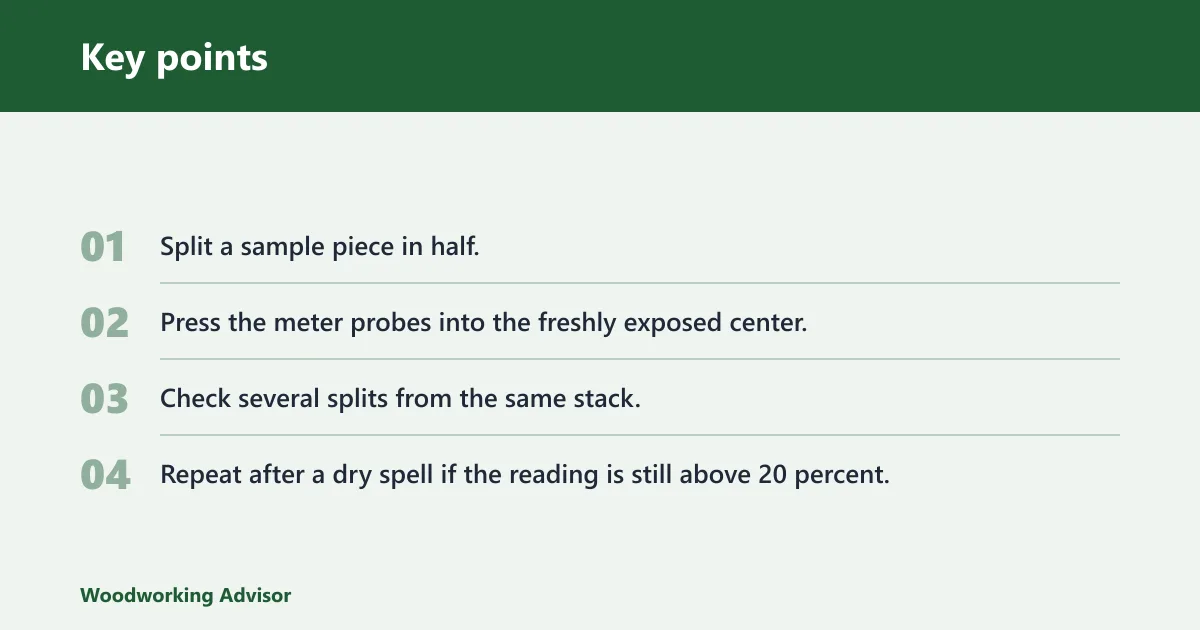
- Split a sample piece in half.
- Press the meter probes into the freshly exposed center.
- Check several splits from the same stack.
- Repeat after a dry spell if the reading is still above 20 percent.
Say your stack has dry-looking bark and cracked ends, but the meter reads 23 percent at the center. That wood is not ready for a clean overnight burn. Give it more time, especially if the pieces are large.
Is black locust hard to split?
Yes, black locust can be hard to split, especially when the grain is twisted, interlocked, or knotty. Straight pieces are more manageable, but many rounds resist clean splitting. In difficult cases, wedges, a maul, or a hydraulic splitter save time and reduce strain.
Twisted grain and knotty pieces
The hardest pieces are often the ones with branches, bends, or visible twist in the grain. Those sections can deflect a maul and leave ugly, uneven splits. If a round looks highly branched or curved, plan on extra effort before you cut it into firewood lengths.
When wedges or a splitter help
Wedges help when the first strike starts a crack but the split stalls. A splitter becomes more useful on large diameter rounds or when you have many pieces to process. Black locust can wear on tools, so a strong wedge set and a sharp axe matter more than they do with easy-splitting woods.
How splitting affects stacking and drying
Smaller splits dry faster because more surface area is exposed to air. That matters with black locust. If you are aiming for a one-year or longer seasoning window, split the wood to a size that still fits your firebox but does not slow drying any more than needed.
Burning black locust in stoves and fireplaces
Black locust burns well in both stoves and fireplaces once it is dry, but the setup changes how useful it is. In a wood stove, it can deliver long heat and a solid coal bed. In an open fireplace, airflow and spark control matter more because dense hardwood can pop.
Loading strategy for a wood stove
For overnight heat, start with a hot coal base and add medium to large splits. Load the firebox in a way that slows airflow without choking it completely. That gives black locust time to turn into steady heat instead of racing through a short, intense burn.
Suppose you load a small stove tightly with oversized black locust splits while the draft is strong. The stove can run hotter than intended, especially if the wood is exceptionally dry. That is useful in severe cold, but it can become too much for a small firebox or a mild night.
Airflow and screen use in a fireplace
Black locust can be burned in an open fireplace with a screen, but it is not the same as casual decorative burning. Keep the fire modest and leave room for airflow. A screen helps catch sparks, and controlled loading reduces the chance of popping embers.
Smoke, coals, and creosote risk
Dry black locust can burn with relatively low smoke, but smoke output depends heavily on stove setup, draft, and burn stage as well as moisture content. It also leaves excellent, long-lasting coals. Wet wood changes that quickly, raising smoke output and increasing creosote risk in the chimney or flue.
The practical rule is simple: dry wood burns cleaner. If black locust is below 20 percent moisture, it should behave like a clean-burning hardwood. If it is still wet inside, expect more smoke, a dirtier glass door, and less useful heat.
Black locust vs honey locust firewood
Black locust and honey locust are often compared because both are dense heating woods with similar output. Black locust is usually the tougher split and the more rot-resistant tree, while honey locust is often the easier buy if your goal is high heat with less processing trouble.
Heat output comparison
Honey locust is also good firewood and sits in a similar heat range. In practice, either species can serve as a strong heating wood when dry. The difference usually comes down to splitting behavior, access, and how much work you want to put into processing the pile.
Processing and splitting differences
Black locust tends to be the more difficult wood to split, especially when it is knotty or twisted. Backyard Boss lists black locust splitting difficulty as easy in one context, but that does not mean every log behaves that way. Real-world difficulty varies a lot by grain and piece shape.
Which one is the easier buy?
If you can get both at the same price and both are properly seasoned, black locust is the stronger choice for maximum coal life. If you are doing the processing yourself and want less frustration at the splitter, honey locust may be the easier route while still delivering strong heat.
Frequently asked questions
Is black locust the best firewood?
Black locust is one of the best firewood species for high heat and long coals, but not the best for every user. If you want the easiest splitting or the fastest seasoning, another hardwood may fit better. For stove heating, though, it belongs near the top.
Can you burn black locust wood in a fireplace?
Yes, but use a screen and keep the load moderate. Black locust burns hot enough that an open fireplace can throw sparks or make the room too warm if you pile it in. Fully seasoned wood and controlled airflow matter more here than in a stove.
How long does black locust firewood take to season?
At least 12 months is a practical minimum, and 1 to 2 years is better for larger splits. Small, well-stacked pieces may be ready sooner, but dense black locust dries more slowly than lighter woods. A moisture meter is the safest way to check readiness.
Does black locust make a lot of smoke?
Not when it is properly seasoned. Dry black locust can burn with relatively low smoke, but wet or partially dried wood will smoke more and can leave more creosote. If you see sustained gray smoke after startup, the wood is usually too wet, the draft is weak, or both.
What moisture content should black locust be before burning?
Below 20 percent is the target. That level supports cleaner combustion, better heat transfer, and less creosote buildup. Because the outside can look dry while the core stays wet, check the center of a freshly split piece with a moisture meter before burning.
Sponsored / affiliate links. As an Amazon Associate I earn from qualifying purchases. I may earn additional commission from eligible campaigns.