How Much Does It Cost to Recoat Wood Floors?
A clean-and-recoat for hardwood floors is often priced at roughly $1.50 to $3.50 per square foot. A full sand-and-refinish often runs $3 to $8 per square foot. Deep wear, bare wood, or widespread damage usually points to refinishing. Choosing the wrong scope can leave worn finish exposed, trap defects under a new coat, or waste money on a fix that fails fast. This guide compares recoating, refinishing, and repair so you can match the floor condition to the right price range.
Recoat vs. refinish cost
A screen and recoat is the lower-cost path when the floor still has sound finish and only the surface is worn. A full sand and refinish costs more because it removes the finish down to bare wood, takes more labor, creates more dust, and is the only real fix for deep damage, stains, or failed finish.
What screen and recoat means
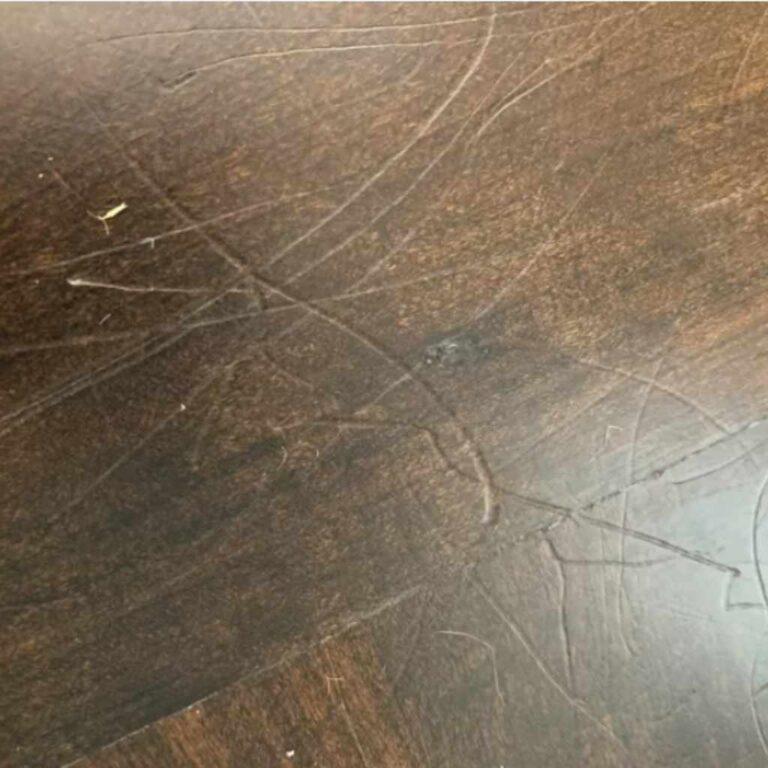
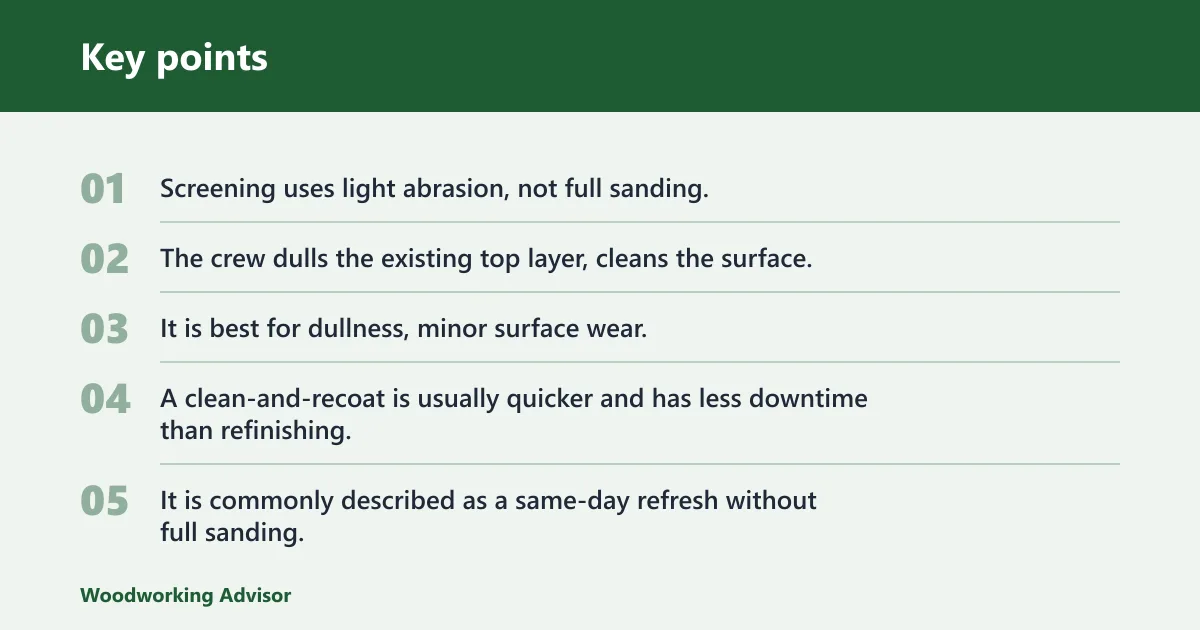
Screening uses light abrasion, not full sanding. The crew dulls the existing top layer, cleans the surface, and applies a new topcoat over the old finish. It is best for dullness, minor surface wear, and light scratches that have not broken through to bare wood.
A clean-and-recoat is usually quicker and has less downtime than refinishing. It is commonly described as a same-day refresh without full sanding, and many projects take about 6 hours, with walk-on use later that same day.
What full sand and refinish means
Full refinishing removes the existing finish down to bare wood, then rebuilds the surface with sanding, optional stain, and new topcoats. It takes multiple sanding passes and more labor. OneDayFinish says a full sand and refinish usually takes 3 to 5 days.
This path is the right one when the floor has deep gouges, water stains, bare patches, color change requests, or a failed finish that will not hold a new coat. It is also the better choice if old recoats have built up too much film for another coat to bond cleanly.
When the cheaper path is enough
The cheaper path works when the wear is on the surface, not in the wood itself. If the floor still has a continuous finish layer, no raw wood showing, and no damage that cuts below the topcoat, a recoat can extend the life of the floor without the cost of full sanding.
Say your 180-square-foot living room has a dull traffic path, a few shallow scratches, and no bare boards. That is the kind of job a recoat can usually handle. If the same room also has a dark water ring and exposed wood near the sofa, the quote should move toward refinishing or repair-first work.
📊 This Old House says the average professional refinishing cost is about $1,800. Source: Thisoldhouse.
How much does recoating cost?
Recoating is usually the less expensive option because it avoids full sanding and heavy repair labor. Cost still moves with square footage, floor layout, edge work, furniture moving, and the finish system. Smaller rooms tend to cost more per square foot than larger, open jobs.
Cost by square footage
| Project size | Typical recoat price | What usually drives it |
|---|---|---|
| Small room, under 100 sq ft | Higher per square foot | Setup time, tight edges, and minimum job charges |
| 100 to 300 sq ft | Mid-range per square foot | More efficient labor spread across the job |
| Over 300 sq ft | Lower per square foot | Better labor efficiency and fewer fixed costs per foot |
A clean-and-recoat often lands below the full refinishing figures because it skips the deepest sanding stage. For a quick pricing check, think of the final quote as a labor-heavy service, not a materials-heavy one.
Labor can account for up to 80% of the final project cost. That is why edging, hand sanding, stairs, furniture moving, and awkward room shapes change the quote so much. Materials matter, but labor usually decides whether the bid stays near the low end or climbs fast.
What material costs usually include
Material pricing typically covers the screening abrasives, cleaners, the topcoat itself, and any sealer or finish system required by the product. Floor coating choice also affects durability and sheen, and many systems use 2 coats. Low-VOC or commercial-grade systems can cost more, but they may shorten downtime or improve odor control.
How much does it cost to refinish wood floors per square foot?
Professionally refinishing hardwood floors typically costs $3 to $8 per square foot. Traditional refinishing also appears in that same range, and dustless refinishing usually costs more. A smaller room often has a higher price per square foot because labor, setup, and minimum charges matter more. (Thisoldhouse)
Small rooms versus whole-home pricing
This Old House says the average professional refinishing cost is about $1,800. It also notes a 100-square-foot room can cost $300 to $800 to refinish. Bob Vila gives a similar national average of $1,869 and reports hardwood floor refinishing ranges from $1,098 to $2,653.
Those numbers show the basic pattern: a compact job can look expensive on a per-foot basis, while a larger project often spreads labor over more square footage. That is why a hallway, bedroom, or single room can price differently from a whole main floor even when the floor condition looks similar.
Dustless refinishing versus standard sanding
The same source says dustless refinishing costs about $5 to $8 per square foot. Traditional refinishing costs about $3 to $8 per square foot. Dustless systems use a vacuum attachment at the sander, which helps control debris and can matter in allergy-sensitive homes, but it does not make the job dust-free.
Dust control can raise the quote because the equipment and setup are more specialized. If the home has fine furnishings, HVAC concerns, or occupants sensitive to dust, the extra cost may make sense. For a simple rental turnover, standard sanding may be the better price choice.
When stain or color change adds cost
The same source reports that sanding hardwood floors can cost roughly $0.50 to $3 per square foot, and staining hardwood floors can cost about $1 to $3 per square foot. If you want a color change, the job generally moves beyond a recoat and into full refinishing because the floor has to be taken back to bare wood first.
A common first-timer mistake is asking for a dark stain over a floor that only needs a recoat. That request usually changes the scope entirely. The existing finish has to come off, and the floor may need extra prep to take stain evenly.
Wood floor cost worksheet
Use this worksheet to sort the job before you request quotes. It separates recoat, refinish, and repair-first work, then shows the main add-ons that often get missed in early pricing. The goal is to match floor condition to scope before labor starts climbing.
Condition checklist: recoat, refinish, or repair first
| Floor condition | Likely path | Why |
|---|---|---|
| Finish is dull, lightly scratched, and intact | Recoat | Surface wear only; new topcoat can bond after screening |
| Small bare spots or worn-through edges | Repair first, then refinish or limited recoat | Raw wood and patching need attention before coating |
| Deep gouges, water stains, or wide discoloration | Refinish | Damage reaches below the finish layer |
| Old finish fails, peels, or has too many stacked coats | Refinish | Another coat may not bond cleanly |
| Loose boards, rot, or structural damage | Repair first | Wood repair must happen before any coating work |
Square footage bands and sample totals
| Square footage | Recoat estimate | Refinish estimate |
|---|---|---|
| 100 sq ft | About $150 to $350 | About $300 to $800 |
| 250 sq ft | About $375 to $875 | About $750 to $2,000 |
| 500 sq ft | About $750 to $1,750 | About $1,500 to $4,000 |
These totals are simple range estimates built from the per-square-foot pricing above. They are useful for budgeting, but the quote can move quickly if the room has stairs, tight trim, heavy furniture, or floors that need repair before coating.
Hidden add-ons to price separately
| Add-on | Why it costs more | Quote impact |
|---|---|---|
| Edge work | Handwork around walls, vents, and trim | Raises labor time |
| Stairs | Small surfaces and more hand sanding | Often priced separately |
| Furniture moving | Setup and protection add labor | Can shift a job out of the base rate |
| Finish build-up removal | Extra prep if old coats are heavy | May push the job from recoat to refinish |
What floor conditions raise the price?
Anything that adds handwork, prep time, or repair labor raises the price. Edge sanding, stairs, furniture moving, and tight access often matter more than the coating itself. If the floor is already uneven or damaged, the quote can move from a simple recoat to a labor-heavy refinish or repair-first job.
Edge work and hand sanding
Edge tools and hand sanding are needed where machines cannot fit. That includes walls, door jambs, corners, vents, and places where the sander cannot reach cleanly. These areas take more time per square foot than open floor space.
Stairs and tight access
Stairs are usually more expensive because each tread, riser, and nosing is a small surface that needs careful work. Tight access also slows the crew. Narrow hallways, furniture that cannot be moved easily, and awkward room layouts all raise labor time.
Furniture moving and floor repairs
Furniture moving can add a meaningful charge because the crew has to clear, protect, and reset the space. Floor repairs add more, especially if boards are loose, split, or stained beyond a simple sand. If the wood is damaged, the repair work should be priced before finish work starts.
When is recoating not enough?
Recoating is not enough when the finish has failed, the wood is exposed, or the damage has gone beyond the top layer. Deep scratches, water stains, pet damage, and multiple old recoats are common signs that a new topcoat will not solve the problem. At that point, sanding to bare wood is the cleaner fix.
Deep scratches and bare wood
If scratches have cut through the finish into bare wood, a screen and recoat will only cover the symptom. Bare patches also need more than a new topcoat. Those areas often telegraph through the fresh finish unless the floor is sanded and leveled first.
Water stains, pet damage, and failed finish
Water stains usually require sanding because the mark has already moved below the surface film. Pet damage can be worse if moisture or urine has darkened the wood. Failed finish, peeling finish, or soft tacky areas also point to full refinishing rather than another coat.
Too many old coat layers
Old recoats can build up over time. Too many layers can cause adhesion problems, dull patchiness, or visible ridges. If the floor already has several coats and the surface feels plasticky or uneven, a full sand may be the better long-term value.
What materials and floor types change the quote?
Finish type, wood species, and floor construction all affect price. Harder species can be slower to sand, while more delicate floors may need gentler work. Parquet, engineered hardwood, and bamboo can also change the approach and the cost because they do not all tolerate sanding the same way.
Topcoat type and coat count
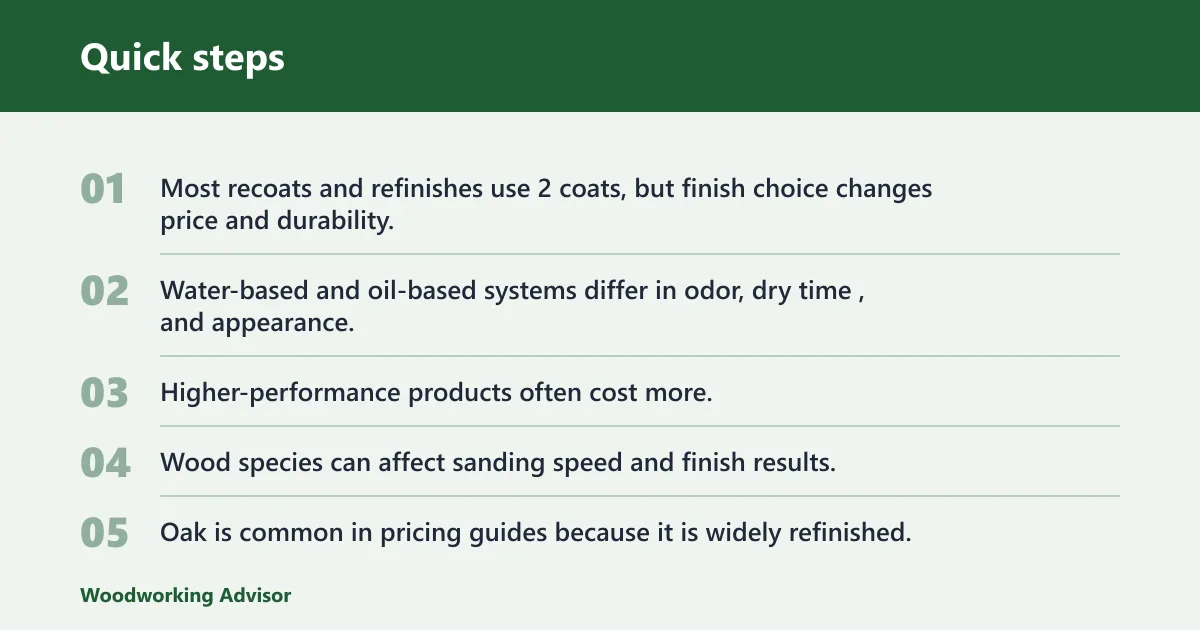
Most recoats and refinishes use 2 coats, but finish choice changes price and durability. Water-based and oil-based systems differ in odor, dry time, and appearance. Higher-performance products often cost more, yet they may dry faster or hold up better to wear.
Oak, maple, cherry, pine, and mahogany
Wood species can affect sanding speed and finish results. Oak is common in pricing guides because it is widely refinished. Maple and cherry can be more demanding to sand cleanly. Pine is softer and can dent more easily. Mahogany may need careful handling because of its grain and finish behavior.
Parquet, engineered hardwood, and bamboo
Parquet can take more time because of its pattern and many seams. Engineered hardwood may have a thin wear layer that limits how much sanding is safe. Bamboo can vary in hardness and construction, so the contractor has to check whether a full refinish is practical before quoting the job.
Older floors can add one more cost issue: lead paint or old varnish risk. If the home is older, testing before sanding matters because disturbing unknown coatings can create health and cleanup problems. That step is small compared with a bad sanding job.
Can I recoat hardwood floors myself? Some homeowners can handle light screening and topcoating, but the risk is adhesion failure, contamination, and incompatibility with the existing finish. If the floor has unknown coatings, failed layers, or old wax, a pro quote is safer because prep errors can ruin the new coat.
Frequently asked questions
How much does it cost to recoat hardwood floors?
A clean-and-recoat usually costs about $1.50 to $3.50 per square foot. The final price depends on room size, edge work, furniture moving, and the finish system. It is best for dull finish, light scratches, and surface wear, not for bare wood or deep stains.
What is the difference between a recoat and a full refinish?
A recoat uses screening and a new topcoat over the existing finish. A full refinish sands the floor down to bare wood before rebuilding it. Recoats are faster and cheaper, but refinishing is needed when the floor has deep damage, bare patches, water stains, or failed finish.
What does dustless refinishing cost compared with traditional refinishing?
The same source says dustless refinishing costs about $5 to $8 per square foot, while traditional refinishing costs about $3 to $8 per square foot. The extra cost reflects the vacuum-equipped sanding setup. It can be worth it in allergy-sensitive homes or spaces where dust control matters.
How long does a clean and recoat take?
The same source describes a clean and recoat as a same-day refresh without full sanding and says most projects take about 6 hours. It also says you can walk on the floor the same evening. The exact timing still depends on room size, layout, and the coating product.
When is recoating not enough and a full sand needed?
Recoating is not enough when the floor has bare wood, deep gouges, water stains, pet damage, peeling finish, or too many old layers. In those cases, a new coat will not fix the problem underneath. Full sanding is the better path because it removes the failed surface first.
Sponsored / affiliate links. As an Amazon Associate I earn from qualifying purchases. I may earn additional commission from eligible campaigns.