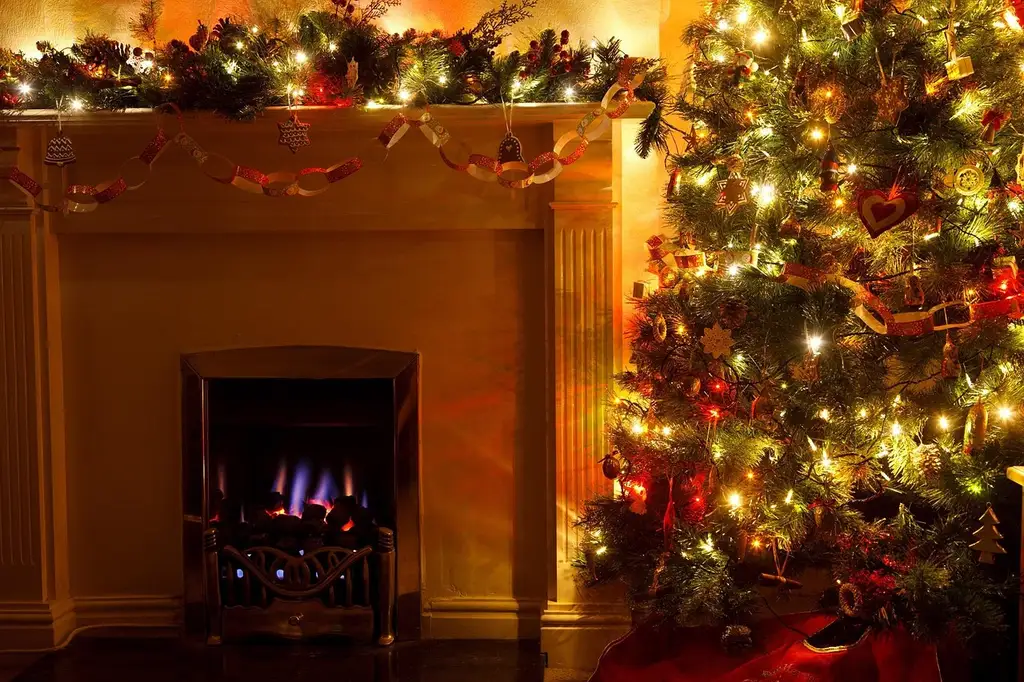
Can You Burn a Christmas Tree in a Fireplace?
No, do not burn a whole Christmas tree in a fireplace. Only a fully stripped trunk that has dried to seasoned-firewood moisture is worth considering later. Burning a fresh tree can drive creosote buildup, flare-ups, and chimney fires. This guide explains what is and is not acceptable in a fireplace, wood stove, or fire pit, and gives safer disposal options.
Can you burn a Christmas tree in a fireplace?
No. A whole Christmas tree is not safe indoor fuel, even if it seems dry on the outside. Needles dry quickly and ignite fast, resin and sap can burn hard, and sparks can escape the firebox. A fireplace screen can help contain ordinary sparks, but it does not make unsuitable fuel safe.
A firebox and chimney can also take a hard hit from a sudden burst of heat. Thermal shock can crack clay flue tiles, and poor combustion adds creosote, a combustible chimney deposit linked to smoke and chimney fires. Timber Blogger says a discarded Christmas tree should not be burned in a fireplace or wood stove, and the EPA advises against it.
Why a fireplace screen is not enough
A screen helps reduce ember escape from a normal fire, but it cannot fix the fuel problem. Christmas tree needles can catch fast, drop burning bits, and send sparks beyond the hearth area. The screen does not stop the high flames, fast ignition, or wild flare-ups that come from a whole tree.
What happens to the firebox and chimney
Christmas trees commonly come from firs, pines, and spruces, which carry resin and sap. Make it Mowery says Christmas trees can fully ignite in less than 10 seconds. That speed can overwhelm the firebox, send heat up the flue too fast, and leave sticky soot and creosote behind.
Why Christmas trees burn so fast
Christmas tree fuel behaves very differently from seasoned firewood. Dry needles, thin branches, and resin-rich wood let fire spread quickly through the whole tree. SINTEF says the needles contain terpenes with very high energy content, which helps explain the sharp, intense burn pattern.
Dry needles and small twigs
Needles dry quickly after a tree is cut, especially once it has been indoors for days or weeks. They ignite with little warning and can throw sparks. Small twigs add more ignition points, so the fire can climb through the tree fast instead of burning in a controlled way.
Sap and resin in pine, fir, and spruce
Resin and sap make the burn less predictable. They can make flames jump and flare, rather than settle into a steady burn. That behavior is one reason a fresh tree is a poor stand-in for firewood, even if it has been trimmed or partly dried.
Smoke, flare-ups, and creosote formation
Creosote forms when wood burns poorly and smoke condenses in the chimney. Wet wood makes that problem worse, and Christmas trees are not seasoned firewood. Properly seasoned firewood is generally reported to be under about 25 percent moisture, and wood fire moisture is commonly said to fall in roughly the 15 to 25 percent range. A fresh Christmas tree is usually far above that range.
Say your 7-foot fir has sat in the living room for about two weeks and the outer needles feel crisp. The outside still does not tell you whether the core is dry enough for firewood. If the trunk is damp inside, it should be recycled, composted, or left to dry for later instead of being burned now.
Christmas tree decision checklist
Use this checklist before you decide anything about burning. The right answer for a whole tree is almost always no. A stripped trunk may be a future option only if it passes every gate below and is later seasoned like ordinary firewood.
| Check | Yes or no | What it means | Final action |
|---|---|---|---|
| Whole tree or stripped trunk? | No whole tree | Needles, twigs, and branch structure make the tree burn too fast. | Recycle or compost |
| Decorations removed? | Yes only if fully bare | Ornaments, tinsel, lights, wire, glitter, paint, flocking, and preservatives make the tree unsafe to burn. | Recycle, compost, or store-and-season |
| Untreated wood only? | Yes only if bare wood is untreated | Do not burn coated, painted, flocked, or chemically treated wood indoors. | Recycle or compost |
| Moisture and seasoning check before future use? | Yes only if the trunk can dry to seasoned-firewood levels | Seasoned wood is typically under 25 percent moisture; a usable trunk may need 6 to 12 months of drying. | Store-and-season |
- Confirm whether the material is a whole tree or only a stripped trunk.
- Remove every ornament, light string, hook, wire tie, tinsel strand, and plastic clip.
- Reject any tree with flocking, glitter, paint, preservatives, or unknown coatings.
- For a bare trunk, split it so the core can dry before any future use.
- Wait for seasoning before considering it as firewood, then recheck moisture.
Can you burn a Christmas tree in a fire pit?
A whole Christmas tree is not generally considered a safe substitute for proper firewood in a fire pit. An outdoor fire pit does not remove the rapid-burning hazard, and it does not stop sparks or embers from escaping. Local rules may also restrict open burning, especially for treated yard waste or material that creates heavy smoke. The same fuel risks still apply.
Why the spark and ember risk remains
A fire pit may seem less enclosed than a fireplace, but that does not make a Christmas tree safer. Dry needles can pop loose, resin can create flare-ups, and embers can carry on the wind. The hazard shifts location; it does not disappear.
Local rules and burn restrictions
Before any outdoor burning, check local rules. Some areas limit open fires, seasonal yard-waste burning, or the burning of Christmas trees entirely. If the tree is decorated, flocked, painted, or wired, it should not go into a fire pit at all.
Can you burn the stripped trunk later?
Maybe, but only after it is stripped, split, and seasoned. The same source notes that a trunk may eventually be usable if stripped, split, and seasoned. That is not the same as burning the whole tree, and it is not a same-day solution.
When the trunk is still too wet
If the core still feels damp, the trunk is not ready. Christmas trees are not seasoned firewood, and a damp core will burn poorly, smoke heavily, and raise creosote risk. Even a trunk that has looked dry indoors for weeks can still hold moisture inside the center.
What seasoned firewood looks like
Seasoned firewood is dry, split, and properly stored. Advance Chimney says a wood fire should have moisture content of 15 to 25 percent, and seasoning can take 6 to 12 months. That is the standard to aim for if you are considering the trunk for later use, not the condition of a fresh holiday tree.
When the trunk should be set aside instead
If the trunk is coated, painted, wrapped in wire, or still damp, set it aside for disposal or storage. Do not rush it into a stove or fireplace. A future firewood pile can wait; a risky burn cannot.
What should you do with the tree instead?
Use disposal routes designed for yard waste. Recycling programs, mulching, composting, local collection, and drop-off sites are the safer path for a whole tree. These options avoid the spark, smoke, and chimney risks that come with burning.
Recycling programs and curbside pickup
Many towns offer curbside pickup or seasonal collection. Others run recycling programs that chip the tree into mulch or process it as yard waste. These are usually the simplest options for a whole tree with no decorations attached.
Mulching or composting
If local rules allow it, a tree can be chipped for mulch or cut into pieces for composting. Remove all decorations first. Glitter, wire, and plastic do not belong in mulch or compost, and flocking or paint can contaminate both.
Drop-off and local collection options
Some communities offer drop-off sites, transfer stations, or landfill yard-waste bins. Check what they accept before you haul the tree. A clear disposal route is better than trying to make fresh branches act like firewood.
A common first-timer mistake is leaving a few strands of tinsel on the tree because they seem minor. They are not minor in a firebox. Wire, glitter, and flocking can contaminate the burn and add smoke, residue, or stray metal in the ash.
Frequently asked questions
Can you burn Christmas tree wood in a fire pit?
Only a stripped, untreated trunk that has been properly seasoned may be considered later, and even then you still need to follow local fire rules. A whole tree, branches, or anything coated with flocking, paint, glitter, or preservatives should not go into the pit.
Can you burn Christmas tree branches in a fireplace?
No. Branches from a Christmas tree still carry dry needles, twigs, sap, and resin. That combination burns fast and can create sparks and flare-ups. It also increases smoke and creosote buildup, which raises chimney fire risk in the fireplace and flue.
Why is burning a Christmas tree dangerous?
Dry needles ignite very quickly, resin burns hot, and the fire can spread through the whole tree in seconds. That fast burn can send sparks out of the hearth and leave heavy smoke in the chimney. It also raises the chance of creosote buildup and chimney damage.
Can a Christmas tree cause creosote buildup?
Yes. Creosote is a combustible chimney deposit that forms when wood burns poorly and smoke condenses in the flue. Christmas trees are not seasoned firewood, so they tend to smoke more and burn less cleanly. That makes creosote buildup more likely, not less.
Can you burn just the trunk of a Christmas tree later?
Possibly, but only after the trunk is stripped, split, untreated, and fully seasoned. Properly seasoned wood is typically under 25 percent moisture, and seasoning can take 6 to 12 months. If the trunk stays damp, it should be recycled or composted instead.
What should you do with a Christmas tree instead of burning it?
Use recycling, mulching, composting, curbside pickup, or a local drop-off site. Those options handle the whole tree without creating sparks, flare-ups, or chimney risk. Remove all decorations first, and follow local yard-waste rules for collection or disposal.
Is it safe to burn a Christmas tree in a wood stove?
No. The article says not to burn a whole Christmas tree in a wood-burning stove. That guidance matches the fireplace warning: dry needles, resin, fast ignition, smoke, and creosote all make the tree a poor and risky choice for indoor burning.
Can you burn dried Christmas tree needles as kindling?
Do not treat them as normal kindling. Even dried needles can ignite very fast and produce sparks. If a tree has been decorated, flocked, painted, or treated, the needles should be discarded with the rest of the tree rather than used to start a fire.
Sponsored / affiliate links. As an Amazon Associate I earn from qualifying purchases. I may earn additional commission from eligible campaigns.