Can You Steam Clean Hardwood Floors? (What Voids the Warranty)
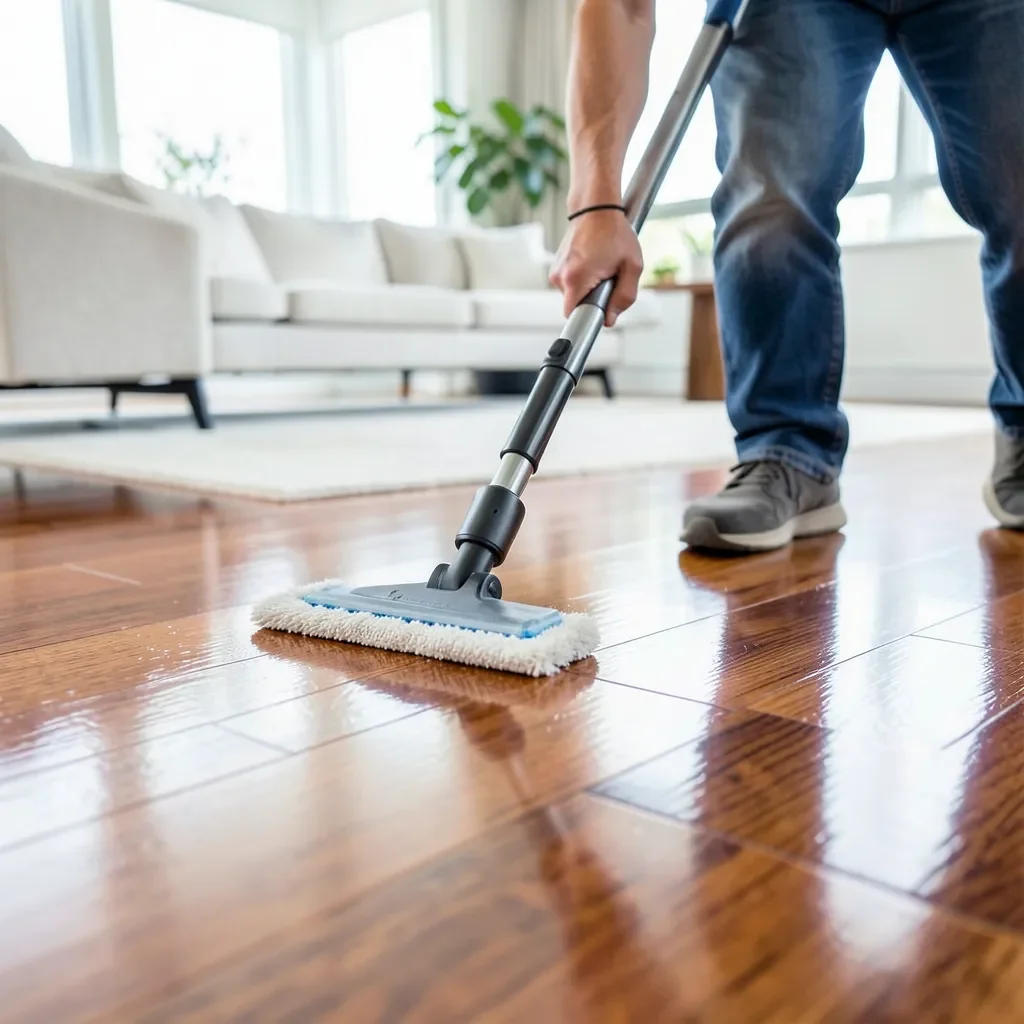
Steam can damage sealed hardwood floors — vapor from a steam mop often runs 200°F to 250°F, forcing moisture into the wood grain faster than a damp mop ever would. Bruce, Shaw, Mohawk, and Mannington all exclude steam-cleaning damage from their warranty coverage, even on floors with an intact polyurethane finish. This guide covers which finishes can tolerate a low-moisture dry steam mop, the technique that limits risk, and safer alternatives for wax, oil, or engineered floors.
The Truth About Steam Cleaning Hardwood Floors
Best No-Steam Hardwood Mop Pick
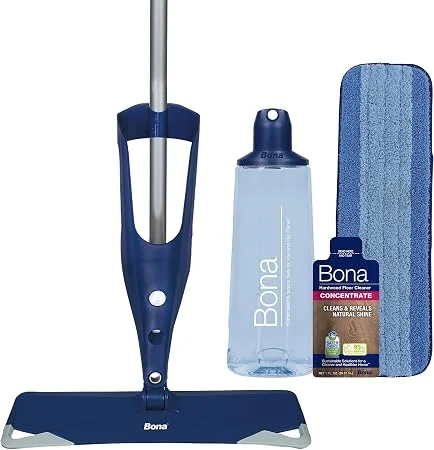 |
Bona Hardwood Floor Premium Spray Mop – $41.97 Delivers the deep-clean result homeowners want from a steam mop, without the heat and standing moisture that void manufacturer warranties on sealed hardwood. The dual-zone spray head and reusable microfiber pad match the low-moisture technique this guide recommends.
|
Hardwood floors are solid wood — typically oak, maple, or cherry — protected by a surface finish that acts as the actual moisture barrier. Polyurethane is the most common modern finish and offers the best protection; wax and oil finishes offer less and react more visibly to heat. The finish on your floor, not the wood species, is what decides whether steam is even worth considering.
Does Steam Cleaning Void Your Hardwood Floor Warranty?
Yes, in most cases. Bruce, Shaw, Mohawk, and Mannington — four of the largest hardwood flooring manufacturers in the US — all explicitly exclude steam-cleaning damage from their warranty coverage, even on floors with an intact, undamaged polyurethane finish. If a floor warps, clouds, or peels after steam mopping, the manufacturer has no obligation to cover repair or replacement. Before using any steam device on a floor still under warranty, check that specific manufacturer’s care documentation — exclusion language varies by product line, and some engineered products are stricter than solid hardwood.
Safe Steam Cleaning Methods for Hardwood
Using steam safely on hardwood isn’t about avoiding it entirely — it’s about controlling moisture output and contact time. That means choosing the right equipment and never letting the mop head linger in one spot.
Choosing the Right Equipment
Look for a steam cleaner with adjustable steam levels and a dry-steam setting — dry steam carries less water content and is less likely to saturate the wood. A microfiber pad attachment matters just as much as the machine itself, since it absorbs residual moisture as you go. Skip any steam cleaner that offers only one high-output wet setting; that’s the type most likely to cause damage on sealed hardwood.
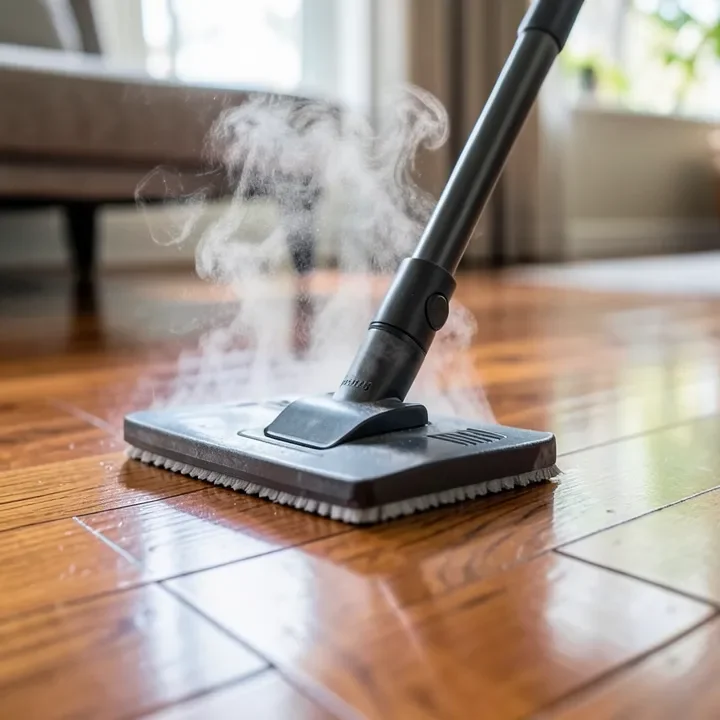
📊 Steam mops typically produce vapor between 200°F and 250°F — hot enough to force moisture past an intact finish and into the wood grain within seconds of contact. — Source: D&G Flooring, 2026
Preparing the Floor
- Clear the area: remove furniture and rugs before you start.
- Vacuum or dry-dust thoroughly: loose grit under a hot mop head can scratch the finish.
- Inspect for gaps or damage: steam finds its way into any broken seam or worn spot in the finish — skip steaming if you see either.
- Confirm the finish is sealed: drop a little water on an inconspicuous spot. If it beads, the finish is intact. If it soaks in, treat the floor as unsealed and skip steam entirely.
The Steaming Process, Step by Step
- Fill the steam cleaner: Use distilled water if your manufacturer recommends it — this prevents mineral buildup in the machine and on the floor.
- Select the lowest steam setting: For hardwood, always start on the lowest moisture output, or use the dedicated hard floor or wood floor setting if the machine has one.
- Attach a clean microfiber pad: A clean, dry microfiber pad picks up loosened dirt and absorbs residual moisture as you go.
- Steam a small test area first: Start in a corner or inconspicuous spot, moving the mop in a slow, steady back-and-forth motion without letting it sit in one place.
- Work in three- to four-foot sections: Cleaning small sections at a time keeps any single area from becoming oversaturated before you can wipe it dry.
- Swap pads as they get damp: Switch to a fresh microfiber pad once one becomes visibly wet or dirty, so you’re not spreading moisture and grime around.
- Let each section dry completely: Hardwood should dry within a few minutes. Don’t walk on it or replace furniture until it’s fully dry to the touch.
This careful, methodical approach is what keeps the steam lifting dirt instead of soaking into the wood — continuous motion and dry microfiber pads do most of the protective work.
Alternatives and Precautions for Hardwood Cleaning
When Not to Steam Clean
- Unfinished or unsealed floors — steam is absorbed directly into bare wood, causing swelling and staining.
- Waxed or oiled floors — heat melts wax into a sticky film and can dull or discolor oil finishes.
- Engineered hardwood with a thin veneer — steam can penetrate a thin wear layer and delaminate the core beneath it.
- Floors with visible gaps, loose boards, or finish damage — steam seeps into any weak point and can cause rot or mold underneath.
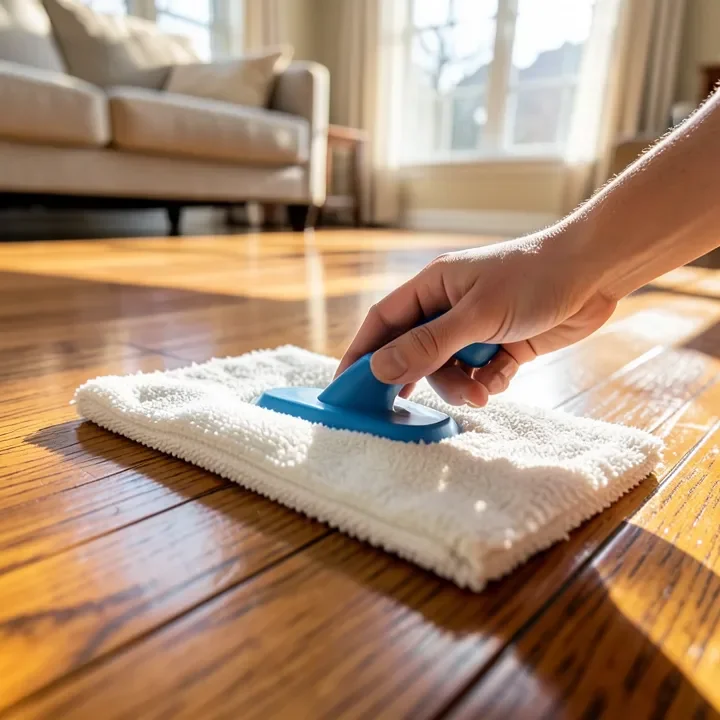
Safer Alternatives
- Regular dry dusting and vacuuming with a soft-brush attachment removes the grit that scratches finishes over time.
- Damp mopping with a wood-specific, pH-balanced cleaner — wring the mop nearly dry and apply cleaner to the pad, not the floor.
- Spot cleaning spills immediately with a barely damp cloth, rather than letting them sit.
Identifying Your Floor’s Finish
Polyurethane finishes feel smooth and slightly plastic (most floors need at least two coats) and are the most tolerant of the low-moisture steam technique above. Wax finishes feel softer and melt under heat — never steam these. Oil finishes penetrate the wood rather than sitting on top and can still be dulled by high heat. When in doubt, check installation records or contact the flooring manufacturer directly rather than guessing.
For the full year-round maintenance routine — not just the steam-cleaning question — see our guide on how to care for hardwood floors and make them last longer. If your floors are engineered rather than solid wood, the veneer thickness changes the risk calculus — our engineered hardwood repair guide covers how to check yours.
Frequently Asked Questions
Can I steam clean my laminate floors?
Laminate floors should generally not be steam cleaned. While they have a durable wear layer, excessive moisture from steam can seep into the seams and damage the core material, causing swelling and warping. It’s best to use a slightly damp mop with a cleaner made for laminate floors.
How often can I steam clean my hardwood floors?
If your floors are properly sealed with polyurethane and you use a low-moisture steam cleaner correctly, once or twice a year for a deep clean is reasonable. Frequent steam cleaning is not recommended — regular dry dusting and occasional damp mopping are usually enough for maintenance.
What if my steam cleaner only has one setting?
If your steam cleaner has no adjustable settings and only produces a single, wetter steam output, it’s too risky for hardwood floors. Traditional damp mopping or a spray mop system is the safer choice instead.
Can steam cleaning remove scratches from hardwood floors?
No. Steam is a cleaning agent, not a repair tool. Scratches are physical damage to the finish or the wood itself and require refinishing or filling, not steam.
Does steam cleaning void my hardwood floor’s warranty?
Usually, yes. Most major manufacturers treat steam-related warping or clouding as excluded moisture damage, not a covered defect, no matter how careful the application was. The section above names four brands that spell this out explicitly — pull up your own flooring’s warranty PDF and search for the word “steam” before you risk it.
Should I use a cleaning solution in my steam cleaner?
Most steam cleaners are designed to run on water only — the heat itself is what loosens dirt. Adding a cleaning solution can damage the heating element or leave residue on the floor. Check your steam cleaner’s manual before adding anything besides water.
Final Thoughts
Whether you can steam clean hardwood floors comes down to two things: the finish, and the manufacturer’s warranty terms. A floor with an intact polyurethane finish can tolerate a low-moisture, dry-steam mop used quickly and carefully — but Bruce, Shaw, Mohawk, and Mannington all still exclude steam damage from warranty coverage, so you’re taking on that risk yourself. Waxed, oiled, or damaged floors should skip steam entirely and stick to dry dusting and damp mopping with a wood-specific cleaner. When in doubt, a spray-mop system does the deep-clean job without the heat or the warranty exposure.
Sponsored / affiliate links. As an Amazon Associate I earn from qualifying purchases. I may earn additional commission from eligible campaigns.