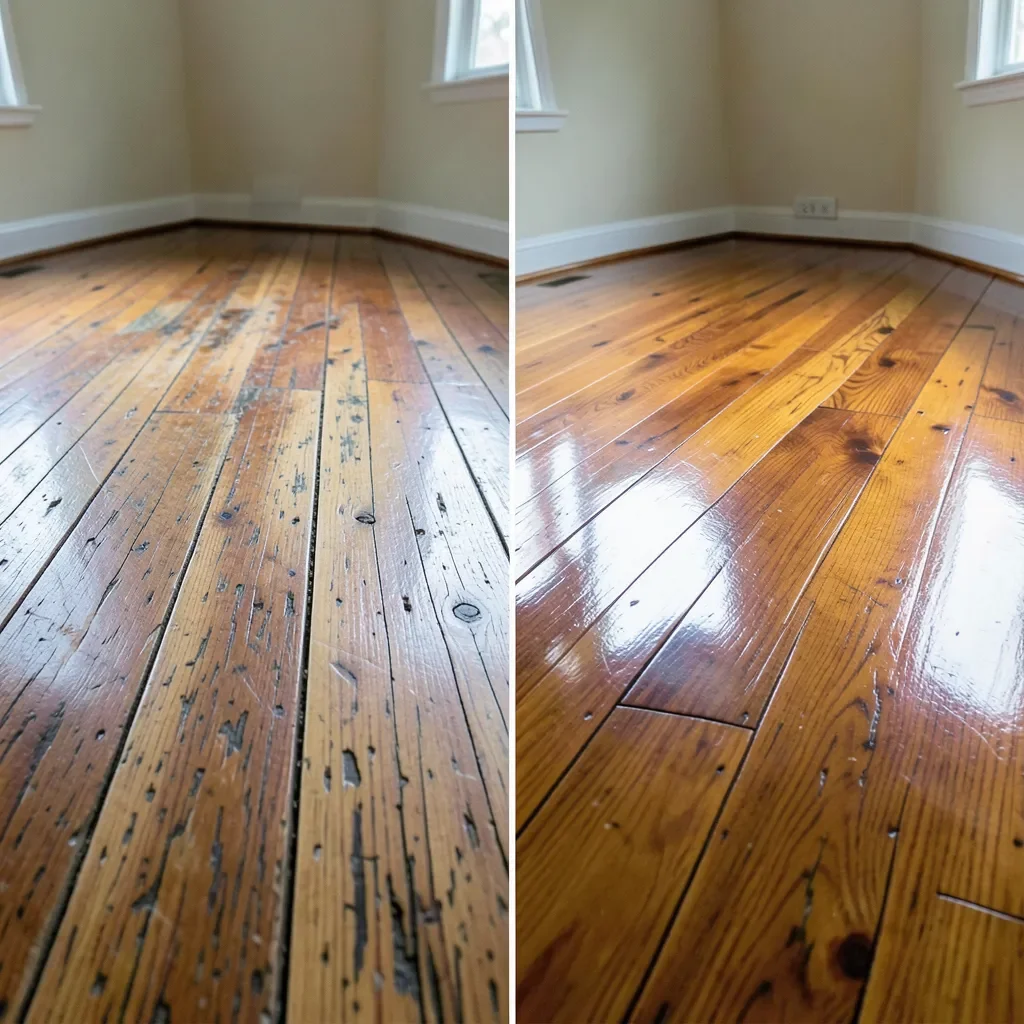
Is It Cheaper to Refinish or Replace Hardwood Floors?
Refinishing hardwood floors costs $3–$8 per square foot, while replacing them runs $6–$12 per square foot in materials alone (more with installation) — refinishing is cheaper in almost every case where the existing wood has enough thickness left to sand. The exception is a floor that’s already been refinished down to a thin veneer or has structural damage, where sanding again isn’t an option. This guide breaks down the real cost gap, when replacement is actually the right call, and how many times a floor can be refinished before it’s done.
The Real Cost Gap: Refinishing vs. Replacing
DIY Refinish Pick
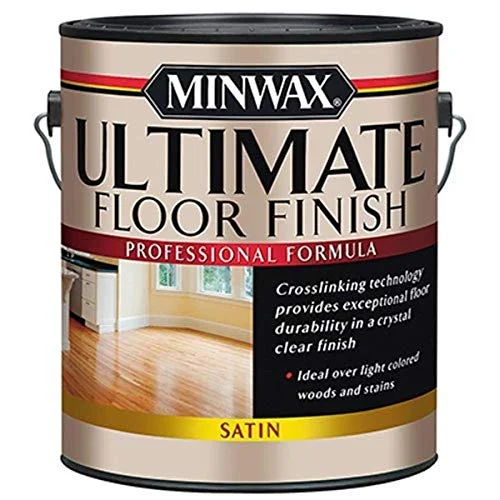 |
Minwax Ultimate Floor Finish (Satin, 1 Gallon) – $107.19 This is the finish coat step in the $3–$8/sq ft refinishing cost breakdown below — one gallon covers roughly 400–500 sq ft per coat, which is most of the material cost if you’re sanding it yourself.
|
Refinishing means sanding off the existing worn or damaged finish and applying new stain and topcoat — the wood itself stays. That keeps costs down to sandpaper, stain, finish, and labor (or a rental sander if you DIY it). Replacing means tearing out the old floor entirely and installing new material, which adds demolition, disposal, new flooring cost, and full installation labor on top.
On a 1,000 sq ft floor, that gap is roughly $4,500 to refinish versus $11,000–$25,000 to replace with new hardwood, installed — a difference that usually settles the decision on its own unless the floor is too damaged to save.
Refinish vs. Replace: Side-by-Side Costs
| Factor | Refinishing | Replacing |
|---|---|---|
| Cost per sq ft | $3–$8 (avg. ~$4.50) | $6–$12 material, $11–$25+ installed |
| 1,000 sq ft total | ~$4,500 | $11,000–$25,000+ |
| Typical timeline | 2–4 days | 1–3 weeks |
| Waste generated | Sanding dust only | Full old floor to landfill/recycling |
| Best for | Scratches, dullness, minor stains, color change | Warping, water damage, thin veneer, species/width change |
When Refinishing Actually Won’t Work
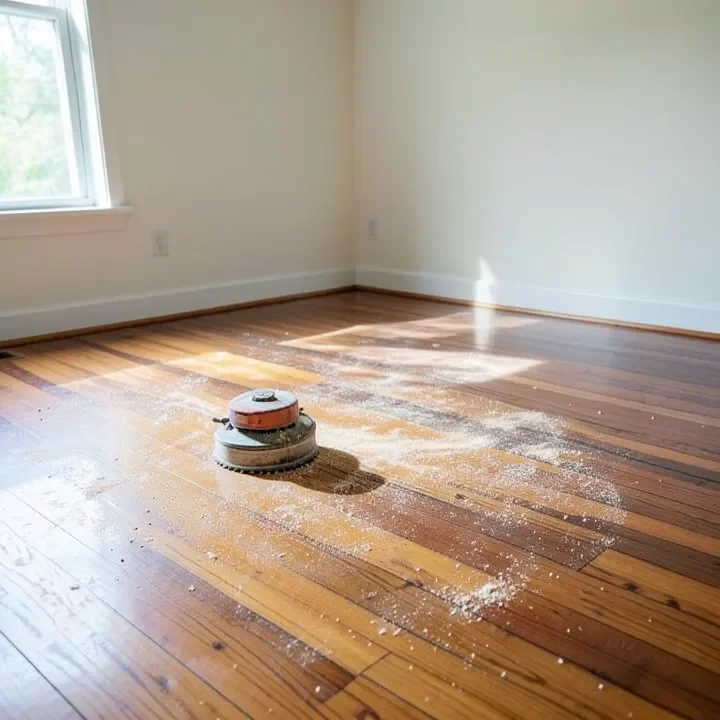
Refinishing only restores the surface — it can’t fix what’s happening underneath. Replace instead of refinish when boards are cupped, crowned, or warped from water exposure, when there are visible gaps, cracks, or missing sections, or when the floor smells musty (a sign of rot or mold under the surface). On engineered hardwood specifically, check the wood veneer thickness first: anything under 2mm likely can’t survive another sanding pass without exposing the plywood core underneath. Our guide on how many times you can refinish wood floors covers exactly how to check remaining wear-layer thickness before you commit.
📊 Solid hardwood can typically be sanded and refinished 4–6 times over its life, since each pass removes only about 1/32” to 1/16” of wood — Source: NerdWallet, Cost to Refinish Hardwood Floors (2026)
DIY vs. Hiring a Pro
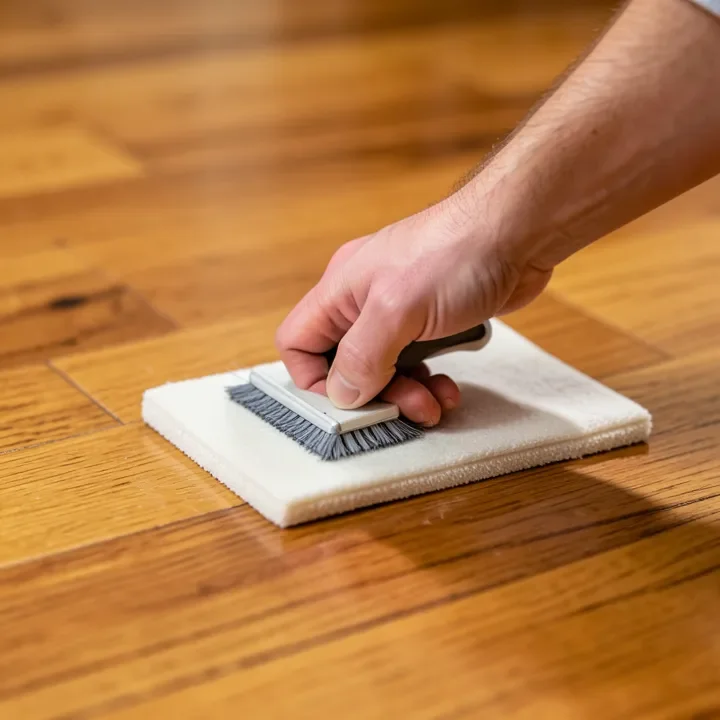
DIY refinishing saves the labor portion of that $3–$8/sq ft range, but you’re renting a drum or orbital sander, buying stain and finish, and doing the sanding yourself — uneven sanding is the most common DIY mistake and it shows immediately once stain goes on. If you’re comfortable with the tool rental and the dust, our step-by-step sanding and refinishing guide walks through the full process; if it sounds like more than you want to take on, this honest breakdown of the difficulty will help you decide before you rent anything.
Frequently Asked Questions
Is it always cheaper to refinish than replace hardwood floors?
Almost always, if the existing floor is solid or engineered hardwood with enough wood left to sand. Refinishing runs $3–$8 per sq ft; replacing hardwood runs $6–$12 per sq ft for materials plus installation, or $11–$25+ per sq ft installed. The exception is when the floor is too thin to sand again or has structural damage — then replacement is the only real option.
How much does it cost to refinish 1,000 sq ft of hardwood floor?
At the national average of about $4.50 per sq ft, refinishing 1,000 sq ft runs roughly $4,500. The same 1,000 sq ft replaced with new hardwood, installed, typically runs $11,000–$25,000–a difference of $6,500 or more.
When should I replace instead of refinish?
Replace when boards are cupped, warped, or spongy from water damage, when there are gaps or missing sections, when the veneer on engineered hardwood is too thin to sand again, or when you want to change the wood species or plank width entirely. Refinishing only restores the surface — it can’t fix structural problems underneath.
How many times can a hardwood floor be refinished?
Solid hardwood can typically be sanded and refinished 4–6 times over its life, since each sanding removes only about 1/32 to 1/16 of an inch. Engineered hardwood is limited by its veneer thickness, usually good for 1–3 refinishes depending on how thick that top wood layer is.
If the wood underneath is sound, refinishing wins on cost almost every time — the real question isn’t which is cheaper, it’s whether your floor still has enough wood left to sand.
Sponsored / affiliate links. As an Amazon Associate I earn from qualifying purchases. I may earn additional commission from eligible campaigns.