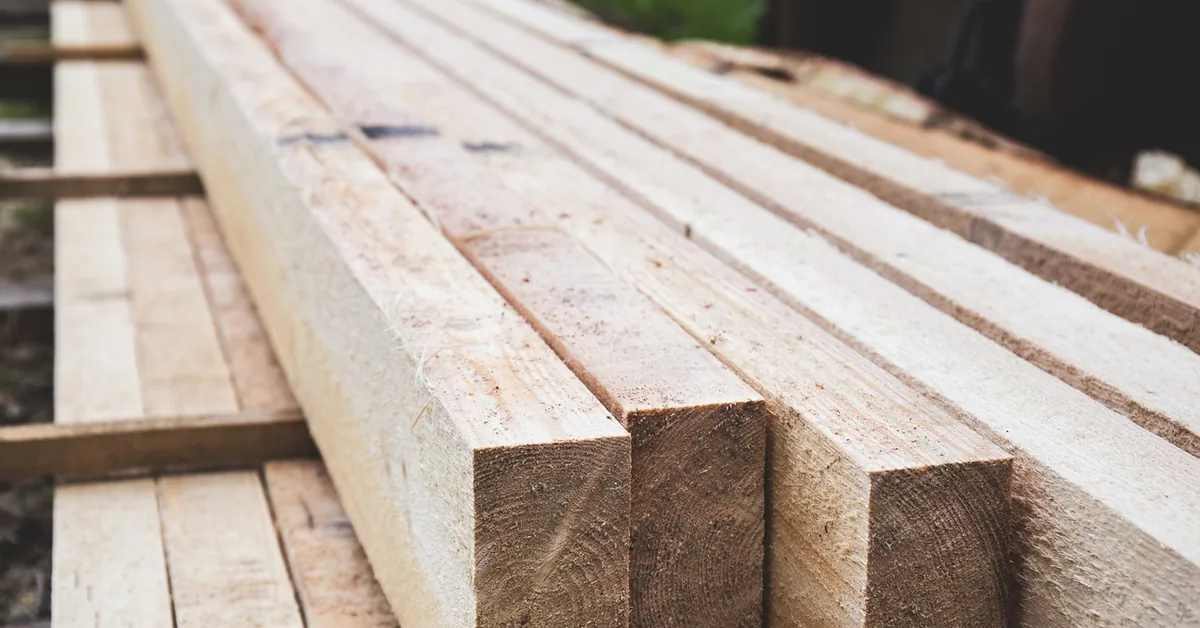
Can MDF Hold Weight? Load Limits By Thickness
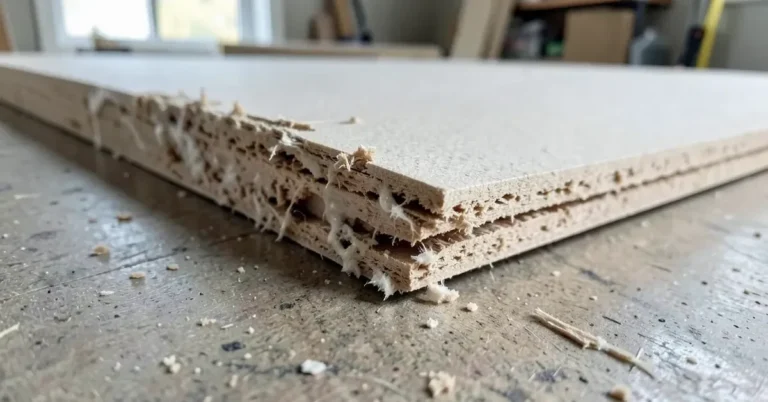
MDF holds weight reliably when thickness matches the span and support — 18mm MDF sags under roughly 15–20kg over an unsupported 800mm run, while 25mm MDF with mid-span support carries 30–35kg with minimal sag. Load it past that limit and the board bows permanently within weeks, not instantly. This guide covers exact weight limits by thickness and span, whether MDF can hold a TV or a loaded clothes rack, and how to reinforce it for heavier loads.
Quick Answer
Yes, MDF holds weight, but capacity depends on thickness and span — 18mm MDF over a 600–800mm span handles about 20–25kg before visible sag. A wall-mounted TV under about 15kg is usually fine on a well-anchored MDF panel with a proper bracket into studs; heavier screens, loaded clothes racks, or anything over roughly 25kg need reinforcement (battens, corner braces, or thicker stock) or a different material entirely.
What Is MDF?
Best MDF Reinforcement Pick
Heavy-Duty L Shelf Brackets, 12″ x 8″ (12-Pack) – $35.95
Full-depth 12-inch brackets that cut the effective unsupported span on a long MDF shelf run — the exact fix step 3 above recommends for anything over an 800mm span.
- Best for: Long shelf runs or heavy garage/closet storage on 18–25mm MDF.
- Why we picked it: 12-inch depth adds real mid-span support, not just a corner tack.
- Main drawback: Bulkier and more visible than a small corner brace — not ideal for open shelving on display.
Compare more MDF reinforcement supplies
 Option 1 L Bracket Shelf Support, Max Load 42lb (6-Pack) – $7.99
|
 Option 2 Stainless Steel Corner Brace, 35lb/15kg Max (4-Pack) – $7.79
|
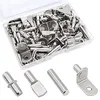 Option 3 Nickel-Plated Shelf Pins Kit (104-Pack) – $6.99
|
As an Amazon Associate we earn from qualifying purchases.
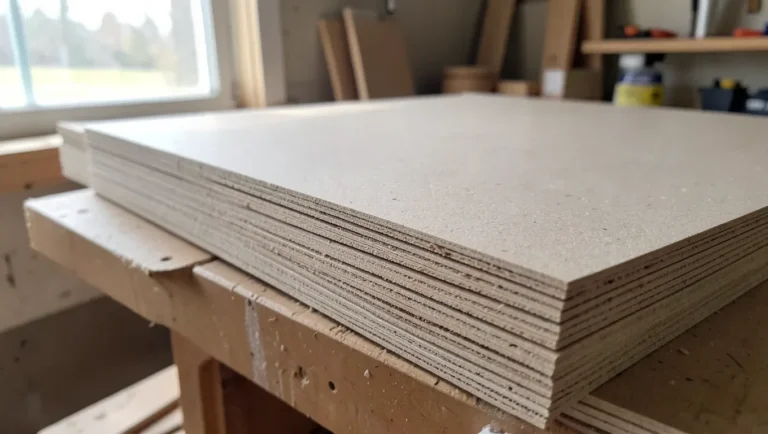
MDF (Medium-Density Fiberboard) is an engineered wood panel made by breaking softwood and hardwood down into fine fibers, mixing them with resin, then pressing the mixture flat under heat and pressure. That pressing is what gives MDF its strength — a denser, more evenly pressed sheet holds more weight than a lightly pressed one. Standard MDF density runs about 600–800 kg/m³, denser than plywood, which is why it feels noticeably heavy for its size.
Because it has no wood grain, MDF cuts and paints cleanly with no splintering, which is exactly why it’s the default choice for cabinet doors, shelving, and painted furniture. That same lack of grain is also its main structural weakness — more on that below.
MDF Weight Capacity By Thickness And Span
Thickness and unsupported span — not weight alone — decide how much an MDF panel can carry. A thicker board sags less over the same distance, and a shorter span holds more weight than a longer one at the same thickness.
| Thickness | Span | Approx. Load Before Sag |
|---|---|---|
| 15mm or less | Any | 5–10kg — decorative panels and doors only |
| 18mm | 600–800mm | 20–25kg before visible sag |
| 18mm | 800–1000mm | 15–20kg, sag likely over time |
| 25mm+ | 600–800mm | 30–35kg with minimal sag |
📊 Under ANSI A208.2-2016 (Grade 155-F11), standard interior MDF has a density of roughly 780–788 kg/m³ and a modulus of rupture (bending strength) of about 27.9–33.1 MPa. — Source: ANSI A208.2-2016, Medium Density Fiberboard for Interior Applications
For the full flexural-strength numbers behind these figures — ANSI-grade MPa ratings, span-vs-sag tables, and exactly where MDF’s edges fall short — see our complete breakdown in Is MDF Strong? For shelf-specific thickness guidance, see how thick MDF shelves should be.
How To Reinforce MDF For Heavier Loads
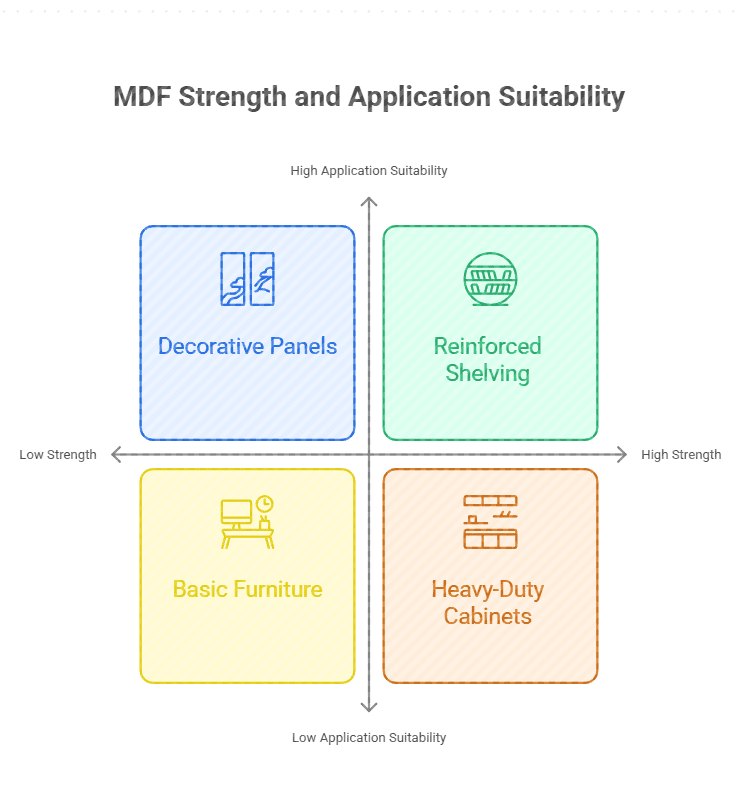
When a project needs more capacity than bare MDF provides at a given thickness, reinforcement closes the gap without switching materials entirely.
- Add a cleat or batten: Screw a solid-wood or plywood batten along the back edge (or full length, for shelves) to cut the effective unsupported span and add stiffness.
- Install corner braces or metal brackets: Mount L-brackets or angle braces at load-bearing corners and joints to keep the panel from flexing under weight.
- Shorten the span with mid-supports: Add a center bracket or upright on any run longer than 800mm — this does more for sag resistance than adding thickness alone.
- Step up in thickness: Move from 18mm to 25mm where the load is fixed and heavy, such as a permanently mounted TV or a fully loaded closet shelf.
- Use screws, not nails: MDF holds screw threads far better than nail friction — use the correct pilot-hole size to avoid splitting the edge.
Can MDF Hold A TV? (Wall-Mounted Screens)
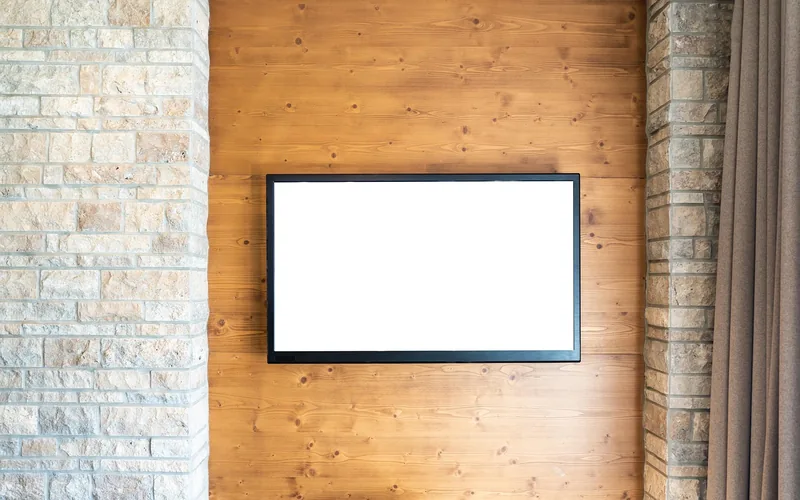
Most flat-panel TVs weigh far less than the 60kg some readers ask about — a typical 55–65 inch TV runs 15–25kg (33–55 lb), which a properly anchored MDF panel can support. The real question isn’t the TV’s weight alone; it’s whether the mount is anchored into wall studs or framing behind the MDF, not into the MDF panel by itself.
A 60kg (132 lb) load — closer to a large monitor array, a projector screen, or a heavier legacy TV — exceeds what any thickness of MDF should carry on its own, mounted or not. For that weight range, mount the bracket through the MDF into solid studs or blocking, and treat the MDF as a decorative surface layer rather than the structural support.
Would 18mm MDF Support A 60kg Screen?
No, not on the MDF alone. 18mm MDF at a typical mounting span holds roughly 20–25kg before sagging, well under 60kg. A load that heavy needs the mounting bracket screwed through the MDF into wall studs or a plywood backer board, so the studs — not the MDF — bear the actual weight.
Is MDF Weight-Bearing Enough For Clothes Racks And Closet Shelving?
Yes, for typical closet loads. A single closet rod loaded with clothing usually weighs 10–20kg total, well within 18mm MDF’s range when the rod bracket is screwed into the MDF at both ends and the span stays under about 900mm. Longer closet runs need a center support bracket, exactly as with any MDF shelf.

Where MDF closet shelving struggles is heavy folded storage — a shelf stacked with towels, books, or bins can quietly exceed 20kg over a single span. For that use, treat it the same as any heavily loaded shelf: shorten the span, add a batten, or step up to 25mm.
MDF Vs Plywood Vs Solid Wood For Weight-Bearing Uses
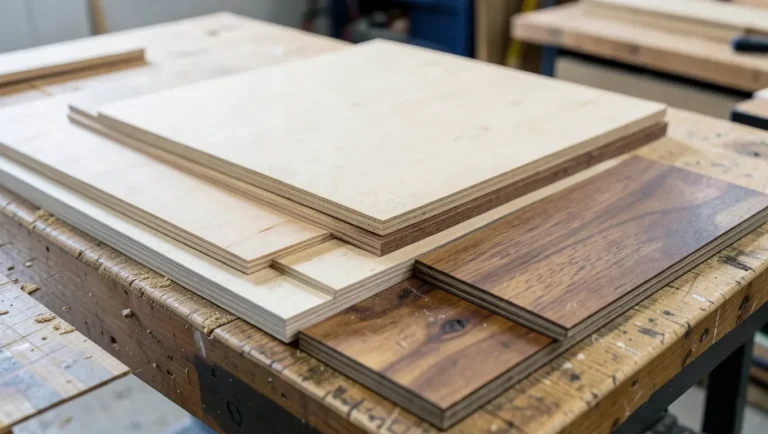
MDF, plywood, and solid wood each handle weight differently because of how their fibers are structured — MDF has no grain, plywood has cross-layered grain for strength in both directions, and solid wood has continuous grain that resists bending along its length.
| Material | Weight-Bearing Strength | Best For |
|---|---|---|
| MDF | Moderate — strong in compression, weak in unsupported bending | Cabinets, painted shelving, short-span storage |
| Plywood | High — cross-grain layers resist bending in both directions | Structural shelving, longer spans, garage storage |
| Solid wood | Highest — continuous grain along the length | Load-bearing shelves, furniture legs, benches |
For a side-by-side of every practical difference beyond weight — cost, finishing, moisture resistance — see our full particle board vs. MDF vs. plywood comparison. If you’re specifically deciding whether MDF suits a shelving project, see can MDF be used for shelves.
“MDF is strong enough for most cabinet and shelving work, but it has no grain to fall back on — once you exceed its span-and-thickness limit, it doesn’t creak and warn you like solid wood does. It just slowly bows.”
Limitations To Keep In Mind
- Moisture is the real enemy: Wet or humid conditions swell and soften MDF fast, cutting its weight capacity well below the dry-condition numbers above — keep it sealed and dry in bathrooms, basements, and garages.
- Edges chip without protection: Unfinished edges are the weakest point under load — edge-band or paint them before putting weight near an edge.
- Screws can loosen over time: Repeated load cycles (a shelf loaded and unloaded often) gradually enlarge the screw hole in MDF faster than in plywood — re-drive into a slightly offset pilot hole if a joint loosens.
Frequently Asked Questions
Can MDF Withstand Weight?
Yes, within limits set by thickness and span. 18mm MDF over a 600–800mm span carries about 20–25kg before visible sag; thinner boards or longer spans hold less. Always check the thickness-and-span table above before loading a specific project.
Is MDF Strong Enough To Stand On?
Not on its own. Unsupported MDF is not rated for a person’s full body weight and can crack or give way. If MDF forms part of a step, platform, or floor underlayment, it needs full support underneath (joists or a solid subfloor) — never an unsupported span.
Is MDF Strong Enough To Hold A TV?
Yes, for most TVs under about 25kg, as long as the mounting bracket is anchored into wall studs behind the MDF rather than the MDF alone. Heavier screens or projector-style panels need a plywood backer board or direct stud mounting.
How Much Can An MDF Shelf Hold?
An 18mm MDF shelf typically holds 20–25kg over a 600–800mm span before sagging, or 15–20kg over an 800–1000mm span. Adding a center bracket or stepping up to 25mm MDF raises that capacity to roughly 30–35kg.
Is MDF Weight-Bearing Enough For A Clothes Rack?
Yes. A typical loaded closet rod weighs 10–20kg total, comfortably within 18mm MDF’s capacity when the rod bracket is screwed in at both ends and the span stays under roughly 900mm. Add a center support on longer runs.
Does MDF Sag Under Weight Over Time?
Yes, more than plywood or solid wood at the same load. Because MDF has no grain structure to resist bending, sustained weight near or above its rated capacity causes gradual, permanent sag over weeks or months rather than an immediate failure.
Conclusion
MDF holds weight well for cabinets, shelving, and most wall-mounted TVs, but its capacity is set by thickness and span, not by the material alone. Match 18mm MDF to spans under 800mm for everyday shelving, step up to 25mm or add reinforcement for anything heavier, and always anchor mounted loads like TVs into studs rather than relying on the panel by itself.
For more on choosing between MDF, plywood, and solid wood for your next project, see our full guide to what MDF is.
Sponsored / affiliate links. As an Amazon Associate I earn from qualifying purchases. I may earn additional commission from eligible campaigns.