Can Water Based Stain Rags Combust? A Critical Warning
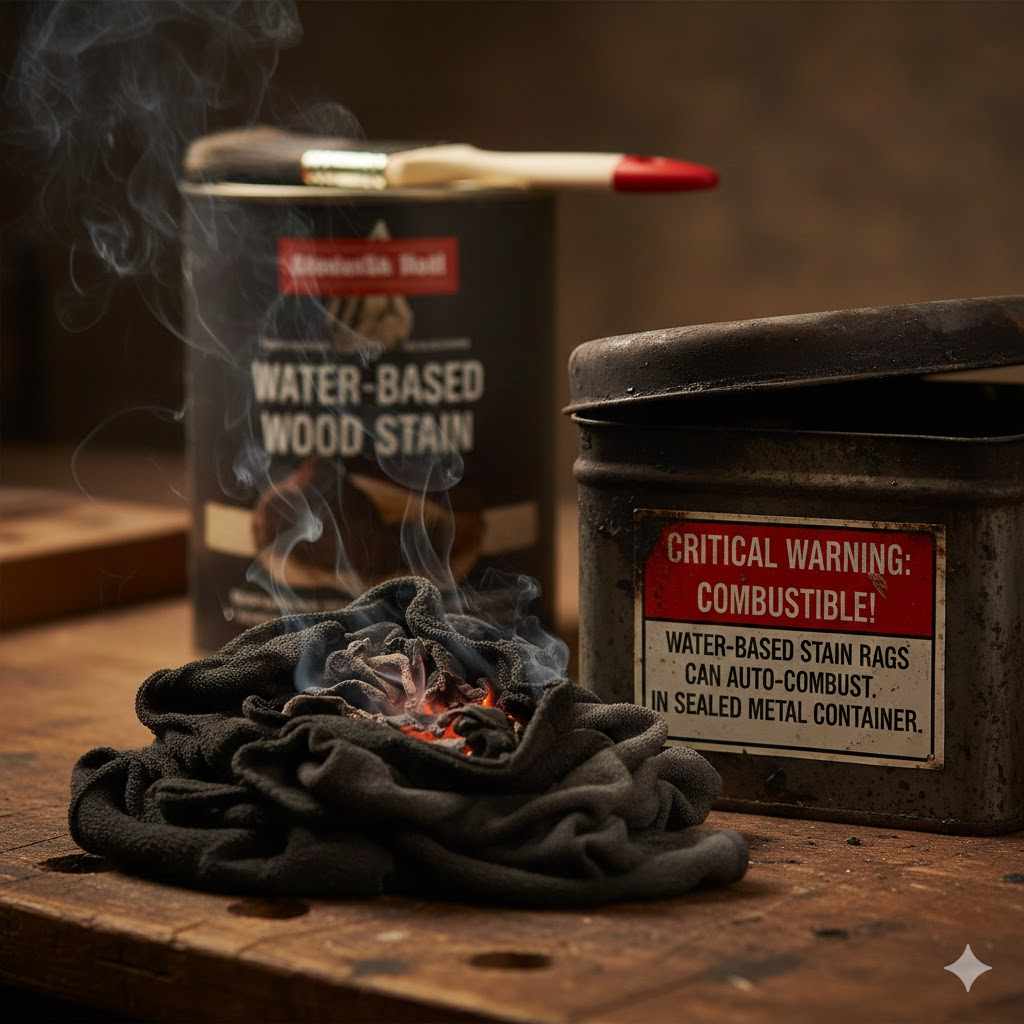
No, rags soaked in a true 100% water-based stain will not spontaneously combust. The fire risk comes from oil-based products, which generate heat as they cure. However, some “water-based” stains contain oils or solvents, so you must always read the label and dry all finishing rags flat before disposal to be safe.
Hello, fellow makers! It’s Md Meraj, your guide in the workshop. Today, we’re tackling a question that causes a lot of confusion and a little bit of fear: can rags used with water-based stain catch fire all by themselves? You’ve probably heard horror stories about workshop fires starting from a pile of old rags, and it’s a terrifying thought. The good news is that you can completely avoid this danger by understanding a simple key difference between products.
The confusion is understandable. With so many products on the shelf, it’s hard to know what’s what. In this guide, I’ll clear things up for you. We’ll walk through why certain rags are dangerous, how to identify safe products, and the single best way to dispose of all your finishing rags. Let’s make your workshop safer together.
The Simple Answer: Water-Based vs. Oil-Based Curing
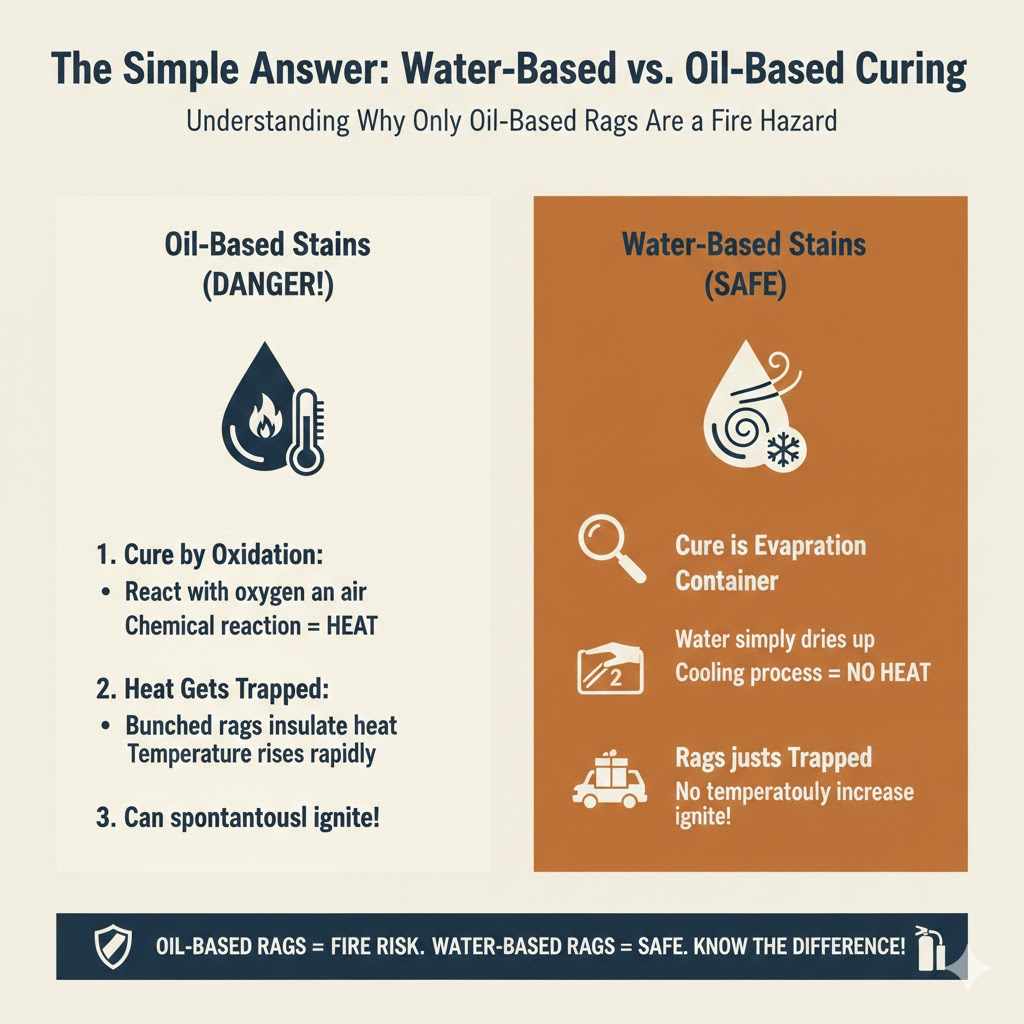
Let’s get straight to the heart of the matter. The risk of rags catching fire on their own—a process called spontaneous combustion—is almost exclusively a problem with oil-based finishing products. It has nothing to do with the wood, the color, or the brand. It’s all about chemistry.
Here’s the breakdown in plain English:
- Oil-Based Stains Cure by Oxidation: Think of this like super-fast rusting. As the oils in the stain react with oxygen in the air, they harden (cure). This chemical reaction produces a small amount of heat.
- Water-Based Stains Cure by Evaporation: These stains cure simply because the water in the formula evaporates into the air, leaving the color pigments and binders behind. This process does not create heat. In fact, evaporation is a cooling process!
So, a rag soaked in a true, 100% water-based stain is not a fire hazard from spontaneous combustion. The water just dries up. A rag soaked in an oil-based stain, however, is a little heat-generating machine. And if you bunch that rag up, you have a recipe for disaster.
Understanding the Science of Spontaneous Combustion
Spontaneous combustion sounds like something out of a science fiction movie, but it’s a very real phenomenon in the workshop. It happens when a material generates its own heat faster than it can escape. With oil-soaked rags, the process looks like this:
- Oxidation Starts: You finish your project and toss the oily rag into a pile in the corner or a trash can. The oil immediately starts reacting with oxygen in the air, releasing heat.
- Heat Gets Trapped: Because the rag is wadded up, the heat has nowhere to go. The inside of the rag pile gets warmer and warmer, which speeds up the oxidation process even more.
- Temperature Rises: This vicious cycle continues. The trapped heat builds, and the temperature inside the rag pile can climb surprisingly fast, reaching hundreds of degrees.
- Flash Point: Eventually, the rags reach their auto-ignition temperature, or “flash point.” At this point, they burst into flame without any spark or external flame source.
This is why you’ll often see warnings about spontaneous combustion on cans of oil-based polyurethane, Danish oil, boiled linseed oil, and oil-based stains. The National Fire Protection Association (NFPA) identifies spontaneous combustion as a leading cause of fires in industrial settings, and it’s just as big a threat in a home workshop.
A Quick Look at Risky Products
Here is a simple table to help you identify which types of products carry a risk of spontaneous combustion. When you see these words on a can, you should handle used rags with extreme care.
| Product Type | Combustion Risk | Key Ingredient to Watch For |
|---|---|---|
| Oil-Based Stain | High | Linseed Oil, Tung Oil, Soya Oil, Alkyd |
| Danish Oil / Teak Oil | High | Tung Oil or Linseed Oil |
| Oil-Based Polyurethane | High | Oil Resins, Mineral Spirits |
| True Water-Based Stain | Very Low / None | Water, Acrylic, Urethane Dispersion |
| “Oil-Modified” Water-Based Finish | Moderate | Alkyd, Oil Emulsions |
The Hidden Danger: When “Water-Based” Isn’t Pure
Here’s where it gets tricky for beginners. Not all products labeled “water-based” are created equal. To improve performance, durability, or application feel, some manufacturers create hybrid products. These are often called “oil-modified” or “oil-enriched” water-based finishes.
These products are fantastic to work with, but they can reintroduce a small risk of spontaneous combustion because they contain curing oils suspended in a water-based formula. While the risk is much lower than with a pure oil-based product, it’s not zero. The small amount of oil can still oxidize and generate heat.
This is why my number one rule in the workshop is: When in doubt, treat it like oil. If you’re unsure about a product’s composition, it costs you nothing to handle the rags safely. Never assume a product is 100% risk-free just because it says “water-based” on the front.
How to Read a Product Label for Safety Clues
Your best friend in determining the risk is the product can itself. Manufacturers are required to list hazards. You don’t need to be a chemist; you just need to know what words to look for. Grab a can of stain and let’s learn how to read it.
Look for these red flags on the back of the can, usually under “DANGER,” “WARNING,” or “DIRECTIONS”:
- “Risk of spontaneous combustion.” This is the most obvious warning. If you see this, you must follow safe disposal procedures.
- “Contains petroleum distillates” or “mineral spirits.” These are solvents common in oil-based products and are highly flammable.
- “Contains linseed oil,” “tung oil,” or “soya oil.” These are the curing oils that produce heat through oxidation.
- “Alkyd” or “oil-modified.” This tells you it’s a hybrid product that contains oils, even if it’s a water-cleanup formula.
If the can says something like “Soap and water cleanup,” but you also see a warning about spontaneous combustion, believe the warning! The cleanup method is for your hands and brushes, not a guarantee about the curing chemistry.
The Universal Safe Disposal Method: For ALL Finishing Rags
Because it can be confusing to know exactly what’s in your stain, I teach every beginner the same foolproof method for disposing of finishing rags. This method is safe for highly combustible oil-based rags and perfectly fine for harmless water-based ones. By using one method for everything, you build a safe habit and never have to worry.
Follow these steps every single time you finish a project:
- Unfold and Separate: Take your used rags outside immediately after you are done. Do not leave them in a pile, not even for a minute. Unfold each rag completely.
- Lay Them Flat to Dry: Drape the rags over a non-flammable surface, like a wire fence, a metal sawhorse, a concrete block, or a gravel driveway. Make sure they are in a single layer with plenty of air circulation around them. Keep them away from direct sunlight on hot days and far from any buildings or flammable vegetation.
- Let Them Cure Completely: Leave the rags to dry until they are fully hardened and stiff. This might take 24 to 48 hours, depending on the weather. The rags are safe once the oils have completely cured and are no longer generating heat. They will feel crusty and hard.
- Safe Final Disposal: Once the rags are stiff and fully cured, they are no longer a spontaneous combustion threat. You can then safely toss them in your regular household trash. For ultimate safety, many professionals place the dried rags in a metal can with a tight-fitting lid before putting them in the garbage.
Another option for disposal, which is often recommended, is to submerge the wet rags in a bucket of water. This stops the oxidation process by cutting off the oxygen supply. However, you are then left with a bucket of oily, hazardous water that needs to be disposed of properly. For this reason, I find the air-drying method much simpler and more effective for home DIYers. Always check with your local waste management authority for specific guidelines in your area. You can often find information on your town or city’s official website or by consulting resources from the Environmental Protection Agency (EPA).
Comparing Disposal Safety at a Glance
Let’s put this into a simple chart to make the choices clear.
| Disposal Method | Is it Safe for Oil-Based Rags? | Is it Safe for Water-Based Rags? | My Recommendation |
|---|---|---|---|
| Tossing wet rags in the trash | EXTREMELY DANGEROUS | Safe, but messy and bad practice | Never do this. |
| Piling wet rags on the floor | EXTREMELY DANGEROUS | Safe, but messy | Never do this. |
| Submerging rags in water | Temporarily safe, but creates hazardous waste | Unnecessary | Okay, but air drying is easier. |
| Laying rags flat outdoors to dry | SAFEST METHOD | SAFEST METHOD | Always do this. |
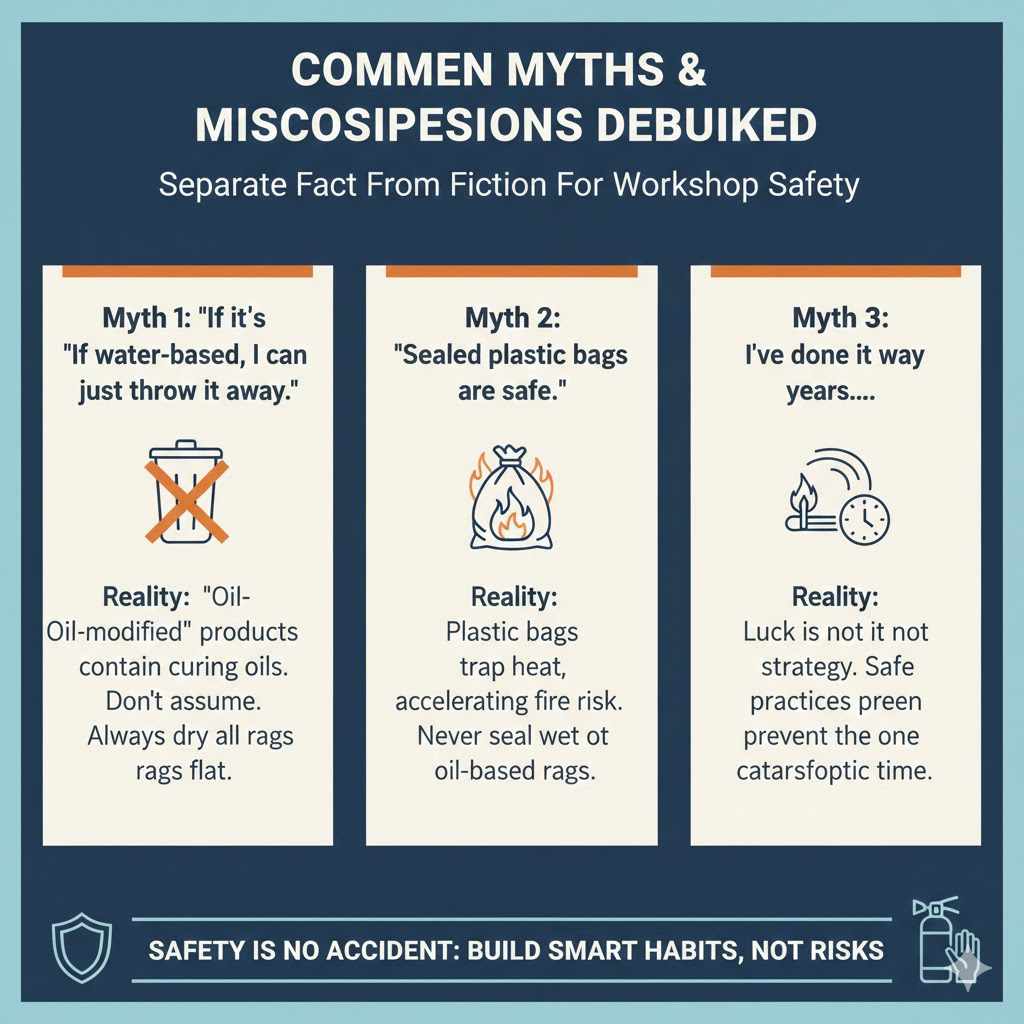
Common Myths and Misconceptions Debunked
There’s a lot of “workshop wisdom” out there, and not all of it is accurate. Let’s clear up a few common myths about stain rags.
Myth 1: “If it’s water-based, I can just throw it away.”
Reality: As we’ve discussed, “oil-modified” products exist. Unless you’ve read the can carefully and are 100% sure it contains no curing oils, you should not assume it’s safe to just toss. Building the safe habit of drying all rags flat protects you from mistakes.
Myth 2: “Putting the rags in a sealed plastic bag is safe.”
Reality: This is incredibly dangerous for oil-based rags. A plastic bag will not stop the oxidation process; it will only trap the heat even more effectively, accelerating the temperature rise and increasing the fire risk. Never put wet finishing rags in a sealed bag.
Myth 3: “I’ve done it this way for years and nothing has happened.”
Reality: This is simple luck. Spontaneous combustion requires the perfect storm of conditions: the right amount of oil, the right amount of air trapped, and poor heat dissipation. You might get lucky 99 times, but the 100th time could be catastrophic. Safe practices aren’t for the times things go right; they are for the one time they could go wrong.
Frequently Asked Questions (FAQ)
Can I reuse stain rags?
You can, but only with some care. If you plan to use the same color stain again within a few hours, you can place the rag in a sealed, fireproof metal container or a zip-top bag with as much air removed as possible to prevent it from drying out. However, for long-term storage, it’s best to use a fresh rag. Do not attempt to wash and reuse oil-based stain rags in a washing machine or dryer, as the oil residue can create a fire hazard.
How long does it take for a rag to dry completely?
It typically takes 24 to 48 hours for a stain rag to become fully cured and stiff when laid flat outdoors. The exact time depends on the temperature, humidity, and airflow. You’ll know it’s ready when it is hard and crusty to the touch, with no soft or oily spots.
What if I accidentally threw a wet oil-based rag in the trash?
If you realize it quickly, you should immediately and carefully remove the rag from the trash can. Take it outside and lay it flat on a non-flammable surface like concrete to dry completely. If it has been in the trash for a while, be extremely cautious. Take the entire trash can outside, away from your home or any structures, and empty it out so the rags can be spread apart to cool and dry safely.
Does the brand of stain matter for combustion risk?
No, the brand does not matter. The fire risk is determined by the chemical composition of the stain—specifically, whether it contains curing oils like linseed or tung oil. A cheap oil-based stain from a hardware store is just as dangerous as an expensive one from a specialty woodworking shop.
Are there alternatives to using rags for applying stain?
Absolutely! Foam brushes are excellent for applying stain and can be thrown away after use (they don’t pose a combustion risk as they don’t get wadded up). Natural bristle brushes also work well, especially for oil-based stains. For a lint-free finish, you can also use staining pads or even high-quality paper towels, but remember to dispose of them using the same “lay flat to dry” method as you would for cloth rags.
So, pure water-based stain rags won’t catch fire on their own?
That is correct. Rags soaked only in a true, 100% water-based stain that contains no curing oils or alkyds do not pose a risk for spontaneous combustion. The curing process is evaporation, which is a cooling, not a heating, process.
What’s the most important safety warning to look for on a can of stain?
The single most important phrase to look for is: “Danger: Rags, steel wool or waste soaked with this product may spontaneously catch fire if improperly discarded.” If you see this or any similar wording, you must follow safe disposal procedures to the letter.
Conclusion: A Simple Habit for a Safe Workshop
Mastering woodworking isn’t just about cutting straight lines or creating beautiful joints; it’s about building a foundation of safe, smart habits. Understanding the difference between oil-based and water-based products is one of the most critical safety lessons you can learn.
While a true water-based stain rag won’t spontaneously combust, the world of wood finishes is filled with complex hybrid products. To protect your home, your workshop, and your peace of mind, I encourage you to adopt one simple, unbreakable rule: always lay your finishing rags flat to dry before disposal.
This single habit eliminates all guesswork and all risk. It doesn’t matter what product you used or what the can says. By making this part of your cleanup routine, you ensure that you can focus on the joy of creating, confident that you’ve made your workspace as safe as it can be. Happy (and safe) building!